

Dental powders for dogs promise a cleaner mouth and fresher breath with nothing more than a single scoop sprinkled over a daily meal. To many pet owners, this sounds almost too simple to be effective. The question of whether these oral health powders actually work deserves a comprehensive, evidence-based answer rather than marketing promises. To address this, veterinarians look closely at the biological mechanisms, the published clinical evidence, and how these supplements compare to traditional home care routines.
This review, written by Athena Gaffud, DVM, and last reviewed on September 14, 2026, evaluates the science behind dog dental powders. Specifically, this analysis focuses on the active ingredient classes, examines the brand-reported clinical trials of PetLabCo.® ProBright® Advanced, and compares the efficacy of powders against tooth brushing, water additives, and dental chews.
The Short Answer: Efficacy and Realistic Expectations
The short answer is yes, dog dental powders can work, but they come with a crucial caveat. When administered daily, high-quality dental powders help support cleaner teeth and fresher breath by interfering with plaque mineralization and balancing oral bacteria. However, they do not remove existing, hardened tartar, they do not physically scrub the teeth, and they function best when integrated into a comprehensive oral care routine that includes brushing and regular veterinary cleanings.
It is important to recognize that dental powders are classified as supplements, which are formulated to support normal bodily functions. They are not designed to diagnose, treat, cure, or prevent periodontal disease.
The mixed experiences reported by pet owners on online forums, such as dog dental care threads on Reddit, usually stem from differing expectations. Owners of dogs with mild, early-stage plaque often report visible improvements and significantly fresher breath within a few months of daily use. Conversely, owners of dogs with heavy, brown calculus build-up are often disappointed because no powder can dissolve mineralized tartar below the gumline. For a dog with advanced calculus, a professional veterinary cleaning is required first, after which a daily powder can be used to help maintain the clean surface.
How Dental Powders Work in the Canine Mouth
Every canine dental powder is designed as a meal topper. Once sprinkled over food and consumed, the powder acts either locally in the mouth during chewing or systemically through the body after digestion. Understanding the active ingredients is the only reliable way to evaluate whether a product is worth purchasing, whether it is a natural seaweed-based powder, a postbiotic formula, or a probiotic blend.
To understand why chemistry matters in oral care, one must look at how plaque and tartar develop. Plaque is a soft, sticky film of bacteria, saliva proteins, and food debris that begins forming on a dog’s teeth within hours of eating. If plaque is not removed, minerals in the dog’s saliva harden it into tartar, also known as calculus, within a matter of days. According to the Merck Veterinary Manual, this progression is the primary driver of periodontal disease, which is one of the most common clinical conditions diagnosed in adult dogs.
While manual brushing removes soft plaque mechanically, a powder operates through chemical and biological pathways. It aims to alter the oral environment to limit the growth of odor-producing bacteria, prevent soft plaque from binding to the teeth, and bind calcium in the saliva so that plaque cannot mineralize into hard tartar.
The Three Key Active Ingredient Classes
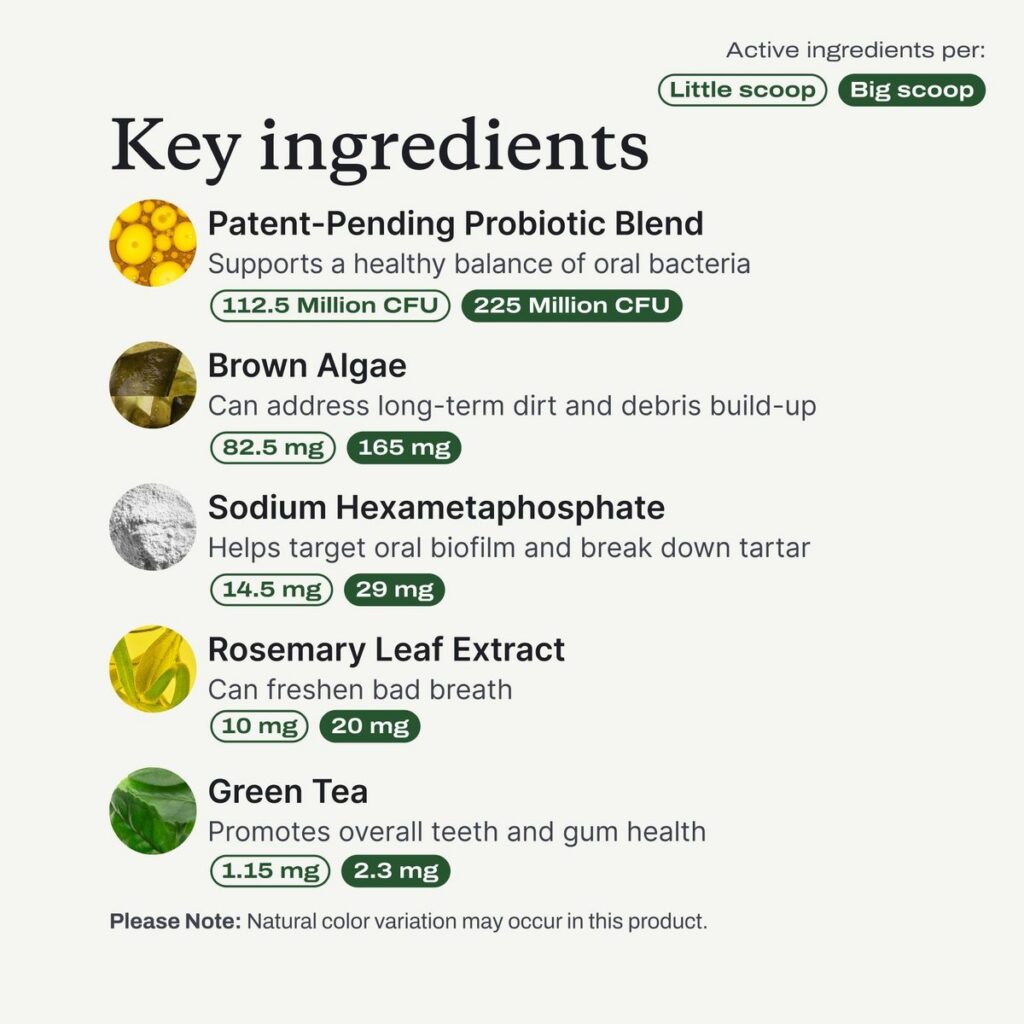
Formulas like PetLabCo.® ProBright® Advanced rely on three primary classes of active ingredients to achieve these goals:
- Probiotics: These beneficial bacterial strains are selected to colonize the oral cavity, helping to balance the mouth’s microbiome. By outcompeting harmful, odor-causing bacteria, probiotics target the volatile sulfur compounds that cause bad breath.
- Brown Algae (Ascophyllum nodosum): This natural seaweed is absorbed systemically and acts through the saliva after digestion. Controlled canine studies have associated the daily consumption of Ascophyllum nodosum with reduced plaque and calculus accumulation.
- Sodium Hexametaphosphate (SHMP): This clinically proven polyphosphate acts as a calcium binder. When a dog eats, SHMP binds to the free calcium present in saliva, making it unavailable to the plaque biofilm and thereby slowing down the mineralization of plaque into hard calculus.
In addition to these primary active ingredients, supporting botanicals like rosemary leaf extract (ranging from 10 mg to 79.67 mg depending on the dog’s size) and decaffeinated green tea (ranging from 1.15 mg to 9.3 mg) are often included. These botanicals provide antioxidant support and temporary breath freshening rather than driving the core dental clearing mechanism.
Reading Labels and the Pitfalls of DIY Formulations
When shopping for dental powders, pet owners should carefully evaluate product labels. A quality product should clearly disclose the active ingredients with their specific amounts per serving, provide weight-based daily feeding guidelines, and offer safety cautions for specific health conditions.
Labels marketing "natural" formulations are not inherently superior. While ingredients like brown algae, rosemary, and green tea are natural, their efficacy depends on standardized concentrations, weight-appropriate dosing, and clinical backing.
This is also why homemade or DIY dog dental powders—which often mix kelp, parsley, and baking soda—frequently fall short. The iodine content in raw kelp can vary wildly between batches, posing potential health risks. Furthermore, homemade recipes lack beneficial probiotic strains, standardized polyphosphates, and precise dosing guidelines tailored to the vast weight differences between a toy breed and a giant breed.
Evaluating the Clinical Evidence
While many supplement manufacturers rely on generalized ingredient studies, PetLabCo.® has reported two clinical trials specifically evaluating its ProBright® Advanced formula.
The first study was a 28-day trial focusing on breath quality. It measured volatile sulfur compounds (VSC) in the dogs’ breath and demonstrated a measurable reduction in these odor-producing compounds compared to baseline levels by the end of the four-week period.
The second study was a longer, 90-day double-blind, placebo-controlled trial evaluating plaque buildup. At the conclusion of the 90 days, the dogs receiving the active ProBright® Advanced formula showed a lower plaque index score compared to the control group receiving a placebo.
It is important to note that these trials were brand-reported, and individual results can vary. The studies measured plaque index scores and breath compounds; they did not measure the removal of existing, mineralized tartar. When interpreted within these boundaries, the clinical evidence supports the product’s mechanism: improving breath quality first by balancing oral bacteria, followed by a reduction in new plaque accumulation over several months.
How Powders Compare to Brushing, Additives, and Chews
No single oral care format can address every aspect of canine dental health. A balanced home care routine often requires combining different methods based on efficacy and compliance.
Daily tooth brushing with a dog-safe toothpaste remains the gold standard of veterinary home care. The American Animal Hospital Association (AAHA) identifies daily brushing as the single most effective way to manage plaque because the physical friction of the bristles removes soft plaque before it can harden. However, brushing requires a cooperative dog and a highly committed owner, and it cannot reach below the gumline or dissolve existing tartar.
Dental powders, such as ProBright® Advanced, offer high compliance because they are simply added to a dog’s food. While they cannot physically scrub the teeth, they utilize probiotics, sodium hexametaphosphate, and brown algae to chemically alter saliva and balance oral bacteria. This makes them an excellent option for dogs that completely resist manual brushing, serving as a supportive addition to a dental care routine rather than a complete replacement for physical cleaning.
Water additives offer a completely passive approach to oral care. These liquid formulas are mixed directly into a dog’s drinking water, ensuring that active enzymes or chemical agents reach the oral tissues every time the dog drinks. While highly convenient—particularly in multi-dog households—the dosage is highly variable because it depends entirely on how much water an individual dog drinks throughout the day. Like powders, water additives cannot physically remove plaque or dissolve hardened tartar.
Dental chews and sticks rely on mechanical abrasion to scrape away plaque as the dog chews. Some high-quality chews also incorporate active chemical ingredients to help prevent tartar formation. While popular as treats, chews add daily calories to a dog’s diet and can occasionally pose a risk of fractured teeth if the chew is too hard, or gastrointestinal blockages if a dog swallows large pieces whole.
Finally, professional dental cleanings performed under anesthesia by a veterinarian remain the only effective method for removing hardened calculus and treating active disease below the gumline. This process involves ultrasonic scaling, dental X-rays to check for bone loss, and thorough polishing of the enamel.
The Role of the Veterinary Oral Health Council (VOHC)
The Veterinary Oral Health Council (VOHC) reviews data submitted by manufacturers to determine if a product meets established standards for reducing plaque or tartar. Products that meet these requirements are awarded the VOHC Seal of Acceptance, which is published as an official list of approved products.
Because the VOHC review process is entirely voluntary, the absence of a seal does not mean a product is ineffective. Dental powders are generally underrepresented on the VOHC list compared to specialized dental diets and chews. PetLabCo.® ProBright® Advanced does not carry the VOHC seal; instead, the manufacturer bases its efficacy claims on the two brand-reported clinical studies detailed above.
Safety Considerations and Potential Side Effects
For the vast majority of healthy dogs, dental powders are highly safe when administered according to the label’s weight-based instructions. However, pet owners should remain aware of potential side effects and contraindications.
The most common side effect associated with dog dental powders is mild gastrointestinal upset, which can manifest as loose stools or a temporary reluctance to eat. This typically occurs during the first few days of introducing the supplement as the dog’s digestive system adjusts to the new flavor and ingredients. To minimize this risk, the ProBright® Advanced label recommends administering the powder during or immediately after a meal rather than on an empty stomach.
Less frequently, a dog with a specific food sensitivity may experience an allergic reaction to inactive ingredients, such as the hydrolyzed chicken liver flavor, brewer’s yeast, or spinach powder, resulting in itching or mild digestive changes. If a dog experiences persistent vomiting, ongoing diarrhea, or general lethargy, the supplement should be discontinued immediately, and a veterinarian should be consulted.
Who Should Consult a Veterinarian Before Use?
Certain health conditions require a professional veterinary consultation before introducing a dental powder:
- Thyroid Disorders: Brown algae (Ascophyllum nodosum) is naturally rich in iodine. High levels of dietary iodine can interfere with thyroid function, making these powders potentially unsuitable for dogs diagnosed with hyperthyroidism or other thyroid conditions.
- Kidney or Heart Disease: Sodium hexametaphosphate contributes phosphorus and sodium to the diet. Dogs on strictly managed low-sodium or low-phosphorus diets due to renal compromise or cardiovascular disease require veterinary clearance before using these supplements.
- Pregnancy and Lactation: The safety of these active ingredient blends has not been fully evaluated in pregnant or nursing female dogs.
Timeline: What to Expect
How long a dental powder takes to show results depends on the specific outcome being measured.
Within the first 28 days of daily use, owners can typically expect a noticeable improvement in breath freshness. This rapid change is driven by the probiotics and botanicals, which actively work to reduce odor-causing bacteria with every meal.
Between 60 and 90 days, visible changes in plaque accumulation may begin to appear. As demonstrated in the 90-day clinical study, the consistent presence of sodium hexametaphosphate and brown algae helps slow the formation of new tartar, keeping the remaining teeth looking cleaner.
Ultimately, these timelines depend heavily on daily consistency. Skipping doses disrupts the colonization of beneficial oral probiotics and allows salivary calcium to resume the rapid mineralization of plaque into hard tartar.
Selecting the Right Format: Tub vs. Packets
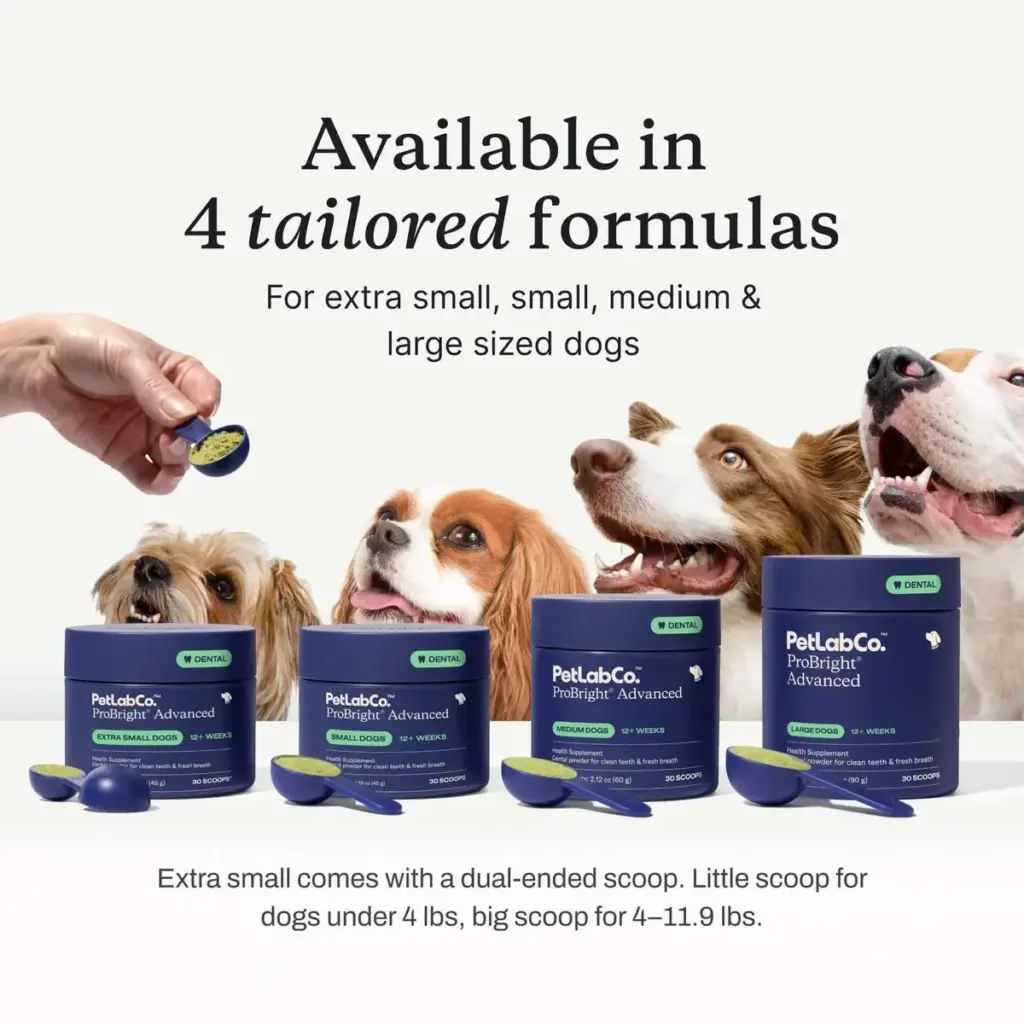
When choosing a dental powder, convenience and consistency are the primary deciding factors. PetLabCo.® offers its ProBright® Advanced formula in two distinct packaging formats, both designed for dogs 12 weeks of age and older.
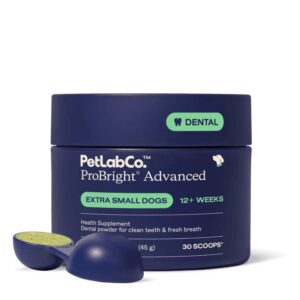
The classic ProBright® Advanced Tub comes in four weight-matched sizes and includes a measuring scoop. This option is highly cost-effective, priced at $36.19 for a one-time purchase or $28.95 with a subscription on the official site (as of September 14, 2026). It is best suited for single-dog households where meals are prepared at home and the scoop can be easily stored.
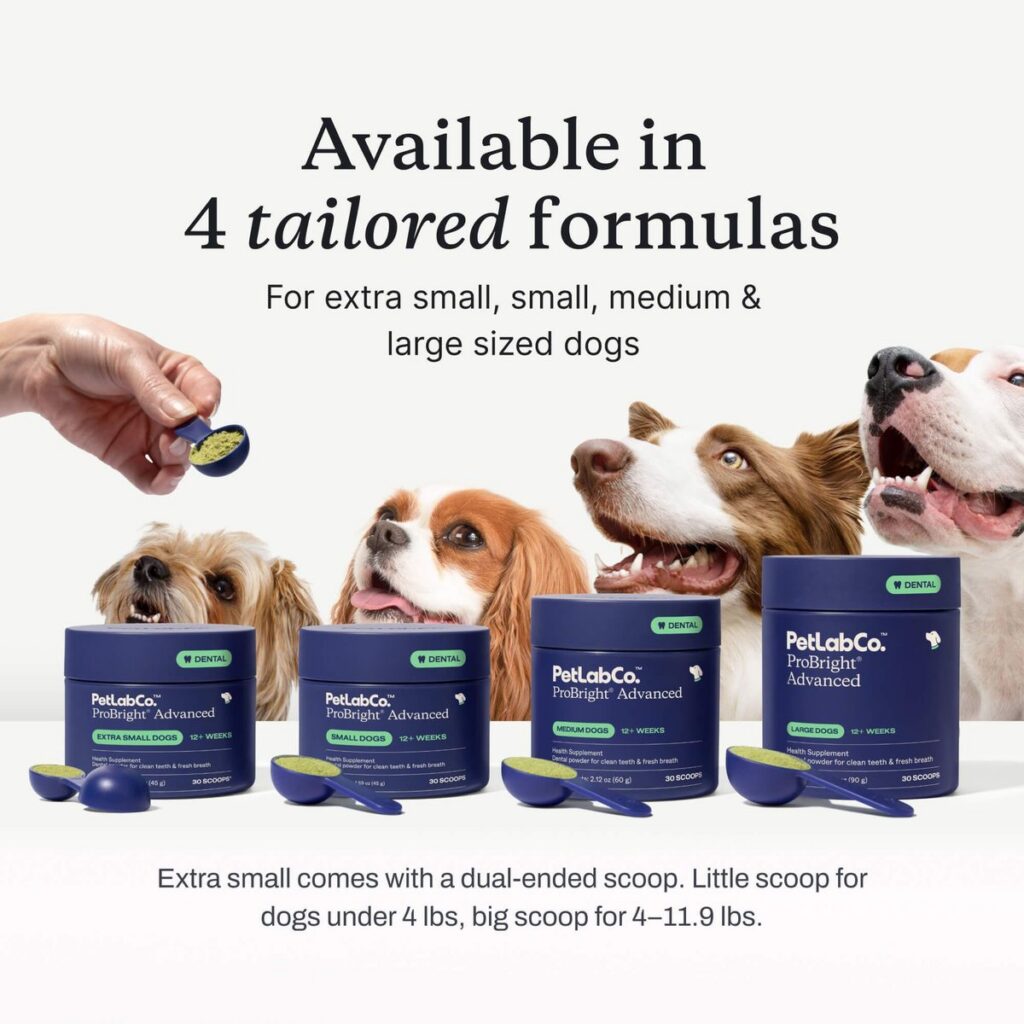
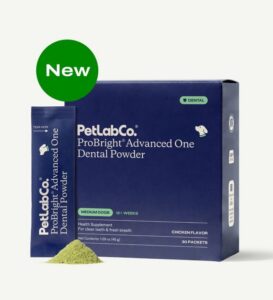
Alternatively, the ProBright® Advanced One format consists of a carton containing 30 individually sealed, pre-measured daily packets. This format is priced at $38.69 for a one-time purchase or $30.95 with a subscription. It is ideal for pet owners who travel frequently, use boarding or dog-sitting services, or manage multiple dogs in different weight categories. For toy dogs weighing under 4 pounds, owners should note that a single packet must still be split in half to deliver the correct dose.
Ultimately, both formats utilize the identical active ingredient blend. Choosing between them is a matter of lifestyle and ensuring daily compliance, which is the true key to supporting a dog’s long-term oral health.