

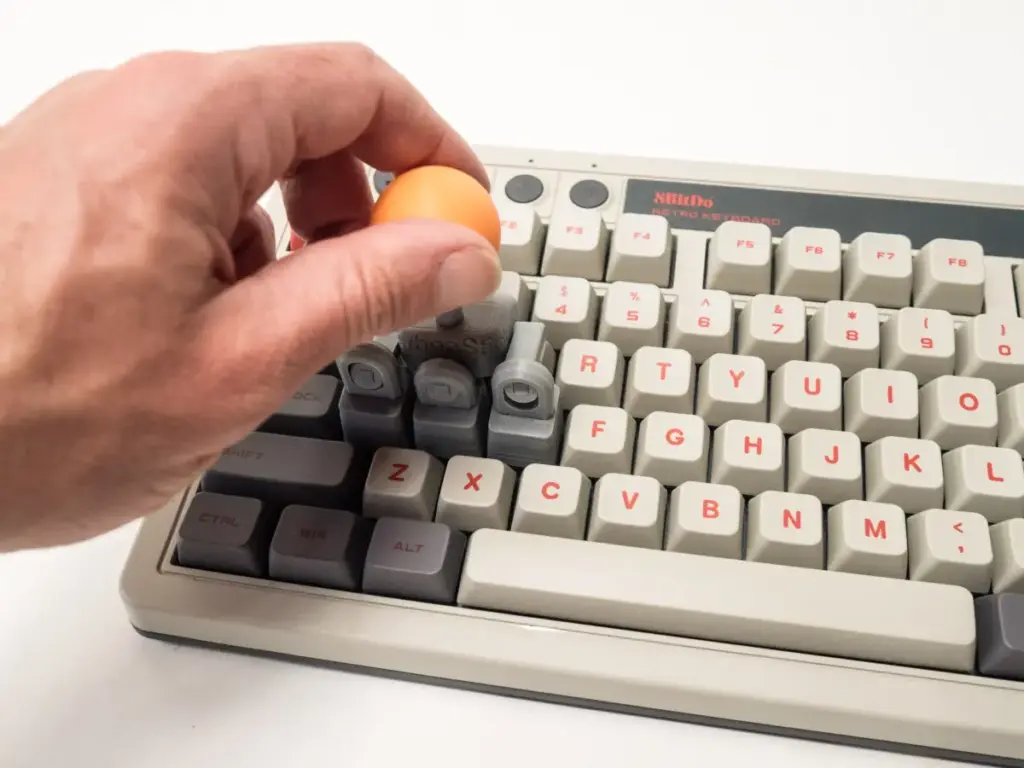
Priced accessibly from zero to seventeen dollars depending on whether users choose to print the model at home or purchase finished units, the KeyboaStick has quickly captured the imagination of the maker and retro-gaming communities alike. The core concept revolves around replacing standard keycaps with a custom-engineered cluster of 3D-printable parts that connect through articulated linkages. When installed on a mechanical keyboard, pressing the joystick in any direction depresses the underlying switches in a coordinated fashion, effectively simulating analog or directional multi-key inputs through a single physical stick.
According to initial reviews and design breakdowns, the project boasts remarkable engineering forethought. The model relies heavily on print-in-place joints, meaning that many of the moving mechanical linkages are fabricated directly by the 3D printer without requiring complex post-processing, assembly of tiny pins, or gluing. Furthermore, the tolerances have been designed with a high degree of forgiveness, ensuring that enthusiasts with older, less-than-perfectly-calibrated desktop 3D printers can still successfully fabricate a working unit.

The installation process is straightforward, allowing users to simply pull off their existing keycaps—such as those on an 8BitDo mechanical keyboard—and snap the KeyboaStick framework into place over the exposed mechanical switches. While initial testers noted that the movement could feel slightly sticky when aiming toward certain lateral angles, and that enthusiastic handling might occasionally result in the top cap popping off, the peripheral proves surprisingly capable in practice. Testing the setup through classic retro titles like Sonic the Hedgehog 2 demonstrated that the custom joystick is more than just a novelty; players can successfully navigate through stages like the Emerald Hill Zone without the physical modification hindering basic gameplay mechanics.
The popularity of the KeyboaStick has inevitably brought commercial complications, with the design falling victim to unauthorized duplication and selling by unscrupulous third-party vendors across various online marketplaces. Despite these intellectual property hurdles, the original designer continues to support the open maker ecosystem. The official fabrication files remain freely accessible for download on MakerWorld, allowing anyone with a 3D printer to produce their own. For enthusiasts without access to a 3D printer, legitimate physical prints are officially distributed through the RadianLab store on Etsy.
The ecosystem surrounding the project has continued to expand beyond the initial proof-of-concept. Variations of the design have been developed to accommodate alternative key layouts, alongside quick-replace versions for easier swapping between standard typing and gaming configurations. Additionally, a heavily redesigned "Pro" version has been introduced to the RadianLab Etsy storefront, featuring refined structural elements engineered to deliver smoother performance and enhanced durability for serious gaming sessions.

While hardware modifications of this nature always carry a learning curve—and blaming a sudden "Game Over" in punishing stages like the Chemical Plant Zone on a custom 3D-printed joystick might be an easy excuse—the KeyboaStick successfully bridges the gap between retro arcade nostalgia and modern mechanical keyboard culture. Whether utilized as a conversational desktop centerpiece or a functional input device for navigating nostalgic platformers, the project highlights the ongoing ingenuity within the global 3D printing and maker communities.