


For many dog owners, maintaining a regular canine dental hygiene routine is a persistent challenge. While veterinarians widely agree that oral health is a cornerstone of overall canine wellness, the practical reality of brushing a dog’s teeth every day can be difficult to sustain. This struggle has fueled a rapidly growing market for alternative dental care products, most notably dental powders designed to be sprinkled directly onto a dog’s food.
Promising a cleaner mouth and fresher breath with nothing more than a daily scoop at mealtime, these products often sound almost too convenient to be effective. To address the frequent questions surrounding these supplements, a veterinary analysis led by Athena Gaffud, DVM, and published in partnership with VetStreet, has evaluated the underlying science, clinical evidence, and practical limitations of dog dental powders, focusing on products like PetLabCo.’s ProBright Advanced.
The short answer to whether dental powders work is yes, but with a crucial caveat. When administered consistently every day, high-quality dental powders can help support cleaner teeth and reduce bad breath. However, they are formulated as supplements designed to support normal oral function. They do not dissolve pre-existing, mineralized tartar, they do not replicate the mechanical cleaning action of physical brushing, and they are not designed to diagnose, treat, cure, or prevent established periodontal disease. For dogs with advanced dental issues, these powders are most effective when integrated into a broader care plan that includes professional veterinary cleanings.
The divergence in consumer experiences—often highlighted in online pet care forums—typically stems from mismatched expectations. Owners of dogs with mild, early-stage plaque accumulation frequently report visible improvements in tooth cleanliness and breath quality within a few months of daily use. Conversely, owners of dogs with heavy, mineralized calculus find that powders yield little visible change. This is because the chemical and biological agents in dental powders are designed to interfere with plaque formation and mineralization, not to scrape away hardened calculus below the gumline.
How Dental Powders Alter Oral Chemistry and Biology
To evaluate whether a dental powder is worth the investment, it is essential to understand how these formulas interact with a dog’s oral cavity. Unlike chew toys or toothbrushes, which rely on mechanical friction, dental powders function through chemical and biological pathways. They are ingested during normal meals and work either locally in the mouth during consumption or systemically through the body after digestion.
Plaque begins as a soft, sticky film composed of bacteria, saliva proteins, and microscopic food debris that adheres to the teeth within hours of eating. If this film is not physically disturbed or chemically altered, calcium and other minerals naturally present in the dog’s saliva begin to bind to it. Within days, this process mineralizes the soft plaque into a hard substance known as tartar or calculus. According to the Merck Veterinary Manual, this mineralization process is the primary catalyst for periodontal disease, one of the most prevalent clinical conditions diagnosed in adult dogs.
While brushing physically sweeps away soft plaque before it can harden, dental powders attempt to alter the oral environment to slow down or disrupt this cycle. They achieve this through three primary classes of active ingredients:
Probiotic Strains
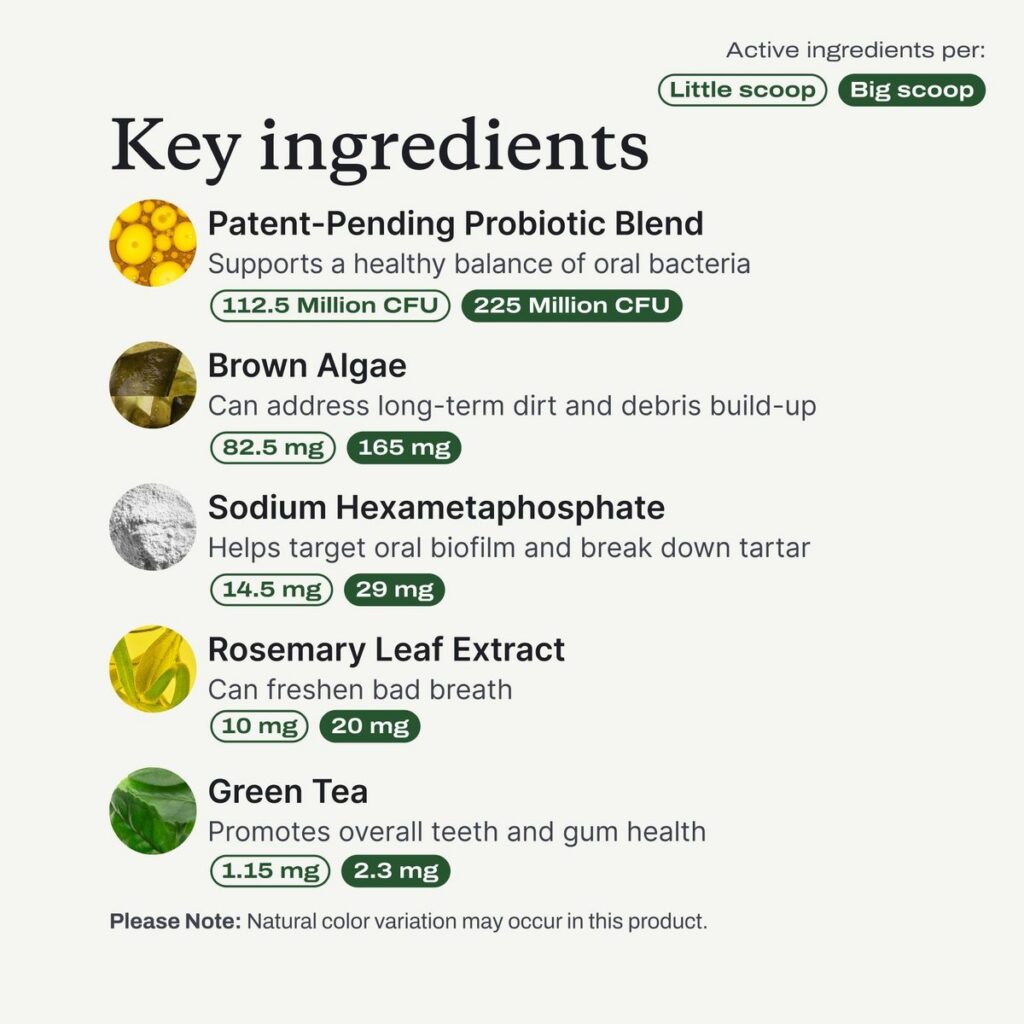
Formulas like ProBright Advanced utilize targeted probiotics, such as Lactobacillus reuteri, to help balance the oral microbiome. By introducing beneficial bacteria into the mouth, these ingredients help crowd out the volatile sulfur compound-producing bacteria that are primarily responsible for halitosis, commonly known as bad breath.
Sodium Hexametaphosphate (SHMP)
This compound is a clinically recognized calcium binder. As a dog chews and swallows food coated in the powder, the SHMP binds to the free calcium circulating in the dog’s saliva. By sequestering this calcium, the compound makes it unavailable to bind with soft plaque, thereby inhibiting the transition of plaque into hardened tartar.
Brown Algae (Ascophyllum nodosum)
This specific seaweed is a common cornerstone of natural dental powders. When digested, the active compounds in Ascophyllum nodosum are absorbed into the bloodstream and eventually secreted back into the mouth via the saliva. Controlled canine studies have shown that the presence of these compounds in saliva is associated with a systemic reduction in plaque and calculus accumulation over time.
Supporting botanicals, such as rosemary leaf extract and decaffeinated green tea, are often added to these commercial formulations. These ingredients provide antioxidant support and temporary breath-freshening benefits, though they serve as secondary supports to the primary bacterial and chemical mechanisms.
Evaluating the Clinical Evidence
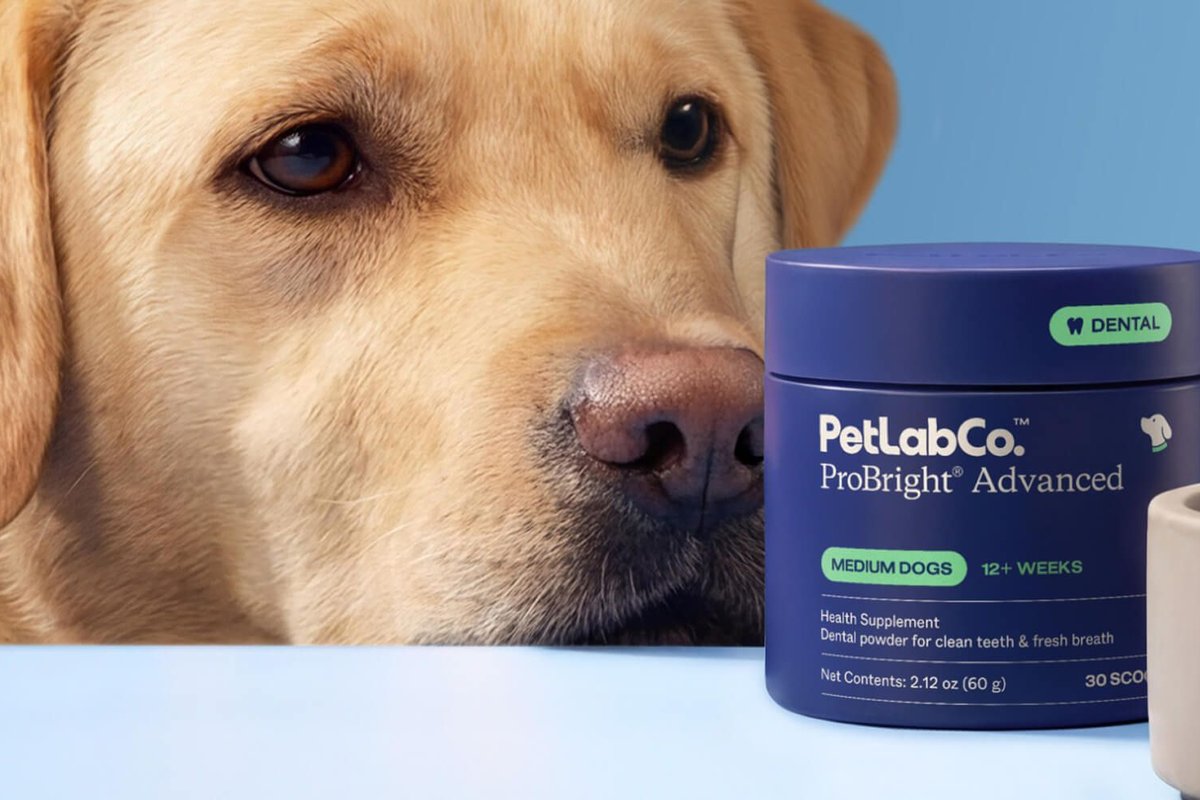
While the theoretical science behind these ingredients is robust, veterinary professionals emphasize the importance of looking at product-specific clinical data. Many dental care supplements rely on generic ingredient studies, but PetLabCo. has reported two clinical studies specifically evaluating its ProBright Advanced formula.
The first study focused on breath quality over a 28-day period. Researchers measured the levels of volatile sulfur compounds—the chemical byproduct of oral bacteria that causes bad breath—in dogs receiving the daily supplement. The study reported a measurable reduction in these compounds by the end of the four-week trial, indicating a positive shift in the oral bacterial balance.
The second study evaluated the formula’s impact on plaque accumulation over a longer timeline of 90 days. In this trial, dogs receiving the daily dental powder showed a lower plaque index score compared to the control group that did not receive the supplement.
Veterinarians point out that while these brand-reported studies are valuable, it is equally important to recognize what they did not measure. The trials did not demonstrate that the powder could dissolve or remove existing, mineralized calculus, nor did they evaluate the product’s impact on active subgingival periodontal disease. The findings align with the chemical mechanism of the ingredients: they work prospectively to reduce new plaque formation and freshen breath, rather than retroactively reversing structural dental damage.
Comparing Powders, Brushing, Water Additives, and Chews
No single dental care format is a universal solution, and a comprehensive home-care routine often combines multiple methods. To understand where dental powders fit, it is helpful to compare them to other common oral hygiene practices.
Daily brushing remains the gold standard of veterinary home care. Recommended by the American Animal Hospital Association (AAHA) as the most effective way to prevent periodontal disease, brushing uses mechanical friction to remove soft plaque from the visible surfaces of the teeth. Its primary limitation is compliance, as many dogs resist brushing, and many owners find it difficult to maintain daily.
Dental powders offer an accessible alternative or supplement. By acting chemically and biologically, they require no physical cooperation from the dog beyond eating their normal meal. While they cannot physically scrub the teeth or dissolve existing tartar, they are highly effective at slowing down new plaque mineralization and improving breath.
Water additives represent another passive care option. These liquid formulas are poured into the dog’s drinking bowl and work as the dog drinks. While they reach the entire mouth passively, their primary drawback is dosage control, as the amount of active ingredient a dog receives depends entirely on how much water they consume throughout the day. This can be particularly challenging in multi-dog households.
Dental chews and sticks rely on a combination of mechanical abrasion and, in some cases, added chemical active ingredients. Chewing helps scrape plaque from some tooth surfaces, but these products add calories to a dog’s diet and carry a small risk of fractured teeth if the chews are too hard. Additionally, their efficacy is limited if a dog swallows the chew too quickly without thoroughly grinding it down.
Ultimately, none of these home-care methods can replace a professional veterinary dental cleaning performed under anesthesia. Anesthetized scaling is the only method capable of safely removing hardened tartar from both the visible crown of the tooth and, crucially, the space below the gumline where periodontal disease actually develops.
The Question of Regulatory Approval and DIY Alternatives
When researching dental products, pet owners frequently look for the Veterinary Oral Health Council (VOHC) seal of acceptance. The VOHC is an independent body that reviews clinical data submitted by manufacturers to verify that a product meets specific standards for reducing plaque or tartar.
While the VOHC publishes a list of accepted products—which includes various chews, diets, and water additives—dental powders are currently lightly represented on this voluntary registry. PetLabCo.’s ProBright Advanced does not carry the VOHC seal; instead, its clinical claims are supported by the two proprietary studies mentioned above. However, the brand maintains quality standards through National Animal Supplement Council (NASC) certification and independent third-party testing for purity and potency.
The lack of standardized commercial options in some areas has led some pet owners to consider homemade or DIY dental powders, which often blend bulk kelp, parsley, and baking soda. Veterinary professionals generally advise against these homemade alternatives. The primary issue is a lack of quality control and measurement precision. For example, the iodine content in raw kelp can vary dramatically from batch to batch, posing a potential risk to a dog’s thyroid health. Furthermore, DIY recipes lack stabilized probiotic strains and precise, weight-based dosing instructions, making commercial formulas a safer and more predictable choice.
Safety Guidelines, Side Effects, and Veterinary Cautions
For the vast majority of healthy dogs, commercial dental powders are safe and well-tolerated. The most common side effect is mild, transient digestive upset, such as slightly softer stools or a temporary reluctance to eat, which typically occurs during the first few days as the dog adjusts to the new flavor. To minimize this risk, manufacturers recommend introducing the powder during or immediately after a meal rather than on an empty stomach.
However, certain canine populations require caution and a veterinary consultation before starting a daily dental powder:
- Dogs with Thyroid Conditions: Because seaweed-based ingredients like brown algae (Ascophyllum nodosum) are naturally rich in iodine, they can impact thyroid function. Dogs with diagnosed thyroid disease or those predisposed to endocrine issues should avoid these supplements unless cleared by a veterinarian.
- Dogs with Liver or Kidney Disease: Impaired metabolic or excretory function can make it difficult for a dog’s body to process the active compounds and minerals present in daily supplements.
- Pregnant or Nursing Dogs: The safety of these active ingredient combinations has not been fully evaluated in breeding, pregnant, or lactating animals.
- Puppies Under 12 Weeks: Young puppies are still developing their digestive and metabolic systems, and most dental powders are explicitly labeled for use only in dogs 12 weeks of age and older.
Timeline of Results and Choosing the Right Format
Pet owners should expect a realistic timeline when introducing a dental powder to their dog’s routine. According to clinical data and veterinary experience, changes occur in stages:
During the first 28 days of daily use, owners typically notice an improvement in breath freshness. This is because the probiotic and botanical components begin working quickly to alter the balance of odor-producing bacteria in the mouth.
Between 60 and 90 days of consistent use, the systemic and chemical effects of the brown algae and sodium hexametaphosphate become more visible. Owners of dogs with clean teeth or mild plaque may observe that the teeth remain bright and free of new yellow or brown buildup. However, for dogs starting with heavy calculus, no visible change will occur on those hardened areas, reinforcing the need for an initial professional cleaning.
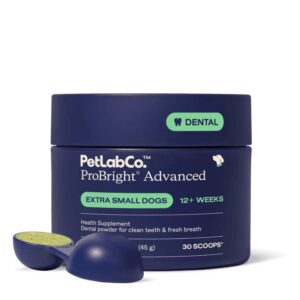
For owners choosing to implement a dental powder, products like PetLabCo.’s ProBright Advanced are typically offered in two primary packaging formats to suit different household routines:
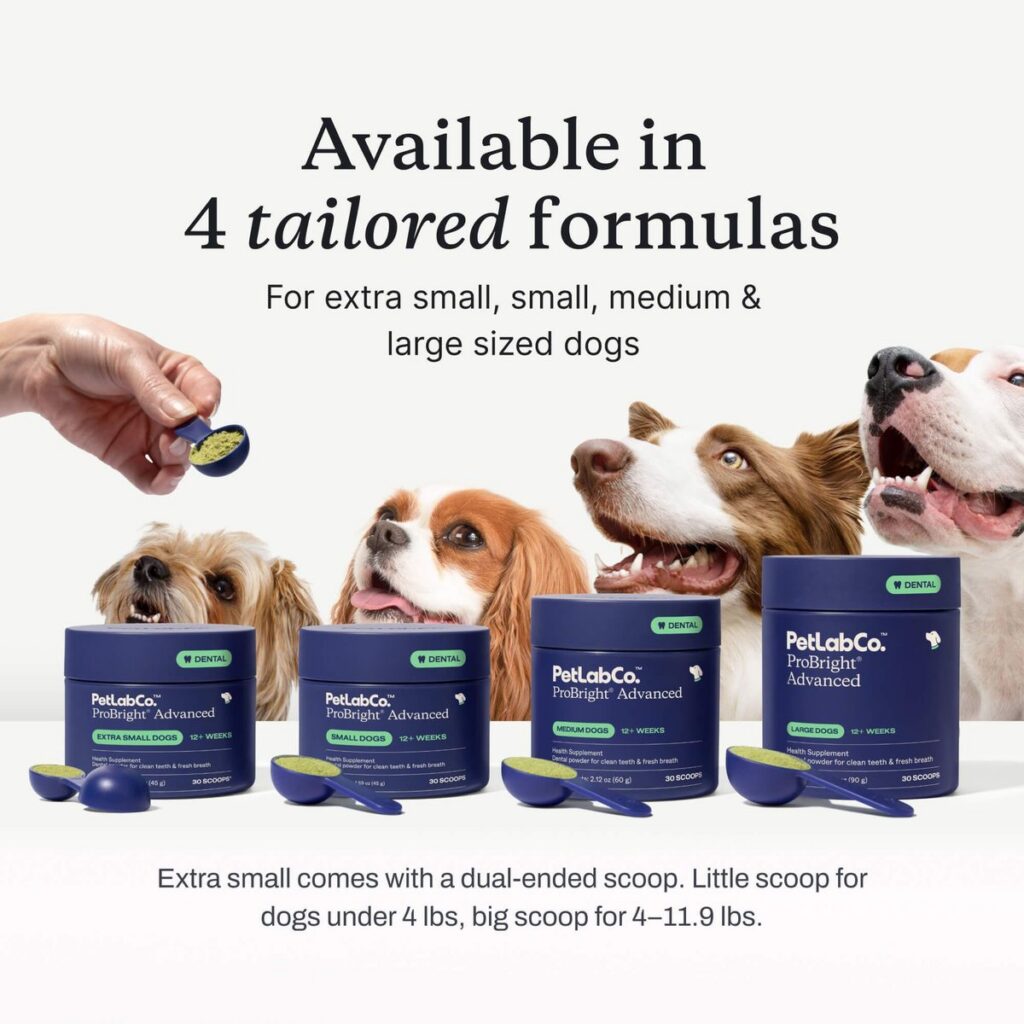
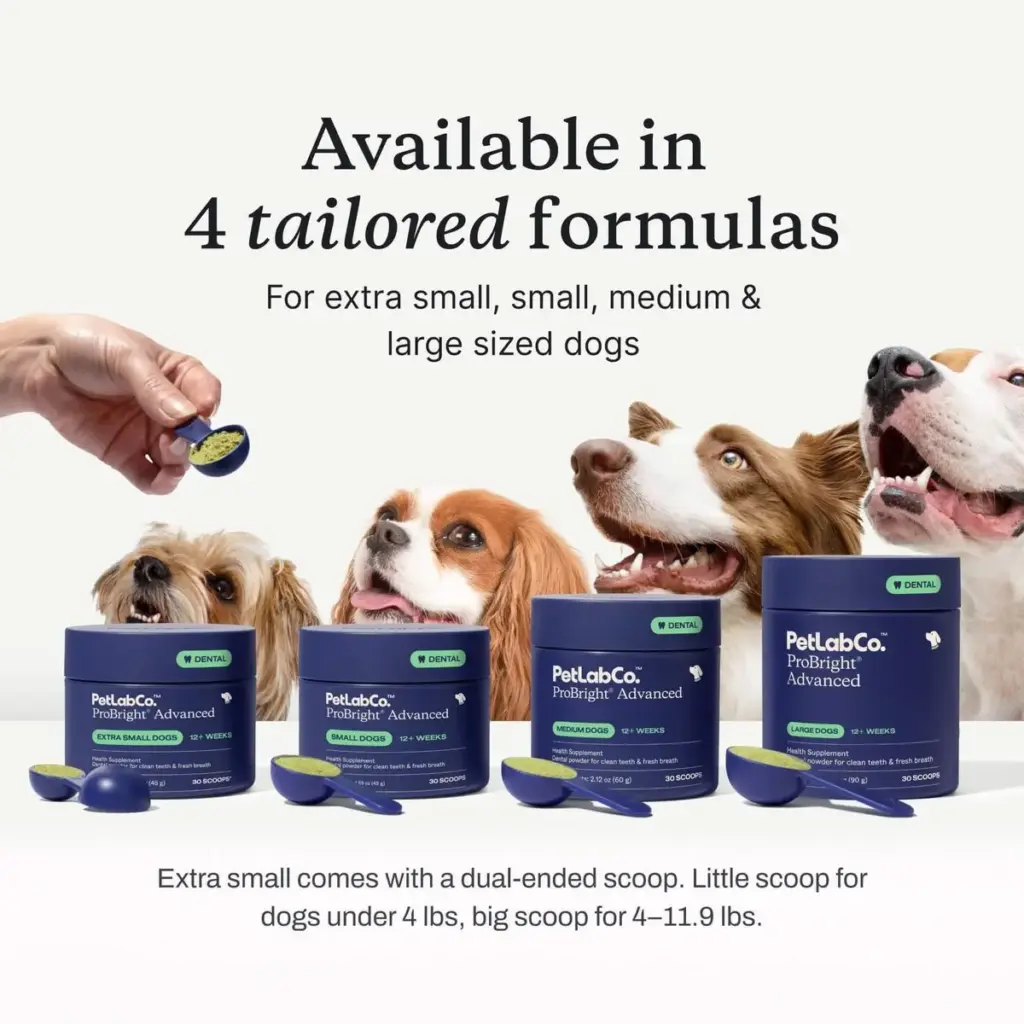
The standard ProBright Advanced Tub comes with a weight-matched scoop and is offered in four distinct tub sizes tailored to different dog weight bands. This format is generally the most cost-effective option for single-dog households where meals are prepared in a consistent location.
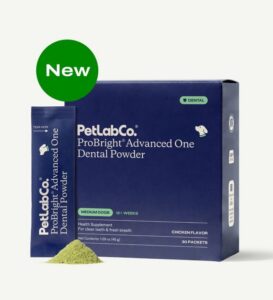
The ProBright Advanced One Packets contain the identical active formula but package it into a carton of 30 individually sealed, pre-measured daily packets. This format is designed for convenience, making it ideal for multi-dog households with different weight ranges, travel, boarding, or situations where pet sitters manage daily feedings.
Regardless of the chosen format, veterinary professionals emphasize that consistency is the single most important factor. Because these powders rely on daily biological and chemical interactions to disrupt plaque formation, skipping doses can quickly allow the oral microbiome to revert to its previous state, resetting the progress made toward cleaner teeth and fresher breath.