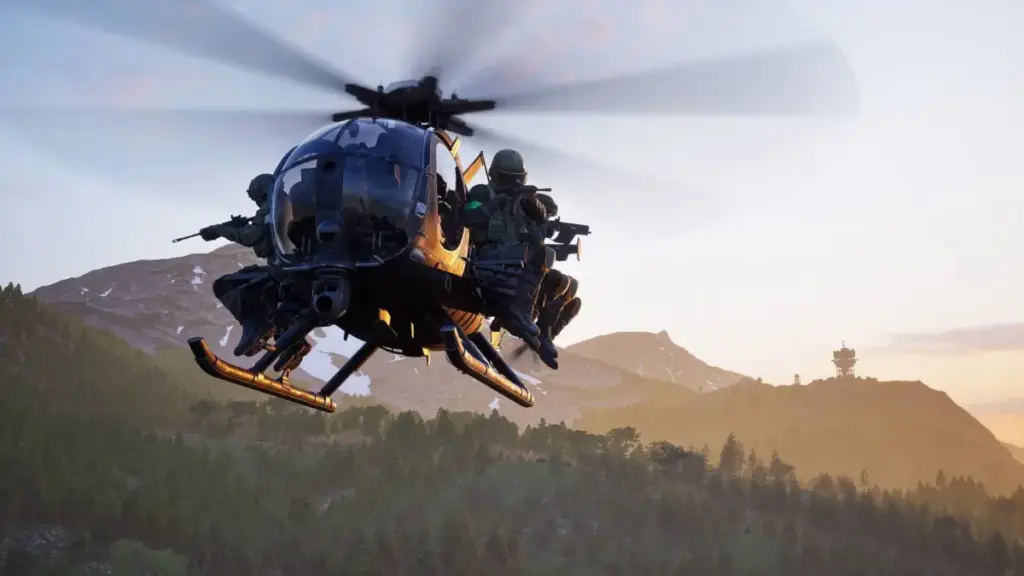
The year 2026 has provided no shortage of white-knuckle, high-pressure moments across the video game landscape. Players have spent the months fleeing from massive, grotesque monsters as Grace Ashcroft in Resident Evil Requiem, going toe-to-toe with Damien Webb deep within the dark sewers in 007 First Light, and feeling their grip dangerously slip away from the final, desperate handhold of a vertical cliff face in Cairn. Yet, according to players and critics alike, none of those cinematic set-pieces quite compare to the uniquely terrifying, nerve-wracking experience of simply trying to pilot a helicopter in Bulkhead and Team17’s multiplayer tactical shooter, Wardogs.
On paper, flying a helicopter in a contemporary video game sounds straightforward enough. In most first-person shooters, aerial vehicles serve a purely functional, mechanical purpose: they are meant to act as a swift, convenient taxi service to get your squad from point A to the heart of the battlefield. Gamers have spent decades mastering the skies in titles spanning Grand Theft Auto 5, navigating complex aerial dogfights and transport routes across the Battlefield franchise, and soaring through sandbox maps in the Just Cause series. But Wardogs operates under an entirely different philosophy, introducing a level of mechanical fidelity and consequence that fundamentally transforms how players interact with the sky.
The reason behind this steep learning curve comes down to authentic design choices made during development. Speaking in an interview at Gamescom 2026, Bulkhead senior producer Kane Allard shed light on the meticulous approach the team took toward the game’s vehicular mechanics. A major pillar of Wardogs is its heavy emphasis on vehicles, and the development team was determined to make them feel as realistic and authentic as possible. To achieve this standard, Bulkhead brought in an actual aeronautical engineer to design the baseline mechanics for the helicopters.
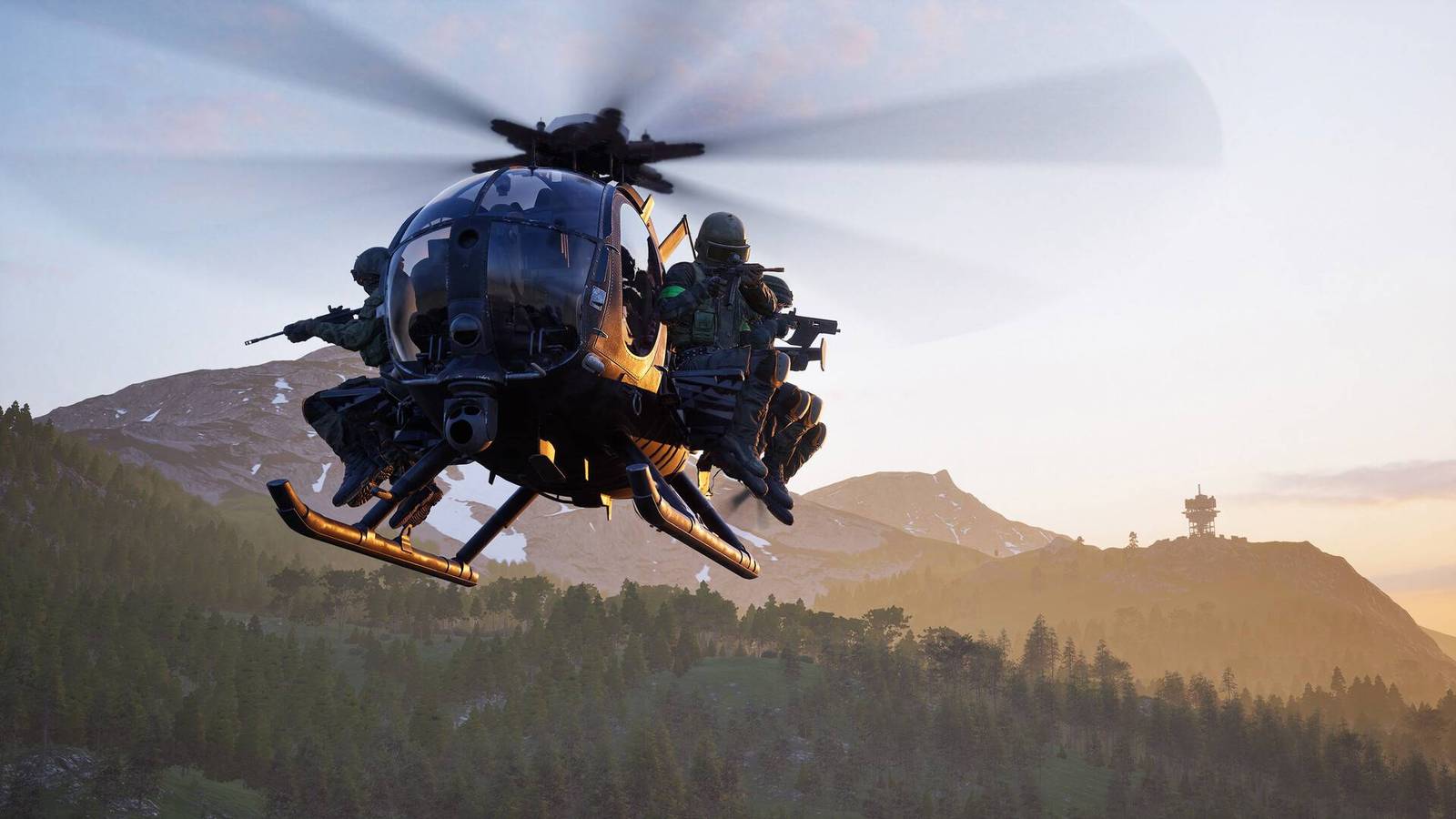
According to Allard, this collaboration was intended to give the aircraft real weight, physical presence, and authenticity, ensuring that mastering them would feel genuinely rewarding. It provides the helicopters with a distinct skill ceiling, allowing dedicated players to practice, learn the nuances of flight, and eventually become skilled pilots.
Unsurprisingly, this engineering-first approach makes them remarkably finicky to handle. For players willing to spend hours practicing maneuvers in the firing range, ferrying allies to the front lines eventually becomes second nature. However, for newcomers, the initial experience of taking to the skies is nothing short of a nightmare. Specifically, the act of landing proves to be the ultimate test of nerves. While keeping the bird airborne and moving forward is manageable, bringing the aircraft to a swift, efficient, and safe stop while allowing panicked passengers to disembark cleanly is a perilous endeavor.
The anxiety of flight in Wardogs extends far beyond the technical mechanics of handling the controls; it is compounded by the staggering stakes involved. Every time a pilot takes off, they carry the weight of a significant financial and tactical investment. A standard helicopter in the game costs roughly $6,250 of in-game currency to purchase and deploy. If a pilot miscalculates a landing, clips a tree, or takes heavy enemy fire and crashes, that investment vanishes instantly, alongside every trusting passenger on board.

Unless a teammate happens to be nearby and capable of pulling off a daring rescue—a scenario that remains entirely unlikely unless the crash occurs safely inside a designated control zone—the consequences multiply exponentially. The combat kits and loadouts equipped by all the passengers are completely lost in the wreckage, resulting in a collective financial loss scaling well into the tens of thousands.
In a tight-knit tactical environment like Wardogs, social consequences follow financial ones. After a catastrophic crash caused by pilot error, teammates are understandably hesitant to trust that individual with the controls again. Survivors are forced to sit quietly as passengers on someone else’s chopper with their tail between their legs, stripped of their pilot status until they can earn back the trust of the squad.
While some members of the community have embraced the challenge, treating aerial transport as a high-skill art form—showcasing precision landings and daring evasive maneuvers online—others find the psychological toll entirely too high. For many players, the sheer pressure of keeping teammates alive and multi-thousand-dollar investments intact outweighs the thrill of flight. For those individuals, sticking firmly to ground transport remains the preferred choice, reserving helicopter pilot duty exclusively for moments when a dangerously elevated heart rate is part of the desired experience.