

Sometimes, the secret to transforming a standard weeknight meal into something extraordinary does not require hours of complex preparation, an exhaustive list of specialty ingredients, or advanced culinary techniques. Often, all it takes to make dinner feel genuinely special is a single, large, and boldly flavored piece of protein. In the world of home cooking, few methods achieve this transformation as effortlessly or with as much visual and sensory impact as high-heat broiler cooking applied to a glossy, richly glazed centerpiece.
A prime example of this culinary philosophy is a newly highlighted recipe featuring a salty-sweet salmon fillet coated in a glistening, teriyaki-style reduction. Rather than relying on store-bought bottled sauces that often contain artificial preservatives and an imbalance of heavy corn syrup, this approach turns to a remarkably quick, homemade glaze crafted from just four pantry staples: dark brown sugar, soy sauce, toasted sesame oil, and unseasoned rice vinegar.
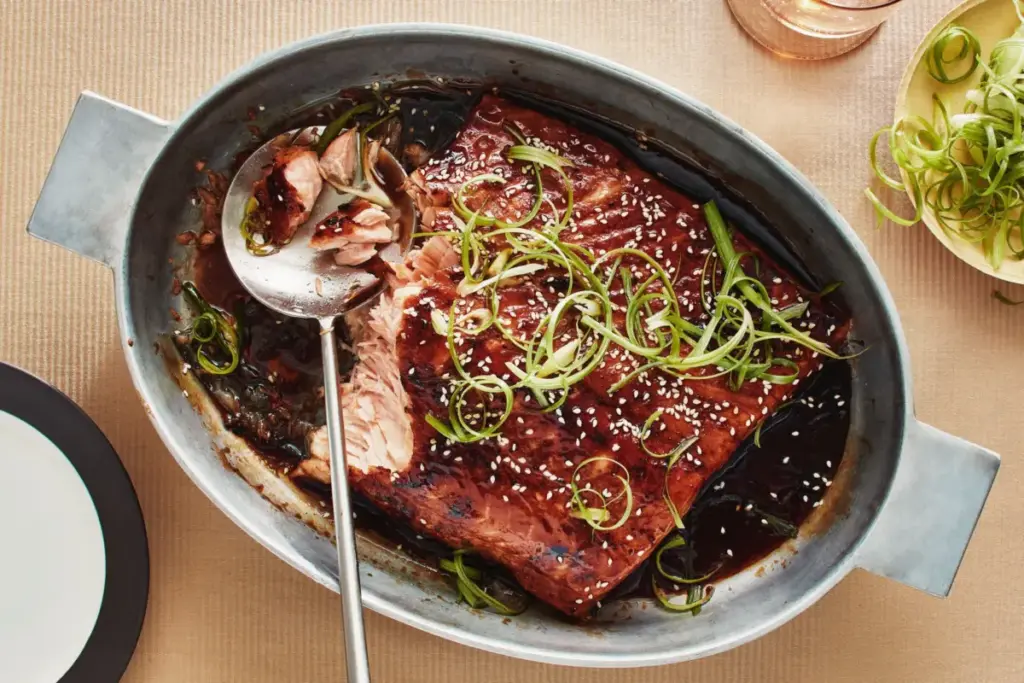
The magic of the dish lies in its interaction with high heat. As the salmon cooks directly under the broiler, the sugars in the glaze caramelize rapidly, creating a deeply savory, slightly charred exterior while sealing in the moisture of the fish. This dual-action cooking method delivers a smoky, complex flavor profile that typically requires much more time and equipment to achieve.
The Mechanics of Broiler-Glazed Seafood
The technique relies heavily on the aggressive, direct radiant heat of an oven broiler, which mimics the effect of an open grill indoors. According to culinary notes accompanying the recipe release, the salmon is brushed with the homemade glaze in two distinct rounds. The first application coats the raw fish, allowing the flavors to penetrate slightly as the heat begins to gently warm the flesh. As the sugars and soy sauce reduce under the intense heat, a second application applied midway through the cooking process builds an exceptionally glossy, sticky lacquer that catches the light and intensifies the savory-sweet contrast.
While the featured recipe specifically calls for one large, impressive center-cut salmon fillet weighing between one and a half to two pounds, the method is inherently flexible. Home cooks looking to adapt the dish for different household sizes or preferences can easily substitute smaller individual fillets or pivot entirely to a sturdy white fish such as cod or halibut.
Culinary experts note, however, that adapting the recipe requires careful attention to cooking times. Because smaller pieces of fish or leaner white varieties have different densities and surface areas compared to a thick, fatty center-cut of salmon, they will cook significantly faster under the broiler. Keeping a vigilant eye on the oven prevents the delicate proteins from drying out or burning prematurely before the interior reaches proper flakiness.
Minimalist Ingredients, Maximum Flavor
The simplicity of the ingredient list underscores a broader culinary trend toward streamlined, high-impact cooking that values pantry staples over complicated shopping lists. The base requires approximately one-third of a cup of dark brown sugar, packed tightly to ensure the right balance of molasses notes, paired with a quarter cup of standard soy sauce to provide depth and umami. Two tablespoons of unseasoned rice vinegar introduce a necessary acidity to cut through the richness of the fish and the sweetness of the sugar, while two teaspoons of toasted sesame oil finish the liquid mixture with a nutty, aromatic warmth.
Before meeting the broiler, the fish is seasoned simply with kosher salt to enhance its natural flavors. Once the cooking process is complete and the glaze has achieved its characteristic bubbling, charred edges, the dish receives a quick, vibrant garnish. Thinly sliced scallions add a sharp, clean bite and a pop of green color, while toasted sesame seeds provide a subtle crunch that contrasts with the tender, flaky texture of the glazed fish.
This focus on bold, streamlined flavors builds upon a growing portfolio of creative glazed salmon variations featured by culinary publications. Among the related dishes that have captured the attention of home cooks are hot honey-glazed salmon, which leans into the fiery sweetness of chili-infused honey; green curry-glazed salmon, which incorporates the aromatic complexity of Southeast Asian pastes; and slow-roasted salmon with harissa, which trades high-heat broiling for a gentle, spice-forward roasting method that melts the fish into buttery tenderness.
Ultimately, whether prepared as a single grand centerpiece for a dinner party or adapted into smaller portions for a fast Tuesday evening meal, this style of broiled, glazed seafood demonstrates that exceptional dining experiences are often built on a foundation of smart techniques and uncomplicated, high-quality ingredients. With dinner wrapped up in a matter of minutes, the approach offers a practical yet elegant solution for anyone looking to elevate their everyday cooking routine without spending hours in the kitchen.