



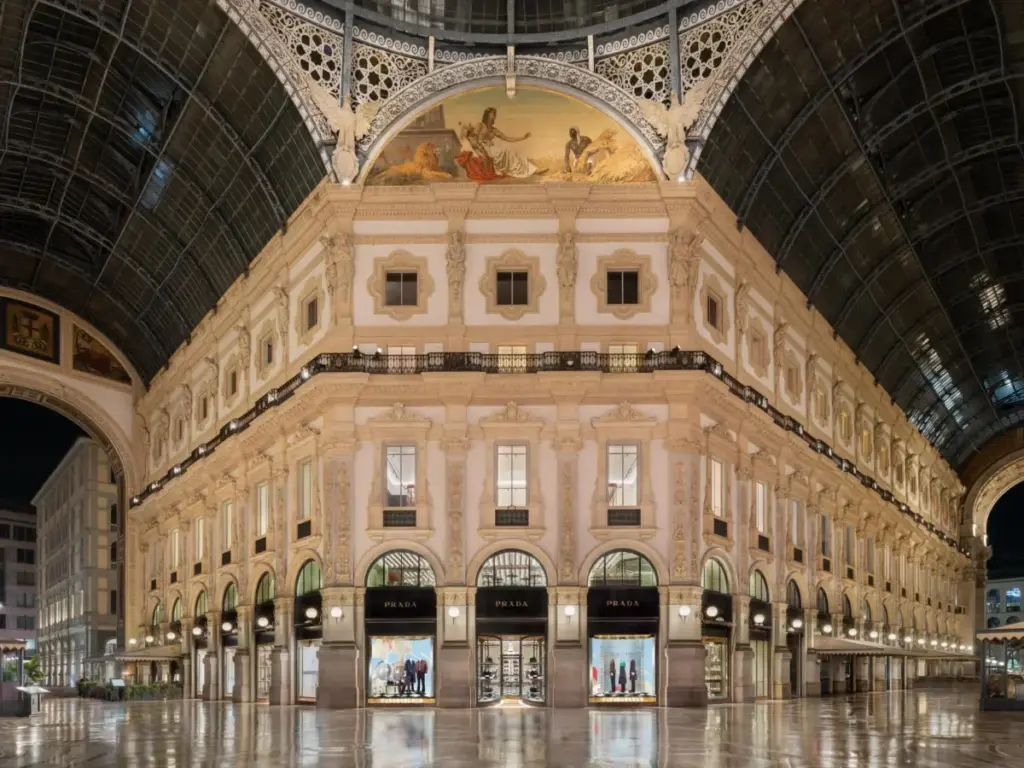
Envision eight floors of Prada: a multi-story complex in the heart of Milan, located right next to the spectacular Duomo di Milano cathedral. The vast boutique houses everything from the Bonnie leather bag you have been eyeing for the office and the Nubuck mules you would like to slip your feet into now that fall has arrived, to the Paradoxe Eau de Parfum you need to restock and the sleekly packaged Lip Oil your friend has been raving about.

That vision is now a reality. Prada Galleria recently opened in Milan’s legendary 19th-century shopping complex, the Galleria Vittorio Emanuele II. While it may serve as Europe’s new go-to destination for all things Prada, this sprawling shopping landmark is far more than just a flagship retail store. From its deeply meaningful location to its thoughtfully curated exhibitions, the expansive space gives visitors an unprecedented glimpse into the heritage, craftsmanship, and history behind the iconic label and its world-famous logo.
The new iteration of the Prada store taps directly into a venerable old tradition that dates back more than a century. When the luxury label was first founded in 1913 by brothers Mario and Martino Prada, it was initially called "Fratelli Prada," which translates to "Prada brothers" in Italian. The pair’s very first leather goods shop was located right inside this exact architectural masterpiece, the Galleria Vittorio Emanuele II. Returning to this historic birthplace represents a poetic homecoming for the brand, intertwining its contemporary retail ambitions with its deep-rooted Milanese origins.

In the 1970s, Miuccia Prada, Mario’s visionary granddaughter, took the reins of the luxury label. Still serving as the head designer of Prada—as well as the founder of its successful sister brand, Miu Miu—Miuccia personally directed the creation of Prada Galleria. The massive project encompasses eight floors full of immersive displays, luxury merchandise, and experiential activations that invite visitors to fully immerse themselves in the multifaceted Prada universe, exploring its past, present, and future all under one roof.
The historic site of the original 1913 Fratelli Prada store is now the home of Prada Donna, the brand’s expansive womenswear boutique. This space has been meticulously enlarged to nearly double its previous display space, allowing the house to present its comprehensive women’s collections alongside an elevated selection of home products, beauty offerings, and an extended travel collection. Connecting this womenswear hub to the menswear section is a unique underground passageway. Named the Passaggio Segreto—meaning "secret passage" in Italian—this subterranean route is not merely a practical tunnel, but an exploratory exhibition in itself. It is thoughtfully lined with historical touchstones and pivotal moments from Prada’s decades-long history, guiding shoppers beneath the historic arcade as they transition from one side of the brand’s universe to the other.

Continuing through the complex, a visit to Prada Galleria remains incomplete without a stop at the iconic Milanese pastry shop, Marchesi 1824, which is situated directly above Prada Uomo. Established in the city centuries ago, the legendary café offers a taste of traditional Milanese confectionery excellence within the modern luxury setting. Rising above the café is the Pradasphere, a permanent exhibition dedicated entirely to the brand and its rich origin story. Rare artifacts sourced directly from the brand’s deep archives, as well as from its long-standing collaborations across art, architecture, film, sport, and global culture, are on public view here—many for the very first time. These carefully preserved objects chronicle the remarkable evolution of the Prada world from a regional leather goods shop into a global cultural powerhouse. However, visitors wishing to explore this archival treasury must plan ahead, as registration in advance is required to view the exhibition.
Complementing the permanent archives is an invitation-only exhibition space known as Appartamento. This secluded area showcases a carefully curated selection of works by renowned German photographer Andreas Gursky. His striking contemporary art pieces are thoughtfully paired alongside antique Italian furniture within an apartment setting that has been meticulously styled and furnished to mimic opulent 18th-century interiors, creating a captivating dialogue between modern visual culture and historical European design.

The cultural significance of the new destination was underscored just days after its grand launch, when Prada Galleria played host to this year’s high-profile Vogue World event. By welcoming the international fashion community to its halls, the venue cemented its status as a dynamic space that effortlessly stands at the intersection of the commercial and the cultural.
From its striking architectural facades to its rooms brimming with products straight from the global catwalks alongside precious mementos from decades past, Prada Galleria stands as a living testament to the ever-evolving legacy of the Italian fashion house. While shoppers might initially head to the magnificent complex to purchase the printed silk scarf spattered with flowers and polka dots spotted on a favorite influencer, or the logo-adorned wool top from the runway that is destined to define autumn and winter layering, they ultimately leave with far more than a branded shopping bag. Visitors depart having been privy to an intimate history lesson on a pioneering house that has not only shaped modern style, but has also extended its creative reach to design lunar spacesuits and inspire one of the biggest fashion-meets-fiction literary hits of our time.