

A casual vacation photograph shared on the internet has led to a remarkable scientific breakthrough after a perceptive botanist recognized what appeared to be an entirely undocumented species of plant growing in the rugged terrain of southern Portugal.
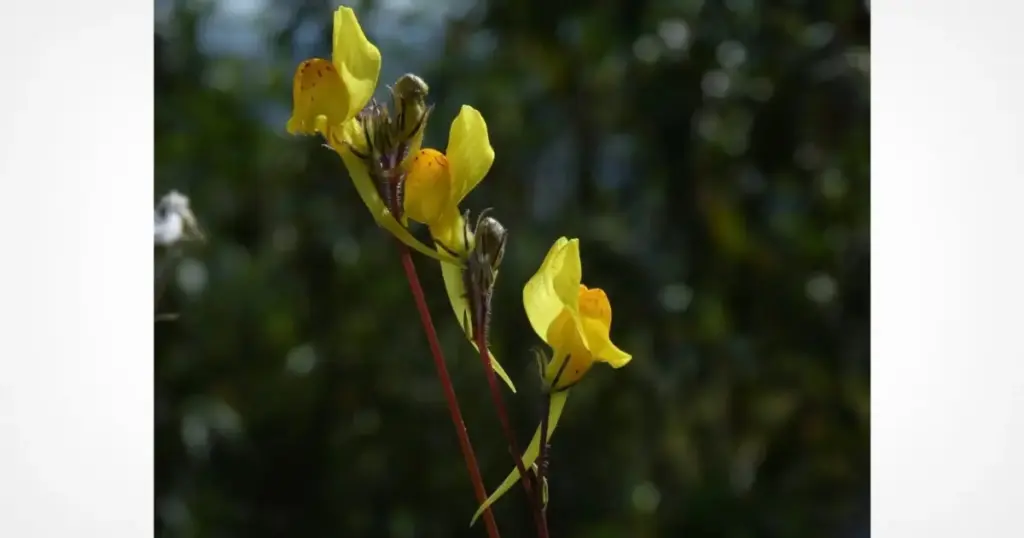
The extraordinary chain of events began when an unnamed German tourist traveled to Monchique, a picturesque town nestled within Portugal’s scenic Algarve region. During her travels in March 2023, she encountered an unusual wildflower, pausing to capture its vibrant appearance with her camera. Like countless travelers before her, she later uploaded the image to iNaturalist, a popular and robust online platform designed for members of the general public, nature enthusiasts, and citizen scientists to record and share their observations of plants, insects, and wildlife from around the globe.
Weeks and months passed as the photograph sat quietly within the vast digital repository of the platform. However, the image eventually crossed paths with João Farminhão, a prominent Portuguese botanist and researcher affiliated with the University of Coimbra’s Centre for Functional Ecology. Reviewing user submissions on the platform, Farminhão was immediately struck by the visual characteristics of the plant captured in the tourist’s frame. He strongly suspected that the unusual flora might represent a previously unidentified species of toadflax, a delicate and specialized group of flowering plants known for their distinct spurred petals.
Intrigued by the possibility, Farminhão decided to investigate further. A year after the tourist initially snapped the photo during her Portuguese holiday, the botanist traveled directly to Cerro do Castelo de Alferce, a historic and geographically rich site located in Monchique. Upon scouring the terrain, his professional suspicions were confirmed when he located a small, isolated population of the plant thriving in its natural habitat.
Detailed botanical analysis soon revealed a stunning reality: the species had never previously been documented, described, or cataloged within the annals of scientific literature, as reported by the Portuguese newspaper Público. In honor of the specific locality where the resilient population takes root, the newly discovered plant was officially named Alferce ansarina, or Linaria alfercensis.
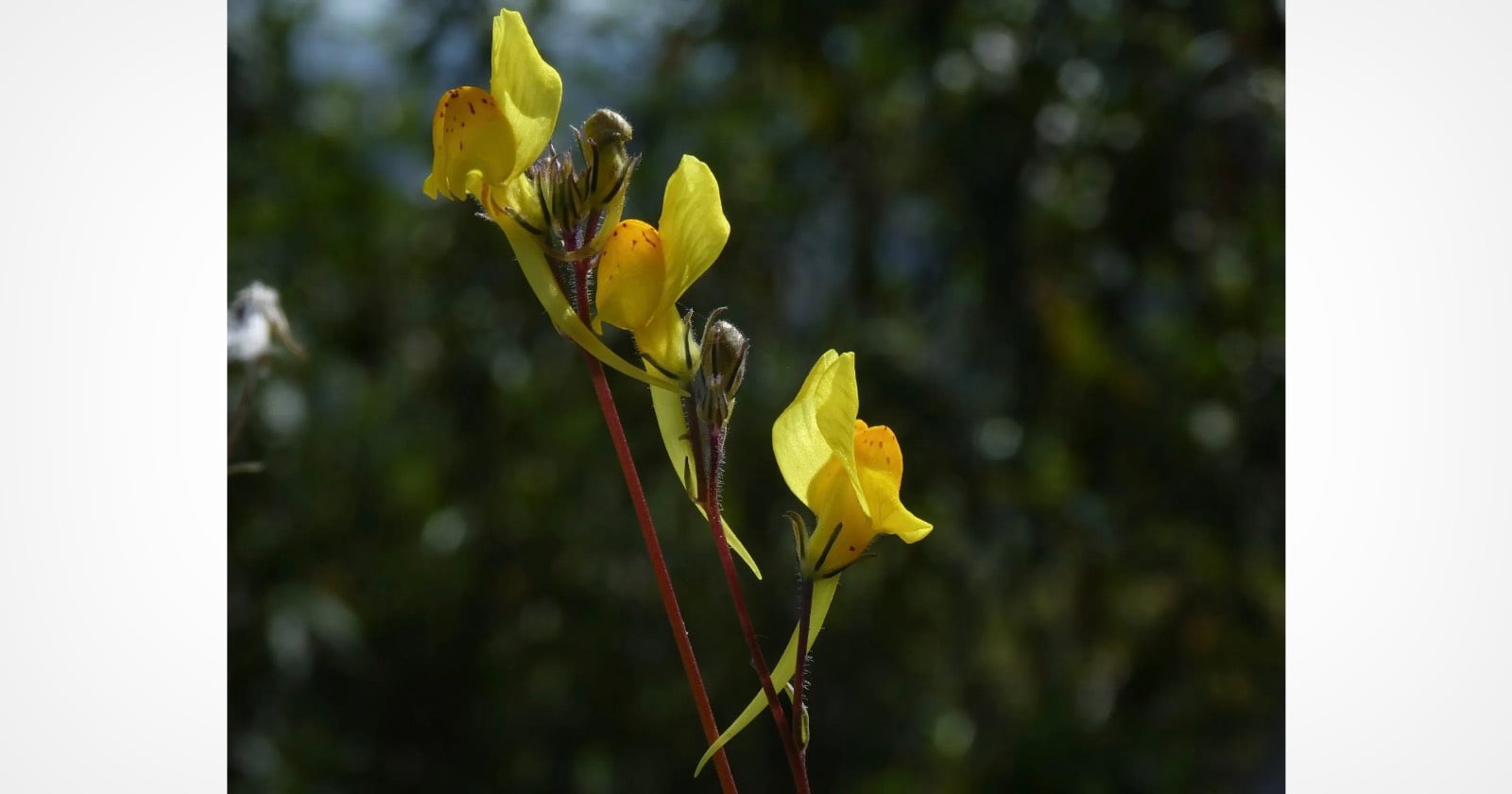
The newly identified species is visually distinguished by several unique botanical traits that set it apart from its closest known relatives in the plant kingdom. Its delicate flowers feature striking, speckled yellow petals accented by two distinct dark stripes running along the underside. Furthermore, unlike closely related species that often sprawl or trail along the ground, Linaria alfercensis exhibits an erect growth habit, standing tall and straight against the backdrop of its native soil.
Following the initial discovery in the field, Farminhão spearheaded a comprehensive scientific study of the plant in collaboration with an elite team of academic researchers from the universities of Lisbon and Barcelona, alongside specialists from Madrid’s prestigious Royal Botanical Garden. The collaborative research findings detailing the discovery and classification of Linaria alfercensis were formally published in a scientific journal, bringing international attention to the remote corner of the Algarve.
Despite the excitement surrounding the discovery, the research team has sounded a serious alarm regarding the long-term survival of the plant. Because field surveys revealed that only a few dozen individual flowering plants are currently known to exist in the wild, the researchers have officially proposed that Linaria alfercensis be classified under the conservation status of “Endangered.”
The survival of the fledgling species faces multiple pressing environmental threats in the Monchique area. Among the primary concerns cited by researchers are the encroachment of commercial eucalyptus plantations, the rapid spread of invasive mimosa acacia, and the ever-present, devastating risk of seasonal wildfires that frequently sweep through the region. In response to these vulnerabilities, local environmental officials have already begun introducing targeted conservation and protection measures at the specific site where the plant’s population is heavily concentrated, aiming to shield the fragile flora from human and environmental pressures.
The serendipitous discovery underscores a fascinating reality in the modern era of exploration and citizen science: photographers, travelers, and nature lovers frequently do not realize the profound significance of what they have captured through their lenses until long after they have pressed the shutter. In an age where digital cameras and smartphones are ubiquitous, crowdsourced platforms like iNaturalist serve as critical bridges between casual observation and professional scientific research.
This recent botanical find mirrors other remarkable instances in recent months where photographic serendipity has rewritten scientific understanding. Earlier this year, two nature photographers unexpectedly made global headlines when they captured photographic evidence of a Rusty Lark, a small and unassuming bird native to Africa’s harsh Sahel region that had been widely thought by ornithologists to be completely extinct for nearly a century. Their striking images provided the first definitive, hard record of the species in an astonishing 94 years, marking the very first known photographs of the elusive creature.
In a similarly unexpected wildlife documentation event previously reported by PetaPixel, a pair of photographers out in the field managed to document the first-ever instance of humpback whales engaging in sexual intercourse. Adding an extra layer of unprecedented behavior to an already historic marine observation, researchers noted that the intimate encounter took place entirely between two males, further demonstrating how much remains hidden in the natural world, waiting simply for a lens to catch it.