

Stem cell transplants may hold the key to repairing severe brain damage caused by strokes, according to groundbreaking new research conducted by scientists at the University of Zurich. In meticulous experiments involving mice, the experimental treatment successfully generated brand-new neurons, restored motor function, and triggered a wide cascade of critical brain repair mechanisms. This milestone offers a deeply promising step forward in the quest to develop effective regenerative treatments for neurological damage that has long been considered permanent.
Stroke remains an extraordinarily prevalent medical crisis worldwide, affecting roughly one in four adults over the course of their lifetime. The physical and cognitive toll is immense, with approximately half of those who survive a stroke left facing lasting, often permanent disabilities such as debilitating paralysis or chronic difficulty speaking.
These severe disabilities occur because a stroke abruptly deprives critical regions of the brain of oxygen-rich blood or causes dangerous internal bleeding that rapidly destroys delicate brain cells. Once those specialized cells are lost, the medical community has traditionally viewed the resulting damage as completely permanent. This bleak outlook persists largely because modern medicine currently lacks established treatments capable of rebuilding complex, affected brain tissue once it has perished.
"That’s why it is essential to pursue new therapeutic approaches to potential brain regeneration after diseases or accidents," explains Christian Tackenberg, the Scientific Head of Division in the Neurodegeneration Group at the University of Zurich Institute for Regenerative Medicine.
Stem Cells Could Help Rebuild Brain Tissue
One of the most compelling possible approaches to this monumental medical challenge involves the use of neural stem cells. These remarkable precursor cells possess the unique ability to develop into multiple specialized types of cells found throughout the central nervous system.
A dedicated research team spearheaded by Tackenberg and postdoctoral researcher Rebecca Weber decided to put this therapeutic theory to the test. They carried out two comprehensive studies in close collaboration with a specialized research group headed by Ruslan Rust from the University of Southern California.
The results of their investigations strongly suggest that transplanted stem cells perform a far more complex and beneficial role than simply acting as passive replacements for the neurons that were tragically wiped out during a stroke.
"Our findings show that neural stem cells not only form new neurons, but also induce other regeneration processes," Tackenberg notes, highlighting the multifaceted nature of the cellular response.
Human Stem Cells Become New Neurons
To explore this potential, the researchers utilized advanced human neural stem cells capable of differentiating into various functional cells of the nervous system. Crucially, these cells were generated directly from induced pluripotent stem cells. These versatile cells are created in a laboratory setting by reprogramming ordinary human somatic cells—such as routine skin or blood cells—so that they completely regain the embryonic-like ability to develop into a wide array of different cell types.
The scientific team then induced permanent strokes in laboratory mice, carefully engineering the resulting brain damage so that it closely mirrored the critical physiological features and damage patterns typically observed in human stroke patients.
Because the stem cells being introduced into the subjects were of human origin, the experimental mice had to be genetically modified in advance. This vital step ensured that their immune systems would not mount an aggressive defense and reject the foreign human tissue.
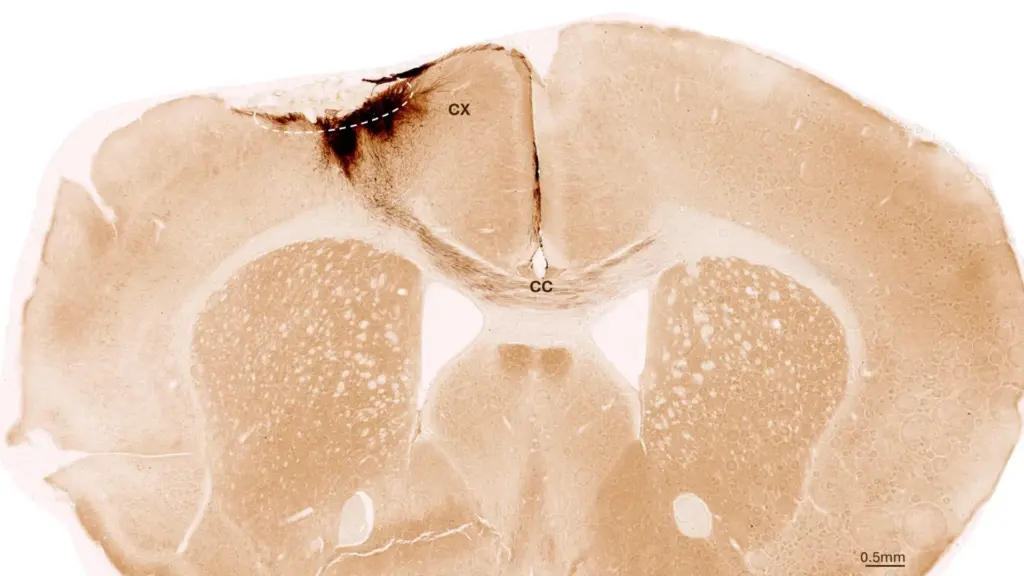
One week after the artificial strokes were induced, the researchers carefully transplanted the human neural stem cells directly into the heavily damaged regions of the mice’s brains. They then tracked the subsequent biological developments using cutting-edge imaging techniques alongside detailed biochemical analyses.
"We found that the stem cells survived for the full analysis period of five weeks and that most of them transformed into neurons, which actually even communicated with the already existing brain cells," Tackenberg reports.
This demonstrated ability to form functional connections with the brain’s surviving native cells is of paramount importance. Merely generating new neurons in a vacuum would not necessarily restore lost neurological function. To be truly therapeutic, these newborn cells must successfully integrate themselves into active, working neural networks.
The Brain Shows Multiple Signs of Repair
As the investigation deepened, the research team uncovered compelling evidence that the stem cell treatment had triggered a much broader, systemic healing response throughout the injured organ.
Alongside the newly integrated neurons, fresh blood vessels were observed forming within the previously starved, damaged brain tissue. Furthermore, harmful inflammatory processes became notably less intense, and the structural integrity of the critical blood-brain barrier showed marked improvement.
The blood-brain barrier functions as a tightly controlled, highly selective protective boundary that separates circulating blood from the sensitive extracellular fluid of the central nervous system. When this barrier is compromised by a stroke, it can contribute significantly to runaway inflammation and exacerbate secondary injury in the days that follow.
"Our analysis goes far beyond the scope of other studies, which focused on the immediate effects right after transplantation," Tackenberg explains, underscoring the comprehensive nature of the University of Zurich team’s work.
Most importantly, these profound biological changes at the microscopic level were directly accompanied by measurable, real-world improvements in the physical capabilities of the animals.
The stem cell transplantation successfully reversed the debilitating motor impairments caused by the strokes in the mice. To ensure objective accuracy, the researchers measured these encouraging physical improvements in part by utilizing sophisticated, AI-assisted analysis systems designed to study the subtle intricacies of the animals’ walking patterns over time.
Waiting a Week May Improve Stem Cell Therapy
In designing their experimental framework, the Zurich researchers kept the eventual goal of human treatment firmly in mind from the very beginning.
For instance, the specialized stem cells used in the studies were produced entirely without the use of reagents derived from animals. Avoiding animal-derived growth factors and materials is a vital consideration when developing advanced therapies intended eventually for human clinical use, as it significantly reduces potential biological safety hazards and regulatory approval hurdles down the road.
To achieve this, the University of Zurich team established a strictly defined, highly reproducible production protocol developed in close collaboration with the Center for iPS Cell Research and Application at Kyoto University in Japan.
Beyond manufacturing protocols, the second study also revealed a crucial insight regarding the optimal timing of the intervention. The researchers discovered that the stem cell transplantation yielded substantially better therapeutic results when it was performed precisely one week after a stroke occurred, rather than being administered immediately in the acute aftermath.
This unexpected grace period could make the therapeutic approach considerably easier to implement in a busy, high-stress clinical setting. In a real-world hospital scenario, attending physicians would have more breathing room to carefully prepare and schedule the specialized treatment, rather than needing to scramble to deliver delicate brain surgery during the chaotic, immediate emergency period following a stroke event.
Researchers Work Toward Human Trials
Despite the overwhelmingly encouraging findings generated thus far, the researchers emphasize that several critical scientific and technical obstacles must still be carefully addressed before the therapy can be cleared for widespread clinical testing in human patients.
"We need to minimize risks and simplify a potential application in humans," Tackenberg notes.
One primary safety concern is the theoretical risk of uncontrolled stem cell proliferation or tumor formation inside the delicate environment of the brain. To counter this, Tackenberg’s research group, once again collaborating with Ruslan Rust, is currently developing a specialized biological safety switch designed to actively prevent any such runaway growth.
Simultaneously, the research team is actively exploring a far less invasive method to deliver the therapeutic cells to their target destination.
Rather than relying on direct surgical transplantation of stem cells straight into the brain tissue—a procedure that carries inherent medical risks—the scientists are working on an innovative endovascular injection approach. This alternative technique would involve delivering the specialized cells safely through the body’s existing blood vessels, potentially proving to be vastly more practical and patient-friendly than performing traditional brain surgery.
There is already encouraging precedent for successfully transitioning induced stem cell therapies out of the laboratory and into human clinical trials. Initial clinical trials utilizing induced stem cells to treat Parkinson’s disease are already underway in Japan, as Tackenberg points out.
"Stroke could be one of the next diseases for which a clinical trial becomes possible," he concludes.