


In the high-stakes, notoriously grueling world of hospitality, getting people through the door has always been the ultimate hurdle. Traditionally, new bars, restaurants, and cafés relied on glossy PR campaigns, whisper networks, food critics, and traditional media write-ups to drum up opening-week excitement. But as the media landscape shifts and digital platforms prioritize raw, serialized storytelling, a new generation of culinary entrepreneurs is bypassing the old gatekeepers entirely. Instead, they are turning their buildouts, permitting nightmares, and design debates into addictive, long-form social media sagas, transforming the messy reality of opening a food business into modern reality television.
This phenomenon represents the final installment of "Getting on the Map," a series highlighting how creative bars and restaurants stand out in an increasingly crowded hospitality scene. Across Instagram, TikTok, YouTube, and Substack, owners of restaurants, coffee shops, grocery stores, and bars are documenting the blood, sweat, and construction dust of their pre-opening days. In doing so, they are building deeply engaged, parasocial audiences long before a single plate is dropped or a single cocktail is poured.
Take Michael Bishop-Myers, a longtime New York City bartender preparing to open his very first Brooklyn bar, Susu’s. Kicking off a video series with an approachable, unvarnished introduction, Bishop-Myers invited the internet inside to watch the space take shape. In quick succession, viewers watched him deliberate over menus, listened to the whine of drills echoing against unfinished bar counters, and caught a glimpse of someone meticulously straightening a frame on the wall. Another video showcased the meticulous acoustic engineering of the space, highlighting the installation of 12 Klipsch speakers and a Powersoft amplifier.
For a niche, behind-the-scenes look at commercial construction, the response has been striking. Bishop-Myers’s debut video pulled in more than 103,000 views on Instagram, accompanied by a flood of excited, supportive comments from future patrons.
Bishop-Myers is far from alone. Across the digital ecosystem, this strategy has powered everything from neighborhood coffee shops to fine-dining destinations. Beginning in 2022, Chicago chef Jacob Potashnick utilized TikTok to meticulously chronicle the arduous process of building his tasting-menu restaurant, Feld. Opening its doors in 2024, Feld’s public-facing journey translated into massive acclaim, eventually earning Potashnick a James Beard Award and a coveted Michelin star—accolades that now serve as the narrative anchor for his recent content. Similarly, in Vancouver, Cowdog Coffee—founded by content creator Joe Lee—chronicled its entire buildout process on social media to build an instant community of local regulars.
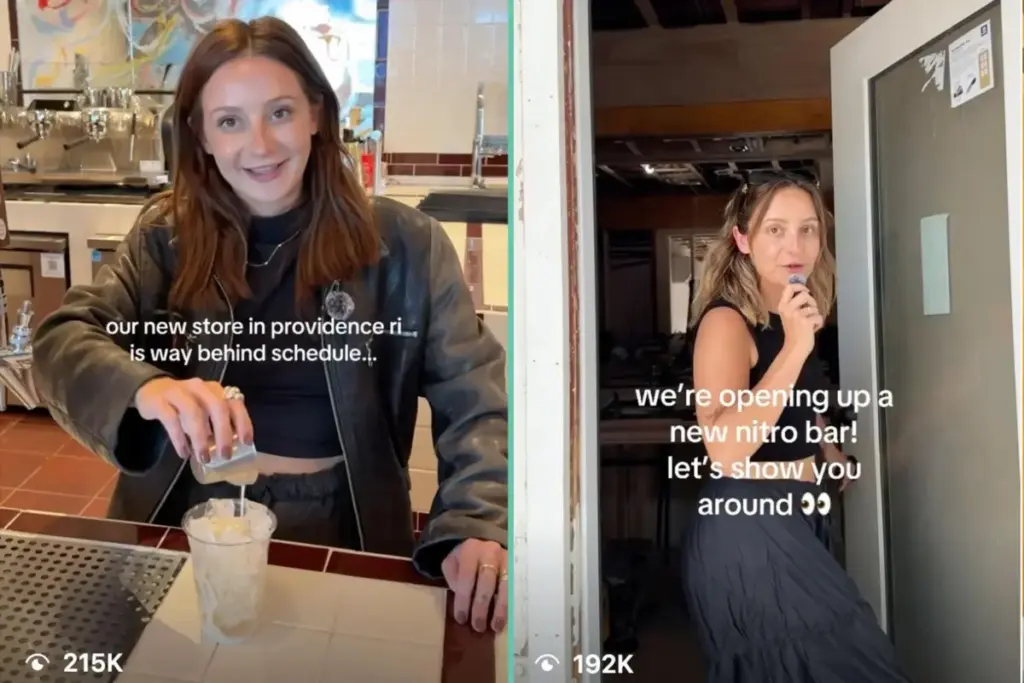
In Providence, Rhode Island, The Nitro Bar has long operated at the bleeding edge of food-business social media. Led by owner-turned-personality Audrey Finocchiaro, the brand is famous for unorthodox marketing tactics, such as asking staff absurd, humorous questions on camera. Finocchiaro has also leaned heavily into the raw reality of operating a small business on her personal accounts, and she is currently documenting the grueling process of expanding The Nitro Bar to New York City via an ongoing series of long-form YouTube videos. One video follows her into high-stakes interior design meetings, while another, viewed more than 54,000 times, takes audiences on a comprehensive tour of the production space.
Industry observers have noted that this approach successfully mimics the mechanics of traditional entertainment. As Rachel Karten, author of the social media-focused publication Link in Bio, explained during a panel alongside Finocchiaro, executing this kind of content relies on establishing a "my show is on" mentality around a business. In this framework, the owner functions as the host, the employees act as the cast, and the physical storefront serves as the set. Finocchiaro herself has described her philosophy as treating her coffee shop not just as a business, but as its own distinct persona—someone that customers genuinely want to befriend.

The crossover appeal of these projects becomes clear when viewed through the lens of modern lifestyle media. It is essentially HGTV fused with the Food Network, designed explicitly for modern consumers whose dining habits are increasingly steered by parasocial relationships. By opening up the construction phase, a business ceases to be a faceless commercial entity and transforms into a protagonist—a character that the viewer actively wants to root for, support, and eventually patronize.
Perhaps the most extreme and viral example of this trend is Sammy Nussdorf’s journey to opening Meadow Lane, a high-end grocery store in New York City. According to an analysis by Grub Street, Nussdorf documented the ordeal over the course of more than 430 days, navigating multiple permitting snafus and publishing nearly 700 TikTok posts along the way. By the time Meadow Lane finally opened its doors in late 2025, Nussdorf was no longer just a first-time grocery store founder; he had become as familiar, and as polarizing, a character as a reality television star. The confessional approach, paired with a protracted, will-it-open-or-won’t-it-air narrative arc, gave the grocery store’s buildout the high-stakes cliffhanger appeal typically reserved for prestige television.
Reflecting on the strategy, Nussdorf noted in an interview that the more a business pulls back the curtain on its private operations, the more invested the public becomes. The TikTok-first marketing blitz proved staggering in its efficacy, resulting in lines stretching down the block during Meadow Lane’s opening week, with the buzz even reaching shoppers halfway across the country in the Midwest.
This hunger for radical transparency extends well beyond short-form video platforms. The rise of independent publishing tools like Substack has enabled operators to communicate directly with their audience without editorial mediation. Stockholm chef Bill Allison gained considerable online traction by sharing the granular nuts-and-bolts of daily restaurant operations. Similarly, ahead of its debut, the owners of the new New York City restaurant Legion published an ongoing series titled The Opening Files on Substack, offering readers a candid look at the pre-launch phase. While prospective operators once relied entirely on traditional media to gauge public interest in the minutiae of choosing a commercial space or selecting custom dishware, today’s restaurateurs can test those hypotheses directly in real time.
Even legacy media outlets have begun embracing this serialized approach. Last year, Curbed published a multi-part series following restaurateur and author Eddie Huang as he undertook the painstaking process of reviving Baohaus. Huang used the platform to write transparently about touring commercial properties, watching real estate deals fall through at the last minute, and detailing the exact financial realities of modern restaurant economics, from steep rents to complex permit concessions.
Ultimately, the driving force behind the trend is remarkably simple. People are inherently curious, and in an era saturated with polished advertisements, stripping away the corporate veneer to offer a glimpse of authentic, behind-the-scenes reality delivers the ultimate form of good gossip.