



With the launch of Dungeons & Dragons: World of Warcraft less than a month away, tabletop enthusiasts and MMORPG veterans alike are preparing for what is shaping up to be one of the most expansive crossover sourcebooks in the history of the game. For months, fans have debated whether this upcoming Universes Beyond expansion would attempt to rigidly translate World of Warcraft’s notoriously fast-paced, combat-heavy MMO mechanics into the slower, strategic framework of fifth-edition D&D, or if it would offer a more traditional roleplaying experience firmly rooted in the lore of Azeroth.
Ahead of the book’s release, Wizards of the Coast principal game designer James Wyatt sat down at New York Comic Con to discuss the creative philosophy driving the new expansion. According to Wyatt, the project was never about forcing complicated MMO action bars or micro-managed rotation combat onto the tabletop. Instead, it is designed to function as a classic D&D game that simply happens to take place in the rich, sprawling fantasy universe of Azeroth.
An On-Ramp for New Players and Veterans Alike
The crossover naturally raises questions about accessibility, particularly for the millions of players who spend their time traversing Azeroth digitally but may have never touched a set of polyhedral dice. Wyatt notes that while onboarding absolute beginners wasn’t the sole purpose of the project, the expansion naturally serves as a fantastic gateway.
For a World of Warcraft player sitting down to try D&D for the first time, traditional tabletop species and classes like Tieflings or Dragonborn can feel abstract and alien. By providing familiar classes, species, and archetypes pulled straight from the MMO, the book gives new players an immediate anchor. They instantly recognize what kind of character they want to play, whether it is a cunning rogue, a stoic warrior, or a spellcasting warlock. The book includes a brief introductory section explaining the core concepts of D&D and points newcomers toward digital resources like D&D Beyond to help them get started.
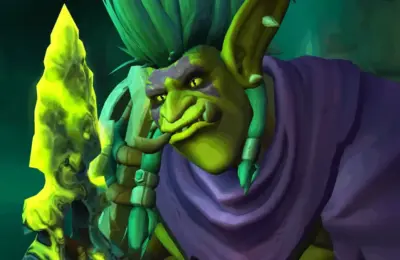
This philosophy was put to the test during early playtests at Blizzard last fall, where employees signed up blindly without knowing what game they were testing. Wyatt recalls how rewarding it was to run sessions for complete novices who did not know what they were "supposed" to do, leading to the kind of unpredictable, highly imaginative moments that define the medium. He highlighted a memorable player controlling a Forsaken Warlock who convinced the table that, lacking a lower jaw, his character could not properly articulate spell components. When his first spell inevitably backfired and sent him tumbling down a flight of stairs, the player simply ripped off his own undead arm and hurled it at a nearby monster. That kind of unscripted creativity, Wyatt emphasizes, is the true heart of Dungeons & Dragons—prioritizing imagination over pre-programmed button presses.
Adapting Dungeons, Raids, and Iconic Encounters
Bringing decades of MMO content into a single tabletop sourcebook presented a massive logistical challenge, starting with the selection of dungeons. Wyatt explained that the team began by outlining the six major conflicts that have driven World of Warcraft’s various expansions over the years, using those thematic conflicts to shape how campaigns can be run.
The dungeons featured in the book were carefully curated to reflect these underlying themes, alongside factors like community popularity rankings on fan wikis and what could realistically fit within the book’s page budget while supporting a wide range of character levels. Rather than attempting to catalog every single dungeon and raid in the game’s long history, the developers focused on the most resonant locations.

For massive encounters like Icecrown Citadel, which might normally require a twenty-five-man raid group, Wizards of the Coast is taking a different approach. Icecrown Citadel will be released as a separate digital download adventure accompanied by a dedicated map pack featuring five double-sided poster maps of the iconic boss fights. Players can run through the raid using a streamlined system where renown with factions like the Ashen Verdict increases rapidly with every encounter, eventually allowing them to forge legendary weapons like Shadowmourne.
At the same time, Wyatt stresses that the book is meant to be a massive toolbox rather than a prescriptive, linear module. Just as he once ran Blackfathom Deeps twenty years ago by downloading rudimentary maps from the internet and inventing statistics for nagas on the fly, the new sourcebook provides Game Masters with the guidelines they need to adapt virtually any dungeon from World of Warcraft into their own custom tabletop campaigns.
Improv over MMO Automation
Concerns from the community regarding whether the book would lean too heavily into rigid, combat-obsessed dungeon crawls are unfounded, according to the design team. In fact, Wyatt views tabletop roleplaying as the exact opposite of an MMO’s automated restrictions. When players walk into a classic location like Shadowfang Keep in D&D, they are not limited by programmed pathing or predefined dialogue trees. They can talk to any NPC, interact with any object in the environment, and rely on a Dungeon Master to improvise the consequences in real time.
The dungeons included in the sourcebook are presented with a light touch, featuring clean maps and specific markers for major bosses, while leaving everything in between open to improvisation, environmental exploration, and modular encounter generation. This sandbox approach extends to adventure hooks, faction reputations, and overarching narratives, treating the source material as a creative springboard rather than a strict rulebook.
Paraphrasing Classes and Managing the Timeline
Translating World of Warcraft’s intricate talent trees and distinct gameplay specializations into fifth-edition D&D required a philosophy of paraphrasing rather than direct mechanical translation. Wyatt noted that the design process involved extensive spreadsheets, evaluating class abilities up to level sixty and finding clever ways to evoke iconic flavors using existing D&D mechanics, new spells, feats, and battle maneuvers.
Because tabletop mechanics operate on a much less granular scale than modern MMOs, the team prioritized thematic resonance over mathematical exactness. This means that while D&D characters enjoy a broader range of options—such as a Paladin being capable of both healing and tanking regardless of their chosen subclass, or a Priest wearing heavier armor reminiscent of lore figures like Anduin—the specializations still provide distinct feats and spell columns to help players capture the precise feel of their favorite Warcraft classes.
The sourcebook also embraces the expansive, time-bending nature of the Warcraft universe through the framing device of Chromie. By featuring the beloved bronze dragon throughout the book—writing introductory text, adding marginalia, and offering a playful narrative justification—the developers have explicitly given readers permission to bend or ignore strict canon to build their own custom timelines. Whether a group chooses to play through the classic era, explore the modern conflicts leading into Midnight, or invent entirely new adventures on Azeroth, the expansion is ultimately designed to provide a blank canvas for players to tell their own stories.