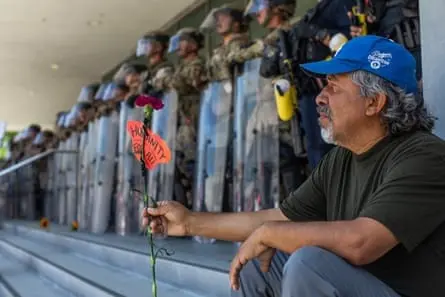
Every night for months, as they settled into bed at their home in Watts, California, seven-year-old José Jr., named after his father, would look over to his mother, Alma Ramirez, and ask her a heartbreaking and unanswerable question: "Why did they take my dad away?"
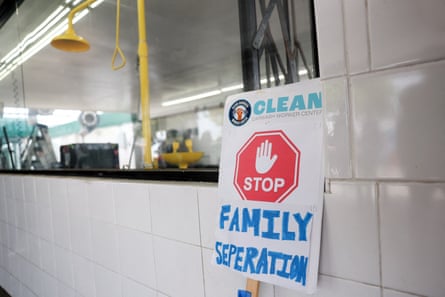
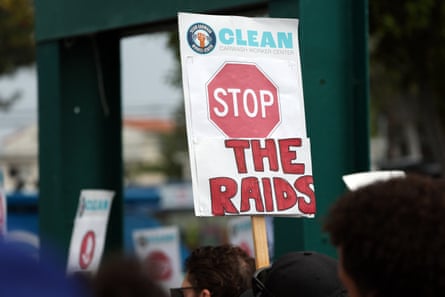
His father, 41-year-old José Padilla, was detained on January 27, 2026, by Immigration and Customs Enforcement (ICE) while working as a car washer in Los Angeles. The father of four, who has lived in the United States for more than 20 years, was one of more than 1,400 people detained in the Los Angeles area that January, according to the Deportation Data Project. Furthermore, he was one of at least 373 car wash workers detained between June 2025 and January 2026, according to data compiled by the Clean Carwash Worker Center.
Like many other families who have lost the head of their household due to ongoing immigration raids across southern California, Ramirez and her children have faced intense financial struggles coupled with the profound emotional and mental health toll of family separation.
"It impacted the kids more because they had their dad every day. Even if he came home tired from working in the hot sun, he would come and play with them," said the 31-year-old mother of three while sitting in her living room. "And he took care of us. He would pay our bills, help me around the house doing chores, and bathe the kids. He was a real present dad. That’s what I love about him."
The absence sent ripples through the entire extended family. "Now that he’s not here, we really feel his absence and how much he helped us—not only with the bills, but also just by being there for the kids, for me, and for my parents," Ramirez said. "It’s been hard for us to be without him. He was our person. Honestly, he was everyone’s person."

The Psychological Toll on Children
The psychological toll of immigration enforcement on mixed-status families has been immense. For children, these abrupt disruptions and absences can cause enduring symptoms of post-traumatic stress disorder (PTSD), severe anxiety, and depression.
According to a report from the University of California, Riverside’s School of Medicine, worksite raids and arrests during federal immigration enforcement operations are creating what researchers describe as a public health emergency for millions of children like José Jr. and his brothers. Dr. Lisa Fortuna, professor and chair of psychiatry and neuroscience at the UCR School of Medicine and the lead psychiatrist behind the report, noted that these types of unexpected separations from a caregiver fundamentally reshape a child’s development and mental health.
In Ramirez’s case, two of her children—José Jr. and her 17-year-old stepson, Alex, who has autism—both experienced significant disengagement in school following their father’s detainment. Alex depended heavily on his father, who helped him with everything from daily bathing and schoolwork to attending school meetings and managing his specialized routines.
"The reason José decided to work a car wash job was for the kids, especially Alex, because he requires extra care," Ramirez said while waiting for Alex to be dropped off by his school bus. "He wanted to make sure he could be available for all of them at any given moment."
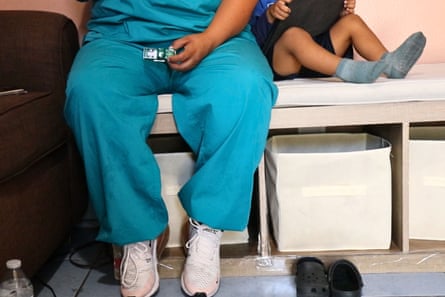
For months, Alex and his brothers were away from their father, and both of the eldest boys began attending regular therapy sessions to cope with the trauma. "They are learning different ways they can manage those big feelings," Ramirez said. "My seven-year-old tries to be a tough little kid, but I can tell he misses his dad."
In a heartfelt letter written to the immigration judge supporting his father, Alex described how much he missed him and how badly he wanted to see his dad in real life, rather than merely through the screen of a phone or tablet.
Routines Interrupted
For seven-year-old José Jr., two-year-old Joaquin, and 17-year-old stepbrother Alex, their father José was a constant figure of safety and stability. They played together every evening after finishing their homework; he would read to them and, alongside Ramirez, frequently take them on family outings. At night, part of the bedtime routine included the children cuddling in between their father’s arms as he soothed the younger ones to sleep.
"We had our routines, each morning and evening, and all that went away," Ramirez said. According to her, the family unit deteriorated the moment José was detained. "From one day to the next, everything was on me," she said, bouncing her two-year-old son in her arms. "And I don’t mind stepping in, but you have to understand, we were such a great team; we really helped each other. When I suffered postpartum depression, he was patient; he took care of everything, and he helped me get back to myself."
Ramirez and her partner, whom she affectionately calls her "mari-novio"—a blend of husband and boyfriend—have been together since 2014 as a mixed-status family. She originally met José when he was a single father of two working at her father’s car washing business. Like any parents, their primary life goal has always been to provide their children with a secure, stable life.
On the day José was detained, he and Ramirez followed their regular morning routine. They helped get the children ready for school, sharing tasks between bathing, dressing, and preparing breakfast. Ramirez would then take her son and nephew to school while José stayed home with the youngest child, completing light housework before getting ready for work.

The only difference that morning was the timing. Typically, José would leave the house by 9:00 a.m., but that day he left extra early to pump gas—a task he did not normally handle in the morning, but he had forgotten to fill the car the previous day.
"He was rushing out the door when I told him, ‘No, you have to eat,’ and I gave him two burritos and a coffee, and he took off," she recalled, trying to hold back her tears.
Ramirez was standing in her mother’s kitchen when she received the phone call. "The guy on the other end asked me if I knew Morro, which is José’s nickname, and when I said yes, he said, ‘ICE just detained him.’"
"I broke down; we were all devastated. We couldn’t believe it," Ramirez remembered, adding that she had to hand the phone over to her mother and sister because she could no longer contain her tears. Although the family had observed ongoing ICE raids in their neighborhoods and discussed basic safety measures like sharing location data, they had never anticipated or planned for what would happen if José himself were taken.
"We just felt like, you know, it won’t happen to us if we’re careful. Until it did," she said.
José was eventually transported from downtown Los Angeles to the Adelanto detention facility before being transferred a final time to the California City detention facility in Kern County. Because the drive from Watts to the detention center takes roughly three hours each way, and given a busy household schedule and an unreliable vehicle, Ramirez and her family were mostly restricted to communicating with José through video phone calls every other night.
‘I Need My Dad’
During a Friday afternoon in June, Ramirez laid out family photos across her couch. In her hands was a Valentine’s Day gift she had prepared for José just before his detention. "We didn’t get to celebrate Valentine’s Day how we wanted, but it’s ok, this is waiting for him when he gets out," she said, maintaining a steady optimism about his eventual return.
Ramirez noted that each child absorbed the trauma differently. Her youngest son, two-year-old Joaquin, took the separation the hardest. "He’s still little, so it’s hard for him to understand why he can’t see his father," Ramirez explained. "He was the one who was used to sleeping in his dad’s arms, so every night he turns to see the empty space next to me, and he says, ‘Me hace falta mi papa,’—’I need my dad.’"
Research from the Children’s Equity Project at Arizona State University highlights that the detention and separation of children and parents, even for short periods, can trigger toxic stress. Furthermore, a report by the American Psychological Association featuring insights from CEO Dr. Arthur Evans Jr. emphasizes that chronic stress caused by immigration enforcement increases anxiety, depression, trauma-related symptoms, and long-term health risks, particularly for developing children whose emotional stability relies on secure caregiving relationships.
A Mother Trying to Keep Afloat
For months, Ramirez managed her children, household duties, and education as best she could. At the time of José’s detainment, she was a stay-at-home mother studying to pass an exam to become a certified phlebotomist. Unfortunately, she had to retake the test multiple times because losing her partner’s daily support left her with almost no time to study.

"It’s been very hard. I just find myself crying all the time, some days are harder than others," she said.
Although Ramirez and her children live with her parents and pay rent—placing them in a more stable housing situation than many families facing similar crises—managing bills and keeping her partner’s spirits up took an immense emotional toll. To help combat depression and pass the time, José took a job working in the detention facility’s kitchen, earning modest funds to buy his own snacks and soups so Ramirez would not have to worry about depositing money into his account.
According to a 2020 study conducted in Pima County, Arizona, an immigration arrest can cost a household an average of more than $24,000, encompassing lost income, out-of-pocket legal fees, seized belongings, and court-related expenses.
Ramirez’s typical day began before 5:00 a.m. by driving her mother to work, leaving her roughly an hour of quiet time in the early morning to study. "It’s been a struggle managing time and finding a new flow," she said. "I have to study either really late at night or really early in the morning because it has to be when the kids are asleep, so I hardly get rest."
Despite the overwhelming hurdles, Ramirez maintained her faith. "I do have a lot of faith and hope that he will be freed," she said in June. "I can’t wait for the day my kids have their father back."
On August 4, 2026—six months after his initial detention—Ramirez and her children finally received the news they had been praying for. José was released from immigration detention, and his children welcomed him home at Union Station in Los Angeles during an emotional reunion captured by the Immigrant Defenders Law Center.
"Who’s that, papa?" Ramirez asked her seven-year-old son as they rounded a corner, meeting the moment not with words, but with smiles, tears of joy, and profound relief.
The family’s journey toward complete healing remains ongoing. While José has successfully regained his freedom, he continues to fight his ongoing immigration case with the hope of remaining permanently in the country where he built his life and family. To assist with lingering attorney and legal fees, the family kept their GoFundMe campaign active. For now, however, Ramirez and her children are simply grateful to be once again wrapped in José’s arms, enjoying the embrace they longed for over six grueling months.