


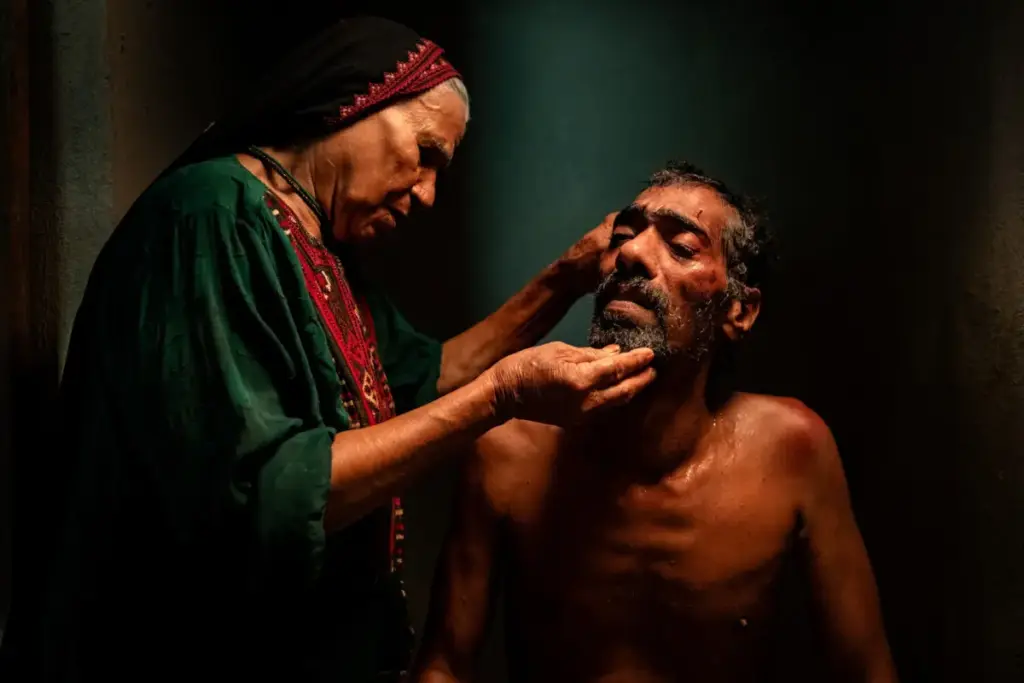
Veteran Iranian filmmaker Majid Majidi has claimed the prestigious Best Film award at the 31st Busan International Film Festival for his latest feature, “Midday Meal.” The film is a stark, powerful contemporary parable centering on a rural schoolteacher forced to navigate difficult moral dilemmas to ensure his students continue receiving free lunches amid sweeping government budget cuts.
Majidi accepted the top prize from this year’s main competition jury president, acclaimed Chinese director Zhang Yimou, during a flashy outdoor closing ceremony at the ultra-modern Busan Film Center. Hosted by South Korean singer and actor Yim Si-wan—widely recognized for his work in “Squid Game”—the evening celebrated the best of Asian cinema. Following his win, Majidi stepped up to the microphone to deliver an impassioned speech protesting the ongoing war in Iran. In particular, the director strongly denounced the Minab school attack that occurred in February of this year, a tragic incident that resulted in the deaths of 156 civilians, including 120 schoolchildren, in a U.S. military strike.
“They will stand firm to the end and fight to get their independence back,” Majidi stated before concluding his address with a heartfelt global plea: “I wish for a future with no war.”
Rooted in the director’s signature humanist approach to social realism, “Midday Meal” focuses heavily on child welfare, aligning it thematically with Majidi’s celebrated body of work. His previous directorial efforts include acclaimed titles such as “The Color of Paradise” and, more recently, the Venice Film Festival competition entry “Sun Children.” Majidi remains internationally renowned for his landmark 1988 film “Children of Heaven,” which made history as the first Iranian production ever to be nominated for the Academy Award then known as Best Foreign Language Film and now categorized as Best International Feature.
In a glowing and appreciative review for Variety, film critic Kambole Campbell highlighted the stylistic choices of the project, writing, “Majidi’s matter-of-fact style of shooting underlines the cold reality that [his protagonist] tries to navigate, and strips away any semblance of potential didacticism.”
Beyond its festival triumph, “Midday Meal” carries significant Oscar momentum. Under new Academy rules instituted this year, capturing the top prize at Busan automatically qualifies the film for consideration in the Best International Feature category at the Academy Awards, bypassing the traditional requirement for its home country to formally submit it. Interestingly, Iran has already entered the lower-profile drama “Land of Angels” for consideration this year. Busan stands as the sixth and final international film festival on the global calendar to be granted this direct qualification status. Other notable films guaranteed Oscar eligibility through this new regulatory framework include Sundance prizewinners “Shame and Money” and “To Hold a Mountain,” Berlinale selection “Yellow Letters,” Cannes entries “Fjord” and “Woman Unknown,” and Toronto’s “Angh.”
The Busan main competition program consisted entirely of Asian features, the vast majority of which celebrated their world premieres during the festival. Among the other major winners was the Taiwanese family drama “To Be Ordinary,” which earned the Best Director accolade for filmmaker Lee Yun Chan. In Variety’s review, Lee’s direction was commended for its “handsome sobriety” and “delicate, empathetic touch.” The feature marks Lee’s first directorial effort in over 15 years. During her acceptance speech, the director noted with emotional resonance that she was wearing the exact same gown she had worn two decades prior when she premiered her 2005 debut feature, “The Shoe Fairy,” at the very same festival.
The Special Jury Prize at the 31st edition of the festival was awarded to Indonesian director Eddie Cahyono for his poignant drama “Ibuku.” The film follows a working-class Indonesian widow struggling to stay afloat after her adult daughter is imprisoned in Saudi Arabia. Campbell praised the film in his review, noting that it is “most compelling when its spiritual qualities are felt rather than seen.”
In a notable sharing of honors, the gender-neutral acting award was presented jointly to two female performers. Japanese newcomer Kashun Himeno earned recognition for her eye-catching and potentially star-making performance as a lovestruck high schooler in the charming feature “Satoko Always,” a project Variety critic James Marsh described as a breakout vehicle. Sharing the acting prize was veteran Chinese star Zhou Xun, who delivered a moving performance as a single mother coping with the death of her father in director Gu You’s tearjerker “The First Taste of Loneliness.” Gu’s film, described by Variety as “patient, restrained and gracefully observed,” earned a second accolade during the ceremony: the Artistic Contribution Award, which went to sound designer Danfeng Li.
In the separately juried New Currents competition, which highlights daring first-time features from emerging filmmakers, Indian director Shashank Walia took home recognition for “Birds in the Dark,” a gritty rural drama exploring corruption and land disputes in Punjab. Additionally, South Korean director Lim Ha-yeon received a special jury mention for “Beach Fictions,” a time-slipping, romantic drama.
Zhang Yimou’s formidable main competition jury featured a diverse array of international talent, including fellow Chinese filmmaker Bi Gan, Japanese director Kei Ishikawa, South Korean director July Jung, actress Samal Yeslyamova, actress Choi Hee-seo, and producer Tran Thi Bich Ngoc. Alongside Majidi and the other victorious filmmakers, the jury members participated heavily as presenters during the outdoor gala.
The festival also distributed numerous additional honors at the Busan Vision Awards ceremony. Notably, the Mongolian-German production “Zogsool” swept the slate by taking home a quartet of prizes, while the Spanish Oscar hopeful “La Bola Negra” added yet another audience award to its rapidly growing collection of festival accolades.