



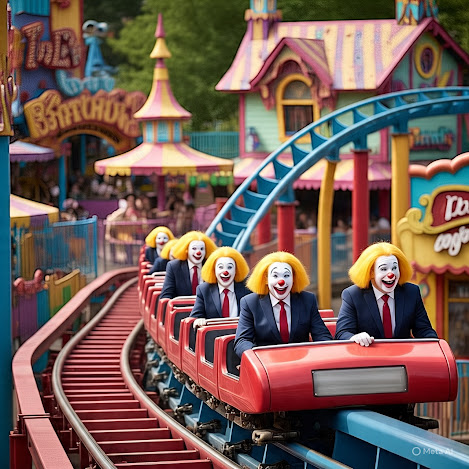
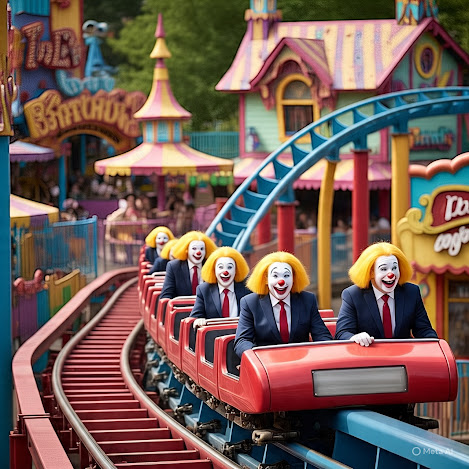
The stock market has always been known for its twists and turns, but the ride over the past several months has tested even the most seasoned investors. Back in February 2025, the market capped off a robust, multi-year climb right before stepping onto a wild roller coaster characterized by some of the steepest drops and recoveries in modern financial history. At its lowest point, the market shed a full 20 percent of its value, yet it managed to claw its way back near its peak values shortly after.
While market volatility does not always come with a neat and tidy explanation, financial analysts and observers agree that the primary catalyst this time around is unmistakable: tariffs. As the global financial landscape has been whipped around like a tent in a hurricane, stakeholders across the country have been left wondering how to interpret the chaos.
At the heart of the matter is an ongoing worldwide tariff and trade dispute. Businesses are actively bracing for massive regulatory and financial shifts, foreign exchange rates and interest rates are reacting in real time, and everyday investors planning for early retirement are left questioning what the future holds for their portfolios. Conversations among friends and peers span the entire emotional spectrum, ranging from dismissive views that the trade friction is a temporary non-issue to catastrophic predictions that the entire financial system is heading for a severe downturn.
To understand the gravity of the current situation, it is necessary to examine the most fundamental economic question at play: what exactly is a tariff?
A tariff is essentially a sales tax levied by a national government on goods imported from abroad. These taxes are paid directly by the importing entity. For an individual consumer, this means paying extra when ordering a specialized product, such as an electric bicycle, directly from an overseas manufacturer. For major corporations like Amazon, Walmart, and Apple, it means absorbing or passing on the costs of importing goods by the shipload.
Despite political rhetoric suggesting otherwise, tariffs are ultimately paid by the end consumer rather than the exporting nation or the importing corporation. When the operational cost of acquiring goods increases due to a tax, retailers invariably raise their shelf prices to maintain profit margins. Furthermore, tariffs impact domestic companies on a structural level. If a major home improvement retailer wants to build a new retail location or an energy company needs to construct an industrial project, tariffs on imported steel, copper, lumber, and countless other components drive up construction costs. These added expenses ripple outward, contributing directly to the rising cost of housing and general infrastructure.
On average, broad-based tariffs function identically to any other sales tax, resulting in higher prices across the board, slower overall economic growth, and a reduction in consumer spending power. Conversely, the revenue generated from these taxes flows directly into government coffers, which can theoretically help fund national budgets and reduce fiscal deficits. However, economic stability relies on tax levels remaining as low, fair, and predictable as possible to incentivize work and long-term business planning. The current unpredictable regime of rapidly shifting, extreme tariff announcements stands in stark contrast to that stability.
While the overarching economic consensus views tariffs as a drag on efficiency, governments occasionally implement them to protect domestic industries. For instance, imposing a heavy tax on imported automobiles gives domestic manufacturers an immediate competitive advantage, boosting their sales and profitability. While consumers ultimately suffer through higher prices and diminished product selection, domestic manufacturers and their employees experience short-term gains. This protectionist strategy can sometimes be deployed for national defense purposes, such as safeguarding domestic aerospace manufacturers to ensure a secure supply of fighter jets. At other times, it is driven by political lobbying and interest groups seeking to shield specific sectors from foreign competition.
This protectionist approach is not confined to a single political party. Past administrations from both sides of the aisle have utilized tariffs to court specific voting blocs. One notable example includes taxes placed on imported solar panel components, which effectively restricted the flow of cheap energy infrastructure designed to lower living costs and boost industry. Blocking access to inexpensive energy and manufacturing materials introduces unnecessary friction into the broader economy.
Examining the mechanics of job creation reveals the complex trade-offs inherent in trade policy. If a substantial tax is levied on imported automobiles, many buyers will pivot toward domestic alternatives to save money. Consequently, domestic automakers see increased sales, leading them to hire more workers, expand factory output, and potentially invest in new technologies. Yet, this localized boom comes at a cost to the rest of the economy. Every other sector faces higher operational expenses, from delivery fleets paying more for commercial trucks to innovative startups operating in a slightly more expensive and less efficient business environment. Furthermore, shielded from fierce international competition, domestic corporations often lose their incentive to innovate and streamline operations over the long term.
This widespread macroeconomic impact is why the vast majority of economists agree that tariffs should be deployed sparingly. They almost universally introduce inefficiencies, decrease overall employment productivity, and slow down economic momentum unless justified by critical national security or food security needs.
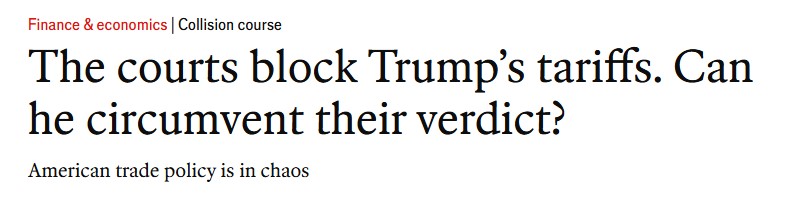
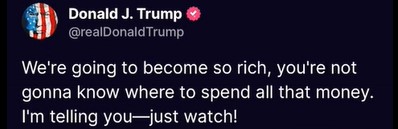
The current political strategy surrounding tariffs has sparked widespread confusion among financial experts. Taking political rhetoric at face value, proponents claim that sweeping tariffs will generate widespread national wealth. This perspective hyper-focuses on first-order effects, such as a domestic manufacturer hiring additional workers, while entirely ignoring the systemic inefficiencies imposed on the rest of the economy.
Market reactions offer a clear window into how actual business leaders and investors view these policies. When announcements of severe tariff hikes hit the news cycle, share prices drop because corporate executives and institutional investors know that profitability will inevitably decline. Conversely, when tariffs are temporarily paused or scaled back, share prices rebound. This cyclical tension highlights the friction between political maneuvering and market realities.
The broader economy currently operates under the immense influence of executive trade policy, drawing scrutiny regarding the balance of power within the federal government. Historically, the American constitutional framework was designed to prevent the concentration of authority through a system of checks and balances across three independent branches. While various administrations have historically tested the limits of executive power in trade matters, the current legal and political pushback is already playing out across the federal court system, where challenges to executive tariff authority are actively being litigated.
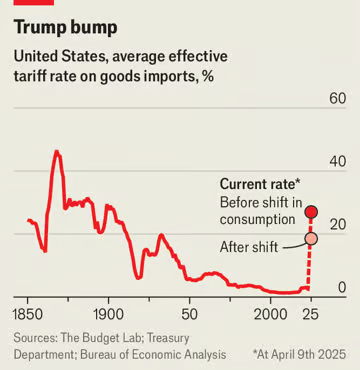
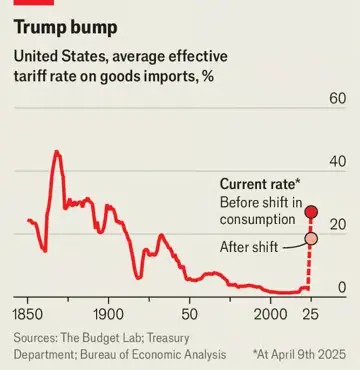
Despite the dramatic rhetoric and extreme figures floated in political discussions, the baseline of the modern American economy remains rooted in decades of relatively low tariffs and open trade. Economic history over the past 75 years demonstrates that the nation’s financial expansion has relied heavily on the free flow of international commerce.
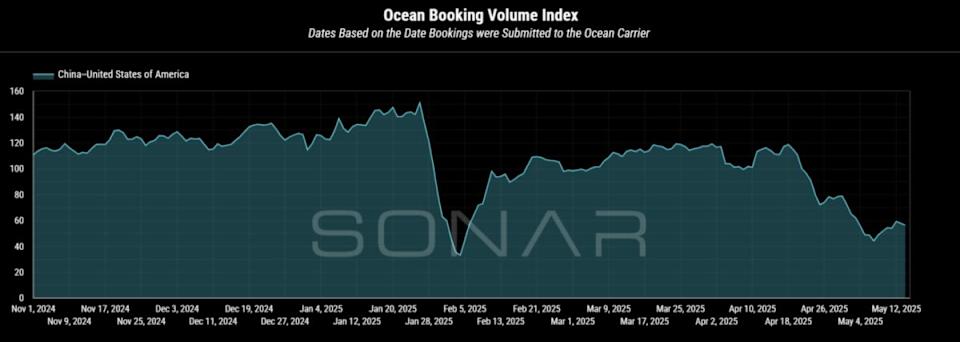
Because the United States functions economically much like a massive cargo ship with deep inventory reserves, the immediate effects of new trade policies take time to materialize. When tariff threats initially emerged, supply chain importers aggressively accelerated orders to stockpile goods before taxes took full effect. Consequently, the economy initially relied on existing inventories, masking the immediate inflationary impact. However, as sustained drops in new imports reduce the cushion of cheap foreign goods, analysts expect broader price increases and potential supply shortages to surface during the summer and fall months. While consumers can easily absorb temporary disruptions in non-essential retail items, restricted access to core industrial machinery and tools carries far more significant economic consequences.
Navigating periods of intense economic uncertainty requires acknowledging that all significant market disruptions eventually resolve, even if the exact trajectory remains unclear. Observers generally outline a couple of primary trajectories for the current trade dispute. In the first scenario, extreme tariffs remain permanently enacted, leading to structurally higher consumer prices, supply chain reorganization, and a slower-growing domestic economy that prioritizes protected industries over broad-based efficiency. In the second scenario, tariffs serve primarily as an aggressive negotiating tactic, ultimately culminating in trade agreements that restore historically low tariff levels and normalize international commerce.
Historical precedent strongly suggests that mutual prosperity is best achieved through cooperative economic engagement. Just as the internal domestic market thrives on open trade across state borders, friendly nations benefit collectively from the unhindered exchange of goods, services, and human capital.
The turbulence of recent months has provided a vivid reminder of how quickly investor sentiment can shift in response to political developments. Major market drops triggered by trade announcements prompted some reactive investors to lock in steep losses, echoing behavioral patterns seen during past market corrections. However, subsequent recoveries demonstrated that equity markets ultimately price in the expectation of eventual trade truces and the preservation of global commerce.
As long as foundational democratic systems continue to check executive overreach and restore balance to trade policy, the long-term outlook for the economy remains resilient. Investors maintaining a fully deployed market strategy continue to bet on the inherent adaptability of the financial system.

Ultimately, navigating modern economic news requires a critical eye toward media reporting. In an era where digital publishing models prioritize audience engagement and emotional reaction over rigorous accuracy, sensationalized headlines frequently distort underlying economic realities. Recognizing that commercial media inherently leans toward generating fear and urgency helps investors filter out short-term noise and focus on long-term fundamentals. By developing a deeper understanding of core subject matters and relying on primary data sources rather than reactive headlines, market participants are better equipped to weather periods of artificial uncertainty and maintain perspective on the broader economic landscape.