



In homes around the world, domestic cats are frequently characterized as aloof, autonomous companions capable of managing their own daily entertainment. Millions of cat owners purchase plush mice, automated ball tracks, and motorized novelties, leaving them scattered across living room floors in the belief that an indoor cat will independently satisfy its own recreational and predatory requirements.
However, according to veteran feline behavior expert and best-selling author Pam Johnson-Bennett, this widespread assumption represents one of the most significant misunderstandings in contemporary pet care. Feline welfare advocates emphasize that interactive play is not merely a casual luxury or an optional pastime to be offered when a human guardian happens to have spare moments. Instead, direct, caregiver-led interactive playtime serves as a foundational pillar of a cat’s physical fitness, cognitive vitality, and emotional stability.
When domestic cats are deprived of appropriate, structured outlets for their instinctual drives, the consequences often manifest in a variety of distressing behavioral problems. Confined indoor environments that lack purposeful physical engagement can quickly give rise to chronic boredom, deep lethargy, depressive symptoms, destructive scratching, relentless attention-seeking vocalizations, and the familiar phenomenon of late-night hyperactivity.
At the biological core of healthy feline behavior lies an evolutionary imperative: the predatory cycle. In the wild, every waking phase of an active feline is governed by an innate sequence of behaviors commonly defined by specialists as stalking, chasing, catching, eating, and resting. For indoor cats, access to commercial food bowls removes the survival necessity of catching prey, yet the primal neurological hardwiring that dictates the hunt remains entirely intact.
To maintain psychological equilibrium, a domestic cat must be given the opportunity to actively live out this sequence in a safe domestic setting. While caregivers do not need to provide live animals for their companions to hunt, replicating the cadence of this ancestral cycle—culminating in an edible reward or a scheduled meal—allows a cat to satisfy its biological programming. The critical ingredient that separates mundane toy play from genuine predatory fulfillment is the presence and active participation of the human guardian. A solitary toy sitting motionless on a rug lacks life, intention, and unpredictability; it requires a human partner to transform an inanimate object into simulated prey.
Structuring Interactive Play Sessions
Establishing a consistent, functional routine is paramount when integrating interactive play into a domestic feline’s daily life. Feline behavior guidance indicates that guardians should aim for at least two dedicated interactive sessions every day, with each session lasting roughly fifteen minutes. While this fifteen-minute baseline provides a dependable framework, session lengths and intensity should be adjusted based on the individual cat’s age, baseline activity levels, physical condition, and natural temperament. A younger or more energetic cat may benefit from slightly longer or more vigorous interactions, whereas a senior or sedentary cat may require a gentler pace with more frequent pauses.
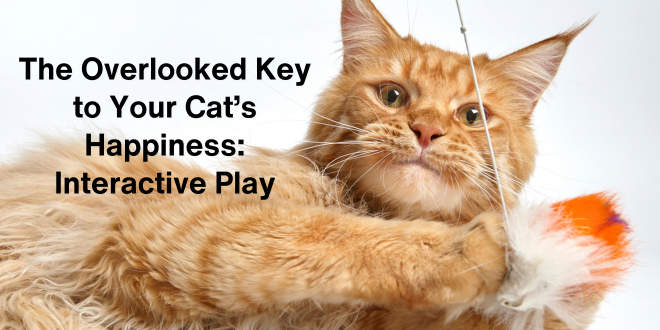
The specific choice of play equipment plays a fundamental role in the success of these sessions. Among the wide array of pet products on the market, fishing-pole-style wand toys are widely recognized as the most effective instrument. A wand toy places the caregiver in full mechanical control of the motion, allowing them to realistically replicate the evasive, erratic maneuvers of small prey animals while keeping the human’s hands at a safe distance from claws and teeth.
Conversely, widely utilized alternatives such as handheld laser pointers carry hidden behavioral drawbacks that often outweigh their initial convenience. Although chasing a darting red beam of light can rapidly trigger a cat’s visual focus and pursuit instinct, laser play possesses an inherent, critical flaw: the cat can never physically catch the light. Felines possess specialized sensory receptors in their paws and mouths, and they rely on the tactile satisfaction of grasping and pinning down their target to achieve a sense of predatory accomplishment.
When a cat spends several minutes pursuing a beam of light that vanishes into thin air upon impact, the animal is denied the experience of physical capture. Over time, this unfulfilled sequence can generate acute frustration, agitation, and escalating stress. For guardians who still choose to introduce a laser pointer into a routine, behavioral experts advise using it only briefly at the opening of a session before smoothly redirecting the light onto a physical toy. By sweeping the beam onto a tangible object that the cat can pounce on, grip, and bite, the guardian allows the animal to transition from visual tracking to a satisfying, tactile capture.
Technique: Simulating Real Prey
Effective interactive play relies less on the tool itself and far more on how the human manipulates it. A frequent error among pet parents is waving a wand toy relentlessly through the air or thrashing it across the floor in a frantic, unceasing frenzy. In nature, potential prey—such as mice, lizards, or small birds—rarely exposes itself by darting back and forth in front of an apex predator without pause. Continuous chaotic movement does not engage a cat’s predatory intelligence; rather, it often leads to sensory overload, confusion, or rapid disinterest.

To foster genuine engagement, guardians must learn to mimic the nuanced behaviors of real prey. Movements should generally be kept low to the ground, moving away from the cat rather than flying directly into its face. Incorporating deliberate pauses is vital. When a simulated prey toy runs a short distance, ducks behind the leg of a chair, pauses behind a doorway, or hides beneath a rug, it triggers the analytical side of the feline brain.
Cats are ambush predators that rely heavily on mental strategy, spatial awareness, and patient observation. In an authentic hunting sequence, a significant portion of the encounter is spent in absolute stillness, with the cat quietly calculating distances, waiting for the optimal opening, and creeping closer using cover. Incorporating intermittent pauses and hidden angles gives the cat the vital opportunity to plan, gather its hindquarters, and execute a calculated ambush. The overarching goal of the session is not to push the cat to pure cardiovascular exhaustion, but rather to stimulate its mind and natural instincts in a controlled, satisfying, and biologically authentic fashion.
Completing the Cycle
How an interactive play session concludes is just as consequential as how it begins. Caregivers frequently make the mistake of ending a session abruptly—pulling the wand toy away and immediately storing it in a closet while the cat is still wide-eyed, hyperventilating, or coiled to spring. Halting the interaction mid-stride leaves the feline flooded with unspent adrenaline and intense predatory drive, which can lead directly to redirected frustration, pacing, or unwanted behaviors.
To properly wind down an interactive session, the guardian should consciously de-escalate the pace of the toy. The movements should gradually slow, mimicking an animal that is losing stamina, growing exhausted, or succumbing to injury. This deliberate deceleration signals to the cat that the climax of the hunt is approaching. It permits the animal to adjust its physical pace, gather its remaining focus, and deliver a decisive, final capture where the toy is firmly held under paw and bitten.
Experiencing that definitive capture produces a sense of psychological closure and biological fulfillment, allowing the cat’s nervous system to shift from high arousal to calm contentment. Once the final capture is made, guardians can complete the final phase of the predatory cycle: eating and resting. Because an ancestral hunt naturally ends with consumption, scheduling interactive sessions immediately prior to mealtime—or distributing a high-value treat immediately after the toy is retired—solidifies the instinctual loop. After eating, the cat’s biology naturally shifts into digestion and rest, promoting deep, restorative sleep instead of nervous energy.

The Wide-Ranging Behavioral Benefits
When implemented with consistency, interactive play transforms from a simple household diversion into one of the most powerful behavioral interventions available to pet owners. By offering a predictable and authentic outlet for pent-up predatory drive, a daily play routine serves as both a preventative measure and a therapeutic remedy for a host of common household conflicts.
Unprovoked biting, stalking of family members’ ankles, and territorial ambushes around hallways are frequently instances of redirected predatory energy. When a cat lacks a designated object to chase and capture, household movement can easily become an unintended target. Daily interactive wand play channels these predatory energies onto acceptable targets, significantly curtailing inter-species friction.
Moreover, the psychological relief provided by completing the predatory cycle assists in lowering generalized anxiety and environmental stress. Cats that display nervous behaviors, compulsive over-grooming, or stress-related vocalizations often experience measurable relief when provided with an orderly, stimulating routine. For households troubled by nocturnal wakefulness—where cats disrupt their owners’ sleep with howling, sprinting, or door scratching—a vigorous evening play session followed by a meal reliably shifts the animal’s sleep-wake cycle toward nocturnal rest.
Beyond mitigating problem behaviors, interactive play serves as an invaluable bridge between cat and human. It builds profound levels of mutual trust and communication. In shy, fearful, or newly adopted felines, the collaborative nature of hunting interactive toys helps dismantle defensive barriers, nurturing confidence as the animal discovers mastery over its territory. Alongside the evident benefits of physical exercise, joint mobility, and weight management, interactive play remains, at its heart, an intrinsically joyous experience that enriches the life of the pet and the household alike.
Resources and Further Insights
Rather than treating play as an occasional chore or a trivial distraction, cat owners are encouraged to view structured interactive sessions as an indispensable component of responsible feline stewardship. Consistent application of these techniques fundamentally alters the domestic environment, transforming under-stimulated felines into balanced, confident companions. For guardians seeking deeper insights into feline psychology, practical problem-solving strategies, and tailored play methodologies, extensive behavioral guidance is detailed throughout the published works and literature of best-selling author Pam Johnson-Bennett.