




How long a dog should take a probiotic supplement is one of the most common questions pet owners present to veterinary professionals. However, clinical guidance indicates there is no universal timeline that applies to every dog or every formulation on the market. A veterinarian may recommend a specific probiotic product for short-term support during a temporary stressor or digestive issue, while an otherwise healthy dog might receive a daily supplement as part of a long-term nutritional and wellness routine. These two distinct applications require different frameworks for deciding when to continue, re-evaluate, or discontinue supplementation.
According to veterinary recommendations, the essential starting point for any regimen is establishing a clear objective. Relying on simple benchmarks—such as giving a supplement until the container is empty—fails to address what the routine is actually designed to accomplish. Furthermore, a dog’s willingness to eat a flavored soft chew does not automatically mean the product remains necessary or appropriate over an extended period. Establishing a clear purpose, adhering to proper weight-based servings, and conducting regular reviews with a veterinarian ensure that long-term supplement use remains intentional and safe.
Understanding Short-Term Support versus Long-Term Daily Maintenance
Answering how long a dog should remain on probiotics requires separating the initial reason for starting the supplement from the ongoing decision to continue it. A dog prescribed veterinary-directed support during a specific digestive disruption needs a designated endpoint or review milestone. Conversely, a healthy dog using a daily supplement for general gut maintenance may follow an open-ended routine, provided the chosen formulation remains suitable for the animal’s changing health profile and diet.
Not all probiotic products fulfill the same functional role. Formulations vary widely, incorporating different strains of microorganisms, prebiotic fibers, postbiotics, and secondary functional ingredients. Because scientific literature does not support a single, category-wide treatment duration, pet owners must work with their veterinarians to determine whether a probiotic is being used to target a specific event, fit into a broader dietary strategy, or support a chronic clinical condition.
When Support Begins with a Specific Trigger
Predictable disruptions—such as upcoming travel, a planned dietary transition, or a recent course of medication—frequently prompt discussions about gut health. In these instances, the primary question is not merely whether probiotics are generally beneficial, but whether a specific product is appropriate for the individual dog, when administration should begin, and what criteria will signal the conclusion of the plan.
For example, a scheduled trip presents a known alteration in a dog’s environment and daily schedule. Discussing the animal’s past responses to travel with a veterinarian prior to departure allows for a proactive strategy, rather than attempting to manage acute symptoms after they arise with multiple new foods or supplements. A tailored plan might integrate routine management, dietary adjustments, and a selected probiotic supplement based on the dog’s historical needs.
When a dog is actively unwell, the immediate medical priority is diagnosing and addressing the underlying illness. Probiotics are not a primary substitute for medical diagnostics when a dog experiences persistent diarrhea, vomiting, or other systemic signs. When recommended as supportive care, probiotics should be integrated into a comprehensive diagnostic and treatment plan, complete with specific instructions on when to contact the clinic if symptoms persist or deteriorate.
Pursuing Ongoing Daily Gut Support
When probiotics are intended for long-term use, they are typically framed as a daily maintenance choice rather than a fixed-term therapy. A label-directed daily supplement can suit this role for an appropriate candidate, provided owners regularly evaluate whether the formula, its active components, and the serving size continue to align with the dog’s age, diet, concurrent medications, and overall health status.
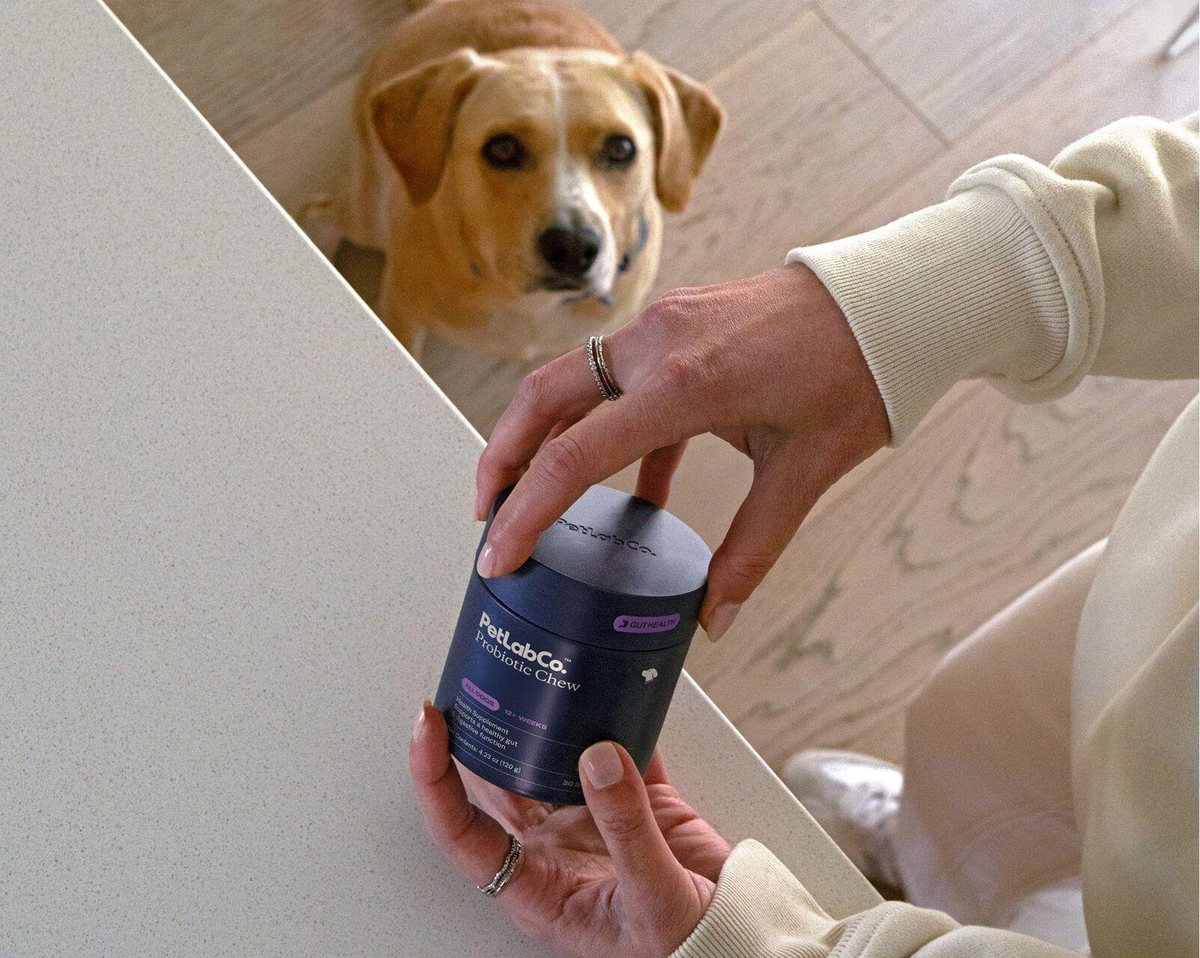
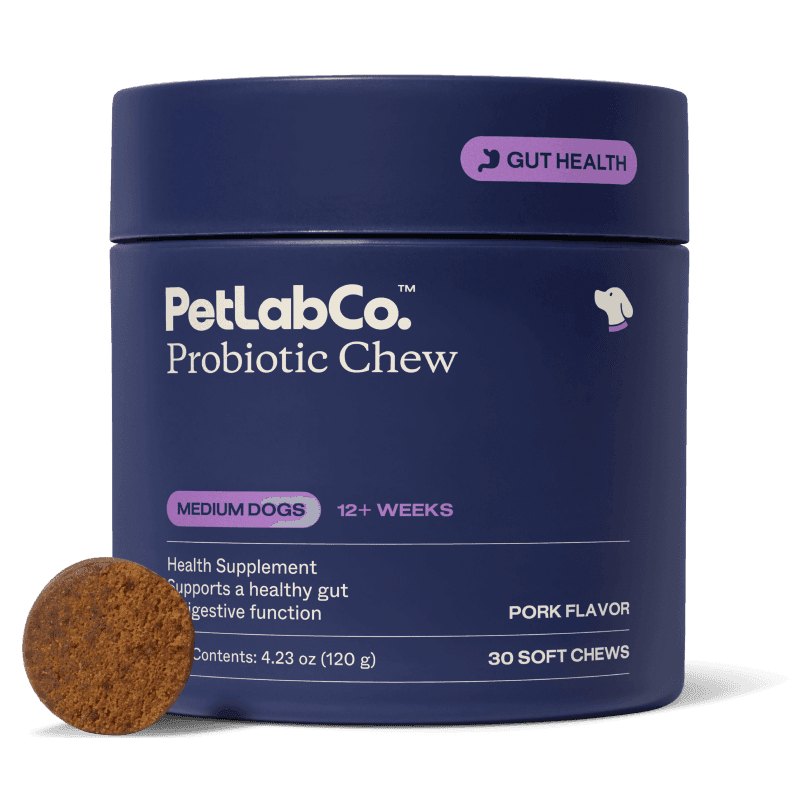
PetLabCo. Probiotic Chews represent one option formulated specifically for daily use. This format may benefit households seeking an easily administered soft chew, provided the dog’s age and dietary requirements match the label specifications. While daily label directions explain how a product is designed to be administered, they do not imply that every dog requires permanent supplementation or that periodic veterinary reviews can be bypassed.
The manufacturer’s published guidance also distinguishes between acute support and daily maintenance. Pet owners can use this general framework to prepare targeted questions for veterinary visits, keeping in mind that the specific product formulation and the individual dog’s health profile ultimately dictate the practical care plan.
Navigating Daily Administration, Dosages, and Routine Management
Many canine supplements are labeled for daily administration, which can be safe and effective when the product matches the dog’s specific health goals. The key to successful long-term administration lies in adhering to the exact product label and the customized plan established with a veterinarian. The designation "daily" describes frequency; it does not indicate that higher doses yield superior results or that multiple probiotic products should be combined.

For PetLabCo. Probiotic Chews, standard label instructions call for one soft chew daily for dogs weighing under 25 pounds, two soft chews daily for dogs between 25 and 75 pounds, and three soft chews daily for dogs over 75 pounds. Each individual 4-gram chew delivers 3 billion colony-forming units (CFU). These serving guidelines apply specifically to the standard formula and differ from directions for specialized product lines, such as the brand’s Tailored range.
Establishing a Consistent Daily Routine
To prevent administration errors, pet owners should establish a fixed time of day and a centralized tracking method for supplement delivery. This is particularly critical in multi-caregiver households where treats and soft chews can easily be administered twice by mistake. Because many supplements are designed to be palatable, clear communication prevents accidental double-dosing.
A practical daily routine involves reviewing label directions before serving, measuring the precise recommended amount, and verifying that the dog fully consumes the supplement. If using a powder supplement mixed into meals, owners must observe whether the entire portion of food containing the supplement was eaten, as the amount placed in a bowl does not always equal the amount ingested.
Managing Missed Servings Correctly
If a daily serving is missed, owners should never double the dose on the following day to compensate. Instead, they should follow any specific missed-dose guidance provided by the manufacturer or consult their veterinarian. Giving extra chews alters the intended daily dose and does not restore the biological baseline in a predictable manner.
A single missed dose rarely necessitates restarting an entire regimen, as most maintenance schedules are not structured around rigid cumulative deadlines. However, if doses are frequently missed, owners should evaluate whether a different delivery method—such as switching from a chew to a meal powder—or reassigning caregiver responsibilities would create a more reliable routine.
Determining how often a dog should take probiotics requires balancing product label directions with clinical assessment. The product label provides structural dosing guidelines, while the veterinarian confirms suitability and monitors ongoing necessity.
Evaluating Scientific Evidence and Expected Timelines
There is no standardized timeline that dictates how rapidly a dog will respond to a probiotic supplement. In clinical research, efficacy is evaluated through diverse parameters: some studies measure stool consistency scores, while others analyze specific fecal microbiota populations or inflammatory markers. Because these endpoints measure different biological mechanisms, visible changes at home may not directly correspond to microscopic laboratory shifts.
Before attempting to evaluate whether a supplement is "working," owners and veterinarians must define what success looks like. A healthy dog taking a maintenance supplement may show no visible change because its digestive system was already functioning normally. Conversely, a dog suffering from acute digestive distress requires a targeted diagnostic approach, where clinical recovery may stem from dietary modifications, prescription medications, natural immune recovery, or a combination of factors.
Research Study Timelines versus Clinical Deadlines
PetLabCo. referenced a 31-day randomized, placebo-controlled study involving 24 healthy adult Beagles to evaluate its standard probiotic chew. Published summaries of the company-funded trial reported shifts in fecal microbiota composition and changes in fecal calprotectin levels. However, a peer-reviewed journal publication of this exact trial summary was not linked.
While product-specific studies provide useful context, a 31-day study length should not be misinterpreted as a strict operational rule. It does not mean that every dog requires exactly 31 days to show changes, nor does it imply that supplementation must automatically end on day 31. Because the trial evaluated healthy adult dogs, its results cannot be used to predict recovery rates in sick animals
, establish dosing protocols for puppies, confirm permanent gut alteration, or guarantee safety across a dog’s entire lifespan.
Factors Preventing a Universal Probiotic Timeline
A microorganism’s identity extends beyond its species name to its specific bacterial strain, count, and delivery system. Research conducted on one specific strain cannot be generalized to all products within the same microbial family. For example, a 2025 controlled study investigating Bacillus coagulans GBI-30, 6086 in healthy adult dogs documented shifts in specific stool and microbiota parameters. However, those findings cannot be used to predict the onset or efficacy of a different multi-strain product that does not explicitly list that exact strain on its label.
Broader scientific literature emphasizes that canine probiotic studies vary significantly in methodology and results. A 2019 systematic review highlighted the limited and heterogeneous nature of available clinical evidence regarding canine probiotic efficacy. Furthermore, a subsequent review focusing on acute diarrhea in dogs concluded that evaluated nutraceuticals failed to demonstrate a clinically significant reduction in the duration of diarrhea. These findings reinforce the principle that no single probiotic product can guarantee the rapid resolution of acute digestive issues within a set number of days.
Objective Observations for Pet Owners
Pet owners should track specific, objective observations related to the original reason for starting the supplement, rather than attempting to guess the state of the internal microbiome based on isolated bowel movements. Documenting changes in stool consistency, appetite, and energy levels provides valuable data for the veterinarian.
If owners are uncertain about what constitutes adequate progress, they should seek veterinary guidance rather than continuing supplementation indefinitely simply because a calendar target has passed. Defining clear review points based on clinical symptoms rather than arbitrary timeframes ensures that necessary medical interventions are not delayed.
Additional context regarding specific duration questions can be found in specialized veterinary guides, such as resources detailing probiotic protocols following antibiotic therapy or advice on timing administration around meals and travel transitions.
Accounting for Medication Interactions and Adverse Effects
When introducing a probiotic, pet owners must consider concurrent prescription medications and potential side effects. Veterinarians should be informed of all dietary supplements, including chewable products that owners might classify as treats. Bringing physical product packaging to veterinary appointments allows the clinician to review exact microbial strains, CFUs, and inactive ingredients.
PetLabCo. product packaging cautions that simultaneous administration of probiotics alongside prescription drugs may delay the absorption of those medications. This warning underscores the necessity of consulting a veterinarian to establish appropriate dosing schedules. It does not mean every drug interacts identically, but it highlights the importance of strategic spacing between supplements and oral medications.
Coordinating Probiotics with Antibiotic Courses
Antibiotics and probiotics serve distinct medical functions. When an antibiotic is prescribed to treat an infection, the full course must be completed strictly as directed by the veterinarian. Owners should never shorten or alter antibiotic therapy simply because a probiotic supplement has been introduced or because the dog shows clinical improvement.
If a veterinarian approves adding a probiotic during or after antibiotic therapy, they will provide specific instructions on how to space the administrations—often suggesting a gap of several hours between the antibiotic and probiotic doses to prevent the medication from inactivating the beneficial bacteria. Furthermore, completing an antibiotic course does not automatically dictate when the probiotic should end; the duration of probiotic support remains tied to the dog’s ongoing clinical response.
Complex care routines involving multiple medications and supplements should be documented in writing. A clear schedule detailing dosing times, food requirements, and responsible caregivers prevents errors and ensures smooth transitions when treatment plans are updated.
Recognizing and Managing Potential Side Effects
Some dogs may experience temporary gastrointestinal changes, such as mild flatulence or softer stools, when a new supplement is introduced. These transient signs do not definitively prove that the probiotic strains are the sole cause, as inactive ingredients, dietary shifts, or underlying health issues may contribute. However, new symptoms should not be routinely dismissed as a normal "adjustment phase."
In the PetLabCo. 31-day Beagle study summary, mild and temporary digestive upset was noted in both the supplement and placebo groups, with no serious adverse events recorded. While reassuring within the parameters of that trial, these findings do not eliminate the possibility of adverse reactions in dogs with different health profiles or during long-term use. Product labels explicitly advise discontinuing use and consulting a veterinarian if a dog’s condition worsens or fails to improve.
Indicators Requiring Immediate Veterinary Intervention
Certain clinical signs require immediate veterinary diagnostic evaluation rather than continued trial of a dietary supplement. Pet owners should seek prompt professional care if a dog exhibits:
- Severe or repeated vomiting
- Visible blood in the stool or black, tarry stools
- Pronounced lethargy or depression
- Signs of abdominal pain or significant discomfort
- Complete loss of appetite or refusal to drink water
Young puppies, senior dogs, and animals with pre-existing chronic illnesses require particularly prompt evaluation. Additionally, if a dog accidentally consumes an excessive quantity of probiotic chews, owners should contact a veterinary clinic or pet poison helpline immediately, equipped with the product packaging, estimated amount consumed, and time of ingestion.
Identifying When Digestive Support Is Appropriate
No single external sign definitively proves that a dog requires a probiotic supplement. Common digestive changes—such as flatulence, loose stools, or appetite fluctuations—can stem from a vast array of underlying causes, including dietary indiscretion, systemic infection, parasitic burden, inflammatory bowel conditions, or organ dysfunction. Supplements should not be used as an automatic remedy under the assumption that all digestive signs indicate a simple imbalance of gut flora.
When presenting a dog for veterinary evaluation, owners should provide a detailed history outlining what changes occurred and when they began. The veterinarian will typically assess dietary history, recent food transitions, potential access to garbage or toxins, medication history, and exposure to other animals. This comprehensive review determines whether the appropriate next step is clinical observation, diagnostic testing, dietary adjustment, or targeted medical therapy.
Differentiating Maintenance for Healthy Dogs from Care for Sick Dogs
A healthy dog taking a probiotic as part of a daily wellness routine represents a completely different clinical scenario than a sick dog experiencing acute gastrointestinal distress. For a healthy dog, the ongoing evaluation focuses on whether the supplement continues to fit the animal’s overall nutritional profile. However, if a dog on a stable maintenance routine suddenly develops acute signs like vomiting or diarrhea, the routine must be paused and the new symptoms investigated independently.
Existing supplement use does not confer immunity against infectious diseases, indiscretions, or systemic illnesses. Continuing to administer higher doses of a maintenance chew in response to new clinical signs can delay necessary medical diagnosis and treatment.
Preparing Information for Veterinary Consultation
To maximize the value of a veterinary visit, owners should prepare concise information regarding their pet’s daily regimen. Useful details include:
- The exact names and brands of all current foods, treats, and supplements
- Precise daily amounts and serving frequencies
- Photos of product label ingredient panels and guaranteed analyses
- A timeline of observed symptoms or physical changes
- Details regarding any recent lifestyle or environmental changes
Asking the veterinarian specific questions—such as what clinical changes would indicate a need to adjust the plan—helps establish clear benchmarks for care. This elevates the conversation from a general query about probiotics into a tailored management strategy.
Comparing Formulations: Gut-Focused Chews versus Multifunctional Powders
Selecting the appropriate probiotic product depends heavily on the intended goal and the practicalities of daily administration. A focused, single-purpose chew may suit an owner looking for a straightforward digestive aid, whereas a multifunctional powder may fit a plan that calls for broad-spectrum nutritional support. Combining multiple probiotic products simultaneously is generally unnecessary and can lead to excessive intake of specific vitamins or active components.
The American Kennel Club highlights that canine probiotics are manufactured in several delivery formats, including chews, powders, and capsules. Choosing between these formats requires balancing the ease of administration with the specific active ingredient profile required for the dog.

Evaluating a Gut-Focused Chew Protocol
PetLabCo. Probiotic Chews utilize a specialized formulation featuring a three-species Bacillus spore blend, fructooligosaccharides (FOS) and galactooligosaccharides (GOS) as prebiotics, and a postbiotic yeast blend. Formulated with pork liver flavor, the product is labeled for dogs 12 weeks of age and older.
For dogs that readily accept soft chews, this format provides a convenient, measurable serving method. Owners should strictly adhere to the weight-based chew counts listed on the label, supervise consumption to ensure the chew is fully eaten, and ensure all household members record when doses are given. When evaluating long-term suitability, owners should distinguish between a dog’s enthusiasm for eating the treat-like chew and documented health benefits.
Evaluating a Multifunctional Powder Protocol
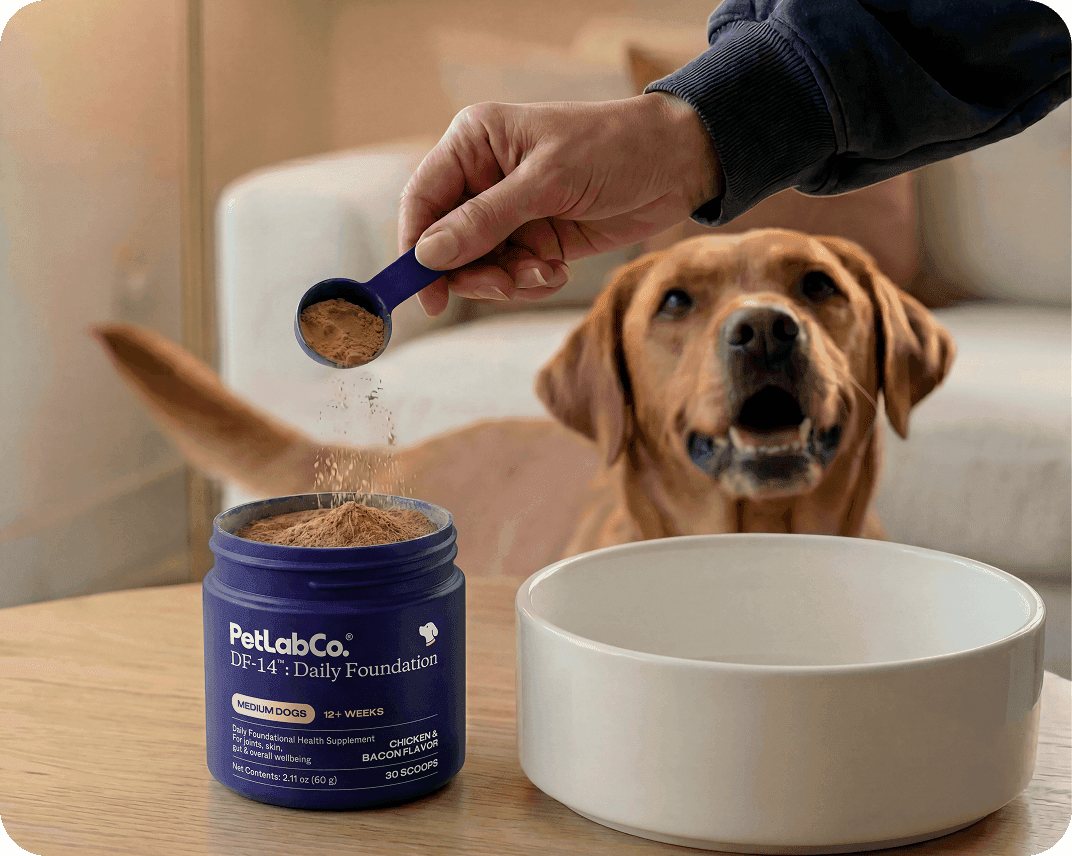
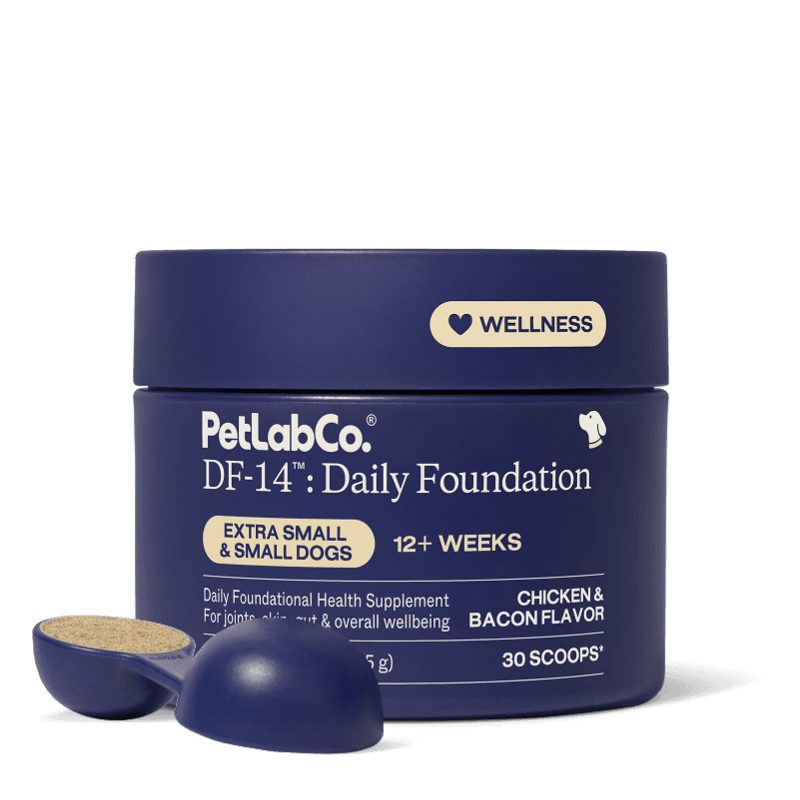
DF-14 Daily Foundation represents a different strategy, functioning as a multifunctional daily powder rather than an isolated probiotic chew. Its complex formulation combines probiotic strains with additional functional ingredients targeting overall foundational health, including joint and skin support.
DF-14 is formulated for once-daily administration at mealtime, mixed directly into wet food or moistened kibble. Serving sizes are determined by product-specific tubs and included measuring scoops tailored to defined weight brackets. For instance, dogs weighing under 4 pounds utilize a specialized scoop provided in the Small Dog tub, whereas larger weight brackets utilize distinct tub and scoop combinations. Household measuring spoons should never be substituted for the manufacturer’s dedicated scoops.
When comparing a gut-focused chew with a multifunctional powder, several operational distinctions emerge:
- Primary Purpose: The chew offers a dedicated gastrointestinal support routine, whereas the multifunctional powder delivers broad nutritional ingredients alongside its probiotic component.
- Administration Method: The chew requires counting whole units based on weight, while the powder requires measuring dedicated scoops into food.
- Verification of Intake: The chew requires confirming the dog chewed and swallowed the unit, while the powder requires verifying that the entire portion of supplemented meal was consumed.
- Formulation Considerations: The chew formula focuses on microbial strains and pre/postbiotics, whereas the powder contains additional ingredients, such as krill, crawfish-derived glucosamine, and hydrolyzed chicken liver, which must be accounted for if the dog has specific food allergies or dietary restrictions.
Ensuring a Cohesive Supplement Strategy
Introducing multiple supplement products simultaneously can create overlapping ingredient profiles and complicate evaluation. If transitioning a dog from a soft chew to a multifunctional powder, owners should consult their veterinarian to plan the transition and confirm that the expanded ingredient list aligns with the dog’s dietary needs. Bringing both product packages to the clinic ensures an accurate comparison of active and inactive components.
Building a Structured Reassessment Strategy
A well-designed supplement plan relies on a clear initial rationale and a pre-determined trigger for reassessment. Owners do not need complex logging systems, but maintaining simple, written notes regarding administration dates, observed physical changes, and dietary modifications provides essential context for veterinary reviews.
The frequency of re-evaluation depends on the dog’s health status. Healthy dogs taking a product for general maintenance can be re-evaluated during routine annual or semi-annual wellness examinations. Conversely, dogs taking a supplement alongside medical management for an active condition require shorter review intervals determined by the attending clinician.
Useful record-keeping focuses on five key elements:
- Reason for Starting: Documenting the specific goal discussed with the veterinarian.
- Product and Serving: Recording the precise formula name, weight bracket, and daily quantity.
- Daily Observations: Tracking appetite, stool consistency, and verified supplement intake.
- Contextual Changes: Logging food shifts, new medications, travel dates, or missed doses.
- Reassessment Trigger: Defining specific events or timeline points that mandate a clinical review.
Evaluating Plan Continuation Before Reordering
Prior to purchasing a replacement container of supplements, owners should conduct a brief review of the current routine. Key questions to consider include:
- Does the dog still fall into the same weight-based serving category?
- Has the dog’s primary diet or health status changed since the last purchase?
- Is the administration routine being maintained consistently by all caregivers?
- Was the supplement started for a temporary event that has now passed?
If observational notes reveal that a powder is frequently left at the bottom of the food bowl or that soft chews are regularly missed, the administration method needs adjustment. These practical challenges indicate a procedural issue rather than a need to alter the dosage.
Protocols for Unresolved Issues or Plan Completion
If the original symptom that prompted supplement use remains unresolved after a reasonable trial, purchasing additional containers without veterinary consultation is discouraged. Owners should share their observation notes with the clinic to determine whether diagnostic testing, prescription medication, or dietary adjustments are needed. A supplement should not remain in the routine indefinitely while the core issue remains unaddressed.
When stopping or changing a probiotic product, pet owners should follow any product-specific instructions and veterinary recommendations. Science does not support the idea that all canine probiotics must be permanently continued, nor is there proof that supplemental bacteria permanently colonize the canine gut after administration stops. Once a supplement is discontinued, normal observation should continue, and any returning symptoms should be evaluated by a professional rather than treated with immediate, unguided resumption of the supplement.
Maintaining a balanced approach ensures that dietary supplements support overall wellness without overshadowing primary medical care, balanced nutrition, and routine preventive medicine.
Applied Real-World Scenarios for Duration Decisions
To better understand how these principles apply in daily life, consider three common scenarios illustrating how different situations dictate unique duration plans:
Scenario A: The Healthy Dog on a Maintenance Routine
A healthy adult dog receives a daily probiotic chew that was reviewed and approved during a routine veterinary examination. The owner administers the labeled serving consistently, the dog accepts it readily, and gastrointestinal function remains stable.
When the product tub is nearly empty, the owner reviews the dog’s weight, confirms no new medications have been introduced, and verifies that the formulation remains unchanged. The decision to purchase another container is based on ongoing suitability and convenience, with the plan scheduled for formal review at the next annual veterinary visit.
Scenario B: Probiotic Support Surrounding Planned Travel
An owner whose dog historically experiences mild, stress-related stool changes during travel plans an upcoming trip. During a pre-travel consultation, the veterinarian approves a short-term probiotic plan.
The travel dates define the timeframe for administration, establishing a clear starting point before departure and a designated endpoint after returning home and settling back into the normal routine. If the dog experiences severe symptoms during the trip, the owner follows pre-agreed clinical guidelines rather than simply extending the supplement duration indefinitely.
Scenario C: Integrating a New Prescription Medication
A dog that has taken a daily probiotic chew for several months is diagnosed with an infection and prescribed an oral antibiotic. Rather than assuming the supplement should be stopped or doubled, the owner consults the prescribing veterinarian.
The clinician adjusts the daily schedule, instructing the owner to space the probiotic chew several hours apart from the antibiotic dose to prevent interaction. The owner records this modified schedule in a visible location for all caregivers. Once the antibiotic course is completed, the owner checks in with the clinic to confirm whether the dog should revert to its standard daily maintenance routine.
In every case, establishing clear parameters regarding dose, frequency, purpose, and review triggers ensures that probiotic supplementation remains a safe, effective, and deliberate component of canine care.
Frequently Asked Questions
Can a dog receive too many probiotics?
Administering more than the recommended label serving or combining multiple probiotic products can supply an excessive amount of microorganisms and other active ingredients. Higher doses do not automatically produce better clinical results and may cause temporary digestive upset. If a dog accidentally ingests a large quantity of supplements, contact a veterinarian or pet poison control center immediately with the product container available.
What is the best time of day to give a dog a probiotic?
Administration timing depends on the specific product directions and the dog’s daily schedule. For example, powders like DF-14 are designed for mealtime mixing, whereas soft chews may be given at a set time daily. If the dog takes prescription medications, the timing must be coordinated with a veterinarian to ensure proper spacing between doses.
When should probiotics be avoided?
Probiotics should not be administered without veterinary guidance if a product is inappropriate for a dog’s age, known food allergies, or underlying medical conditions. Products with warnings regarding pregnant or breeding dogs should be used only under direct veterinary supervision. Furthermore, starting a supplement should never take priority over seeking immediate diagnostic care for an acutely ill animal.
What are alternatives to probiotic supplements?
Alternatives depend entirely on the pet’s underlying health goals. Healthy dogs receiving a complete and balanced diet may not require any added digestive supplements. Dogs with gastrointestinal signs may benefit more from therapeutic diets, fiber adjustment, or targeted veterinary medications, depending on the diagnostic findings.
Are natural food sources like yogurt equivalent to canine probiotic supplements?
Fermented foods like plain yogurt or kefir contain live cultures, but their bacterial strains, concentrations, and suitability for canine digestion vary widely. Additionally, many dogs are lactose intolerant or sensitive to dairy products. Human foods do not provide standardized canine dosing and should be discussed with a veterinarian before introduction, especially for dogs with dietary restrictions.