


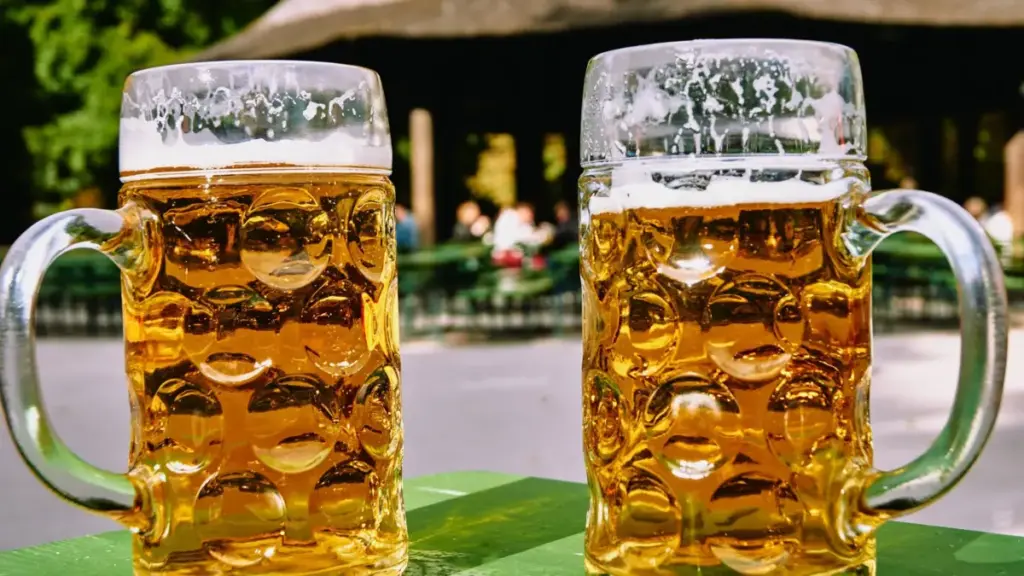
Raise your glasses! Now, hold them up until your arms begin to shake. That is the challenge that athletes take on at a competitive steinholding competition, which is the focus of this week’s Long Read on the Outside Podcast.
Published October 18, 2026, at 3:01 AM, the latest episode of the podcast takes a deep dive into competitive steinholding, an intense sport where athletes raise their heavy glassware filled with beer and attempt to keep them suspended until their muscles inevitably fail and their arms begin to shake uncontrollably.
The sport, while possessing festive and lighthearted cultural roots, demands a surprising level of physical endurance, mental fortitude, and precise physiological technique. In 2025, writer Martin Fritz Huber attended the U.S. national championships of steinholding, which were held during New York City’s annual Oktoberfest celebration in the heart of Central Park. Huber, who chronicled the spectacle, enjoyed himself so much at the event that he decided to take a deep dive into the competition’s shaky German roots, the rigorous training and technique employed by top-tier athletes, and the bizarre backstories of some of the sport’s greatest competitors.
The premise of steinholding, sometimes referred to in its traditional German context as Masskrugstemmen, sounds deceptively simple on the surface. Competitors must hold a full, one-liter glass stein—known as a Masskrug—out in front of them with a completely straight arm, parallel to the ground. The rules are strict: bending the elbow, spilling the beer, or dropping the arm results in immediate disqualification. Because a standard filled stein weighs roughly five pounds, the physics of leverage quickly turn the event into an agonizing test of isometric endurance. Over time, gravity exerts an immense force on the shoulder and arm muscles, leading to the characteristic shaking that defines the sport’s most dramatic moments.
While the modern competitive circuit has gained traction in the United States and various other parts of the world through organized bodies like the U.S. Steinholding Association, its origins trace back to traditional Bavarian culture. Originally, holding a heavy beer stein for extended periods was less of an organized athletic contest and more of a test of stubbornness and camaraderie during lengthy festival celebrations in Germany. Over the decades, however, this festive display of stamina evolved into a structured sport with standardized rules, regional qualifiers, and a fiercely competitive national championship scene.
Huber’s reporting on the 2025 U.S. national championships in Central Park highlights how far the sport has come from its casual tavern beginnings. Surrounded by the autumn foliage of New York City and the festive atmosphere of Oktoberfest, athletes gathered from across the country to see who could outlast the rest. The stakes at the national level are high, drawing competitors who take the discipline very seriously, treating it with the same level of preparation and dedication seen in more traditional endurance sports.
Through his deep dive, Huber explores the fascinating training methods and physical techniques that separate casual festival-goers from elite steinholders. Competitors do not simply show up and lift; they engage in targeted shoulder and core conditioning, build grip strength, and practice mental visualization to push through the excruciating pain threshold that arrives several minutes into a hold. The human body is naturally resistant to the kind of prolonged isometric stress required in steinholding, meaning athletes must train their nervous systems to delay the onset of muscle tremors and failure.
Equally compelling are the personal narratives and backstories of the sport’s elite figures. The community features colorful characters who have stumbled into the sport almost by accident—often winning local pub contests before realizing they possess a rare physiological gift for endurance—only to find themselves training relentlessly for a shot at a national title. These bizarre and engaging backstories add a layer of human interest to a sport that, to an outsider, might initially look like a simple party trick.
As featured on the Outside Podcast, Huber’s exploration captures both the humorous absurdity and the genuine athletic achievement inherent in competitive steinholding. By blending the cultural pageantry of Oktoberfest with the gritty reality of physical exhaustion, the episode offers listeners a comprehensive look into a subculture where a simple glass of beer becomes the ultimate instrument of athletic suffering.