

Discovering the fountain of youth remains an age-old pursuit, inspiring generations of researchers and scientists to look for ways to slow, stop, or even reverse the biological clock. One of the latest experimental interventions causing a buzz in the scientific community is a procedure known as therapeutic plasma exchange. This complex medical technique involves filtering and replacing the liquid portion of a person’s blood. A notable 2025 study published in the scientific journal Aging Cell suggests that this blood-filtering procedure could potentially lower a person’s biological age by approximately two and a half years.
However, before individuals begin searching online for local commercial plasma clinics or viewing the procedure as an immediate medical breakthrough, longevity experts emphasize the importance of looking past the catchy headlines. It is crucial to carefully examine what the study actually reports, what its findings genuinely mean, and—just as importantly—what the research does not imply about using plasma exchange as a simple anti-aging elixir. While the preliminary results offer fascinating insights into human biology and aging, the reality of the procedure is far more complex than a quick fix for longevity.
Why Longevity Experts Care About Plasma
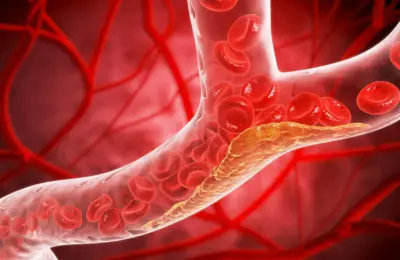
To understand why researchers are focusing heavily on blood plasma, it helps to understand what plasma actually is and what role it plays in human physiology. Plasma is far more than just the liquid medium that simply surrounds red and white blood cells in the human bloodstream. Although it is composed primarily of water, plasma is also remarkably rich in vital proteins, metabolites, various hormones, and inflammatory signaling molecules. According to Dr. Andrea Maier, a geriatrician and board member of the Academy for Health and Lifespan Research, these molecules continuously reflect and actively influence what is happening across various organ systems throughout the body.
Dr. Maier describes plasma using a helpful everyday comparison, calling it a transport system akin to a delivery service like DHL. It acts as a biological vehicle designed to carry substances from the brain to the muscles, from the kidneys to the lungs, and between countless other physiological destinations. Because it is a circulating fluid carrying an immense amount of systemic information, it serves as an exceptionally smart focal point for modern longevity studies.
By analyzing changes in the circulating levels of thousands of different proteins within a person’s plasma, researchers can capture a wide-angle, comprehensive view of the body’s internal state—a metric often referred to as "biological age." This measurement suggests that while a person’s chronological age might be firmly set at 40 years old, their underlying biological systems might be functioning more like those of a 30-year-old or, conversely, a 50-year-old.
Dr. Keenan Walker, a senior investigator at the National Institute on Aging, notes that while biological age is not a completely fixed or mathematically precise measurement, it provides highly useful health information. He explains that there is no single, universally agreed-upon definition of biological age, yet researchers continually try to estimate it because numerous studies have consistently found that individuals whose biological age outpaces their chronological age face a significantly greater risk for chronic health conditions, various diseases, and overall mortality.
The scientific interest in this area is not entirely new. Approximately fifteen years ago, researchers began aggressively exploring the fundamental connection between blood plasma and the biological aging process. This early scientific inquiry led to groundbreaking experiments utilizing a surgical technique known as parabiosis. In these laboratory studies, researchers physically linked the circulatory systems of two different organisms together. Specifically, scientists would stitch together the circulatory systems of old mice and young mice, operating under the core hypothesis that if younger plasma was continuously circulated through an older organism, that older organism’s body would reap distinct physiological benefits.
Those early animal studies did indeed demonstrate striking results. Older mice that received the continuous infusion of plasma from younger mice exhibited a noticeably higher resilience to various forms of tissue and organ stress. These promising findings eventually paved the way for the clinical development of therapeutic plasma exchange as a medical intervention used today to treat specific autoimmune diseases, complex neurological disorders, and certain types of blood cancers.
Dr. Maier points out that the entire contemporary wave of anti-aging plasma research fundamentally emerged from a single core question: Is there something circulating within our blood that we could actively remove, or conversely, infuse into our circulation, that would enable human beings to live longer and healthier lives? Yet, she notes that science does not yet have a definitive, universally applicable answer to that question.
The Study Shows Potential, But Is Far From a Panacea
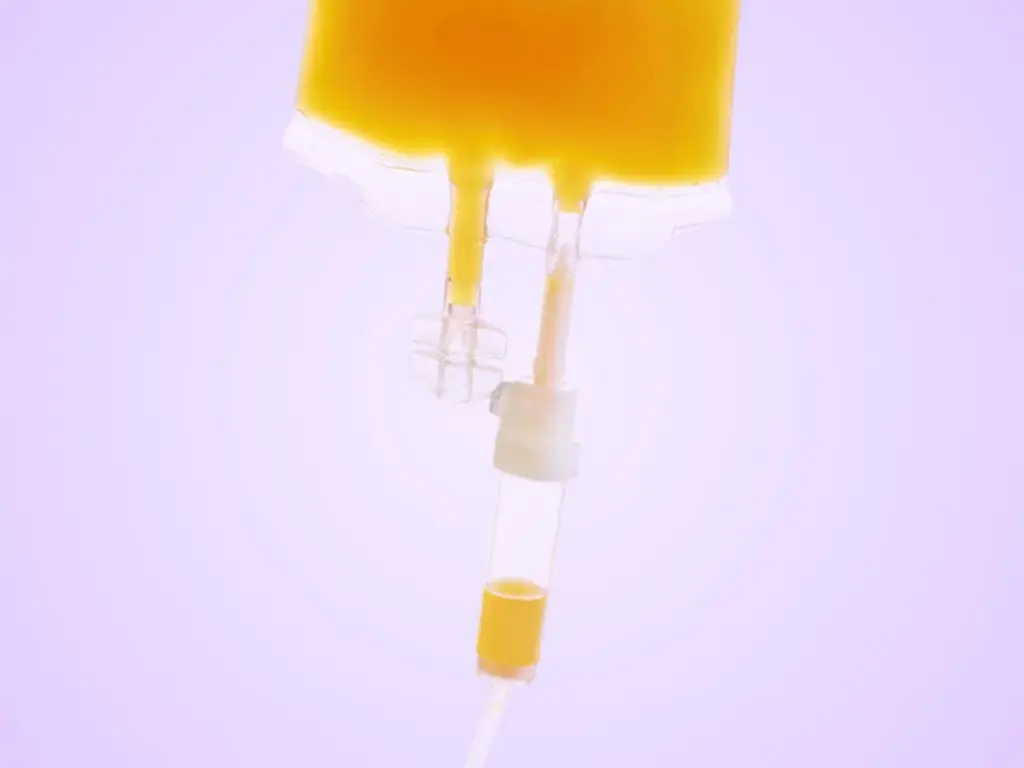
In the recent Aging Cell study, researchers enrolled a cohort of 42 human participants and performed a procedure where their existing plasma was systematically exchanged with purified albumin, which is a standard blood protein, along with a sterile saline solution. Additionally, a subset of the participants received a specific type of immune therapy known as intravenous immunoglobulin, or IVIG, added into their treatment protocol. Throughout the course of the research, scientists carefully measured changes within the participants’ bodies using advanced laboratory testing capable of tracking aging markers down to the molecular level.
At first glance, the numerical results of the study appeared quite significant. Certain participants in the trial demonstrated a reduction in their estimated biological age by roughly two and a half years. However, Dr. Maier points out a critical nuance regarding the timeline of these findings, noting that this specific data emerged from a midpoint evaluation during the study rather than from the final measurements recorded at its conclusion.
When researchers dig a little bit deeper into the data, that reported drop of two and a half years in biological age represents a comparison between participants at the midterm evaluation point and their initial baseline measurements, rather than a comparison between the final study results and the baseline. By the time the study reached its official conclusion, that noticeable rejuvenating effect had nearly vanished.
Dr. Maier explains that one primary reason for this temporary effect is that the human body undergoes a form of systemic shock when a large portion of its plasma is entirely removed and replaced with a different fluid mixture. The sudden influx of fresh cells and proteins can momentarily shift a person’s biological age markers, but the body quickly begins experiencing severe physiological stress as it struggles to adapt to this massive internal disruption. Consequently, the biological biomarkers soon swing right back to their original baseline levels. In essence, while an individual might achieve some degree of short-term cellular rejuvenation, the effect is ultimately fleeting.
Another noteworthy detail highlighted by Dr. Walker involves the baseline health status of the individuals who chose to participate in the study. He observes that participants who started the trial in a less healthy physiological state experienced a stronger overall intervention effect from the plasma exchange. Because of this variation, Dr. Walker emphasizes that future research must focus heavily on identifying precisely which demographic groups stand to benefit most from the procedure.
As an overarching scientific concept, both Dr. Maier and Dr. Walker view blood-based interventions as holding genuine promise for improving overall human healthspan, but they strongly advocate for a much more personalized approach rather than a generalized, indiscriminate plasma-filtering process.
Dr. Maier characterizes the current research milestone as a classic phase 1 study. She explains that the scientific community has successfully learned that the procedure can be performed safely under controlled conditions, but researchers now need to validate these findings through much larger, more comprehensive clinical trials that track long-term health outcomes. She stresses that the underlying concept is not far-fetched or crazy, noting that it is firmly grounded in a substantial body of scientific evidence, but it is certainly not a universal treatment suitable for every individual.
Moving forward, the field requires significantly greater precision. While Dr. Maier expresses profound optimism for the future of longevity science and describes the current research as an encouraging first step, she firmly cautions against implementing therapeutic plasma exchange in routine clinical practice for anti-aging purposes at this stage, primarily due to the intense physical stress it places on the human body. Although she values clinical innovation and appreciates the scope of the study, she believes that future breakthroughs in the pursuit of longevity will likely take entirely different, less invasive forms.