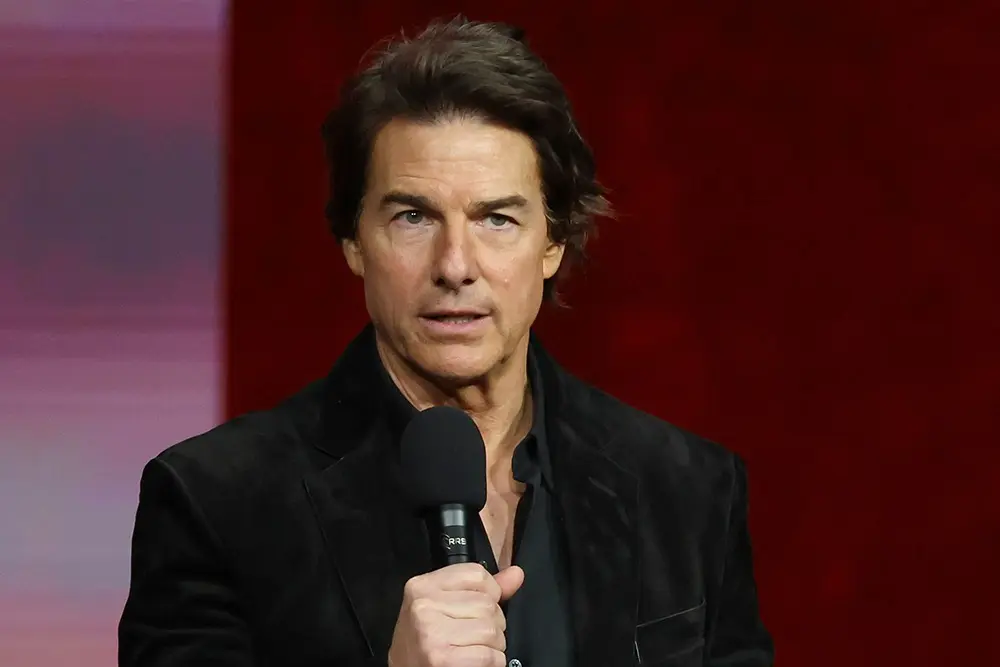
Hollywood icon Tom Cruise remains utterly unintimidated by the burgeoning technological revolution sweeping across the entertainment industry. Speaking candidly during a rare and intimate career retrospective in London, the veteran actor and producer expressed unwavering faith in the enduring appeal of human storytelling, live-action authenticity, and the communal magic of the theatrical experience.
The conversation, part of the prestigious BAFTA “Life in Pictures” series, took place on a Monday night before a rapt audience in the British capital. Moderated by broadcaster Edith Bowman, the evening offered a sweeping retrospective of Cruise’s extraordinary four-decade career. Together, they journeyed through his legendary filmography, touching upon his breakthrough and critically acclaimed performances in beloved classics such as “Top Gun,” “Jerry Maguire,” “Magnolia,” and the high-octane “Mission: Impossible” franchise, while also pivoting toward the horizon to discuss his fiercely anticipated upcoming projects.
The discussion inevitably turned toward the future of filmmaking, specifically addressing the looming presence of artificial intelligence. It is a topic of considerable irony and topicality for the actor, given that the “Mission: Impossible” series has long positioned itself at the absolute forefront of technological integration in cinema. Most notably, the franchise’s upcoming 2025 installment, “The Final Reckoning,” tackles artificial intelligence directly by casting it as the ultimate villain facing Ethan Hunt. When Bowman pressed Cruise on how he believes AI will ultimately impact the broader film industry, the actor offered a grounded, optimistic assessment rooted in the irreplaceable value of human emotion.
“Here’s the thing: There is nothing like human,” Cruise began, articulating a philosophy that has defined his career as both a performer and a relentless advocate for the big-screen experience. He explained that one of the primary reasons he remains so fiercely bullish on preserving the traditional theatrical model is its unique ability to unite people in a shared physical space. For Cruise, going to the movies is not merely a passive form of consumption, but an active, collective ritual that relies entirely on human empathy and shared connection.
While acknowledging the modern landscape of home entertainment, Cruise was quick to clarify that his dedication to theaters does not stem from animosity toward digital alternatives. “I have nothing against streaming or anything like that,” he continued, framing the debate not as a hostile war between formats, but as a recognition of distinct mediums. Seeing a film in a crowded movie theater, he emphasized, is simply “a different art form” altogether, one that demands a specific kind of communal engagement and sensory immersion that cannot be replicated on a living room television screen.
To substantiate his faith in the theatrical marketplace, Cruise pointed to the remarkable triumph of the summer box office. The industry recently shattered all-time historical records, pulling in a staggering $4.76 billion globally during the lucrative window stretching from May 1 to Labor Day. For Cruise, this staggering financial milestone served as definitive proof of the public’s unyielding appetite for genuine human stories, rigorous physical craftsmanship, and authentic cinematic spectacles.
“People want that experience. They’re going to movie theaters,” Cruise noted with characteristic enthusiasm, before reiterating his foundational worldview: “I always believe in humanity.”
Addressing the rapid technological advancements head-on, Cruise maintained that while the integration of artificial intelligence is an inevitable reality that the industry must confront, it should serve as a catalyst for human ingenuity rather than a replacement for it. Concluding his thoughts on the matter, the producer and actor stressed that creatives must simply “keep creating.”
“You know, it is coming and it’s going to happen,” Cruise acknowledged regarding the encroachment of AI tools into production pipelines and post-production workflows. However, he doubled down on his core conviction, asserting with absolute finality: “But people want to see real things.”
The conversation also provided Cruise with the opportunity to offer a tantalizing preview of his next major cinematic endeavor, a deeply dramatic film titled “Digger.” Directed by Alejandro G. Iñárritu, the visionary filmmaker behind masterpieces like “The Revenant,” the movie features Cruise in a remarkably unconventional role as a wealthy oil tycoon. In a testament to his ongoing commitment to physical transformation and immersive character work, Cruise looks nearly unrecognizable in the film, sporting an extensive fat suit and heavy prosthetics. The application process for the demanding role was no small feat, with Cruise revealing that the specialized makeup initially required a grueling six hours to apply each day.
The sheer originality of the project clearly left a profound impression on the seasoned star, who has spent decades working with some of the greatest directors in the history of modern cinema. “I’ve never read a movie like this,” Cruise confessed to the captivated BAFTA audience, praising the daring vision of the production. “It’s the most original film and one of the most moving films I’ve ever seen.”
“Digger” is scheduled to make its official theatrical debut on October 2, distributed worldwide by Warner Bros., setting the stage for yet another bold chapter in a career defined by risk-taking and an unyielding dedication to the art of the big screen.