
The procedure was "remarkably" successful.
That is how 74-year-old Cynthia Schraf-Fletcher describes genicular artery embolization, widely known as GAE, a minimally invasive medical treatment specifically designed to reduce chronic knee pain for individuals suffering from degenerative joint conditions. Nearly a year after undergoing the outpatient procedure on her right knee, she reports that the physical result feels almost identical to the total knee replacement she previously underwent on her left knee, a major surgical undertaking that involves significantly longer recovery times and more complex post-operative care.
"I couldn’t be more pleased," says Schraf-Fletcher, reflecting on her medical journey. She turned for relief to Leigh Casadaban, MD, MS, an assistant professor of radiology at the University of Colorado Anschutz School of Medicine, who performed the specialized treatment.
Reflecting on her daily life after the intervention, Schraf-Fletcher notes that everyday activities which once came with substantial, wincing discomfort are now remarkably much easier to accomplish. Simple pleasures such as tending to her garden, riding a stationary bicycle, and enjoying other favorite recreational activities all involve far less pain than they did before she walked into Dr. Casadaban’s office. Her experience underscores a growing shift in modern orthopedic and interventional radiology care, where physicians are increasingly looking for effective, less invasive ways to manage chronic conditions without rushing patients into major surgery.
A New Option Between Injections and Knee Replacement
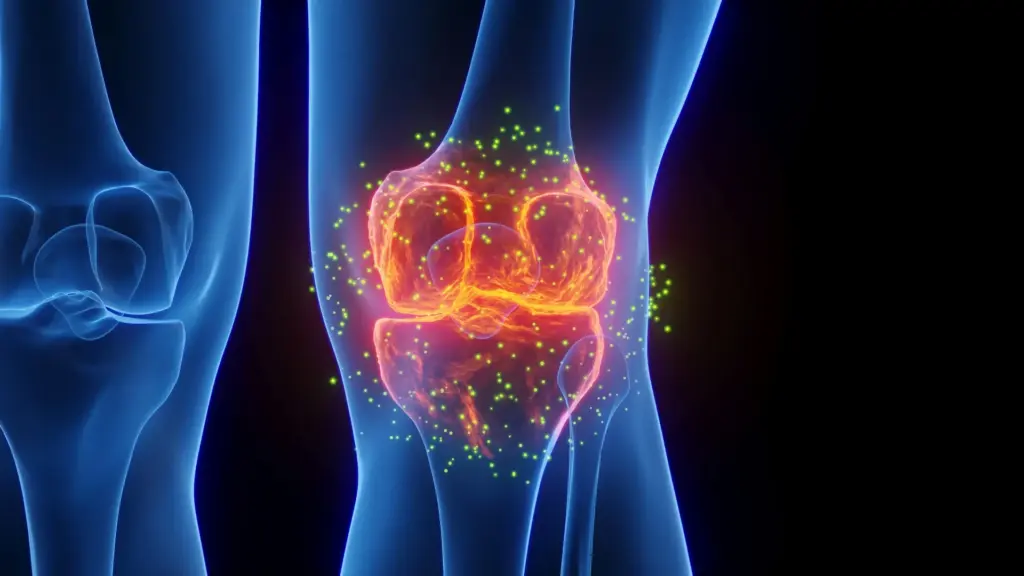
Genicular artery embolization works through a targeted biological mechanism: reducing excessive blood flow to inflamed areas located inside and around the knee joint. The primary medical goal of this targeted blood flow reduction is to calm chronic inflammation, which can in turn significantly reduce fluid swelling and the persistent, nagging pain that accompanies it day in and day out.
That specific mechanism makes the procedure potentially useful and deeply appealing for people suffering from osteoarthritis who have successfully exhausted simpler conservative options—such as physical therapy and lifestyle modifications—but are not yet clinically ready or personally willing to undergo major orthopedic surgery.
"For treating osteoarthritis in the knees, we often think of medications, physical therapy, maybe a steroid injection, and then on the far end of the spectrum is a total knee replacement. There really hasn’t been anything for patients in between," explains Casadaban, a practicing vascular interventional radiologist at the University of Colorado Anschutz School of Medicine. "GAE is a promising minimally invasive procedure that may fill that spot for people who have failed conservative treatments but are not yet ready to have a major surgery."
Osteoarthritis is a widespread degenerative joint disease in which protective cartilage and other crucial structural tissues inside a joint gradually break down over time due to wear, tear, and biological aging. In the human knee, that destructive physiological process can cause severe, unyielding pain, joint stiffness, localized inflammation, and profound difficulty walking, climbing stairs, or exercising comfortably.
According to Dr. Casadaban, people who present with mild to moderate knee osteoarthritis tend to be the absolute best candidates for the GAE procedure. However, patients with more advanced degenerative disease can also undergo the specialized treatment, though clinical observations suggest that the long-term benefits may not endure quite as long as they do in patients with less severe joint deterioration.
"We find about 70% of patients have phenomenal results. They cut their pain scores in half, sometimes more. We have a few patients with no pain at all after the procedure," Casadaban notes, highlighting the high efficacy rate observed in clinical settings. "Patients that have tried a lot of other treatments and haven’t had pain relief are happy to get back to their normal activities."
For Schraf-Fletcher, the chance to avoid another major knee operation was exceptionally appealing. After previously experiencing frustrating complications from her earlier traditional knee replacement surgery, she says she was remarkably eager to explore alternative interventions like GAE, and looking back now, she is profoundly glad that she made the choice to proceed.
How the Procedure Works
Genicular artery embolization is an intricate yet streamlined medical intervention that typically takes between one and two hours to complete. It is performed under conscious sedation, meaning that the patient remains relaxed, comfortable, and responsive throughout the session, but is not placed under full general anesthesia, thereby avoiding the heavier physiological toll associated with unconscious surgical states.
The medical process begins when an interventional radiology team carefully makes a small, discreet incision in the natural crease of the patient’s leg. A very thin, flexible medical tube known as a catheter is then skillfully guided through the femoral artery using advanced X-ray imaging technology and specialized contrast dye, which allows the attending doctors to visualize the complex network of blood vessels clearly on high-resolution monitors.
Once the catheter successfully reaches the genicular arteries surrounding the knee joint, the clinical team releases microscopic beads directly into the abnormal, hyperemic blood vessels that are associated with the painful, inflamed areas previously identified through patient mapping. Those tiny specialized beads work mechanically to reduce abnormal blood flow directly to the targeted vascular pathways, starving the inflammatory tissue of the excessive blood supply that fuels chronic irritation.
Because the procedure does not involve physically cutting open the joint, replacing native bone, or making a large surgical incision in the skin, the physical recovery period is generally much shorter and considerably less painful than the recovery following a traditional knee replacement operation. Patients are carefully monitored in a recovery setting for several hours after the procedure is finished and typically return home to the comfort of their own beds on the very same day. Following discharge, patients are usually advised to take it easy and avoid strenuous physical exertion for the next few days to allow the treated area to settle.
A Procedure With Growing Interest
Genicular artery embolization was first developed and pioneered in Japan a little more than a decade ago, and in the years since its introduction, it has steadily attracted increasing clinical attention, research funding, and patient interest around the world.
Within the United States, regulatory bodies have taken close note of the technology’s rapid advancement. Notably, the U.S. Food and Drug Administration has granted "breakthrough device status" to a number of specialized medical devices utilized in this specialized field since 2021. This prestigious designation is purposefully intended to accelerate and speed up the development, evaluation, and regulatory review of specific medical technologies that could potentially offer meaningful, life-improving advantages for patients suffering from difficult chronic conditions.
Early clinical research investigating the outcomes of GAE has also produced highly encouraging results that continue to build confidence within the medical community.
"The theory is that GAE reduces inflammation inside the knee joint, and symptom relief can last years," Casadaban explains, pointing to the growing body of international medical literature. "Four-year data published in Japan shows that if you have one outpatient procedure, your pain relief can last for those four years. In the U.S., we now have two-year data, which shows that if you have a good response, pain relief can last two years. That really speaks to the theory that we’re hopefully modifying something in the joint."
The exciting possibility that a single outpatient medical treatment could provide lasting relief stretching across several years is one of the primary reasons why medical researchers are so closely studying the precise biological mechanisms that occur inside the knee joint following a GAE procedure.
Researchers Are Testing How GAE Changes the Knee
To deepen the medical community’s understanding of these mechanisms, Dr. Casadaban is actively leading dedicated clinical trials at the University of Colorado Anschutz School of Medicine aimed at learning more about how and why the treatment works so effectively for many individuals.
One ongoing clinical study is closely examining changes in synovial fluid within the knee joint in people undergoing the GAE procedure. By carefully examining those biochemical changes, researchers hope to gain a much clearer picture of how the intervention directly affects inflammation and other complex molecular processes occurring deep inside the joint.
Another related study is currently evaluating a brand-new temporary treatment device called Nexsphere-F. In this trial, the specialized device is placed into the arteries to temporarily block small blood vessels in the knee that contribute significantly to localized inflammation and persistent pain, offering another avenue for medical innovation in the field.
Osteoarthritis is a widespread condition that affects millions of people each year and can develop in many different joints throughout the human body. For now, genicular artery embolization is primarily being used to treat painful knees, but the same general interventional strategy is beginning to expand into clinical trials and treatments for other chronic, painful musculoskeletal conditions.
Dr. Casadaban notes that similar minimally invasive vascular approaches are currently being explored for stubborn problems including frozen shoulder, tennis elbow, and chronic plantar fasciitis.
If ongoing clinical studies continue to demonstrate safe, lasting benefits for patients, genicular artery embolization could eventually cement its place as an essential, standard medical option for millions of patients currently caught in the difficult gap between conservative treatments and major joint surgery.