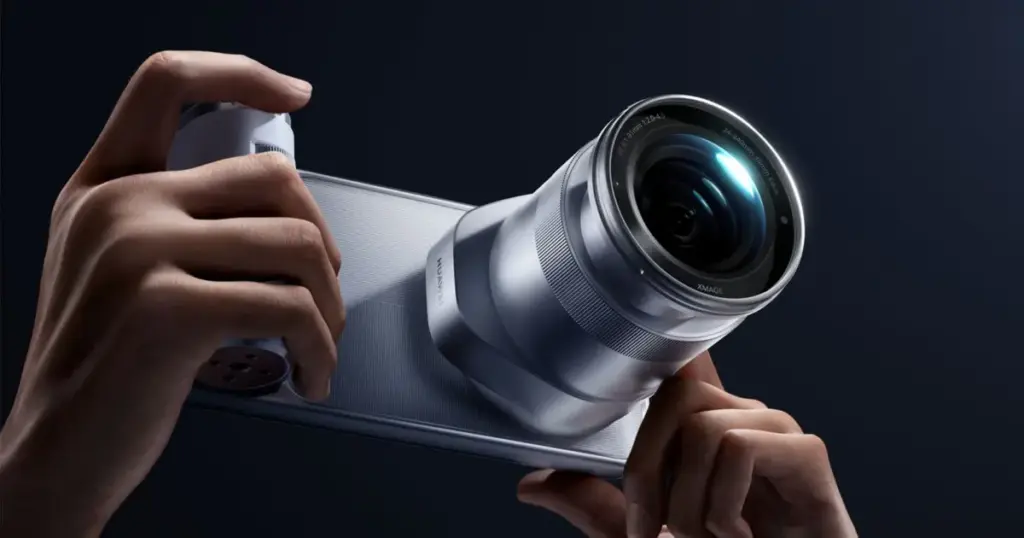
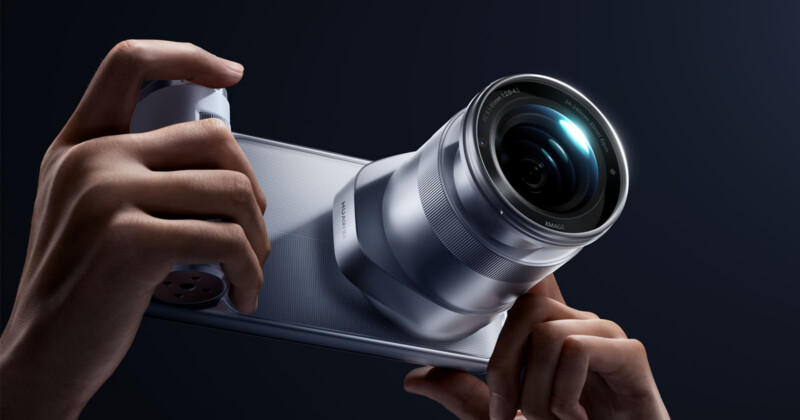
In a bold move that blurs the lines between traditional mobile photography and dedicated compact cameras, Huawei has officially unveiled an innovative add-on camera module alongside its latest slate of flagship smartphones. While competitors such as Vivo have previously introduced accessories like Zeiss-made teleconverter lenses to extend smartphone reach, Huawei’s new Ruiying Z10 goes a step much further by functioning as an entirely self-contained camera system complete with its own dedicated 50-megapixel image sensor and powerful zoom lens.
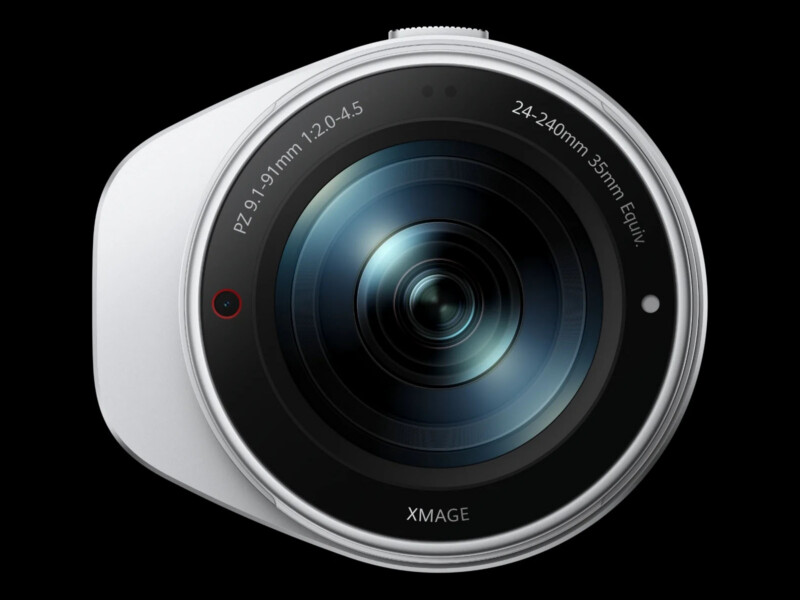
According to initial reports detailing the release, the Huawei Ruiying Z10 features a large Type 1 RYYB image sensor positioned neatly behind a 24-240mm f/2-4.5 equivalent power zoom lens. Optically, the hardware utilizes a 9.1-91mm optic prior to factoring in a 2.6 times crop factor. Interestingly, this crop factor sits remarkably close to the familiar 2x crop factor found across Micro Four Thirds digital cameras, offering photographers a familiar optical framework when framing shots.
Rather than acting merely as an external optical glass or a passive teleconverter, the Ruiying Z10 operates as an independent imaging unit that relies on the host smartphone strictly for power and processing capabilities. The modular accessory has been engineered to seamlessly integrate with two specific high-end devices within Huawei’s newly announced Mate 90 series: the Mate 90 Pro Max Collector’s Edition and the Mate 90 RS, which serves as the brand’s premier flagship slab phone. The physical attachment mechanism breaks away from conventional slip-on magnetic cases or software-dependent clip-ons, utilizing instead a specialized screw-on mount system. This design choice closely mirrors the tactile experience of mounting an interchangeable lens onto a traditional digital single-lens reflex or mirrorless camera. Although the heavy module sits directly in front of the smartphone’s native built-in cameras, it operates entirely independently of them.
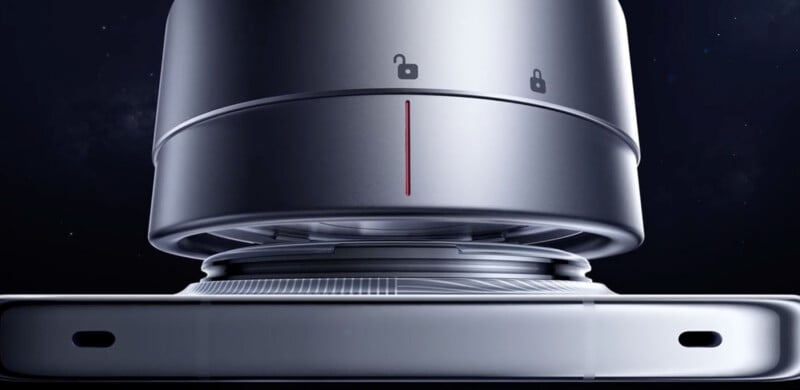
This unconventional hardware approach introduces an intriguing paradigm shift for mobile photography enthusiasts. By pairing a large sensor and a dedicated optical assembly with a smartphone’s computing power, the Ruiying Z10 effectively delivers a high-end compact digital camera experience—complete with matching physical image quality—packaged directly within a mobile ecosystem. Naturally, this level of engineering trade-off introduces physical compromises. The module alone adds a substantial amount of size and weight to the paired smartphone, tipping the scales at nearly 350 grams by itself. However, because the system is modular and entirely detachable, users are not forced to carry the extra bulk at all times, especially considering that the Mate 90 RS and Mate 90 Pro Max already feature exceptionally capable built-in camera arrays.

The core advantage of the Ruiying Z10 lies in the physics of optical design. Even the most advanced computational photography algorithms and sophisticated multi-frame image processing techniques struggle to replicate the physical benefits offered by a genuinely large image sensor and a full-blown optical lens assembly. Within the realm of photography, there remains no true technological substitute for physical glass, particularly when evaluating overall resolving power, light-gathering capability, and natural depth of field separation. Furthermore, the unit’s expansive 10x zoom lens provides smooth, step-less focal length adjustments spanning its entire focal range—a fluid mechanical capability that fixed or switched-focal-length smartphone lenses simply cannot achieve natively. Beneath the exterior barrel, the sophisticated lens structure incorporates a complex configuration of 19 distinct elements organized across six separate groups.

Given the extensive hardware packed inside the module, the Ruiying Z10 commands a notable financial investment. Unlike a basic teleconverter lens that consists solely of optical glass elements, the Z10 houses an entire miniature imaging pipeline, complete with sensor hardware and motorized zoom mechanics. In the Chinese market, the Ruiying Z10 carries a retail price tag of 5,999 RMB, which translates to roughly $900 based on current currency exchange rates. This positioning means the camera module costs more than many standalone consumer smartphones currently available on the market, firmly targeting dedicated mobile imaging enthusiasts, professionals, and early adopters willing to pay a premium for experimental photographic form factors.