

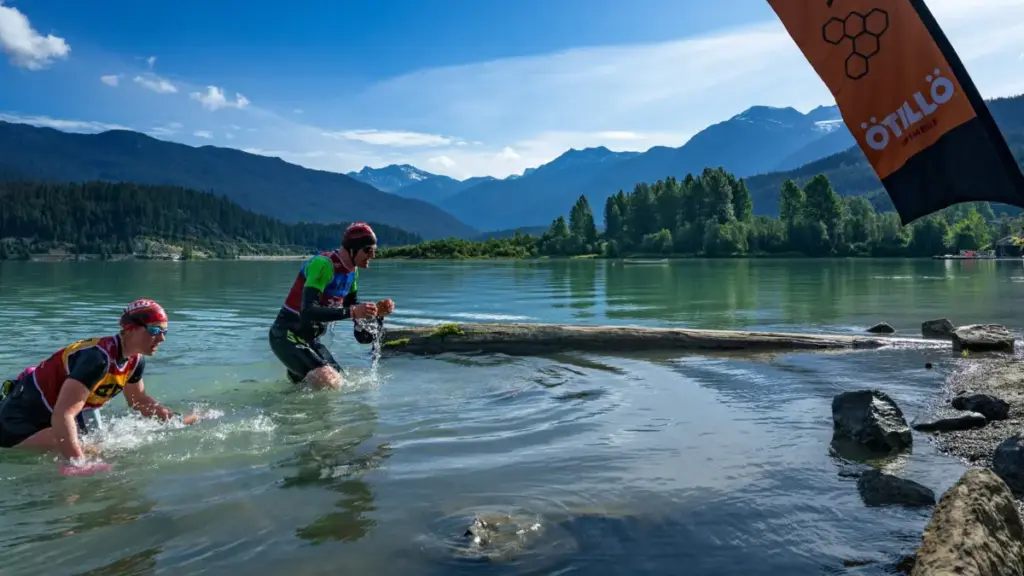
FORT COLLINS, Colorado — For the past 25 years, veteran endurance athlete Frederick Dreier has tested his limits across triathlons, bicycle races, and a wide array of demanding multi-sport competitions. Yet, standing on the shores of Colorado’s Horsetooth Reservoir ahead of his latest test, he found himself facing an entirely unfamiliar breed of athletic challenge: the Ötillö Swimrun.
The event, which took place on Sunday, October 4, combined open-water swimming and trail running in a point-to-point format that strips away the transition areas common in traditional triathlons. For Dreier, the race yielded a mix of heavy-limbed fatigue, an unintended encounter with a pricklypear cactus, and an overwhelming sense of accomplishment shared among a community of strangers clad in wetsuits and running shoes.
Despite crossing the finish line with aching arms and cactus spines embedded in his backside, Dreier described the experience as an absolute blast, offering a refreshing departure from the rigid self-seriousness that often plagues modern endurance sports.
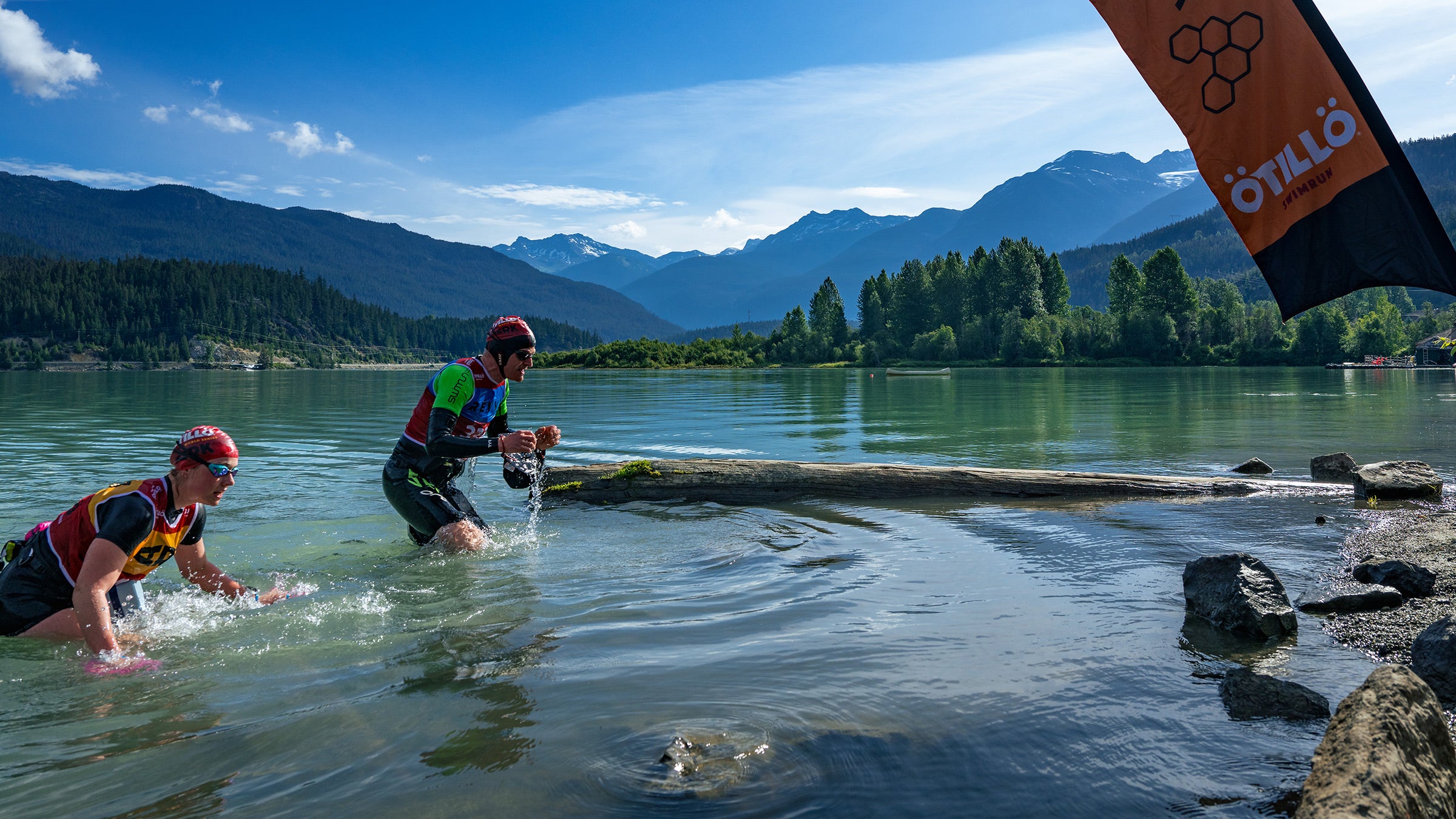
What the Heck Is a Swimrun?
For those unfamiliar with the discipline, swimrun is best understood as a triathlon minus the bicycle, with the swimming and running segments chopped up and stitched together repeatedly across a continuous course. Participants run, swim, run, swim, and repeat the cycle until they reach the finish line. Dreier competed in the "sprint" distance event, which spanned 12 miles of rugged trails and lake water, broken up into five swims and six runs. It took him nearly three hours to complete, with little room for actual sprinting.
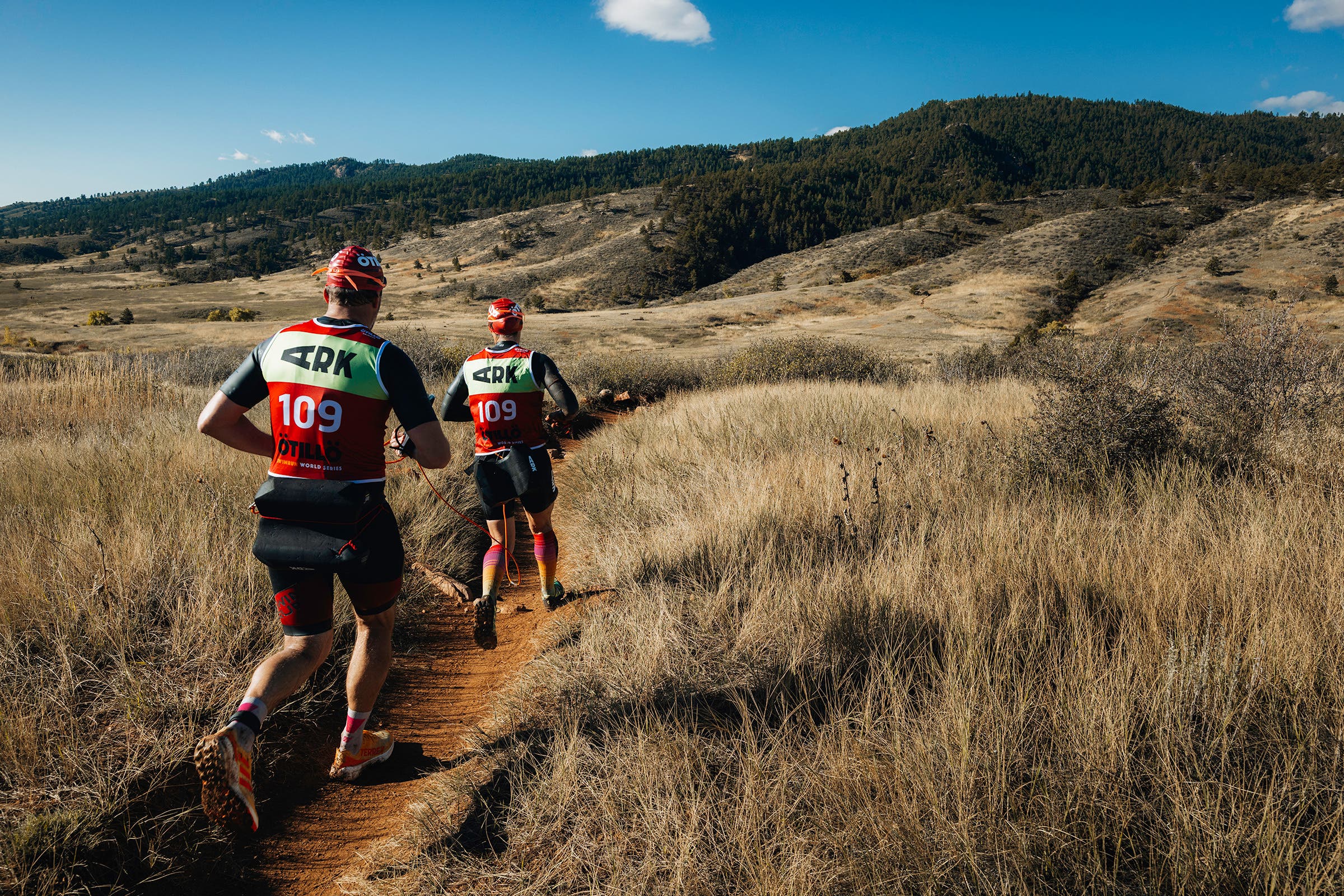
Unlike traditional triathlons where athletes shed their gear after each leg, swimrun participants must carry all of their equipment from the start line to the finish. This rule dictates that athletes must swim while wearing their running shoes, run while zipped into their wetsuits, and haul specialized accessories—such as pull buoys and hand paddles—for the entirety of the journey.
Within the global endurance landscape, Ötillö serves as the sport’s premier brand and most recognizable series. Developed in Sweden, the format was born among the rugged island chains just east of Stockholm, which still serves as the site of the annual Ötillö world championships. The name itself is a Swedish phrase that loosely translates to "island to island." Over the years, the format has earned a reputation for being grueling, highly adventurous, and deeply rooted in European outdoor culture.
Ötillö Expands to North America
The Ötillö racing format is no longer confined to European waters. In 2023, the organization expanded its reach into North America by acquiring a growing collection of U.S. swimrun events known as the Odyssey series. That domestic circuit was originally co-founded by Lars Finanger, a former roommate of Dreier’s from their days as dirtbag triathletes chasing endorphins in Boulder, Colorado, two decades ago.
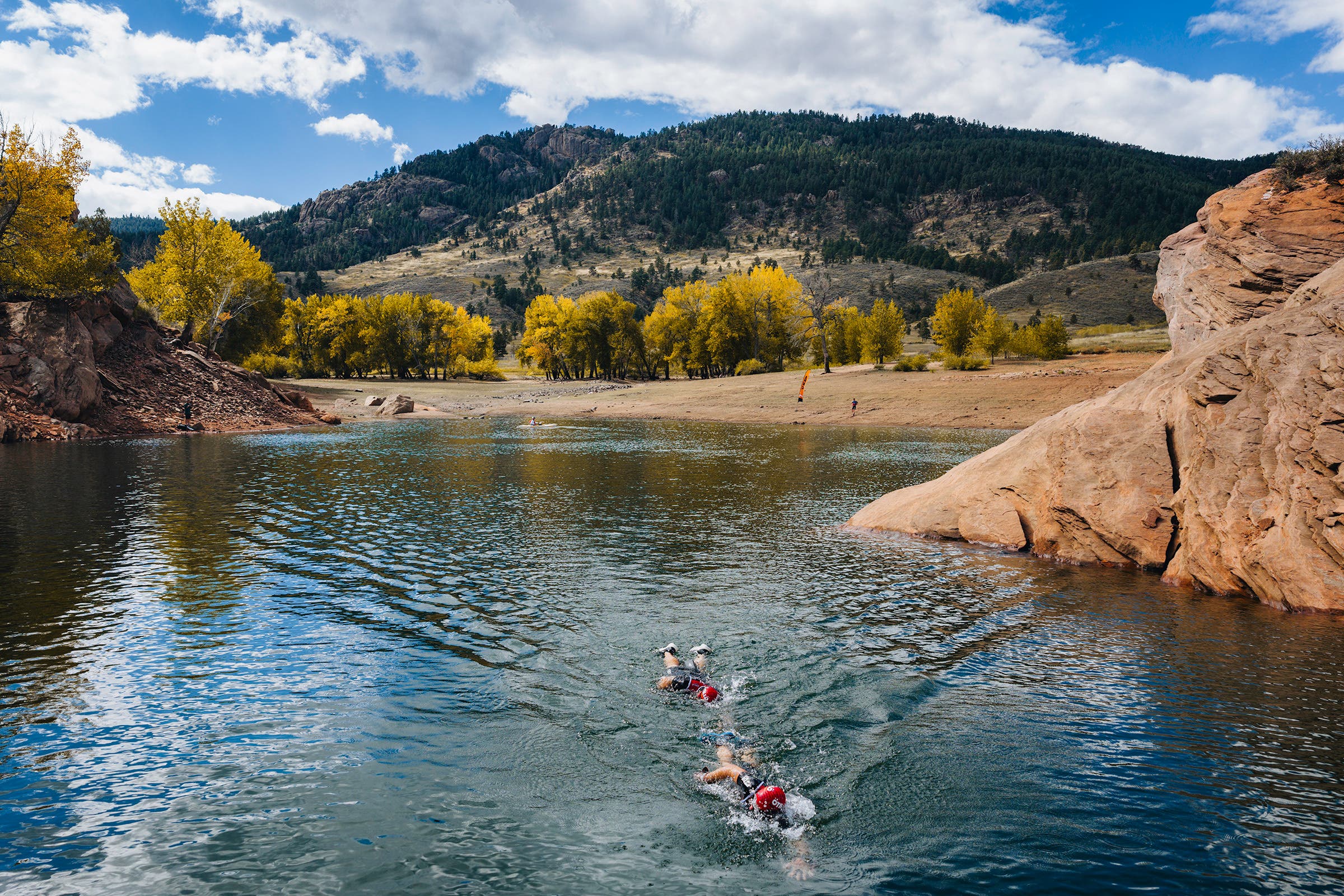
Today, Finanger is working to popularize the Swedish sport in the United States, where running trails in a full wetsuit remains a niche pursuit.
Reflecting on the sport’s domestic growth, Finanger noted that the racing community has evolved from an eclectic mix of triathletes, Ironman finishers, and adventure racers into a dedicated cohort of athletes who identify as swimrunners first. Finanger first discovered Ötillö through endurance media coverage when he was experiencing burnout from traditional triathlons and road cycling. Seeking a fresh challenge, he traveled to Stockholm for the world championship—a punishing test comprising 38 miles of running and 5.7 miles of swimming completed in pairs, often taking teams upwards of ten hours.
Captivated by the rugged scenery and the inherent joy of the event, Finanger sought to bring a similar experience to the United States. He soon connected with Jeffrey Cole, a veteran endurance sports industry figure and triathlon race director who recognized that the coastal geography of Casco Bay in Maine offered an ideal American analogue to Sweden’s island-hopping courses. In 2015, the duo launched the inaugural Odyssey event along the Maine coast.
The model quickly gained traction, expanding to scenic locations including Orcas Island in Washington, Cedarville in Michigan, Austin in Texas, and California’s Catalina Island, with participation numbers eventually climbing past 400 athletes per event. Following Cole’s passing in 2018, Finanger maintained the operations alongside new partners until Ötillö acquired the series in 2023, integrating the U.S. races into an official qualification pathway for the world championships in Stockholm while retaining shorter distances and solo categories designed to welcome newcomers.
Jell-O Legs and Juggling Gear
When Dreier registered for the 2026 Colorado Ötillö event, world championship qualification was far from his mind. Opting for the shorter sprint distance, he sought guidance from Finanger, who simply advised him to focus on having a personal adventure around the lake.
That laid-back philosophy was immediately apparent at the start line. Unlike the high-anxiety atmospheres typical of Ironman triathlons or major marathons, the Ötillö start line carried the relaxed ambiance of a casual community run rather than a grueling multi-hour stamina test.
Still, the transition from dry land to water quickly revealed the unique mechanical challenges of the sport. As a former NCAA Division-III swimmer and multiple Ironman finisher, Dreier was no stranger to chaotic open-water swimming. However, managing swimrun gear proved tricky, particularly when attempting to keep a pull buoy positioned between his legs while kicking in sneakers.
The real test came upon exiting the water. Stepping onto the clay beach, Dreier experienced the classic swimrunners’ disorientation—a sudden, dizzying sensation akin to post-swim vertigo that caused him to wobble like a newborn fawn as he navigated the trail. Seasoned competitors typically secure their pull buoys to their waists with a cord, letting the apparatus trail behind them like a fanny pack. Fumbling with his equipment while trying to trot along the path, Dreier accidentally dropped a plastic swim paddle into a nearby bush, prompting a brief pause that allowed his elevated heart rate to settle before he resumed the course.
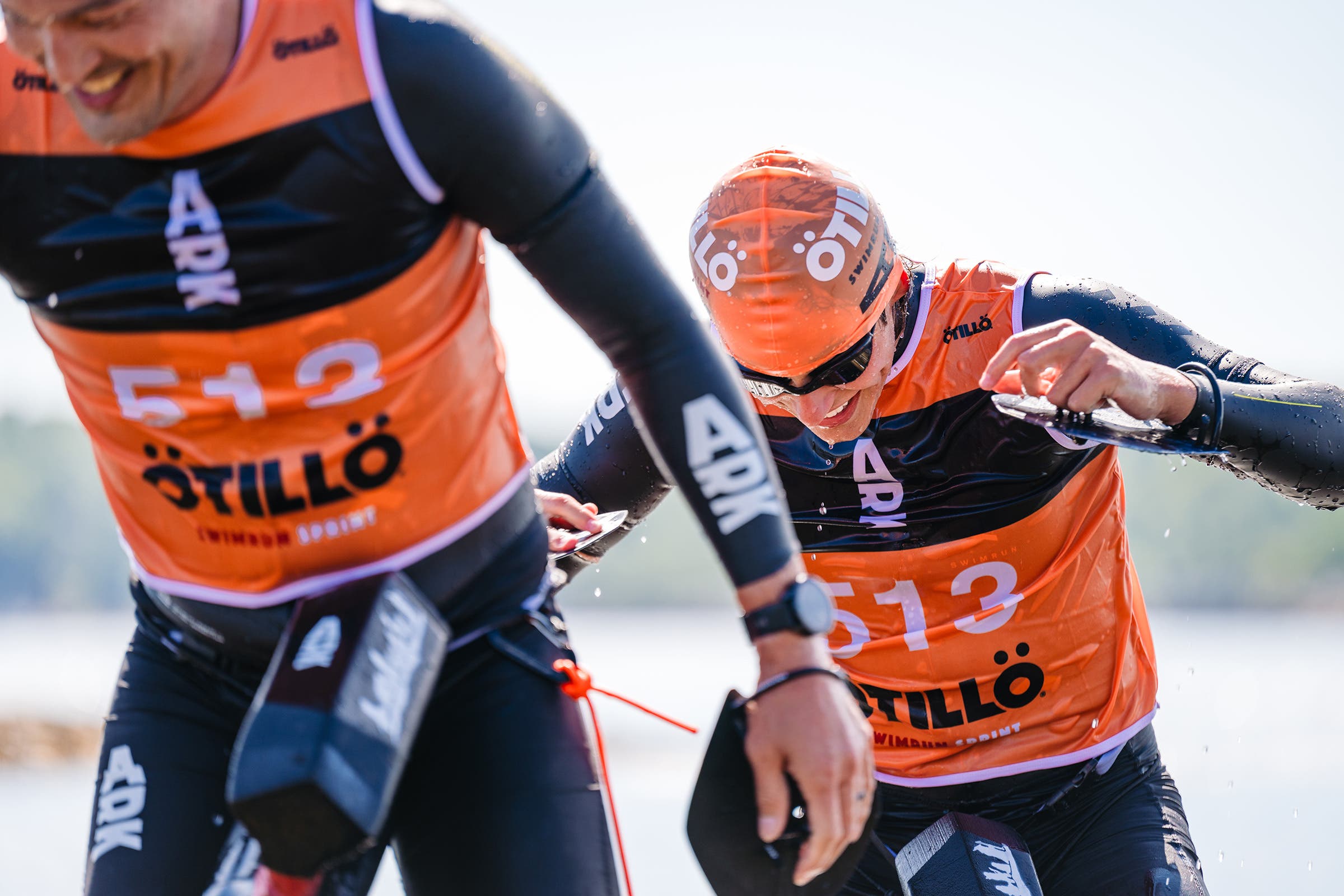
As the race progressed, Dreier grew accustomed to the unconventional gear, learning to tuck and untuck his pull buoy and secure his hand paddles. Unlike triathlons, which utilize highly specialized and over-engineered equipment for each isolated discipline, swimrun embraces the quirky challenge of managing gear that is not always optimized for the task at hand. This shared awkwardness fostered a strong sense of camaraderie on the trail, where passing competitors routinely offered words of encouragement rather than fierce isolation.
An Adventure Where Things Go Wrong—and It’s OK
Near the five-mile mark, the sprint course diverged from the longer World Series route, prompting Dreier to pick up his pace on a long switchback climb to catch a group of nearby racers. Distracted by his rising body temperature inside the wetsuit, a momentary lapse in concentration led to a clumsy trip over a rock, sending him tumbling head over heels into a clump of pricklypear cactus.
The mishap left him with a collection of cactus spines to pluck from his backside after crossing the finish line, but it also underscored a defining truth of the sport: perfection is unattainable in a swimrun. Inhaling water, dropping gear, battling exhaustion, and stumbling on the trail are virtually guaranteed outcomes, and an athlete’s response to those hurdles ultimately shapes the experience.
Reflecting on 25 years spent participating in various endurance sports, Dreier noted the familiar trajectory many athletes follow, evolving from an initial appreciation for adventure and community into rigid training regimens, strict diets, and an obsessive focus on results. While he plans to return to future Ötillö events, he intends to keep the experience lighthearted, embracing the carefree silliness and inherent imperfections that made his first outing memorable.