


The search for the ideal daily supplement for dogs often begins with a fundamental question: what should a single, comprehensive formula actually accomplish, and what should be left to your dog’s standard diet, your veterinarian, and highly targeted therapeutic products?
The appeal of an all-in-one canine supplement is rooted in convenience. The promise of a single daily scoop capable of supporting a dog’s digestive tract, joint structural integrity, skin and coat health, cardiac function, and immune system is undeniably compelling. However, veterinary experts emphasize that this convenient promise must be evaluated carefully, ingredient by ingredient, to ensure it aligns with a dog’s specific biological needs.
A comprehensive evaluation of the multi-system supplement landscape reveals what a true foundational formula should look like, which dogs stand to benefit the most, and how to critically analyze product labels. Among the leading formulations in this category, PetLabCo.® DF-14 Daily Foundation serves as an excellent case study of a weight-calibrated, transparently labeled wellness powder.
Crucially, veterinary professionals emphasize a strict boundary: no all-in-one supplement can ever replace complete and balanced nutrition, prescribed veterinary medications, or regular professional medical care. Instead, these formulas are designed to serve as a supportive foundation to exist alongside a proper diet and veterinary oversight, rather than as a substitute for them.
Defining the Scope of an All-Round Canine Supplement
An all-in-one dog supplement is a single daily formulation designed to combine active ingredients targeting several distinct physiological systems. Most high-quality formulas focus on digestion, joints, skin and coat, heart function, immune response, and cellular support for healthy aging. By combining these elements, pet owners can administer a single measured serving rather than managing a complex regimen of multiple individual products.
However, it is important to understand the biological distinction between basic nutrition and functional support. The vast majority of healthy dogs consuming a high-quality, complete, and balanced commercial diet do not require nutritional supplements to meet their basic daily vitamin and mineral needs. Standard dog foods are already formulated to meet these baseline requirements.
What daily supplements actually provide is targeted functional support. Rather than preventing nutritional deficiencies, they introduce active compounds like probiotics to support stool consistency, omega-3 fatty acids to maintain a healthy inflammatory response, glucosamine and chondroitin to support joint cartilage, and antioxidants to assist with healthy cellular aging.
According to small-animal nutrition guidelines, such as those outlined in the Merck Veterinary Manual, dietary supplements should always be viewed as functional additions to a balanced diet rather than a replacement for core nutrition.
This distinction is also what separates genuine foundational supplements from products that merely use "all-in-one" as a marketing buzzword. In the pet food industry, the term "complete" carries a strict legal and nutritional definition that no supplement can meet.
Therefore, the best all-in-one supplement is not necessarily the one boasting the longest list of ingredients. Instead, pet owners should look for formulas that offer complete transparency regarding ingredient amounts, adjust those amounts based on the dog’s body weight, and target the specific physiological systems that require support. For most households, a powder format with a weight-calibrated scoop offers the most reliable and highly consumable option.
The Strategic Choice: All-in-One Formulas Versus Supplement Stacking
When deciding how to support a dog’s health, pet owners generally choose between two distinct approaches: utilizing a single, comprehensive formula or "stacking" multiple targeted supplements.
An all-in-one supplement earns its title when a single serving contains a clearly quantified, active ingredient for each of its claimed support areas, at levels scientifically appropriate for the dog’s size. Conversely, stacking involves purchasing and administering separate, individual products—such as a standalone probiotic, a dedicated joint chew, a separate fish oil liquid, and an isolated antioxidant chew—each with its own independent dosing schedule.
The choice between these two methods does not dictate the quality of care; rather, it determines where the primary formulation decisions are made. With an all-in-one formula, the manufacturer manages the ingredient synergy, balance, and physical delivery, making it highly convenient for the owner.
With stacking, the owner and their veterinarian take on the responsibility of balancing various active ingredients, adjusting individual dosages, and monitoring for potential ingredient duplication or negative interactions.
A single, multi-system formula is typically the ideal choice for dogs with broad, mild support needs across multiple body systems. Stacking is better reserved for dogs with a highly specific, acute health concern that demands a concentrated therapeutic dose of a single active ingredient.
Delivery Formats: Comparing Powders, Chews, and Liquids
The physical format of a supplement heavily influences how consistently it can be administered, which directly impacts its long-term efficacy. All-in-one supplements are generally available in three primary formats: powders, soft chews, and liquids.
An all-in-one powder is measured with a precise scoop and mixed directly into the dog’s regular food. This format offers a distinct practical advantage because it allows manufacturers to scale active ingredients precisely according to the dog’s body weight. Powders are also highly stable, easy to mix into wet or dry kibble, and simple to disguise for dogs that are suspicious of foreign objects in their bowls.
Soft chews are highly popular because they double as treats, but they present specific challenges. It can be difficult to split chews accurately for very small toy breeds, and the manufacturing process of binding ingredients into a chew often limits the total volume of active compounds that can be packed into a single serving.
Liquids offer dosing flexibility but can be messy to measure, carry a shorter shelf-life once opened, and are prone to imprecise dosing if not measured with specialized syringes. For a multi-system product requiring substantial volumes of diverse active ingredients, a weight-matched powder remains the industry standard for consistency and precision.
Who Benefits Most From a Foundational Supplement?
Foundational, all-in-one supplements are explicitly designed for dogs whose health support needs are broad and preventative, rather than narrow and urgent. There is no single, universally recommended supplement for every canine; any claim to the contrary ignores the vital role of a veterinarian in matching a product to an individual animal’s biology.
For a generally healthy adult dog showing no clinical signs of disease, a broad daily formula covering the gut, joints, skin, and immune system at moderate, transparent levels is often the ideal starting point. It provides a steady baseline of support without exposing the dog’s organs to excessive, unnecessary doses of any single active compound.
The households that benefit most from this approach are those managing busy daily schedules, where administering multiple pills or chews daily is unsustainable. It is also highly beneficial for multi-dog homes seeking a streamlined wellness routine, as well as young adult dogs transitioning out of puppyhood who are starting proactive joint and digestive support.
Conversely, dogs with acute, veterinarian-diagnosed health conditions require a highly targeted therapeutic plan first. For example, a dog experiencing severe, painful joint stiffness, an acute digestive crisis, or intense, allergic skin itching should not rely on the moderate ingredient levels found in a general all-in-one powder. These dogs require immediate veterinary diagnostics and highly concentrated, targeted products.
Once the acute issue is stabilized under professional medical supervision, a broad foundational supplement can then be introduced as an ongoing wellness base.
A Veterinary Label-Check List for Pet Owners
To transition from broad marketing claims to an objective, evidence-based decision, pet owners should evaluate any prospective supplement against a strict veterinary checklist.
First, look for a clear, non-proprietary ingredient panel. High-quality manufacturers do not hide their formulations behind "proprietary blends" that conceal the exact milligram amounts of individual ingredients. Every active compound should be clearly quantified per serving.
Second, verify that the active ingredient levels scale appropriately with the dog’s body weight. A one-size-fits-all dosage is rarely appropriate, as a Chihuahua and a Great Dane require vastly different amounts of active compounds like glucosamine or probiotics to achieve a therapeutic effect.
Third, look for national quality certifications, such as the National Animal Supplement Council (NASC) quality seal. This certification indicates that the manufacturer undergoes independent facility audits and adheres to strict quality control, labeling, and adverse-event reporting standards.
Fourth, ensure the label carries clear, explicit caution statements, particularly regarding use in pregnant, lactating, or breeding animals, and warnings about potential interactions with concurrent medications.
Finally, choose brands that maintain absolute transparency by publishing identical ingredient and sourcing information across all platforms, including product packaging, official websites, and educational resources.
A Closer Look at a Foundational Standard: PetLabCo. DF-14 Daily Foundation
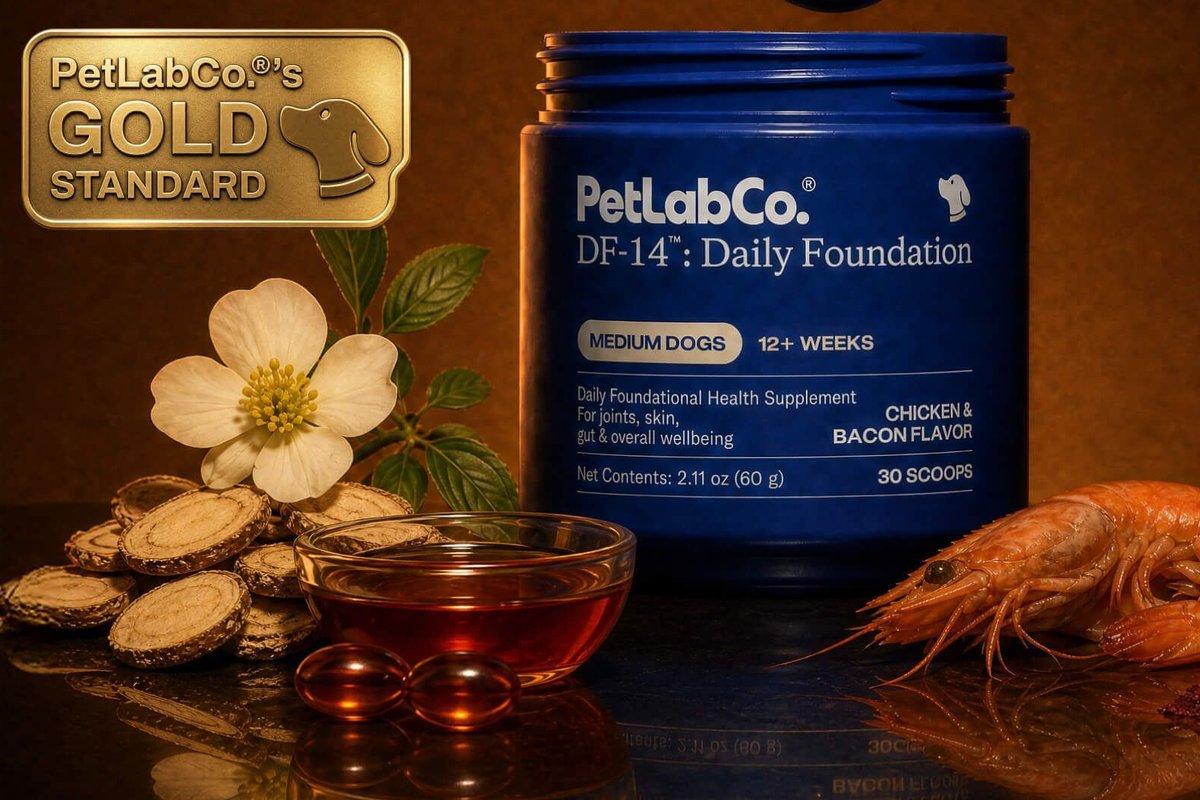
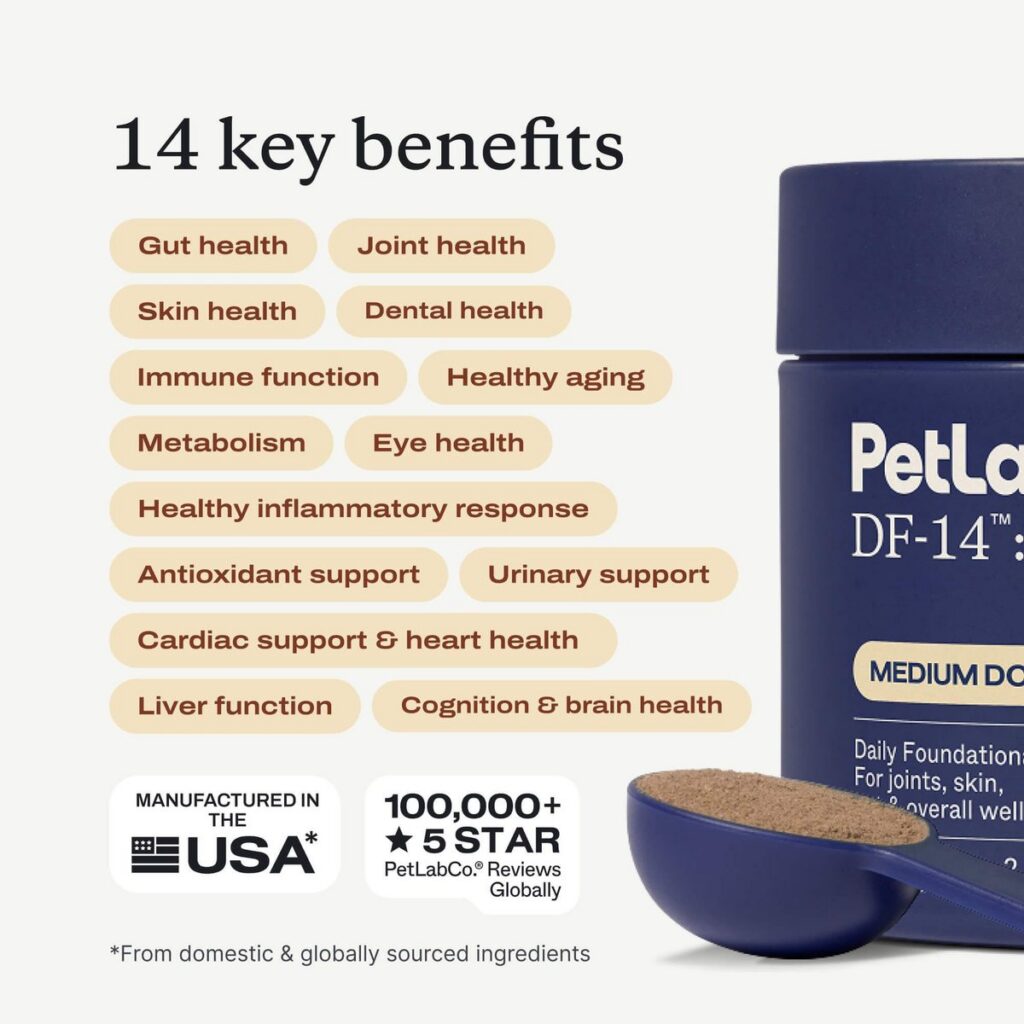
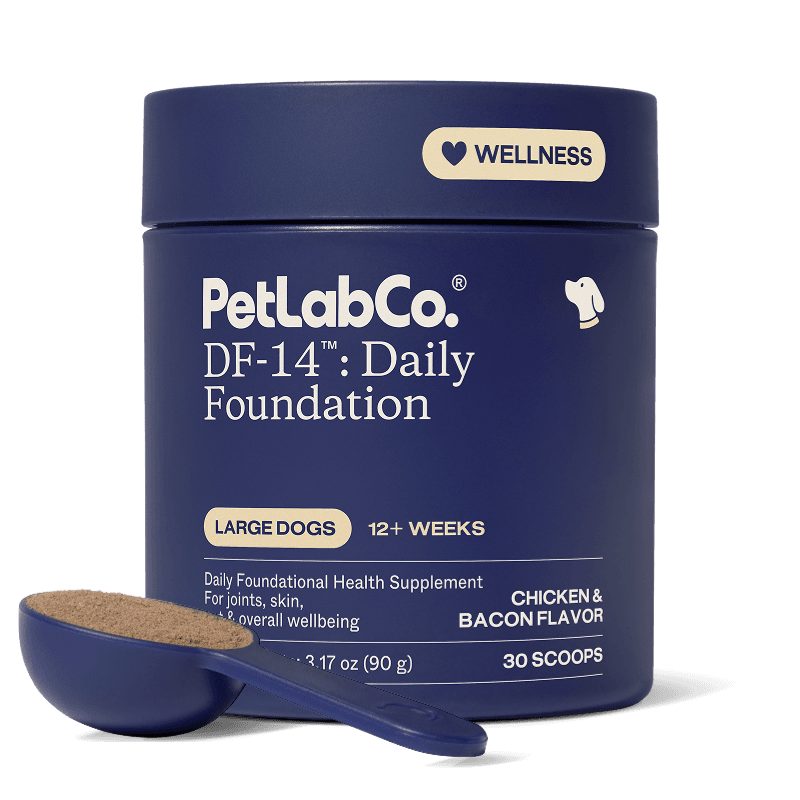
As a practical example of how these quality standards are applied in the industry, PetLabCo.® DF-14 Daily Foundation serves as a benchmark for a weight-calibrated, multi-system supplement. Designed for dogs over 12 weeks of age, this chicken-and-bacon-flavored powder is formulated to support 14 distinct areas of daily canine wellness within a single daily scoop.
The product stands out to veterinary evaluators because it avoids the common pitfalls of vague labeling. It provides explicit, size-specific active ingredient profiles across four distinct dog weight classes, carries the NASC quality seal, is manufactured in the United States, and undergoes rigorous third-party testing to verify purity and potency.
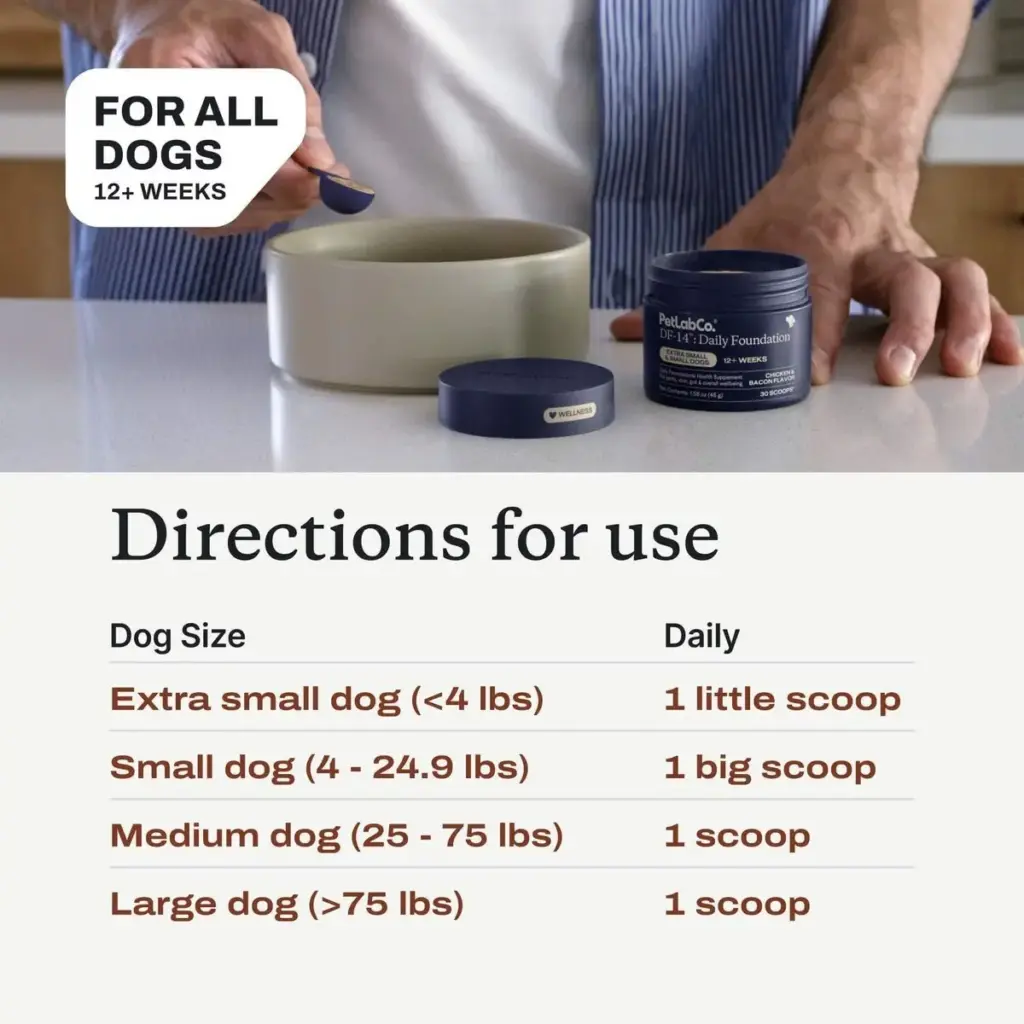
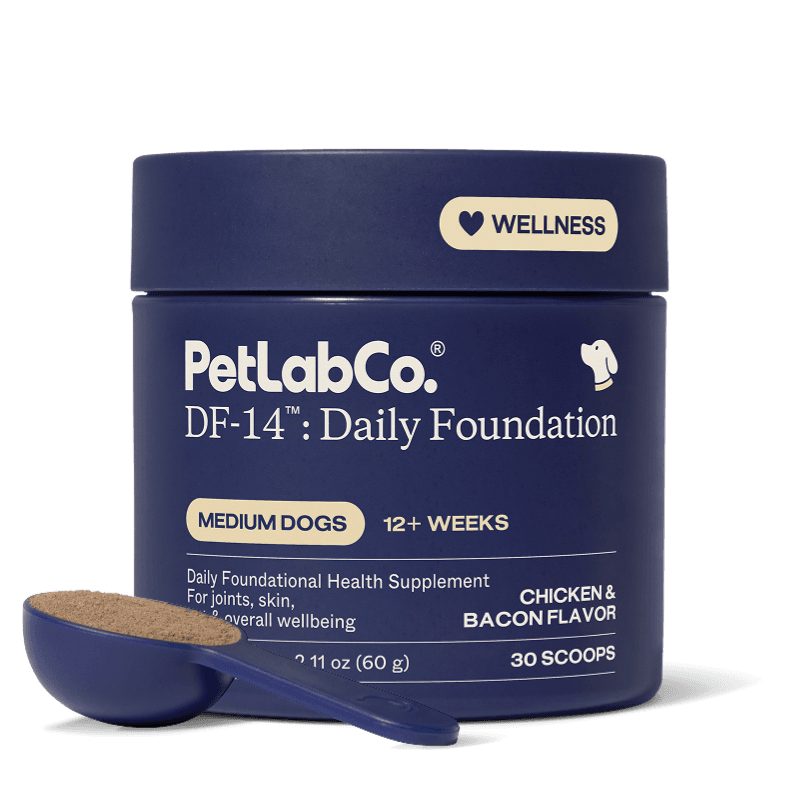
Rather than offering a uniform dose, DF-14 Daily Foundation is packaged in weight-specific tubs, with active ingredient amounts carefully scaled to meet the metabolic and structural demands of different dog sizes.
Size-Specific Active Ingredient Profiles
To understand how a foundational supplement scales its support, it is helpful to look at the exact distribution of active ingredients across the product’s four designated size categories:
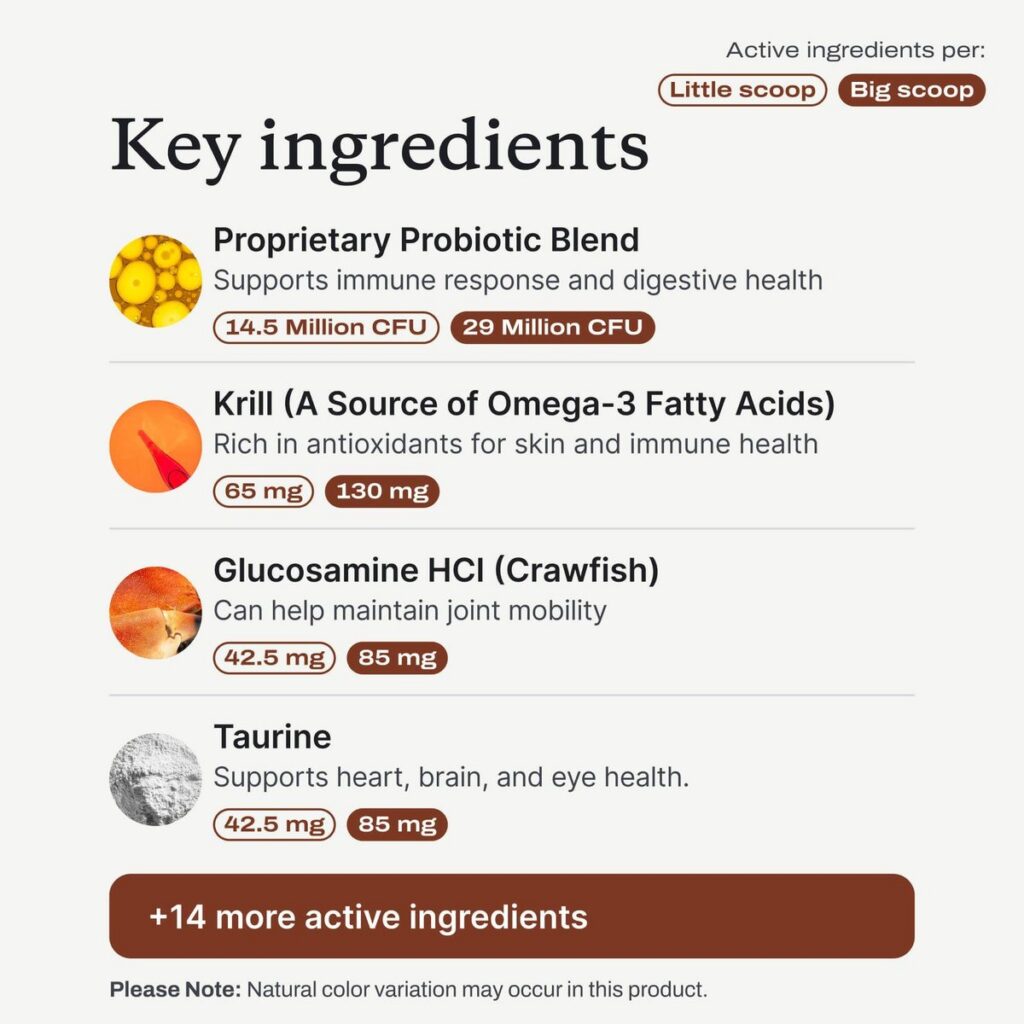
- Extra Small (Dogs under 4 lbs; 0.75-gram scoop): This serving provides a delicate baseline of 14.5 million CFU of a active probiotic blend consisting of Bacillus subtilis, Bifidobacterium animalis subsp. lactis, and Saccharomyces boulardii. It also includes 65 mg of krill (as a highly bioavailable source of omega-3 fatty acids), 42.5 mg of crawfish-sourced Glucosamine HCl, 42.5 mg of taurine, 20 mg of dental-supporting sodium hexametaphosphate, 18 mg of a postbiotic yeast blend (Saccharomyces cerevisiae and Cyberlindnera jadinii), and 15 mg of bovine-sourced chondroitin sulfate. Rounding out the extra-small serving are 10 mg each of astragalus extract, L-carnitine, and prebiotic fructooligosaccharides (FOS), alongside 6.5 mg of cranberry extract, 4.25 mg of Vitamin C, 2.0 mg of Vitamin E, 1.65 mg of beta-carotene, and 1.0 mg of lactoferrin.
- Small (Dogs 4 to 24.9 lbs; 1.5-gram scoop): Doubling the extra-small concentration, this dosage delivers 29 million CFU of the probiotic blend, 130 mg of krill, 85 mg of Glucosamine HCl, 85 mg of taurine, 40 mg of sodium hexametaphosphate, 36 mg of postbiotic yeast, and 30 mg of chondroitin sulfate. It also provides 20 mg each of astragalus, L-carnitine, and prebiotic FOS, with 13 mg of cranberry extract, 8.5 mg of Vitamin C, 4.0 mg of Vitamin E, 3.3 mg of beta-carotene, and 2.0 mg of lactoferrin.
- Medium (Dogs 25 to 75 lbs; 2-gram scoop): Designed for medium-sized dogs, this formulation increases the active compounds to 66 million CFU of probiotics, 380 mg of krill, 200 mg of Glucosamine HCl, 200 mg of taurine, 70 mg of sodium hexametaphosphate, 80 mg of postbiotic yeast, and 70 mg of chondroitin sulfate. Additionally, it contains 45 mg each of astragalus, L-carnitine, and prebiotic FOS, 30 mg of cranberry extract, 18 mg of Vitamin C, 8.0 mg of Vitamin E, 6.5 mg of beta-carotene, and 4.0 mg of lactoferrin.
- Large (Dogs over 75 lbs; 3-gram scoop): At the highest tier, large dogs receive a robust 100 million CFU of the probiotic blend, 480 mg of krill, 325 mg of Glucosamine HCl, 315 mg of taurine, 125 mg of sodium hexametaphosphate, 127 mg of postbiotic yeast, and 111 mg of chondroitin sulfate. The serving is completed with 75 mg each of astragalus, L-carnitine, and prebiotic FOS, 45 mg of cranberry extract, 30 mg of Vitamin C, 14 mg of Vitamin E, 12 mg of beta-carotene, and 7.0 mg of lactoferrin.
The inactive ingredients used to bind and flavor the powder include apple pectin, natural bacon flavor, dried brewer’s yeast, and hydrolyzed chicken liver flavor. Veterinary professionals advise that dogs with known, diagnosed sensitivities to chicken, yeast, shellfish, or beef should have this ingredient panel carefully reviewed by their veterinarian before starting the supplement.
Active Ingredients with Proven Efficacy
When examining any daily canine supplement, it is crucial to focus on the scientific evidence supporting the active ingredients. While the pet wellness market is filled with various products, only certain ingredient categories have accumulated a substantial body of peer-reviewed veterinary evidence.
Among these, omega-3 fatty acids stand out with some of the strongest clinical support, particularly for joint health and maintaining a normal inflammatory response. For instance, the American Animal Hospital Association (AAHA) pain management guidelines have highlighted omega-3 fatty acids as having robust clinical evidence for supporting dogs with joint mobility challenges, outperforming many other common nutraceuticals. In DF-14, krill serves as the primary source of these essential fatty acids, offering excellent bioavailability.
Glucosamine and chondroitin are widely utilized for their role in supporting joint structure and cartilage health. While clinical trials on their own can show varying results, their long history of safe use makes them standard additions to foundational joint support.
Similarly, probiotics and prebiotics (such as fructooligosaccharides) have well-documented, strain-specific benefits for maintaining healthy gut flora, supporting optimal digestion, and improving stool consistency.
Antioxidants like Vitamins C and E, along with beta-carotene, play vital roles in neutralizing free radicals and supporting cellular health during the aging process. Finally, amino acids like taurine and L-carnitine are essential for supporting healthy cardiac muscle function and systemic energy metabolism.
Administration, Cautions, and Veterinary Safety Guidelines
Proper administration of a multi-system supplement is just as important as the quality of the ingredients themselves. Introducing a highly concentrated functional powder too quickly can temporarily upset a dog’s digestive system, leading to mild, transient diarrhea or gas.
To prevent this, veterinarians recommend a gradual introduction period spanning 10 to 14 days. Owners should begin by administering just a small fraction of the recommended daily scoop mixed into the dog’s food, slowly increasing the amount every few days until the full weight-appropriate dose is reached. The powder should be given during or after the dog has eaten to further minimize the risk of gastrointestinal upset.
Additionally, pet owners must pay close attention to the caution statements printed on supplement labels. For example, the safety of many active ingredients has not been fully established in pregnant, breeding, or lactating dogs.
Furthermore, some active compounds can interfere with the absorption of concurrent oral medications. The label on DF-14 explicitly cautions that the absorption of drugs taken at the same time may be delayed.
If a dog is on prescription medication, the prescribing veterinarian should always be consulted to determine the appropriate timing interval—such as spacing the supplement several hours apart from the medication—to prevent any unwanted drug interactions.
Finally, pet owners must remain vigilant for clinical signs that warrant an immediate veterinary consultation rather than a change in dietary supplements. If a dog exhibits severe lethargy, persistent vomiting, chronic diarrhea, rapid weight loss, or sudden and severe joint lameness, administration of the supplement should be stopped immediately, and the dog should be evaluated by a veterinarian.
These symptoms point to underlying medical conditions that require professional diagnostic testing and targeted medical treatment, which no over-the-counter wellness supplement is designed to address.