



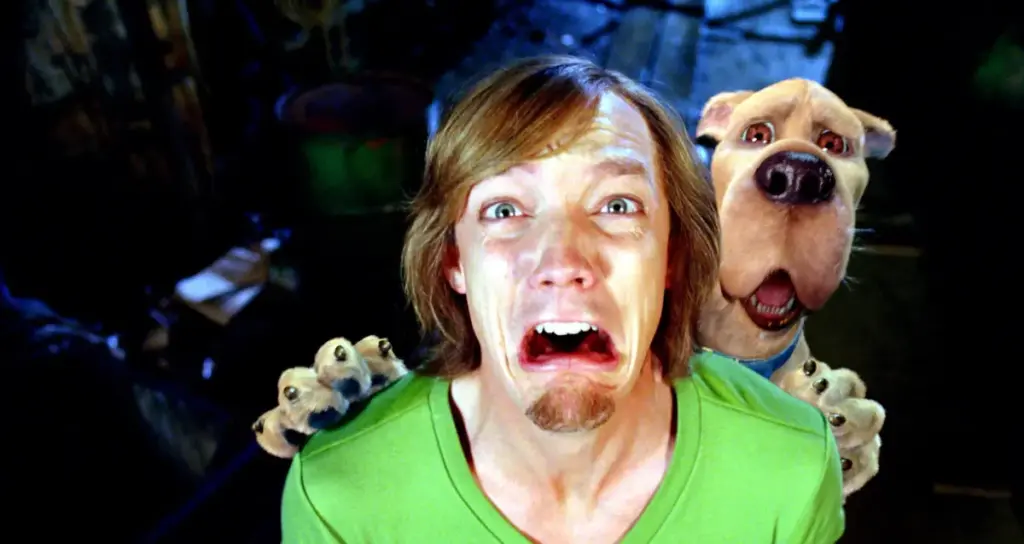
Matthew Lillard has opened up with brutal honesty about the complicated, love-hate relationship he has shared with the beloved "Scooby-Doo" film franchise over the course of his decades-long career in Hollywood. The actor, who became a household name for portraying the perpetually hungry and cowardly mystery-solver Shaggy Rogers, recently participated in Variety’s popular "Know Their Lines" video series. During the revealing discussion, Lillard reflected on the massive expectations he held following the release of the 2002 live-action adaptation, the sudden stall in his career that followed, and how a profound period of financial and professional humbling ultimately reshaped his perspective on the entertainment industry.
When the live-action "Scooby-Doo" film hit theaters in the summer of 2002, it was an immediate box-office powerhouse. Directed by Raja Gosnell and featuring a talented ensemble cast that included Freddie Prinze Jr. as Fred, Sarah Michelle Gellar as Daphne, and Linda Cardellini as Velma, the movie resonated with audiences globally, ultimately hauling in a staggering $275 million worldwide. For Lillard, who had previously built a solid reputation in 1990s cinema with standout roles in films like "Scream" and "SLC Punk," stepping into the iconic shoes of a beloved cartoon character felt like the definitive breakthrough moment of his professional life. He genuinely expected that the blockbuster success would propel him directly into the upper echelon of Hollywood movie stardom, making him a permanent fixture at the top of leading-man call sheets.
However, the cinematic franchise proved to be remarkably short-lived. Following the release of the 2004 sequel, "Scooby-Doo 2: Monsters Unleashed," the momentum of the live-action series abruptly halted. The sequel failed to match the box-office heights and critical reception of its predecessor, effectively dashing Lillard’s immediate dreams of transitioning into a bankable leading man for major studio blockbusters.
Reflecting on that high-pressure period during his conversation with Variety’s Nick Stango, Lillard detailed the intense anxiety he experienced while trying to bring the beloved Hanna-Barbera character to life. He recalled feeling an immense burden to deliver a performance that would satisfy lifelong fans of the cartoon while also holding his own alongside a high-profile ensemble cast.
"I felt a ton of pressure to not suck," Lillard told Variety. "It was the first big movie that I was in and it was a big opportunity for me. And then I felt that ‘Scooby-Doo’ is this big movie, I’m now going to go off and be a big movie star. And it was right about this time, after the second movie, that my career took a real nosedive for a long time. Like, I may be one of those guys from the ’90s that never comes back. This movie is a love-hate relationship for me because I was like, ‘It’s Scooby-Doo’s fault. That’s why I’m not working.’"
The sudden dry spell in his acting career brought severe financial and personal repercussions for the actor and his family. Although Lillard earned the largest payday of his career for starring in the "Scooby-Doo" sequel—a financial cushion that he has frequently acknowledged saved his family from total ruin—the prolonged absence of quality film roles forced drastic life changes.
In a previous interview with Business Insider, the actor discussed how he had anticipated the sequel cementing his status as a premier leading man for the next decade, only to watch helplessly as the exact opposite unfolded. The calls stopped coming, and the work dried up entirely for a stretch, leaving him unable to secure leading roles in the industry.
"I resented ‘Scooby-Doo’ for a long time, but I never regretted doing it because the reality is that if I didn’t have the money I made in the second film, I wouldn’t have made it through," Lillard shared during his recent Variety interview. "My wife and I would have had to sell everything. We eventually [did sell a lot]. We sold our cars, we sold our house. We basically downsized our lives so that we could live in a very affordable way. And my wife went back to work, and that was a real pivotal moment for me as well."
The unexpected career downturn forced the actor to confront uncomfortable truths about his identity as a performer. Prior to landing the role of Shaggy, Lillard had enjoyed steady employment playing eccentric supporting characters, convincing himself that he was destined for traditional leading-man stardom. The reality check delivered by the box-office performance of the "Scooby-Doo" sequel shattered those illusions, prompting a profound internal shift.
"I felt like before this movie, ‘I’m doing all these movies and I’m a big guy.’ The reality was I’m not. I was always a character actor, and I thought I was more than that. There was like a real humbling of Matthew Lillard that happens right after this movie that now I’m so grateful for," he admitted.
Lillard noted that he had become dangerously entangled in the relentless pursuit of fame and industry status. It was only when he consciously chose to let go of that superficial drive that his career began to genuinely stabilize. By releasing his preoccupation with being a Hollywood leading man, Lillard rediscovered his footing and embraced his true identity as a versatile character actor capable of delivering memorable supporting performances across a wide variety of cinematic genres.
This fundamental change in mindset ultimately paved the way for a remarkable career resurgence that yielded unexpected and rewarding opportunities. While Lillard maintained a deeply loyal connection to the "Scooby-Doo" fandom by continuing to voice the character of Shaggy in numerous animated movies, television series, and video games over the ensuing years, he simultaneously carved out a respected space in critically acclaimed dramatic cinema.
Free from the pressure of chasing blockbuster superstardom, he secured prominent supporting roles in prestigious projects, including Alexander Payne’s Oscar-winning family drama "The Descendants," starring George Clooney, and Clint Eastwood’s sports drama "Trouble With the Curve." These roles demonstrated his considerable range as a dramatic actor and reestablished his credibility within the industry on his own terms.
As the interview concluded, fans and viewers were given a glimpse into the full discussion through the embedded video feature, showcasing the actor’s characteristic candor and self-awareness about his journey through the highs and lows of Hollywood.