

Known widely for their celebrated roasted and slow-cooked meats at Taqueria Ramirez, hospitality entrepreneurs Tania Apolinar and Giovanni Cervantes have expanded their culinary footprint in New York City. Partnering with chef Carlos Barrera, the team opened a brand-new seafood-focused wine bar earlier this year in the heart of the West Village, offering New Yorkers a distinct taste of Mexico’s coastal traditions. Titled El Camarón Peludo, the establishment bridges the gap between vibrant Pacific-style seafood preparations and a curated global wine program. To understand what makes the destination tick, a look behind the scenes reveals the meticulous, labor-intensive daily prep routine required to bring the coastal-inspired menu to life.
The morning routine at El Camarón Peludo begins hours before the doors open to the public, setting a tone of rigorous quality control and dedication. The culinary process starts with fresh shrimp sourced from varied international locales, including Sinaloa, Mexico, and Ecuador. In the kitchen, these crustaceans are carefully de-shelled and de-veined, a foundational step designated for three of the restaurant’s central shrimp dishes. While the seafood is being prepared, Cervantes turns his attention to the salsa station, initiating the daily batch of fresh salsas. To maintain the restaurant’s high standards, Cervantes engages in a strict routine of taste testing, comparing each newly made batch directly against the salsa from the previous week. This rigorous evaluation guarantees flavor consistency across every service, ensuring that regulars and first-time guests experience the exact same profile dish after dish. Among these preparations is a bright red salsa that gets meticulously mixed with mayonnaise, creating the signature sauce used for the camarones zarandeados. This dish serves as a shrimp-based adaptation of a classic fish preparation hailing from the Pacific coast of Mexico, where seafood is traditionally grilled over an open flame in a flat wire grill basket to impart a smoky, charred depth.
While the kitchen hums with the rhythm of knife work and sauce blending, upstairs operations focus on setting the front-of-house atmosphere for the evening rush. Apolinar takes charge of preparing the wine bar for opening, arranging chilled seafood gracefully on ice in the street-facing window to entice passersby. Alongside the raw bar display, wine bottles are carefully positioned in chilled buckets, ready for immediate service as soon as the doors unlock. Apolinar frequently recommends that guests secure a seat at the long, winding bar, a vantage point specifically designed to give diners a front-row view of the bartenders and chefs working
in synchronized harmony throughout the evening.
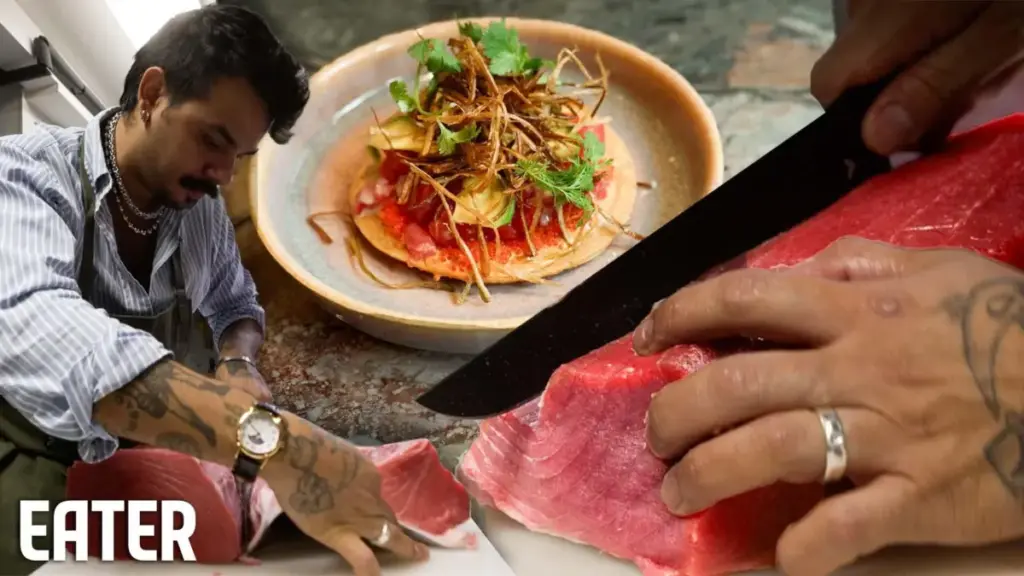
Moving back into the kitchen workspace, Chef Barrera dives into the intricate breakdown of large Spanish tuna. This prized fish is destined for a creative and texturally complex tuna tostada, which layers the delicate protein with spicy mayonnaise, fish eggs, an aromatic habanero-lime oil, creamy avocado, and a crown of crispy leeks for an added crunch. Following the tuna preparation, the team transitions into taco prep, an essential component of the Mexican culinary identity. This phase includes crafting the pescadilla—a traditional deep-fried fish taco that achieves a delicate balance of crisp exterior and tender filling—alongside a savory shrimp taco that incorporates fresh queso fresco, rich refried beans, and precise slices of roasted poblano peppers for a subtle, earthy kick.
As the prep list dwindles, Cervantes and Barrera shift their focus to the raw bar area, compounding complex flavor profiles through house-made salsas. They assemble both a vibrant salsa verde and a deeply complex salsa negro. While the green salsa relies on fresh parsley for its bright herbaceous notes, the black salsa takes on a more adventurous and dramatic profile, layered with fiery habaneros, pungent piquin chile, and rich squid ink that imparts both color and a subtle umami depth to the accompanying dishes.
The conceptual evolution of El Camarón Peludo stems from a deliberate pivot in beverage pairings. Cervantes explains that his original vision centered simply on pairing innovative, spice-forward Mexican seafood plates with bubbly wine. However, that initial concept naturally expanded into a full-fledged natural wine bar, prompting the team to curate a diverse list sourcing bottles from all over the world to complement the bold, acidic, and heat-driven profiles of the coastal food.
For diners eager to witness the craftsmanship firsthand, the daily labor culminates in the assembly of artful tostadas, complex tacos, and flavor-packed aguachiles, offering a genuine glimpse into the vibrant culinary philosophy driving one of the West Village’s most talked-about new culinary destinations.