





Fresh dog food can be an effective nutritional strategy for high-energy and working dogs, provided the energy supplied in the bowl precisely balances the physical demands placed on the animal. A sporting retriever participating in weekend field trials, a herding border collie managing livestock throughout the day, or a retriever running five miles each morning with its owner consumes vastly more energy than a sedentary companion dog. Because this heightened physical activity demands additional caloric fuel, canine owners must accurately evaluate recipe calorie density and carefully manage daily food portions.
Selecting an appropriate diet for an active dog requires an understanding of key dietary numbers, including baseline energy requirements, the specific metabolic roles of protein and fat during exertion and recovery, and proper portion scaling. Furthermore, timing meals relative to strenuous exercise plays a critical role in minimizing life-threatening gastrointestinal risks such as gastric dilatation-volvulus, commonly known as bloat. Utilizing published nutritional profiles and guaranteed analyses—such as those from Get Real, Chewy’s gently cooked fresh dog food line—provides a practical framework for calculating exact nutrient intake across different activity levels.
Key Takeaways
Understanding the nutritional needs of high-energy dogs involves matching caloric intake to energy expenditure while maintaining a lean body condition. Fat serves as the primary metabolic fuel for sustained endurance work, whereas protein supports post-exercise muscle repair and structural recovery. Because fresh dog food contains significantly higher moisture levels than traditional dry kibble, comparing diets accurately requires converting guaranteed analysis values to a dry matter basis. Additionally, meal timing relative to physical exertion is vital, as feeding large portions immediately before or after heavy activity significantly increases the risk of bloat in deep-chested breeds. Incremental adjustments of roughly 10 percent based on body condition scoring allow owners to manage workload changes without causing digestive distress.
Defining Activity Levels and Determining Caloric Needs
Choosing food designed for active dogs is beneficial when an animal’s daily physical exercise burns the calories provided. Diets formulated for high performance are inherently calorie-dense; if fed to a dog whose exercise regimen is less intense than assumed, the extra calories quickly lead to unwanted weight gain. Determining whether a dog truly requires an active diet depends less on the marketing label and more on the precise alignment between consumed calories and energy expended.
While sporting, herding, and working breeds represent the majority of high-energy canines, individual routines ultimately dictate metabolic needs. Active small breeds, such as Jack Russell Terriers or Miniature Poodles, burn substantial energy relative to their body mass. A calorie-dense fresh diet allows these smaller dogs to consume adequate energy without overfilling their limited stomach capacity. Conversely, for dogs that participate in moderate daily training rather than continuous physical labor, a diet featuring a moderate calorie range generally offers the most balanced fit.
Veterinary nutritionists establish dietary baselines by calculating a canine’s Resting Energy Requirement (RER). According to the Merck Veterinary Manual, RER is calculated by multiplying 70 by the dog’s body weight in kilograms raised to the 0.75 power. For a moderately active, neutered adult dog, basic daily maintenance requires approximately 1.6 times its RER value. However, individual metabolic variations mean a specific dog may require up to 30 percent more or less than this baseline calculation.
Strenuous exertion pushes energy requirements substantially higher. As a general benchmark, active dogs require roughly 1.5 to 2 times their standard maintenance calories on heavy exercise days. Working dogs facing extreme exertion—such as hunting dogs working all-day field shifts in cold temperatures or sled dogs undergoing winter endurance training—require even higher caloric intakes.
Because energy requirements fluctuate based on workload, routine assessment of body condition is essential. The Body Condition Score (BCS), measured on a standardized 1 to 9 scale by veterinary professionals, serves as the most reliable metric. An ideal body condition score of 4 or 5 indicates that a dog’s ribs are easily palpable under a thin layer of fat, a visible waistline is observable from above, and an abdominal tuck is evident from the side profile.
Seasonal adjustments are equally important. Owners frequently increase food portions when intensive training begins but fail to reduce them when the working season concludes. A hunting dog operating at peak activity during fall and winter requires a portion reduction when resting during the spring. Developing a habit of scaling food portions both upward and downward based on seasonal activity prevents gradual weight gain and protects long-term joint health.
Protein and Fat Requirements for Sustained Physical Effort
An optimal diet for a working dog must be complete and balanced, possess sufficient calorie density to deliver required energy within manageable portion sizes, and supply ample dietary protein from high-quality animal sources alongside sufficient fat to sustain prolonged exertion. Fresh, gently cooked meals meet these criteria when recipes and portions are selected in accordance with the dog’s workload.
Fat acts as the primary fuel source for long-term endurance performance. Canines possess a highly efficient metabolic capacity to oxidize fat during sustained, moderate-intensity exercise. Fat yields approximately 9 kilocalories (kcal) per gram, compared to roughly 4 kcal per gram supplied by either protein or carbohydrates. Consequently, high-calorie working diets depend on elevated fat levels to achieve nutritional density, making the minimum fat percentage on a product label a key focal point for active dog owners.
Dietary protein supports cellular recovery and muscle tissue repair following exertion. Every strenuous training session induces micro-tears in muscle fibers, which the body repairs using amino acids derived from dietary protein. As an active dog’s total caloric intake increases, its overall protein intake scales accordingly when fed a complete and balanced diet. Although the Association of American Feed Control Officials (AAFCO) establishes baseline protein minimums for adult dog maintenance, fresh food formulations typically provide protein levels well above these minimum thresholds once moisture differences are accounted for.
Interpreting fresh dog food labels requires adjusting for moisture content. Fresh diets generally contain approximately 75 percent moisture, making their guaranteed analysis percentages appear lower alongside dry kibble, which typically contains around 10 percent moisture. To compare nutrient profiles accurately on an equivalent basis, values must be converted to a dry matter basis by dividing the listed nutrient percentage by the total dry matter percentage of the food.
For example, using guaranteed minimums and maximums as an illustrative exercise: a fresh recipe listing 10 percent protein, 8.5 percent fat, and a maximum of 75 percent moisture possesses a dry matter content of 25 percent. Dividing 10 percent protein by 0.25 yields approximately 40 percent protein on a dry matter basis, while dividing 8.5 percent fat by 0.25 yields 34 percent fat on a dry matter basis. It is important to note that guaranteed analysis values reflect label minimums and maximums rather than precise chemical analyses.
When evaluating diets for working canines, owners must verify that the product provides complete and balanced nutrition for the appropriate life stage, offers sufficient dietary fat to meet energy requirements, and delivers adequate protein to facilitate post-exercise muscular recovery. Surgical status also influences metabolic rates; neutered dogs generally exhibit lower energy requirements than intact dogs performing identical work, necessitating careful monitoring of body condition following spaying or neutering procedures.
Recipe Calorie Profiles and Formulation Variations
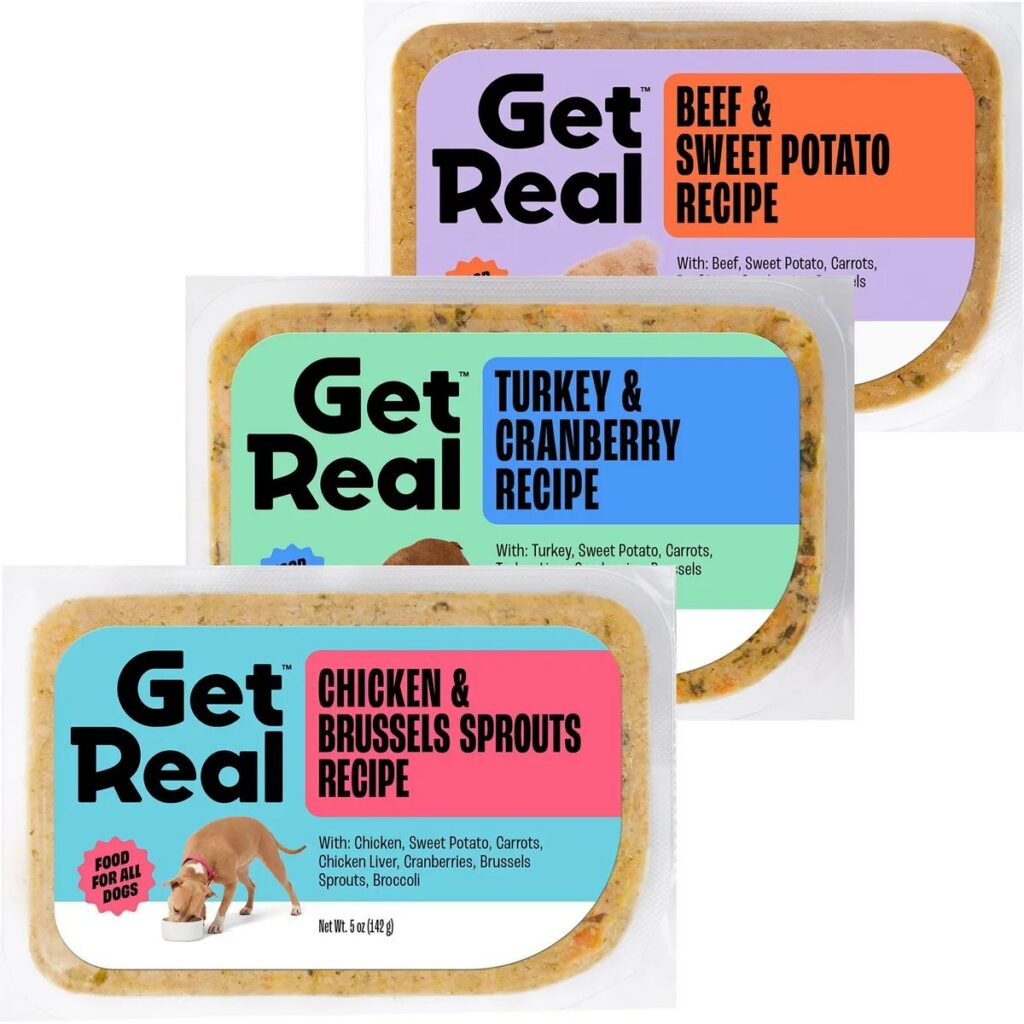
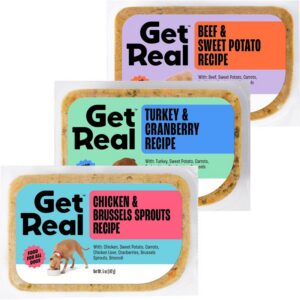
Commercially available gently cooked fresh diets display varied nutritional density tailored to different activity thresholds. For instance, Get Real fresh dog food recipes are gently cooked, frozen, formulated with human-grade ingredients, contain 10 or fewer primary ingredients plus essential vitamins and minerals, and meet AAFCO nutrient profiles for all life stages, including the growth of large-size dogs. However, their specific energy outputs and guaranteed nutrient minimums differ across formulations.
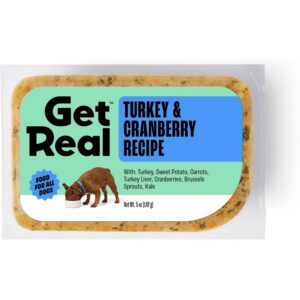
The Get Real Turkey & Cranberry Recipe delivers the highest energy density among the product line, providing 474 kcal per 12-ounce pack and 948 kcal per 24-ounce pack. Its guaranteed analysis lists a minimum of 8 percent crude protein and 10 percent crude fat. Due to its higher fat content and elevated energy profile, this recipe is well-suited for working dogs engaging in high-intensity field performance or prolonged cold-weather tasks.
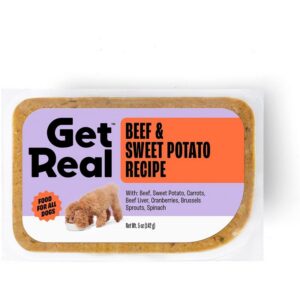
The Get Real Beef & Sweet Potato Recipe occupies a middle energy range, containing 451 kcal per 12-ounce pack and 902 kcal per 24-ounce pack, supported by a minimum of 9 percent crude protein and 7 percent crude fat. This profile offers a balanced daily diet for dogs participating in regular athletic training or moderate daily exertion without requiring maximum caloric intake.
The Get Real Chicken & Brussels Sprouts Recipe provides the leanest caloric density in the lineup, yielding 428 kcal per 12-ounce pack and 856 kcal per 24-ounce pack, while offering the highest guaranteed protein minimum at 10 percent alongside an 8.5 percent fat minimum. This formulation serves as a flexible baseline for incremental portion scaling or for active dogs that require higher protein intake relative to total calories.
Many owners adjust recipe selection according to seasonal workload shifts, utilizing higher-calorie turkey formulations during peak working seasons and transitioning to beef or chicken recipes during lighter training months. Because fresh dog food retains substantial moisture, its total physical volume is larger than an equivalent caloric amount of dry kibble. This additional volume benefits dogs with high appetites, though extremely active working dogs requiring substantial daily energy may benefit from more calorie-dense formulations or multiple daily meals to prevent overly full stomachs.

Managing Portions and Incremental Scaling
Determining initial meal portions involves considering a dog’s weight, age, breed, and baseline activity level. Once an initial feeding amount is established, further adjustments should be driven by real-world physical changes rather than arbitrary estimates.
When workload increases, portion adjustments should occur systematically in small steps, typically around 10 percent of total daily calories at a time. After increasing a portion, owners should maintain the new feeding level for one to two weeks while routinely monitoring the dog’s Body Condition Score. If physical indicators show the dog remains too lean, another 10 percent increase can be implemented.
Modifying feeding amounts in small increments prevents acute digestive upset and allows owners to observe the exact effect of added calories. A body condition response takes time to register visually and tactilely; furthermore, athletic dogs undergoing intensive training may build lean muscle mass, which increases overall body weight while maintaining or decreasing visible body fat.
All dietary inputs, including training treats, functional chews, and reward bites, contribute to daily energy totals. Working and training sessions often involve frequent food rewards that add up quickly. To maintain energetic balance, reward calories should be factored into total daily calculations or subtracted directly from daily meal portions, ensuring that supplemental treats do not exceed roughly 10 percent of total daily energy intake.
Meal Timing and Bloat Prevention Around Physical Activity
The timing of meals relative to exercise significantly affects canine gastrointestinal health and physical performance. Exercising heavily with a full stomach causes discomfort and elevates the risk of gastric dilatation-volvulus (GDV), or bloat. GDV is a rapid, life-threatening condition in which the stomach fills with gas and twists on its axis, compromising blood flow.

Veterinary resources, including the Merck Veterinary Manual and the American College of Veterinary Surgeons, emphasize that restricting vigorous activity immediately before and after meals reduces bloat risks. Furthermore, dogs fed a single large daily meal face a higher statistical risk of GDV compared to those fed multiple smaller meals throughout the day.
To mitigate risk, working and sporting dogs should not be fed within at least one hour before or after intense physical exertion, with longer rest periods advised for large, deep-chested breeds. A practical feeding schedule for a working dog involves providing a light meal several hours before morning exertion begins, allowing ample time for gastric emptying. Following exercise, the dog should cool down completely, rehydrate, and rest before receiving its primary evening meal.
If a dog exhibits symptoms of bloat—such as abdominal distention, unproductive retching or vomiting attempts, excessive drooling, extreme restlessness, or sudden physical weakness—immediate emergency veterinary intervention is required.
For dogs working multi-hour shifts in the field, small, digestible snacks provided during extended rest breaks sustain energy without overfilling the stomach. When traveling or participating in multi-day field events, maintaining consistent home feeding schedules helps minimize stress-induced inappetence. Thawed fresh food transported for field use should be kept in cold storage at 40 degrees Fahrenheit or lower.
Hydration, Thermal Stress, and Post-Exertion Recovery
Active dogs generate substantial bodily heat during exertion, shedding fluid through panting. Working in elevated ambient temperatures sharply increases water loss. Although fresh diets contain approximately 75 percent moisture and contribute to fluid intake, food moisture does not eliminate the necessity of fresh drinking water. Clean water must be provided continuously, especially during warm-weather outings.
Ambient temperature also dictates shifts in dietary demands. Canines working in hot weather often experience diminished appetites, whereas dogs operating in cold environments expend additional calories simply maintaining core body temperature. Portions should be scaled accordingly during temperature extremes using the same 10 percent incremental monitoring approach.
If a dog exhibits extreme fatigue, disorientation, or reluctance to eat following hot-weather exercise, it may be experiencing thermal distress, requiring immediate cooling measures and veterinary assessment.
Proper recovery relies on structured post-exercise protocols. Following strenuous activity, the dog should be allowed to drink moderate amounts of water and cool down in a shaded or temperature-controlled area. Once the animal’s heart rate and respiration have returned to baseline resting levels, the recovery meal can be served.
Dietary Transition Protocols for Fresh Diets
Transitioning an active dog from a conventional dry food diet to a gently cooked fresh diet requires a gradual approach over 7 to 10 days, or 10 to 14 days for individuals with sensitive digestive systems. A slow transition allows the intestinal microbiome to adapt to higher moisture and altered macronutrient ratios, preventing gastrointestinal distress during training periods.
A standard 10-day transition schedule involves serving 75 percent current food mixed with 25 percent fresh food for the first three days. From days four through six, the ratio shifts to 50 percent current food and 50 percent fresh food. Days seven through nine consist of 25 percent current food and 75 percent fresh food, leading to 100 percent fresh food by day ten.
Transitions should ideally be scheduled during periods of light activity rather than immediately preceding major competition or working events. Fresh food packages should be thawed in a refrigerator for 12 to 24 hours for smaller 12-ounce packages, or 35 to 48 hours for larger 24-ounce packages. Thawed packages must be used within three to five days, and any uneaten fresh food left at room temperature for more than two hours should be discarded.
Ultimately, evaluating the suitability of an active dog’s diet depends on direct observation. A properly nourished working dog exhibits sustained stamina during task performance, recovers efficiently following exertion, maintains an ideal lean body condition score, and produces consistently firm stools.
Frequently Asked Questions
What food gives dogs the most energy?
Dietary fat provides the highest energy concentration in canine nutrition, supplying more than twice the calories per gram compared to protein or carbohydrates. Consequently, complete and balanced recipes featuring elevated fat levels offer the most sustained metabolic energy for active dogs, provided overall portions match actual energy output.
How can I safely boost my dog’s energy levels?
Initial evaluation by a veterinarian is essential to rule out underlying medical conditions, pain, or metabolic issues. If the dog is healthy, providing a complete and balanced diet scaled accurately to workload, maintaining a lean body condition, ensuring sufficient rest, and following a consistent conditioning program will naturally support physical stamina.
Do specific foods cause hyperactive behavior in dogs?
Nutritional research offers little evidence indicating that balanced commercial diets induce hyperactivity. Unwanted hyperactive behavior typically stems from insufficient physical exercise, lack of mental stimulation, or inadequate behavioral training rather than dietary ingredients.
Is dry kibble sufficient for high-energy working dogs?
Complete and balanced dry kibble can fuel active dogs effectively due to its high caloric density and low moisture content. Fresh food offers higher moisture content and palatability, but either dietary format can support athletic performance when caloric intake and macronutrient ratios align with energy demands.
Can changing a dog’s diet calm hyperactive behavior?
Dietary alterations rarely resolve hyperactive behaviors directly. Addressing high energy levels effectively requires structured physical exercise, regular training, mental enrichment, and consistent daily routines. Persistent or sudden behavioral changes warrant veterinary consultation to evaluate potential health factors.