


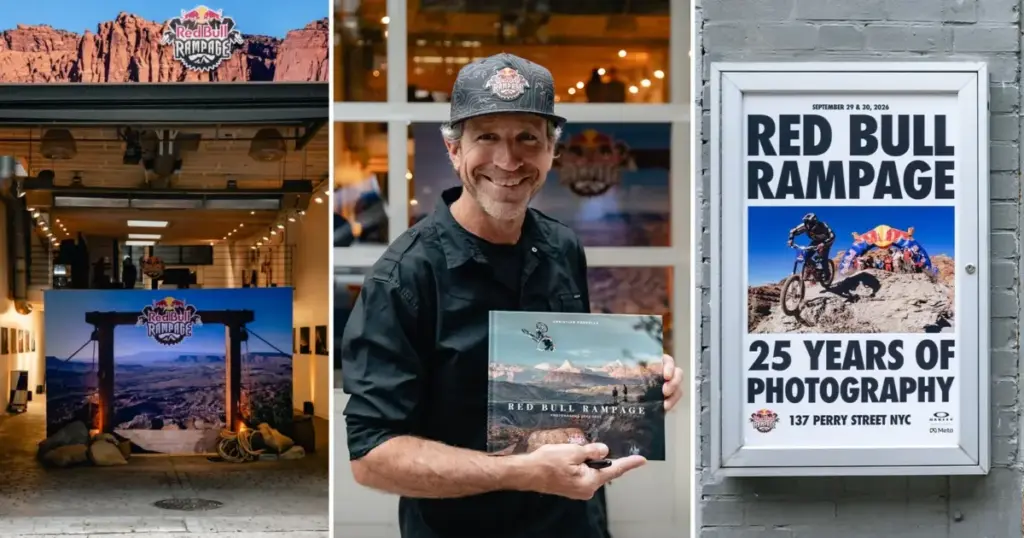
What does it take to capture some of the most demanding action sports on earth from the precipice of a sheer desert cliff? For two and a half decades, the Red Bull Rampage has tested the absolute limits of freeride mountain biking on the towering, unforgiving sandstone ridges of southwest Utah. Year after year, the world’s best riders descend lines that appear completely vertical and impossible to navigate even from a safe distance. Yet, running parallel to these elite athletes on the mountain is an entirely different group of professionals who tackle the exact same extreme terrain while carrying heavy camera gear instead of handlebars: the action sports photographers.
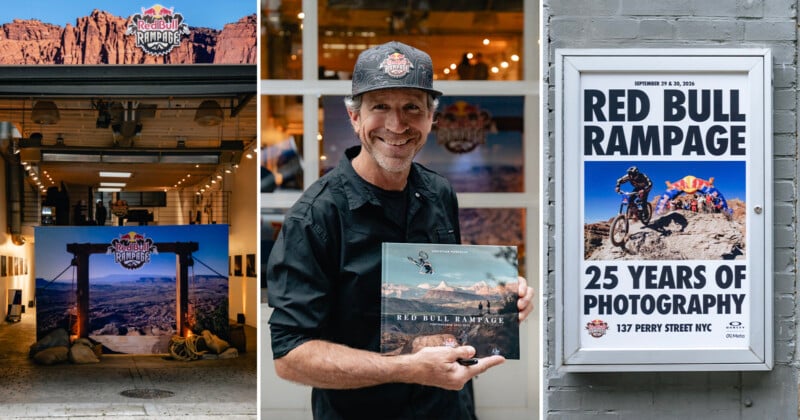
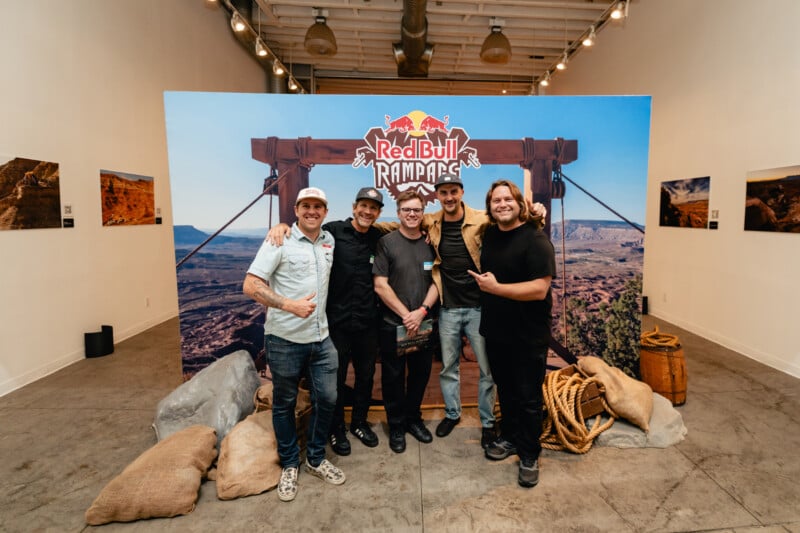
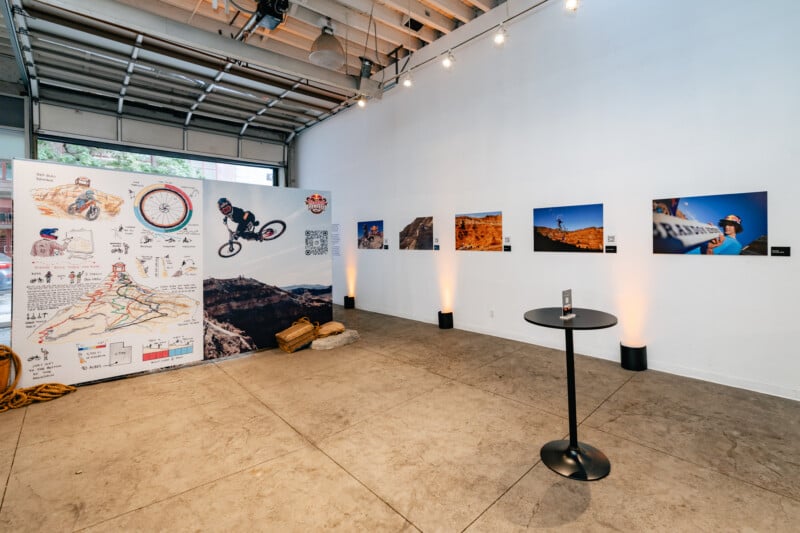
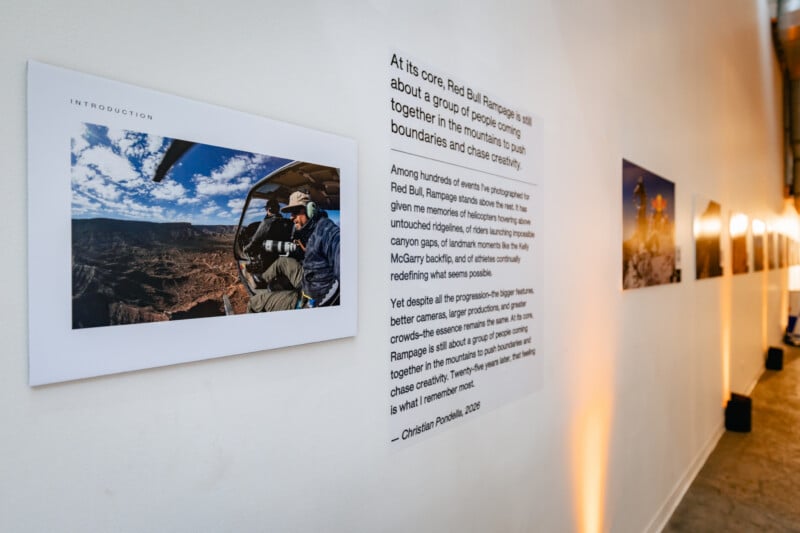
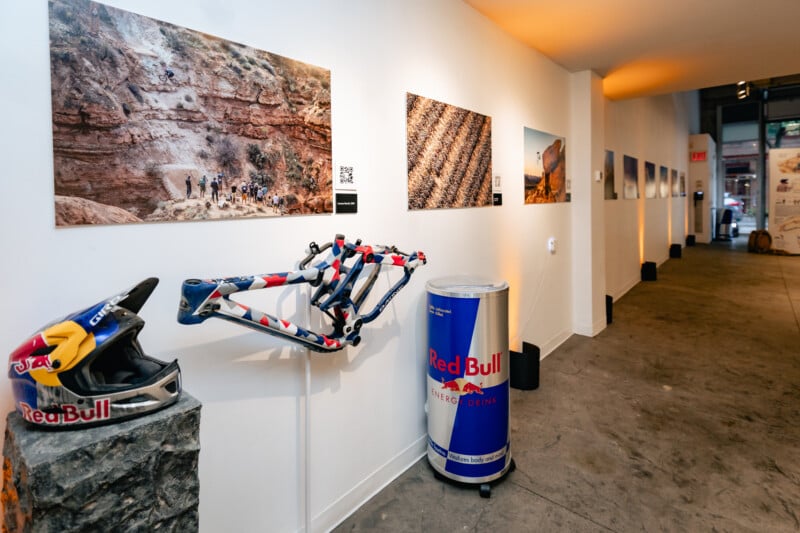
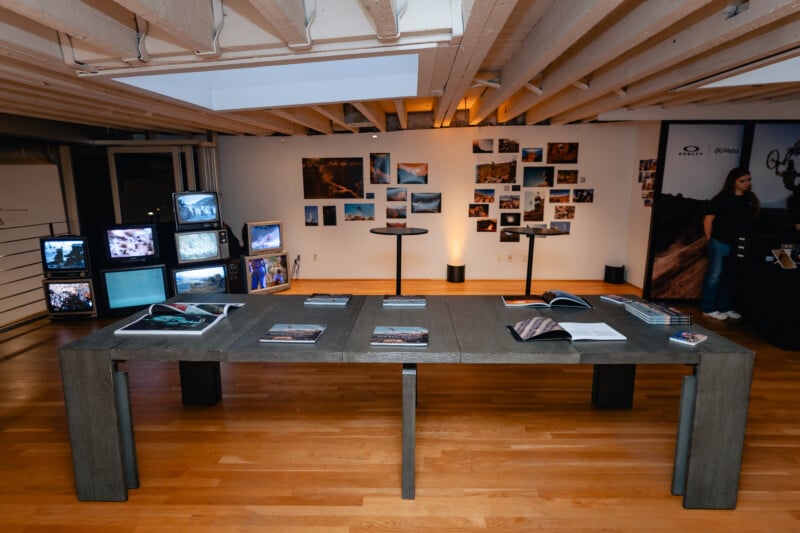
That vital behind-the-scenes perspective takes center stage in New York City with the Red Bull Rampage 25th Anniversary Photo Gallery. The special exhibition brings together iconic imagery from Red Bull’s dedicated photography team alongside the extensive, defining work of legendary adventure photographer Christian Pondella, who has documented every single edition of the Rampage since its inception in 2001. The resulting exhibition offers audiences a profound look not just at the athletes who have continually redefined gravity and progression over the last 25 years, but at the courageous visual storytellers who place themselves in extraordinarily perilous positions to translate that raw adrenaline for the rest of the world.
Photographing From the Same Dangerous Cliffs
For the photographers assigned to cover the Red Bull Rampage, capturing the event is never as simple as finding a comfortable vantage point and waiting for riders to pass through a pre-composed frame. The very environmental factors that make the competition so intensely challenging and dangerous for the athletes—loose gravel, vertical drop-offs, blistering heat, and shifting desert light—apply equally to the media crew documenting them.
Photographers must expertly scale and position themselves on steep, highly exposed sections of the canyon landscape while balancing heavy camera backpacks, telephoto lenses, and tripods. They constantly search for unique perspectives and dynamic compositions that accurately communicate the sheer, staggering scale and dramatic nature of the terrain. Operating from these precarious perches, they must accurately anticipate split-second athletic movements, maintain absolute focus, and be thoroughly prepared for the single, fleeting opportunity to capture a historic moment.
The resulting photographs often make the high-speed descents and massive aerials look completely effortless. Behind every striking image, however, lies a tremendous amount of meticulous planning, grueling physical climbing, strategic positioning, and unwavering trust shared among the athletes, the media crews, and the broader event staff.
The People Behind the Pictures
For Christian Pondella, documenting the Red Bull Rampage extends far beyond simply scouting a visually striking camera angle. As an accomplished rock climber, skier, cyclist, and multi-disciplinary adventure athlete himself, Pondella possesses the deep personal experience required to intuitively understand extreme terrain and instinctively know where he needs to be to freeze the action. That firsthand familiarity often means navigating the exact same hazardous, exposed cliff faces as the riders, but while hauling significantly heavier gear and constantly calculating where the next high-stakes moment will unfold.
Pondella has photographed every single iteration of the Red Bull Rampage since the event was established in 2001, granting him an exceptionally rare and comprehensive perspective on both the rapid progression of the sport and the technological evolution of action photography. Over the course of those 25 years, he has watched the competition grow from its raw, underground origins in the Utah desert into a highly produced global spectacle, all while camera technology evolved rapidly alongside the athletes and their specialized equipment. Today, his personal archive contains more than 50,000 Rampage images, spanning generations of iconic riders and capturing many of the sport’s most defining milestones.
His professional portfolio extends well beyond the boundaries of mountain biking. Pondella has documented elite skiing, technical climbing, BASE jumping, and motocross for major editorial publications including National Geographic, Sports Illustrated, Outside, and Men’s Journal. He has also shot high-profile commercial campaigns for industry-leading brands such as Red Bull, Patagonia, Oakley, and Yeti. That unique blend of rigorous editorial and commercial experience, paired with his authentic background in the sports he covers, has allowed him to develop an intimate and respectful approach to documenting individuals who push the absolute limits of human capability.
When looking back at a quarter-century of Rampage history, however, Pondella does not point first to the advanced cameras, the changing technology, or the increasingly elaborate wooden features and cliff drops. When asked about his favorite aspect of photographing the grueling event, his thoughts immediately return to the human element.
The camaraderie built on the mountain is something he cherishes deeply, noting that returning each year feels akin to visiting family, with athletes, production crews, and photographers working seamlessly as a cohesive unit.
Paris Gore, another acclaimed photographer featured in the anniversary exhibition, echoed similar sentiments when reflecting on what makes covering Rampage so special as the event marks its milestone anniversary. For Gore, the core of the experience is likewise defined by the collective group of people who bring the massive production to life year after year.
It is a fascinating perspective for an event that is so intensely and visually defined by enormous jumps, sheer cliffs, and terrifying technical descents. Yet, for the professional photographers who return to the desert season after season, Rampage is ultimately about much more than documenting escalating athletic feats. It is fundamentally about the tight-knit, resilient community that has organically developed around the competition.
That profound sense of mutual trust and camaraderie becomes especially apparent when examining the photographers’ portfolios alongside the actual athletic performances. Every dramatic, crystal-clear photograph represents a deep collaboration. Whether that involves an athlete trusting a photographer to position themselves dangerously close to a landing zone, a course crew member helping establish a safe working area on loose rock, or multiple photographers coordinating to cover vastly different angles of the exact same high-stakes run, teamwork remains the invisible engine driving the visuals.
25 Years of Red Bull Rampage Through a Camera
The anniversary exhibition ultimately provides a rare opportunity to view two and a half decades of mountain biking history strictly through the eyes of the individuals who recorded it. Rather than simply presenting Rampage as a straightforward collection of spectacular athletic highlights, the curated photographs illustrate how the sport has matured and how visual artists have continually adapted their techniques to capture it.
For contemporary photographers, this evolution is perhaps the most compelling element of the exhibition. The displayed images vividly demonstrate the immense effort required to produce a single photograph that makes an extreme, alien environment comprehensible to an observer sitting thousands of miles away.
A truly successful Rampage photograph must accurately communicate scale, speed, severe terrain, and elite athleticism within the confines of a single frame. Achieving this balance frequently requires the photographer to get close enough to make the surrounding canyon walls feel overwhelmingly massive, while simultaneously finding a precise composition that gives the rider a clear path through the frame. The absolute best images successfully trick the human eye, making viewers feel as though they are standing right on the dusty mountain ridge alongside the media crew.
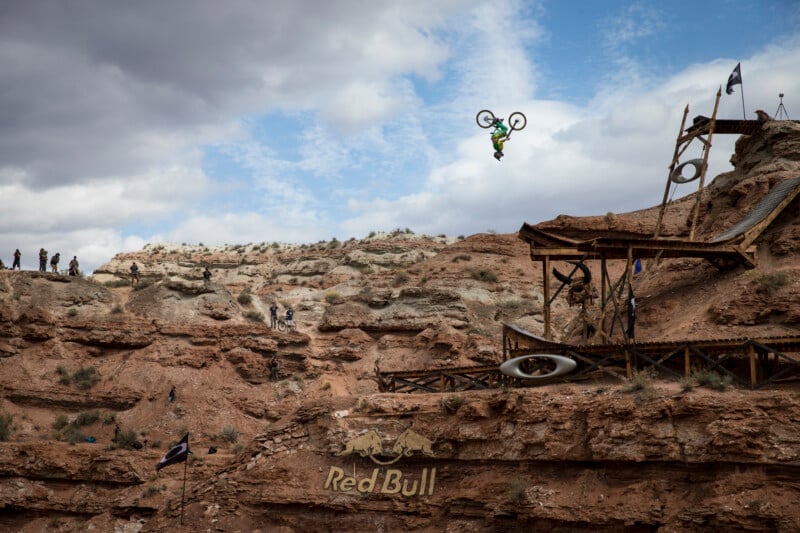
That immersive perspective, however, demands a heavy physical toll. The athletes are not the only ones placing themselves in perilous, high-stress positions to create the annual spectacle.
The Red Bull Rampage 25th anniversary celebration will culminate when the premier competition returns to the rugged terrain of southwest Utah this October. Continuing the tradition established in recent years, the 2026 competition will utilize a dedicated two-day format, featuring the women’s competition on Thursday, October 8, followed immediately by the men’s competition on Saturday, October 10.
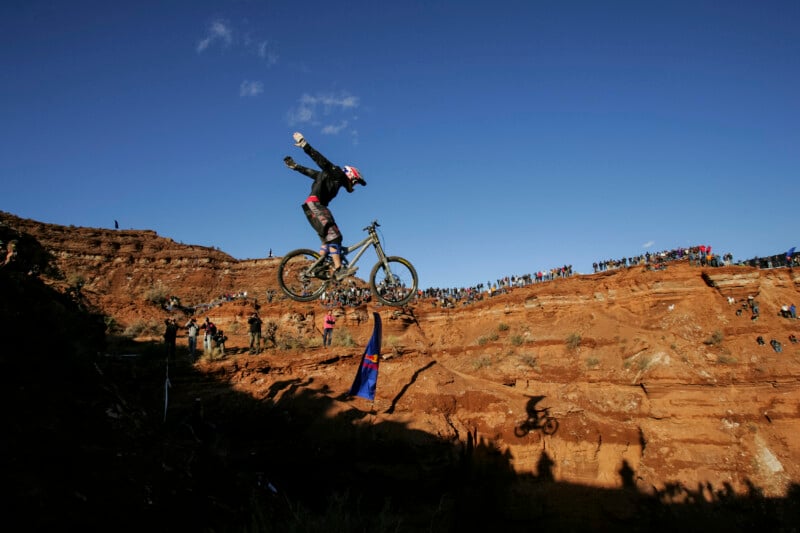
Live global broadcasts for both events are scheduled to begin at 10 a.m. Mountain Time on their respective competition days, ensuring fans worldwide can follow every moment. Both the women’s and men’s showdowns will be streamed live on Red Bull TV and the official Red Bull Bike YouTube channel.
As audiences tune in to watch extreme action sports like the Red Bull Rampage, it is remarkably easy to become entirely absorbed by the riders and the breathtaking, high-risk maneuvers unfolding on the mountain. The polished broadcasts and striking photographs effortlessly create the illusion that the viewer is right there on the ridge, watching every calculated line, massive gap, and terrifying drop happen in real time.
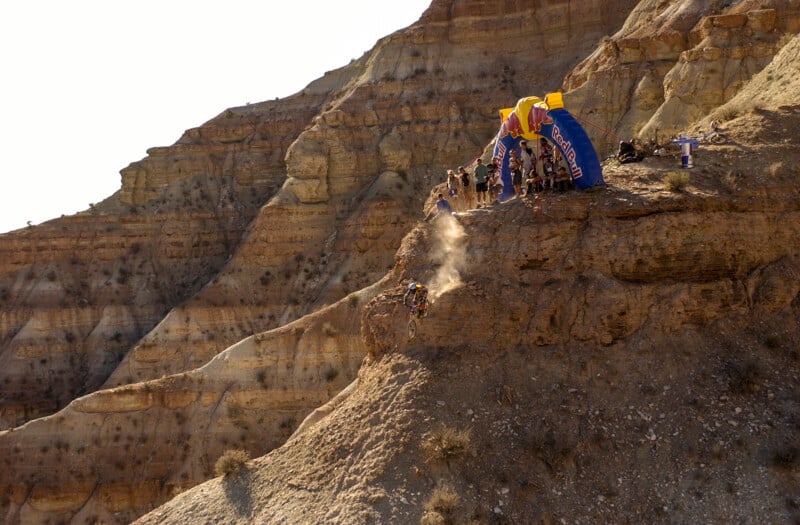
The next time one of those powerful images pulls a viewer directly into the heart of the action, it serves as a reminder that an entire parallel story is quietly unfolding behind the camera lens. The photographer is out there on the mountain too, navigating the treacherous terrain, securing a precarious vantage point, and anticipating the precise fraction of a second that will successfully translate the raw experience for everyone watching from afar. That enduring dynamic remains at the heart of what makes action sports photography so endlessly compelling: the athlete crafts the unforgettable moment, and the photographer finds a way to share what it truly felt like to stand in the dust and witness history.