




The rollout comes as Meta continues to expand the capabilities of its AI-powered eyewear, which allows wearers to interact with their surroundings using voice commands, translate foreign text on menus, identify plants and landmarks, and access real-time assistance. However, these advanced features rely heavily on the collection of images and video clips captured by the glasses’ outward-facing cameras. Under the newly introduced option, users can now choose to opt out of contributing this visual data to Meta’s product improvement initiatives, offering a degree of control that privacy advocates have increasingly demanded as ambient computing becomes more widespread.
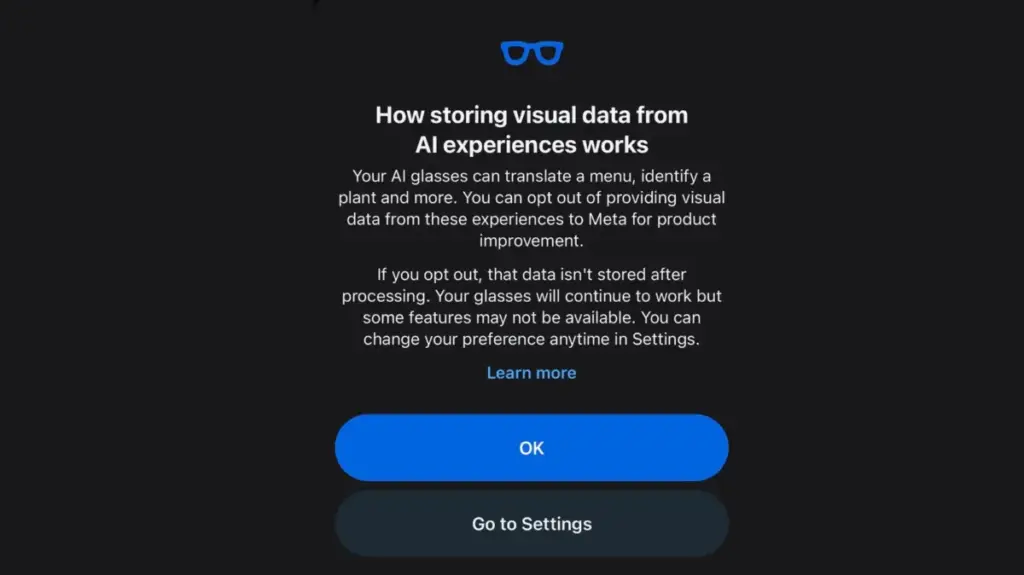
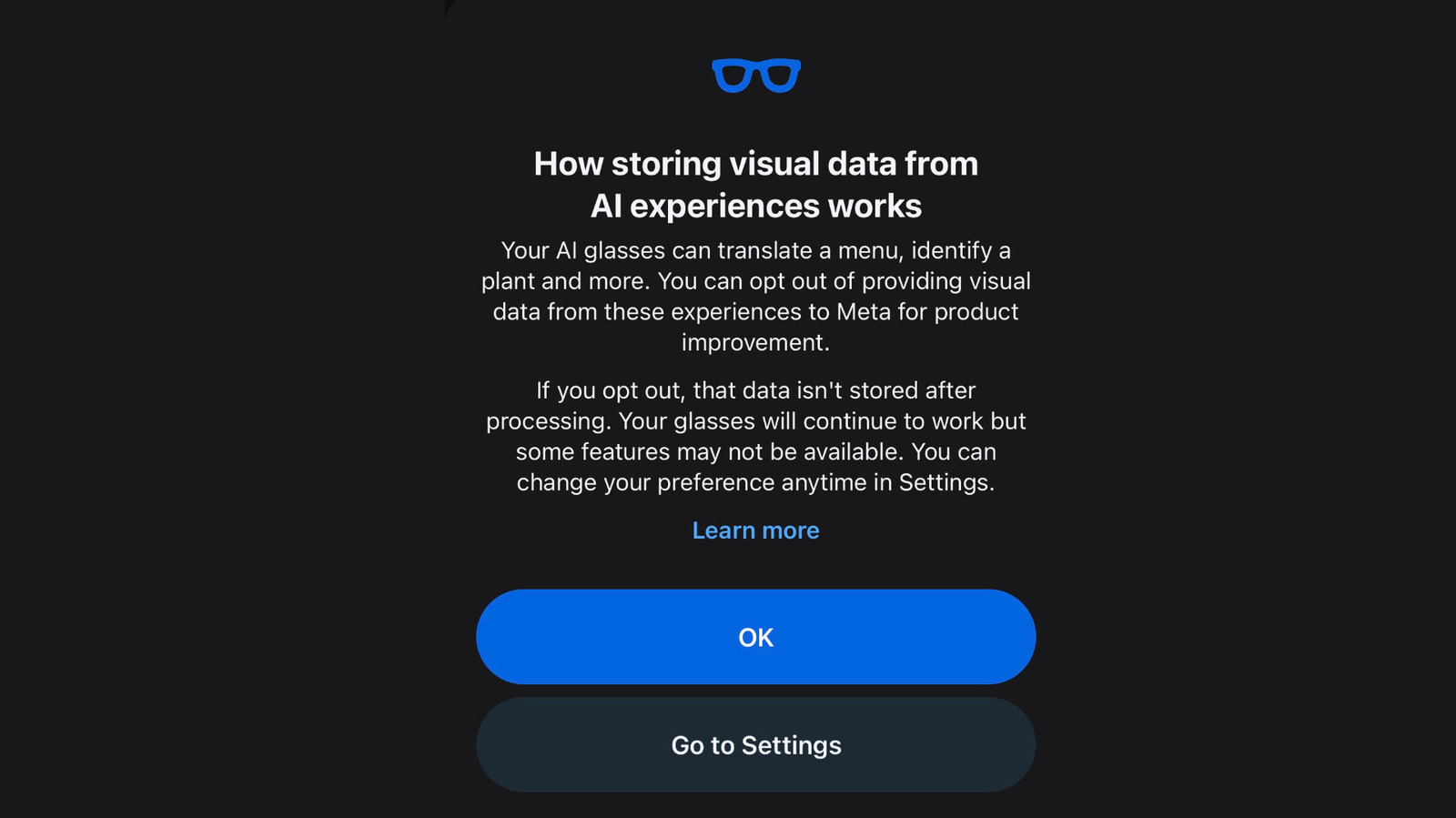
As part of the rollout, Meta has begun notifying owners of its smart glasses through an in-app notification prompt within the Meta AI application. The alert explains the utility of the AI-powered glasses—highlighting their ability to translate text, identify objects, and assist with daily tasks—while clearly outlining the new privacy choice available to consumers. The prompt informs users that they can opt out of providing visual data from these experiences to Meta for product improvement. It reassures participants that choosing to opt out means the captured data will not be stored after processing, preventing it from being routed into the company’s broader machine learning pipelines.
Locating and activating the new privacy control requires navigating through the companion app. Users must access the specific settings menu dedicated to their smart glasses, select the Meta AI category, and scroll down to locate the toggle labeled for storing visual data from AI experiences. To successfully change this setting, the glasses must be removed from their charging case and actively connected to the user’s mobile device via Bluetooth. Furthermore, consumers who own multiple pairs of Meta smart glasses must repeat the process individually for each device to ensure the preference is applied uniformly across all of their hardware.
While the new toggle offers a clear pathway for privacy-conscious users, Meta has noted that opting out may restrict access to certain functionalities. Specifically, disabling the storage of visual data could prevent users from utilizing features such as visual reminders—a capability that allows a wearer to look at a physical object, such as a grocery item or a book, and instruct Meta AI to issue a reminder related to it for a future date. At present, the company has not specified whether any other existing or planned features will be similarly impacted by a user’s decision to disable visual data collection, leaving some questions open about the full trade-off between privacy preservation and advanced AI utility.
Alongside the introduction of the new setting, Meta has updated its official online help center to provide a more transparent and detailed explanation of how visual data is handled when users engage with their devices. The documentation explicitly addresses a detail that has drawn intense scrutiny from privacy watchdogs: the possibility of human review. When individuals utilize AI experiences on their Meta glasses—such as asking questions about objects within their field of view or engaging with live AI features—the company records and stores the resulting visual data. Meta acknowledges in the help documentation that this information may be utilized to power glasses features and refine Meta products overall. Crucially, this operational scope includes the training and enhancement of AI models, a process that the company confirms can involve both automated systems and manual review by human contractors or employees.
To clarify the boundaries of what is collected, Meta’s updated guidelines draw a distinct line between active AI interactions and standard media capture. The company emphasizes that the visual data subject to storage and potential AI training is strictly limited to information gathered while using specific AI features, including Live AI modes. By contrast, the company states that "visual data" does not encompass everyday photos and videos captured intentionally by users through the glasses when the physical capture LED light is illuminated to signal recording. This distinction aims to reassure users that standard personal photography and video recording sessions remain separate from the continuous data streams utilized for backend machine learning development.
The introduction of the opt-out mechanism reflects a broader industry challenge as technology companies race to integrate generative artificial intelligence into everyday consumer hardware. Smart glasses, which sit on the face and capture perspectives from the user’s exact point of view, present unique regulatory and social considerations regarding consent and surveillance in public and private spaces. By offering a transparent mechanism to halt data harvesting for AI training, Meta is responding to mounting pressure from privacy regulators and consumers alike who seek greater autonomy over how their personal interactions with AI are monitored, stored, and analyzed in corporate data centers.