As dogs age, maintaining joint health and mobility becomes a central focus for pet owners seeking to preserve their companions’ quality of life. The market for canine joint supplements has grown increasingly sophisticated, with manufacturers frequently updating their formulations to incorporate new ingredients and higher concentrations of active compounds. To help pet parents navigate these options, Athena Gaffud, DVM, has conducted an expert-analysis review of PetLabCo.’s Joint Care Chew Advanced.
This review focuses on the salmon-flavored soft chew formulation, examining its label quantities, weight-based dosing directions, scientific evidence supporting its ingredients, safety considerations, and its overall role within a comprehensive canine mobility plan.
Crucially, this assessment is based on the specific product formulation and manufacturer guidelines displayed by PetLabCo. as of August 25, 2026. This distinction is important for consumers, as older reviews of PetLabCo. joint supplements often discuss previous formulations that included different active ingredients, such as turmeric extract or calcium fructoborate. This evaluation is an expert analysis of the label and the surrounding scientific literature rather than a hands-on product trial, meaning it does not make firsthand claims regarding the chew’s palatability, texture, or individual clinical results.
An Overview of the Joint Care Chew Advanced Product Profile
PetLabCo. Joint Care Chew Advanced is designed as a daily canine joint-support supplement suitable for dogs 12 weeks of age and older. Formulated as a salmon-flavored soft chew, the product is manufactured in the United States using a combination of domestic and globally sourced ingredients.
To provide quality assurance to pet owners, PetLabCo. maintains certification from the National Animal Supplement Council (NASC) and utilizes third-party testing to verify the purity, potency, and label accuracy of its products. The soft chews are sold in tubs containing 30, 60, or 90 chews.
From a pricing perspective, the standard retail cost for a single tub is $38.69, while a subscription option lowers the single-tub price to $30.95. The manufacturer offers a conditional 60-day guarantee for qualifying first-time buyers in the United States who purchase directly from their website, alongside a general 30-day return policy for unopened items. Because pricing, subscription structures, and guarantee terms are subject to change, pet owners are encouraged to verify current terms prior to purchasing.
Deconstructing the Formula: Ingredient Quantities and Daily Guidelines
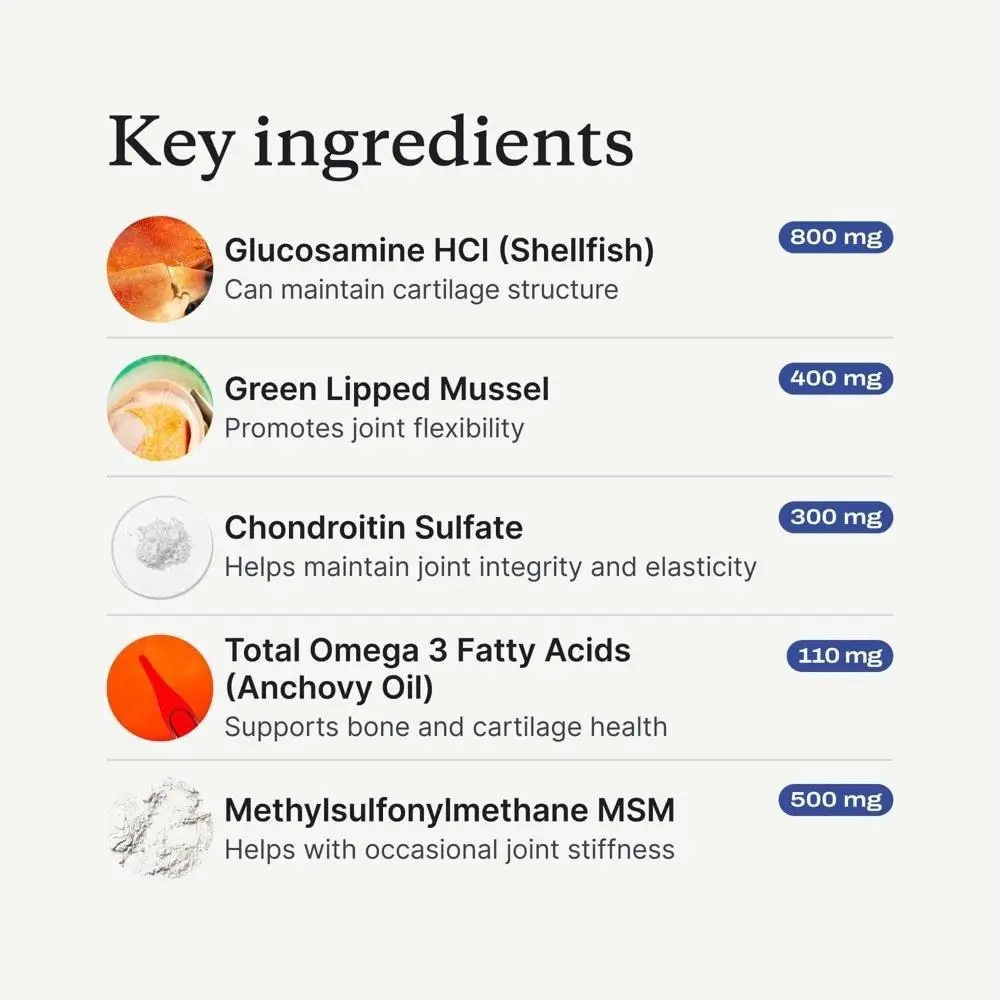
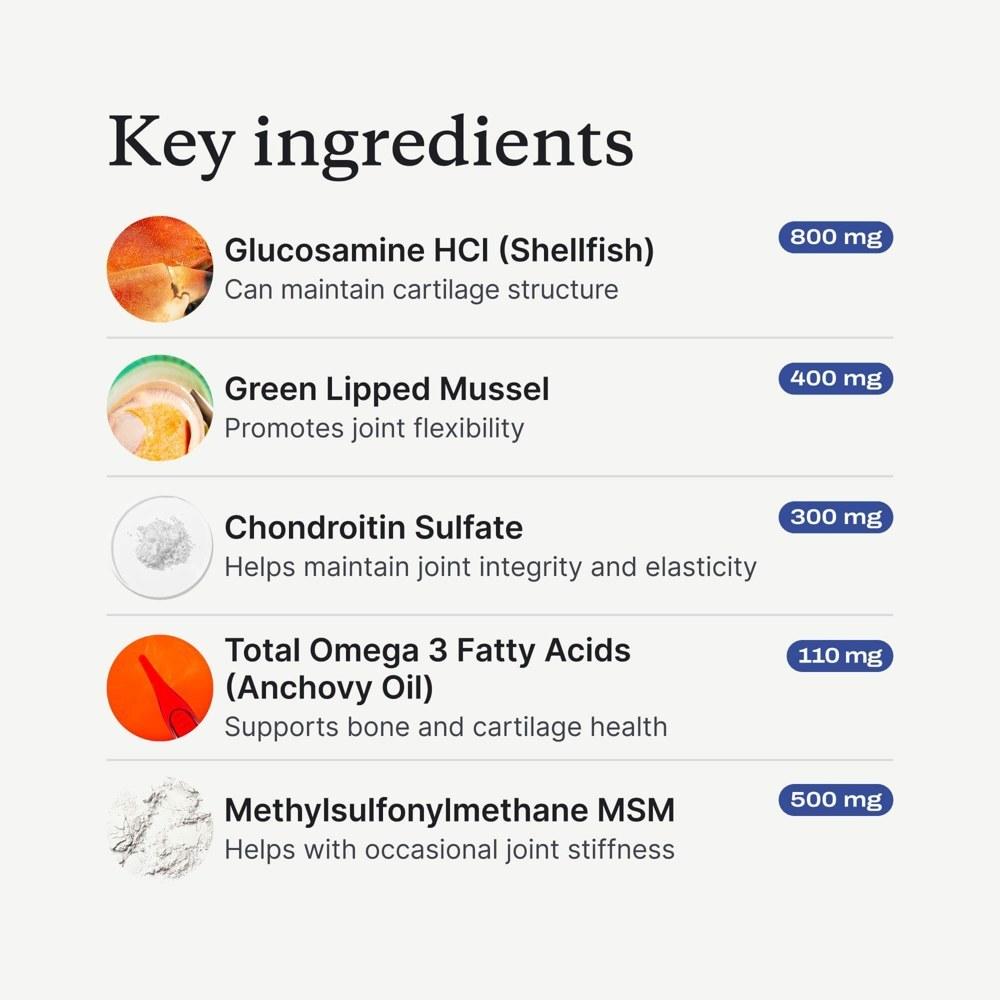
A key strength of the Joint Care Chew Advanced is its transparent ingredient label. The supplement facts panel reports specific active ingredient quantities based on a two-chew serving, which is equivalent to an 8-gram dose.
Within this two-chew serving, the formula delivers:
- Glucosamine Hydrochloride (derived from shellfish): 800 mg
- Methylsulfonylmethane (MSM): 500 mg
- Green-Lipped Mussel (Perna canaliculus): 400 mg
- Chondroitin Sulfate: 300 mg
- Boswellia: 40 mg
- Total Omega-3 Fatty Acids (derived from anchovy oil): 110 mg (including 70 mg of Eicosapentaenoic Acid [EPA] and 40 mg of Docosahexaenoic Acid [DHA])
The inactive ingredients supporting the chew’s form and salmon flavor profile include apple cider vinegar, coconut glycerin, hickory smoke flavor, rosemary extract, salmon hydrolysate, sunflower lecithin, sunflower oil, and sweet potato.
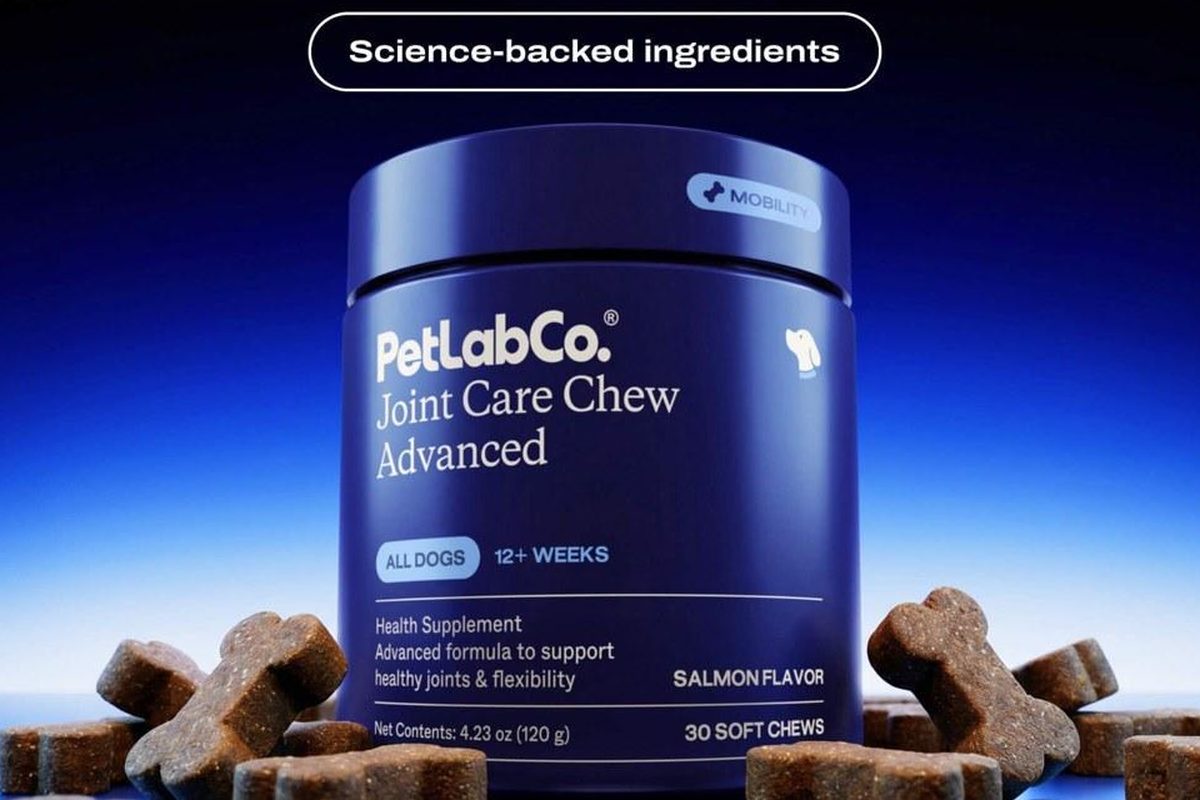
To accommodate dogs of varying sizes, PetLabCo. provides weight-based daily administration guidelines. For small dogs weighing under 25 pounds, the recommended serving is 1 chew per day, which provides exactly half of the active ingredient quantities listed on the two-chew label. Dogs weighing between 25 and 49.9 pounds should receive the standard serving of 2 chews daily. Large dogs in the 50 to 75-pound range require 3 chews daily, delivering one and a half times the labeled quantities. For giant breeds weighing over 75 pounds, the daily recommendation is 4 chews, doubling the active ingredient intake.
Veterinarians emphasize the importance of adhering strictly to these labeled directions rather than adjusting doses based on outdated reviews or a desire to accelerate results. When a dog is already consuming other joint supplements, fish oils, or a therapeutic veterinary diet, professional guidance is essential to calculate the total daily intake of overlapping ingredients and avoid potential nutritional imbalances.
Evaluating the Scientific Evidence Behind the Active Ingredients
When evaluating any joint supplement, it is crucial to separate the manufacturer’s marketing claims from independent clinical evidence. The ingredients in the Joint Care Chew Advanced represent a mix of components with varying degrees of scientific support in veterinary medicine.
Omega-3 Fatty Acids: The Strongest Clinical Evidence
Among all the ingredients in this formulation, the omega-3 fatty acids derived from anchovy oil possess the most robust clinical support for managing canine joint health. The 2022 American Animal Hospital Association (AAHA) pain-management guidelines note that clinical evidence remains low for most joint nutraceuticals in dogs, with the notable exception of omega-3 fatty acids. Additionally, the Merck Veterinary Manual highlights that supplementation with EPA, or diets rich in EPA, has been shown to improve gait and overall mobility in dogs diagnosed with osteoarthritis.
This makes the inclusion of 110 milligrams of total omega-3s (70 mg EPA and 40 mg DHA) per two chews a highly valuable component of the formula. However, this quantity must be viewed in the context of the dog’s total daily diet. Therapeutic doses studied in clinical trials are often higher and calculated based on the dog’s exact body weight, meaning these chews should not be assumed to be a direct replacement for concentrated veterinary fish oils or a prescribed therapeutic joint diet.
Green-Lipped Mussel: Promising, Preparation-Specific Support
Green-lipped mussel (Perna canaliculus) is a marine ingredient rich in unique omega-3 fatty acids, amino acids, and minerals. Some veterinary clinical trials support its use; for instance, a double-blind study involving 31 dogs found significant improvements in overall arthritis scores after six weeks of supplementing a complete diet with a specific green-lipped mussel powder.
While these findings are promising, clinical success often depends heavily on the specific preparation, processing methods, and concentration used. Because this specific PetLabCo. finished product has not undergone clinical trials, the green-lipped mussel content should be viewed as a supportive ingredient rather than a guaranteed therapeutic agent.
Glucosamine and Chondroitin: Popular but Scientifically Mixed
Glucosamine and chondroitin are the most widely recognized joint supplement ingredients on the market, frequently associated with supporting cartilage structure and joint fluid health. However, their popularity does not entirely align with clinical consensus.
A comprehensive 2022 systematic review of veterinary literature concluded that there is a significant lack of analgesic efficacy for glucosamine-chondroitin nutraceuticals in managing osteoarthritis pain in both dogs and cats. The Merck Veterinary Manual similarly states that current evidence does not support using these ingredients as standalone therapies for active pain management. While they remain useful for supporting the structural components of healthy joints, they should not be expected to reverse arthritic changes or replace prescription pain relief.
Boswellia and MSM: Supportive Roles with Limited Canine Data
Boswellia, a herbal resin, is included in the chew at 40 milligrams per serving to assist with joint comfort. While small, preliminary canine studies have suggested some benefits for specific standardized preparations of Boswellia, these findings cannot be broadly applied to the exact concentration and form used in this multi-ingredient chew.
Similarly, Methylsulfonylmethane (MSM) is a sulfur-containing compound widely utilized to support connective tissue biology. Although biologically plausible, strong clinical trial data demonstrating direct mobility improvements in dogs supplemented with MSM remains limited. Both ingredients broaden the formula’s profile but should be viewed as supportive rather than primary therapeutic agents.
Safety Considerations, Allergens, and Contraindications
While Joint Care Chew Advanced is generally safe for daily use in healthy dogs, several clinical safety factors require close attention.
First and foremost is the potential for food allergies. The current formulation contains multiple animal-derived marine ingredients, including shellfish-derived glucosamine, green-lipped mussel, anchovy oil, and salmon hydrolysate. For dogs with known or suspected sensitivities to fish or shellfish, this product is highly likely to trigger an allergic response. Pet parents of sensitive dogs should consult their veterinarian to identify alternative joint supplements with different protein sources.
Furthermore, several of the active ingredients carry specific medical precautions:
- Bleeding Disorders and Anticoagulants: Omega-3 fatty acids can influence platelet aggregation. Dogs with pre-existing bleeding disorders or those currently taking anticoagulant medications require veterinary clearance before starting this supplement.
- Diabetes and Glucose Regulation: Glucosamine is an amino sugar, which means its administration should be carefully monitored in diabetic dogs to ensure it does not interfere with glucose management.
- Urinary Stones: Certain ingredient profiles may influence urinary pH or mineral excretion, making professional oversight necessary for dogs with a history of urinary tract stones.
- Pregnancy and Breeding: The safety of this supplement has not been established in pregnant, lactating, or breeding dogs.
- Young Puppies: While PetLabCo. states the product is safe for puppies from 12 weeks of age, caution should be exercised with rapidly growing large-breed puppies or those on specialized growth diets to avoid disrupting their carefully balanced nutritional intake.
In all cases, if a dog’s condition worsens or fails to improve after starting the supplement, administration should be stopped, and a veterinarian should be consulted. In the event of an accidental overdose, owners should contact a veterinary professional or an animal poison control center immediately.
Comparing the Chew to Alternative Joint-Support Approaches
When deciding whether PetLabCo. Joint Care Chew Advanced is the right choice, it is helpful to compare its role to other common joint-care strategies.
Compared to concentrated veterinary fish oils, the chew offers a convenient, multi-ingredient option, but it provides a lower, less targeted dose of EPA and DHA per serving. For dogs requiring high-dose omega-3 therapy, a dedicated fish oil supplement may be more appropriate.
When compared to therapeutic veterinary joint diets, the chew allows owners to maintain their dog’s current food while adding targeted joint support. However, therapeutic diets are backed by extensive clinical research and offer complete, balanced nutrition designed specifically for joint health, which a supplement chew cannot replicate.
Single-ingredient supplements offer a more controlled way to evaluate how a dog responds to a specific compound, making it easier to identify adverse reactions or positive responses. In contrast, multi-ingredient chews like PetLabCo.’s offer the convenience of delivering multiple popular compounds in a single, palatable treat, though it is harder to pinpoint which specific ingredient is driving any observed changes.
Most importantly, joint supplements are not a substitute for prescription veterinary care. For dogs experiencing active pain, lameness, or severe mobility loss, nutraceuticals cannot replace the immediate efficacy of prescribed non-steroidal anti-inflammatory drugs (NSAIDs), physical rehabilitation, joint injections, or surgical interventions.
A Practical Guide for Owners to Measure Real-World Progress
Because joint supplements require consistent use over several weeks before any potential support becomes noticeable, pet owners need an objective method to judge whether the product is truly benefiting their dog.
Before starting the supplement, owners should select and document two or three specific, measurable daily activities rather than relying on a general sense of whether the dog seems "younger." Useful baselines include:
- The ease and speed with which the dog rises after a long rest.
- The dog’s pace and stamina during a standard walk along a familiar route.
- The dog’s ability to navigate a common set of stairs or climb onto a favorite resting spot.
By keeping the dog’s diet, exercise routine, and medications completely stable during the trial period, owners can minimize confounding variables. After several weeks of consistent daily administration at the labeled dose, the dog’s performance of these baseline activities can be re-evaluated.
This structured observation provides valuable, objective feedback for the dog’s veterinarian, helping to determine whether to continue with the Joint Care Chew Advanced or transition to a different therapeutic approach. Ultimately, the value of the chew lies not in any promise of a miracle cure, but in how effectively its transparent, multi-ingredient formula fits into a professionally managed, comprehensive canine wellness and mobility plan.