



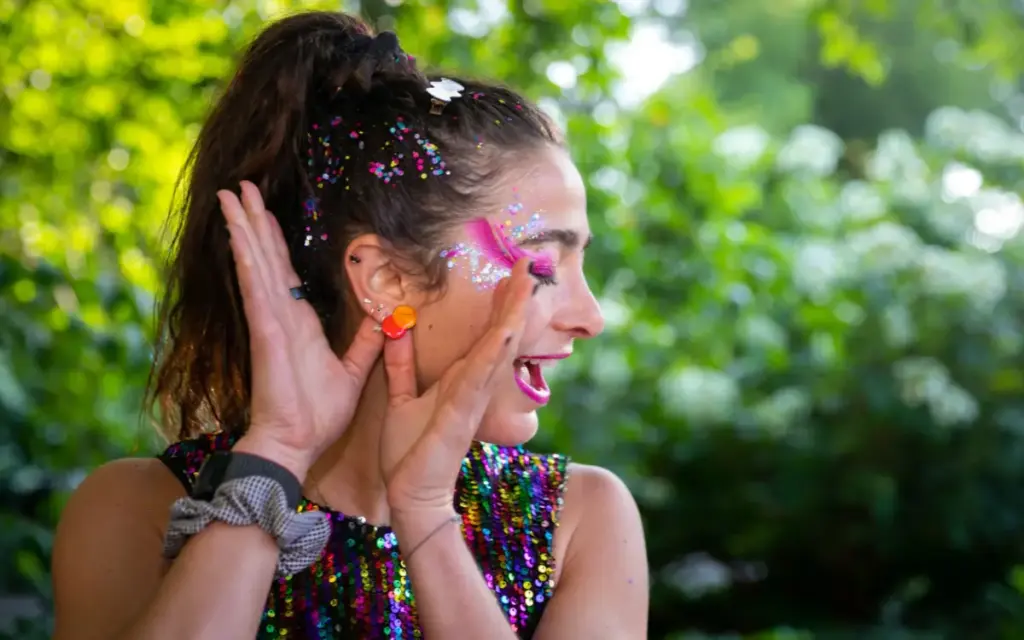
For decades, the standard uniform for endurance sports and backcountry exploration has been defined by utilitarian pragmatism. Moisture-wicking synthetics, muted earth tones, and heavy-duty technical gear have long dominated the trails, summits, and rivers. But stepping out onto the mountain trails or crossing the finish lines of grueling ultramarathons today, observers are increasingly likely to spot an unexpected and vibrant addition to the traditional athlete’s toolkit: shimmering face glitter.
What was once largely confined to music festivals and costume parties has firmly established a presence in outdoor culture. From chairlifts and whitewater rafting trips to elite bicycle races and grueling endurance runs, athletes and outdoor enthusiasts are routinely adorning themselves in sparkles. Ultramarathon runner Jennifer Lichter famously crossed the finish line of the prestigious Western States 100-mile endurance run in June, setting a new course record with orange glitter splashed across her cheekbones. Thru-hikers are glittering themselves while traversing the Continental Divide Trail, and even wildland firefighters have been known to bring a touch of sparkle into remote forest camps.
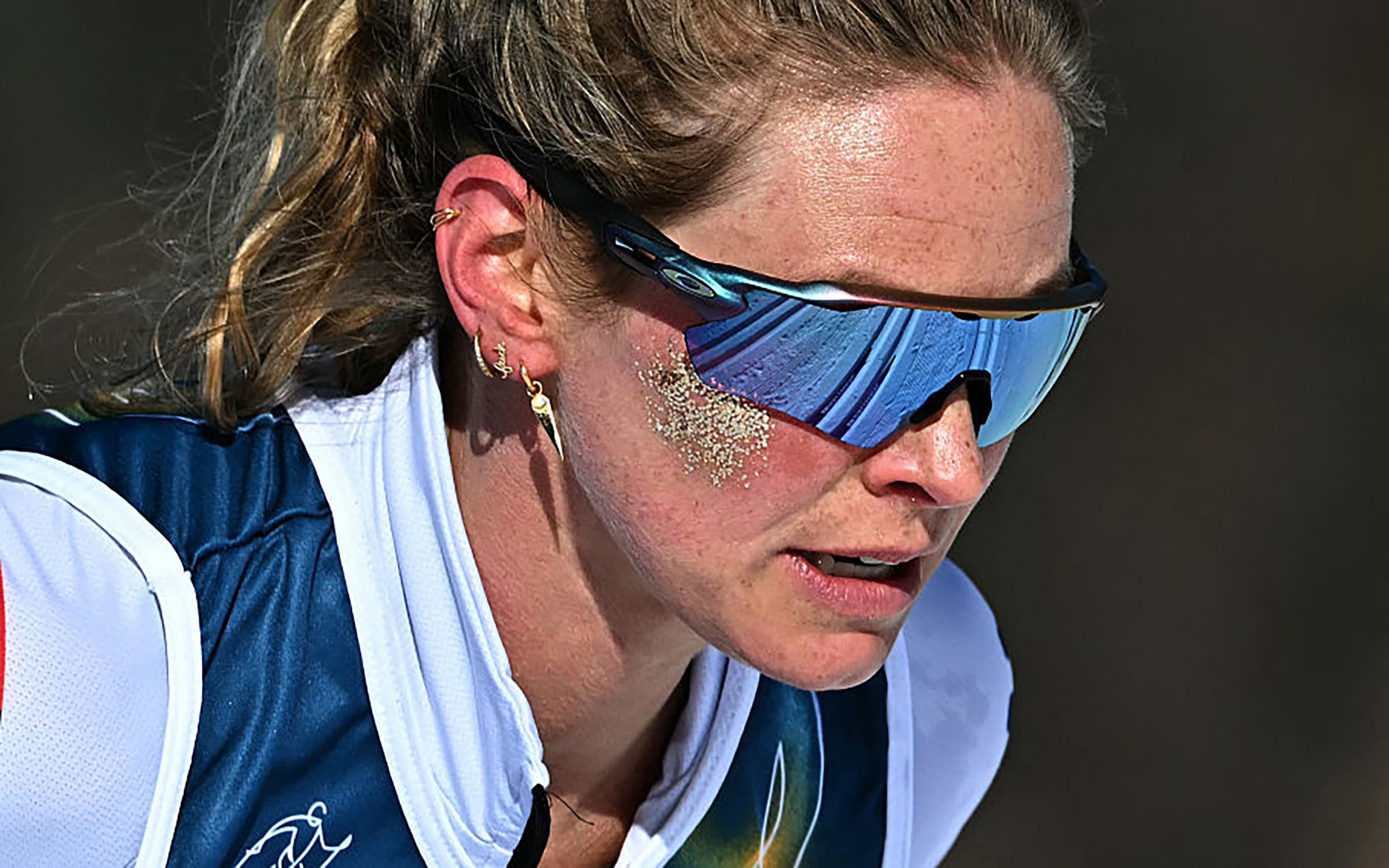
The rising visibility of glitter on summits and at finish lines can be attributed, at least in part, to elite athletes showcasing the trend on national and global stages in recent years. Jessie Diggins, the prolific cross-country skier boasting four Olympic medals, four World Cup overall titles, and seven World Championship medals, sparkled her way through the Winter Olympics in Italy. However, her signature use of glitter extends far beyond recent competitions.
Diggins first began wearing glitter at the age of 19 during her debut season competing on the World Cup circuit. When she was a younger athlete, she recalled, pre-race nerves would often consume her to the point where it drained her energy and sucked the joy out of the experience. Deciding to apply glitter before a race became a conscious way to reclaim that fun and positivity. Today, she smears on the sparkles right before leaving her hotel for the race venue, turning the routine into her most important pre-race ritual. As Diggins notes, it is remarkably difficult to take yourself too seriously when your cheeks are covered in glitter.
Similarly, Olympic runner Alexi Pappas has emerged as a trailblazer for glitter in endurance sports. Pappas first wore glitter—along with rhinestones and butterfly wings—when she ran the New York City Marathon in 2021. Still recovering from hamstring surgery at the time, she felt nervous about potentially running slower than her usual pace. Yet, dancing through the streets, blowing kisses, and wearing sparkles acted as a form of protective armor against her anxieties, signaling to the crowds that she was fully embracing the experience and finding joy in the moment. Recognizing the purposeful intention behind her sparkling appearance, Pappas has continued to wear glitter at races ever since.
Glitter Helps Athletes Transform
Building on her personal connection to the trend, Pappas is taking her passion a step further by launching a sweat-proof aesthetics company called Glop, debuting at the Chicago Marathon. Tired of relying on harsh eyelash glue to keep loose glitter adhered to her face during strenuous exertion, she designed products tailored specifically for athletes, including portable pouches of glitter meant to fit neatly inside a running vest. The brand name draws inspiration from the transformation caterpillars undergo within a chrysalis before emerging as butterflies, with colorways directly influenced by animals known for biological metamorphosis, such as the pink and purple hues of the strawberry sea anemone.
The appeal of glitter appears particularly strong among competitors tackling grueling endurance events where psychological morale can mean the difference between finishing and dropping out. Legendary ultrarunner Ann Trason, a 14-time winner of the Western States Endurance Run, first discovered the transformative power of glitter while pacing a struggling runner during the Javelina Jundred 100k. After visiting an aid station tent stocked with glitter and taking a few sips of soda, the runner regained the momentum needed to finish the race. Describing the sparkles as a form of happiness powder, Trason views it as an effective mood booster that helps participants push through physical and mental barriers. Even while managing painful rheumatoid arthritis at age 66, Trason maintains an active racing schedule, completing multiple events in successive weekends.
While elite competitors like Rachel Entrekin—who wore glitter when she placed second at the Ultra-Trail du Mont Blanc—and Mikey Mitch—who sported sparkles on his cheeks, chest, and shoulders during a fourth-place finish at the Leadville 100—have embraced the trend, the movement extends well beyond professional fields. Mountaineers, ski instructors, and river guides are increasingly incorporating glitter into their daily routines.
Sparkles in Backcountry Sports, Too
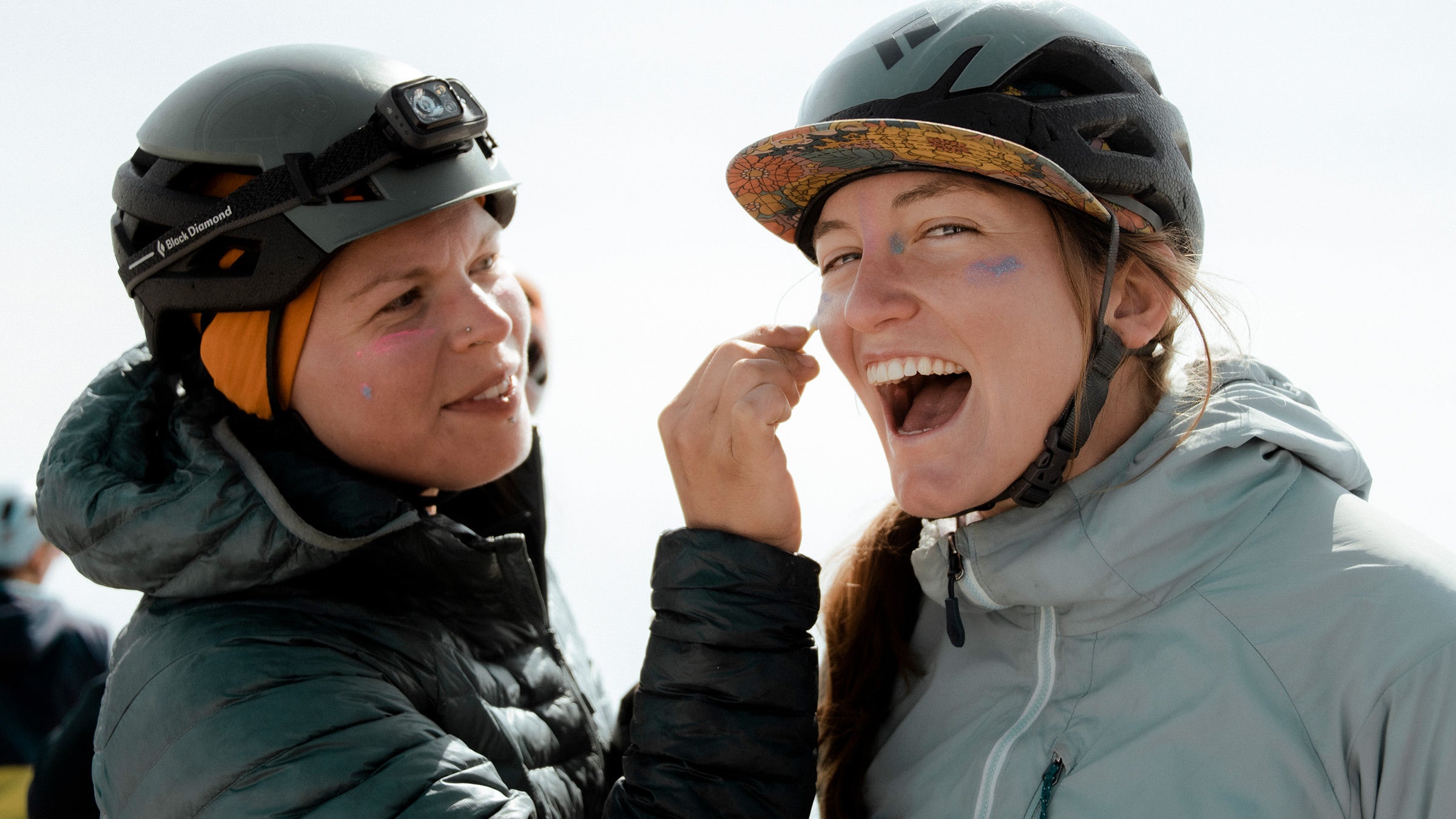
In the Pacific Northwest, guide training programs led by organizations like Upwards Transitions Institute, a female-owned guide company based in Bellingham, Washington, routinely provide pots of glitter to participants. Company owner and guide Victoria Garvin explains that the sparkles have become a standard fixture of the guide kit due to their powerful effect on group morale. Mountaineering inherently involves moments of fear and intense physical challenge, but Garvin emphasizes that the activity should remain fundamentally enjoyable. The glitter serves as a visual reminder to participants that they are out on the mountain by choice, helping to cut through tension and ease apprehension. Furthermore, she notes that having glitter on her face shifts interpersonal dynamics during difficult conversations about mountain conditions or physical readiness, helping people respond with greater openness and positivity.
On the rivers of Montana, Brooke Hornbeck of the Glacier Raft Company treats glitter as a daily staple, applying blue glitter adorned with star and moon shapes before brushing her teeth in the morning. Hornbeck regularly offers sparkles to busloads of guests before they embark on float trips down the Middle Fork of the Flathead River. For her, wearing glitter in traditionally male-dominated spaces like roaring rapids and remote mountain summits serves as a powerful expression of femininity, proving that women do not need to hide their identity to succeed in outdoor sports, but can instead embrace their femininity as a core strength.
Both Garvin and Hornbeck operate in pristine, protected natural environments—navigating Wild and Scenic Rivers and leading remote alpine expeditions—and share a firm commitment to environmental stewardship. Neither guide wants to leave microplastics behind in the wilderness for the sake of temporary whimsy. To resolve this concern, they utilize biodegradable glitter gel manufactured by Adorn Glitter, a Montana-based company that produces sparkles derived from Eucalyptus tree plant cellulose film.

Ali Bierman founded Adorn Glitter in 2022 after initially making glitter party favors for friends, a grassroots venture that quickly expanded far beyond her initial expectations. Bierman attributes the soaring popularity of glitter to a broader cultural shift within outdoor recreation, characterized by an explosion of color, creativity, and playfulness introduced largely by small, women-owned brands challenging traditional gear aesthetics and norms. As people increasingly embrace self-expression in the outdoors, glitter has naturally found its place alongside bold apparel and vibrant equipment. Ultimately, Bierman suggests that putting on glitter functions much like donning a superhero cape, offering a tangible reminder of an individual’s inner bravery and capacity to accomplish difficult things.