



Nearly nineteen years into early retirement, financial independence pioneer and blogger Mr. Money Mustache has come to a surprising realization: the complete freedom of this lifestyle can act as a profound double-edged sword. While the initial years of stepping away from the traditional workforce are often celebrated for the immediate relief from long commutes, rigid corporate structures, and demanding bosses, maintaining lifelong momentum without external obligations presents a unique set of psychological challenges.
For nearly two decades, the upside of this lifestyle has been abundantly clear. Having the rare opportunity to raise a son from birth well beyond his eighteenth birthday without professional compromises stands as a primary achievement. Furthermore, thousands of hours have been dedicated to valued pursuits such as family health, friendships, outdoor adventures, carpentry, and publishing commentary on personal finance and lifestyle design. These rewards remain entirely undisputed.
Yet, this life of total autonomy comes with a subtle, paradoxical flaw: the individual never has to do anything they do not actively want to do. To most people trapped in the daily grind, this condition sounds like the ultimate dream—a non-stop playground of self-actualization backed by financial security. In reality, however, the outcome depends heavily on the psychological makeup of the individual.
Absolute freedom and financial stability tend to strip away external scaffolding, laying bare a person’s true strengths and weaknesses. The resulting spectrum of human behavior spans widely, stretching from unchecked complacency—characterized by endless distractions and passive leisure—at one end, to monumental ambition, such as managing large-scale philanthropic foundations dedicated to medical research and clean energy, at the other.

During the first decade of this early retirement journey, the demands of active parenting provided a robust, natural structure. Alongside fatherhood, there was ample time to build and restore neighborhood homes, embark on rugged adventures, record instructional videos, and author hundreds of essays. Over the past few years, however, a noticeable deceleration occurred. Wrangle and focus became increasingly difficult, slowing down the pace of these creative and physical endeavors.
Instead of maintaining a constant presence on construction sites or locking into laser focus at the keyboard to finish articles, afternoons began to dissolve earlier into the couch. Seeking passive distraction through smartphones, there arose a recurring wish for the energy and focus required to execute more fulfilling tasks.
In response to this drift, an extensive personal study of health and wellness was initiated to uncover ways to optimize energy, focus, and baseline motivation. This research yielded numerous insights regarding daily habits, the dangers of excessive physical and psychological comfort, and the biology of human drive. While these strategies proved effective in theory, a persistent bottleneck emerged in execution.
The recurring pattern involved learning effective methods, successfully integrating them for brief periods, and then watching the brain gradually invent subtle excuses to abandon consistency. The result was a surplus of accumulated knowledge paired with a deficit of tangible accomplishment. Ultimately, a critical realization surfaced: the primary life advantage—total freedom—was being weaponized as a tool to avoid tasks that required immediate discomfort or friction.

Freedom serves an invaluable purpose when it rescues an individual from leaving home before dawn to endure traffic jams and sit in a corporate office for nine hours. Yet, that same freedom is effectively squandered if the newly gained hours are filled with mindless scrolling while children are left unengaged. True autonomy requires utilizing freed time for pursuits even more demanding and rewarding than the career left behind. Without that internal standard, the structured accountability of a traditional job might offer a safer harbor.
This avoidance mechanism often targets tasks requiring upfront planning, mental energy, or sustained focus, even when those exact activities generate the deepest satisfaction. Physical fitness serves as a clear illustration of this dynamic. Extensive evidence demonstrates that regular exercise delivers a higher return on investment than almost any other daily habit, fundamentally enhancing every other dimension of physical and mental health.
Despite possessing this knowledge, a familiar avoidance cycle frequently took hold. The intent to complete a rigorous weight training session would emerge, quickly followed by rationalizations about how difficult it felt. Attempts to engineer the ideal environment—waiting for perfect weather, high energy levels, and meticulously preparing the home gym the night before—often failed to bridge the gap between intention and action. Some weeks saw multiple workouts, while others slipped by with mere excuses about getting steps in through routine walking, revealing gaps of over a week between genuine physical training sessions. The inevitable result of this sporadic effort was lackluster fitness.
Breaking this cycle required abandoning elaborate rationalizations in favor of an immediate, instinctual pivot. The moment hesitation arises—the internal dialogue questioning whether a task is too difficult—serves as the ultimate alarm bell. Recognizing that precise moment of self-sabotage transforms hesitation from a trigger for procrastination into a direct trigger for immediate action.

While counterintuitive at first, running directly toward difficult tasks rather than away from them resolves the underlying psychological friction. Hesitation, though uncomfortable in the moment, can effectively become a rigorous internal coach once its patterns are properly identified.
Using Extreme Motivation as Fuel
When discussing these observations with peers, responses varied significantly. Roughly half of the acquaintances related deeply to the sensation of underachieving and desiring a higher output, while the other half viewed the premise as excessive, feeling they were already overextended by managing multiple children, running businesses, and training for endurance triathlons in the mountains.
These high-achieving individuals often moved through life in a constant state of high productivity paired with chronic stress—a schedule that offered little appeal. Conversely, a schedule lacking sufficient challenge felt equally unbalanced. Both extremes suggested the value of migrating closer to a sustainable center.
The catalyst that fundamentally shifted this perspective, however, came from engaging with extreme examples of human endurance, specifically through interviews with ultramarathoner and former Navy SEAL David Goggins. Learning about Goggins’ life story—marked by severe childhood adversity, profound psychological hurdles, and an uncompromising drive to seek out and conquer extreme physical and mental hardship—offered a stark perspective on human limitation. From enduring near-death selection processes to running hundreds of miles without sleep and setting pull-up world records, Goggins pushes past boundaries most people consider biologically impossible.
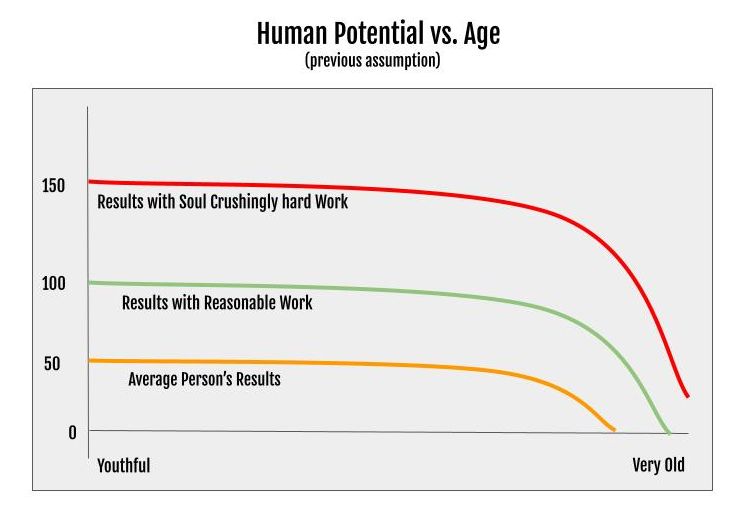
While adopting the totality of such an extreme lifestyle holds no appeal, the underlying lesson is profound: the vast majority of barriers standing in the way of achievement are psychological rather than physical or environmental. Shifting the fundamental assumption about personal capacity opens up an expansive horizon of possibility.
Armed with this renewed perspective, a simple yet potent phrase—derived from observing extreme drive—was jotted down on a cardstock note and affixed to the bathroom mirror: the realization that one already knows what needs to be done.
This simple visual cue immediately altered daily execution. Approaching physical training with the understanding that both the desire and the lack of desire to work out serve as immediate triggers for action eliminated procrastination entirely. Over the initial four months of applying this relentless consistency, tangible physical improvements followed, including the addition of ten pounds of lean muscle mass, a return to the strength and flexibility characteristic of a much younger age, and a generalized revitalization of joint health.
The same behavioral trigger was successfully applied to other dormant habits, such as increasing running frequency, traveling to a shared workspace for collaboration and socialization, and sitting down to write consistently. While online productivity and blogging demand careful boundaries to prevent burnout, finding the optimal balance requires discipline—particularly when competing against easier, more immediately gratifying leisure activities.
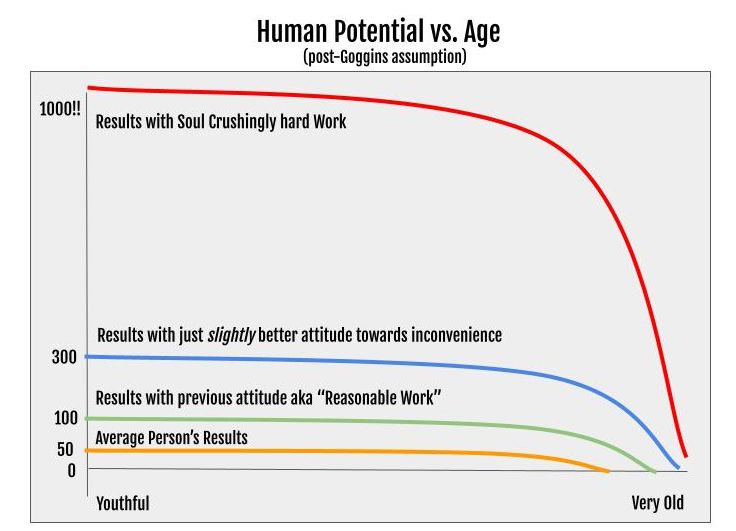
To sustain this momentum, the practice of regularly consuming challenging, high-intensity literature and audiobooks has become part of the routine. Works exploring extreme ownership, physiological optimization, and mental resilience provide a steady source of external energy. While academic critics frequently debate the nuances of modern motivational culture, the practical takeaway remains straightforward: absorb the principles that drive personal progress and discard the rest. Aligning with stories of intense dedication provides a reliable mechanism for unlocking greater daily productivity, ensuring that the remarkable gift of early retirement is matched by an equally remarkable standard of purposeful accomplishment.