


At first glance, a baked potato may not seem like a dish that requires much technique. Yet, culinary professionals and home cooks alike are discovering that there is a profound difference between a merely good baked potato and a truly great one. For generations, traditional preparation methods have often relied on wrapping russet potatoes in aluminum foil before sending them into a hot oven. While this common practice yields a tender interior, it inadvertently traps moisture, rendering the skin far too soft and robbing the dish of its textural contrast.
For the most crisp skin possible, culinary experts now recommend abandoning the foil entirely and baking the potatoes directly on the oven grate at a relatively high temperature. To elevate the exterior even further—making the skin taste almost like a potato chip—cooks are advised to thoroughly scrub the russets, rub them generously with vegetable oil, and season them with plenty of salt before they ever touch the heat.
Surprisingly, skipping the foil wrap does not compromise the fluffiness of the interior. Achieving that ideal, cloud-like texture inside comes down to a matter of internal temperature rather than trapped steam. Specifically, a baked potato achieves its ultimate internal fluffiness when its core temperature reaches at least 212 degrees Fahrenheit. While it may initially seem unusual or overly meticulous to take your potato’s temperature with a kitchen thermometer, food scientists and testers note that this is a foolproof, fail-safe route to the most enjoyable potato experience.
Beyond the baking process itself, the method of opening a freshly baked potato has long been a subject of debate among food authorities. Some organizations, including the Idaho Potato Commission, swear that the exact way a baked potato is opened significantly affects its overall mouthfeel and texture. Rather than reaching for a knife, these traditionalists advocate for using a fork to gently poke a plus sign into the surface of the hot spud.
Others take a much more dramatic approach. Beloved food writer Nigel Slater prefers to strike the potato as though it were part of a martial arts competition. Describing his preferred technique in a piece for The Guardian, Slater advises home cooks to bring their hand down fast and sharp, as if they were executing a karate chop, but with only enough force to crack open the potato skin. Whether or not to attempt this dramatic culinary feat remains literally in the hands of the individual potato-baker. However, extensive testing in professional kitchens has revealed that a single fork-pricked line drawn down the length of the spud is ultimately the most efficient and effective method for releasing steam without destroying the potato’s structural integrity.
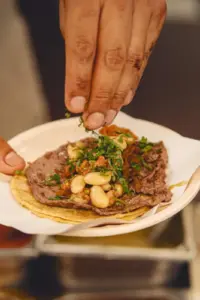
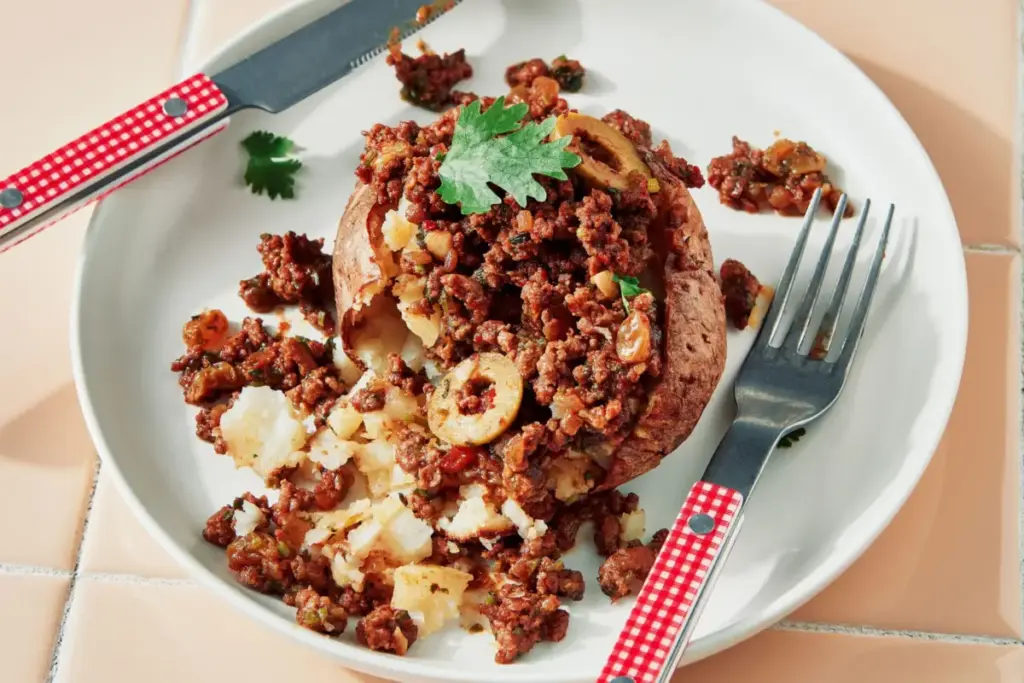
Once opened and properly fluffed, a baked potato serves as a versatile canvas that can be filled with an endless variety of ingredients, ranging from classic toppings like tuna salad to comforting bowls of cheesy baked beans. In recent culinary developments, test kitchens have begun exploring heartier, globally inspired fillings that transform the side dish into a complete, nutrient-dense meal. One such variation features a picadillo-inspired mixture centered around ground beef. This savory filling is naturally packed with protein, iron, and creatine, though home cooks looking for alternatives can easily substitute ground turkey or chicken with equally delicious results.
To elevate the beef mixture, the picadillo is adorned with golden raisins and stuffed olives, creating a complex balance of sweet and briny flavors. A vibrant, spicy tomato sauce is then ladled over the top, slowly soaking into the steaming potato with every passing minute to further season the starch from the inside out. When preparing this style of dish, culinary specialists emphasize the importance of using a high-quality chili powder that is formulated as a blend of various spices, including chiles, cumin, oregano, and garlic, rather than relying solely on dried ground chiles, which lack the necessary depth of flavor.
This renewed focus on elevated potato preparation is part of a broader conversation surrounding healthy, wholesome eating and the rehabilitation of the white potato’s nutritional reputation. Healthy cooking does not have to be overly complicated, and in many cases, the simpler a dish is, the better it ultimately tastes. Through culinary features such as Good for You, food editors and test kitchen professionals continue to share approachable, feel-good recipes designed for any day of the week. Nutrition experts frequently point out that white potatoes are far from being mere empty calories; rather, they are rich in essential nutrients and fiber, making them a genuinely great addition to a balanced diet when prepared with quality ingredients and thoughtful technique.