


By Olivia Rosane and Cristen Hemingway Jaynes
Invisible, odorless, and found everywhere from natural wetlands and livestock to domestic basements, methane has emerged as one of the most critical frontiers in the global fight against climate change. While carbon dioxide frequently commands the lion’s share of public attention, methane stands as the second most important contributor to the climate crisis. As the primary component of natural gas—a fossil fuel that currently generates approximately 25 percent of the world’s electricity—this powerful greenhouse gas plays a decisive role in shaping the trajectory of global temperatures.
Chemically, methane is a hydrocarbon composed of four hydrogen atoms bonded to a single carbon atom. It is abundant in nature, emerging from a combination of geological and biological processes. Geologically, it forms over millions of years as heat and pressure act upon decomposing organic matter, creating the underground reservoirs that supply the natural gas industry, though it can also form deep underground without organic precursors. Biologically, methane is generated through a process known as methanogenesis, wherein specialized underwater microorganisms called archaea produce the gas as a byproduct of their oxygen-free respiration. This biological pathway accounts for methane generated in natural wetlands and within the digestive tracts of animals such as termites and cattle.

Measuring methane presents a unique set of challenges, leading scientists to rely on two primary methodologies: bottom-up and top-down approaches. Bottom-up assessments begin at the ground level with localized sources, calculating emissions either through direct facility measurements or by multiplying emission factors—such as the standard leak rate of a piece of equipment or the average emissions of a single cow—by the total population of sources. However, this method often fails to capture rare, extraordinary events. Studies show that roughly five percent of extraordinary leaks are responsible for more than half of all gas-industry leak emissions. To bridge this gap, researchers increasingly utilize top-down approaches, employing aircraft, high-altitude platforms, and advanced satellites to measure atmospheric methane directly. When compared against federal inventories, direct measurements frequently reveal that emissions from fossil fuel operations are significantly higher than previously estimated.
The mechanism by which methane drives global heating is rooted in its atmospheric behavior. Upon entering the atmosphere, methane absorbs heat energy radiated from the Earth’s surface and redirects it back downward. While natural sinks, including soils and the troposphere, actively break down methane into carbon dioxide and water vapor, human activities since the dawn of the industrial revolution have accelerated emissions far beyond the capacity of these natural systems.
Data from the World Meteorological Organization indicates that atmospheric methane concentrations have surged by 265 percent compared to pre-industrial levels, reaching 1,934 parts per billion. Approximately 60 percent of current emissions stem from human activities, driving roughly one-third of contemporary global heating. Scientists emphasize that while carbon dioxide remains the most prevalent greenhouse gas over the long term, methane’s potency and relatively brief atmospheric lifespan—approximately 12 years—make it the most leverageable target for rapid climate stabilization. Over a twenty-year period, methane traps 86 times more heat per unit of mass than carbon dioxide. Consequently, the Global Methane Assessment concludes that curbing methane is the single most effective strategy for decreasing warming over the immediate two-decade horizon, with the Intergovernmental Panel on Climate Change noting that cuts of roughly 34 percent by 2030 are required to keep global heating within the 1.5-degree Celsius threshold.

Human activities account for roughly 60 percent of atmospheric methane, with more than 90 percent of those emissions originating from three primary sectors: agriculture, fossil fuels, and waste management. Natural sources, dominated by wetlands and freshwater systems, make up the remaining 40 percent.
Agriculture drives approximately 40 percent of human-caused methane emissions, predominantly through livestock operations. Ruminant animals, including cattle, sheep, and goats, produce methane through enteric fermentation, a digestive process where microbes break down nutrients in the gut. Manure storage systems further elevate these agricultural emissions. Rice cultivation contributes another significant share, as flooded paddy fields create oxygen-poor environments that foster the proliferation of methanogenic microbes.
Fossil fuel operations account for roughly 35 percent of human-caused emissions. The extraction, transport, and processing of oil and gas generate about 23 percent, driven by operational venting and chronic infrastructure leaks. Coal mining contributes an additional 12 percent through intentional ventilation systems designed to prevent dangerous gas buildups in underground mines, as well as seepage from abandoned shafts. Furthermore, satellite observations have unmasked hundreds of "super-emitter" incidents globally, where major leaks from fossil fuel infrastructure and waste sites spew massive quantities of gas into the atmosphere in a matter of hours.

Waste management systems, including landfills and wastewater treatment facilities, generate approximately 20 percent of human-caused emissions as microorganisms decompose organic matter in anaerobic conditions. With rapid urbanization and population growth, waste-related emissions are projected to rise significantly in the coming decades.
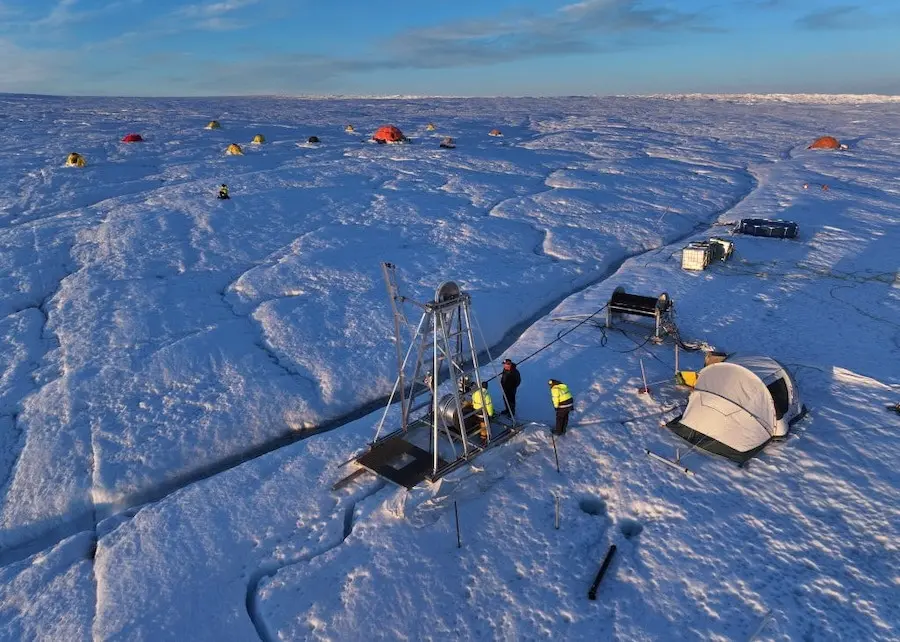
Simultaneously, natural sources face compounding pressures from the climate crisis itself. Wetlands, which cover a fraction of the Earth’s surface yet account for roughly one-third of total methane emissions, are experiencing increased biological output due to rising temperatures and shifting precipitation patterns. This phenomenon, known as the wetland methane feedback, has driven unexpected surges in emissions from tropical and permafrost-laden Arctic wetlands. As Arctic temperatures rise, thawing permafrost releases ancient organic matter and unfreezes dormant microbes, initiating positive feedback loops that threaten to unleash vast quantities of stored carbon into the atmosphere.
The expansion of liquefied natural gas infrastructure has further complicated global emissions trajectories. Proponents of natural gas have long promoted it as a cleaner "bridge fuel" away from coal, citing lower carbon dioxide emissions at the point of combustion. However, recent scientific analyses demonstrate that when upstream methane leaks from extraction, processing, and transportation are factored into the equation, the climate warming potential of natural gas often matches or exceeds that of coal over a twenty-year timeframe. Critics warn that the massive buildout of export terminals threatens to undermine global climate targets entirely.

Beyond its role as a driver of climate change, methane reacts in the atmosphere to produce ground-level ozone, a harmful pollutant that damages human lung tissue and agricultural crops, resulting in hundreds of thousands of premature deaths annually. Mitigating methane offers immediate public health and food security dividends alongside climate stabilization.
Solutions are readily available across all major sectors. Agricultural emissions can be curbed through improved livestock feed efficiency, the integration of enteric methane inhibitors such as specific seaweed supplements, and alternative wetting and drying techniques for rice cultivation. In the fossil fuel sector, the deployment of rigorous leak detection and repair protocols, the electrification of production facilities, and the replacement of aging infrastructure can eliminate a substantial majority of ongoing operational leaks. Waste sector emissions can be curtailed by shifting toward circular economies, expanding municipal composting, and capturing biogas from landfills and wastewater treatment plants.
While international frameworks such as the Global Methane Pledge—signed by 159 nations committed to cutting global emissions by 30 percent from 2020 levels by 2030—have established political momentum, real-world reductions have lagged behind policy commitments. Closing this implementation gap remains an urgent priority for scientists, policymakers, and communities worldwide as they navigate the critical window for climate action.