





Published November 3, 2026
For skiers blessed—or cursed, depending on who you ask—with wide feet, finding a properly fitting ski boot has long been an exercise in frustration. Navigating the world of ski gear with wide forefeet, flat arches, or skinny heels often leads to painful compromises, forcing skiers to either swim in high-volume buckets or squeeze into narrow shells that require extensive modifications from a professional bootfitter.
Industry experts emphasize that wide feet typically require a high-volume ski boot, which generally translates to a last width of 102 millimeters or wider. However, many skiers with moderately wide feet find success in medium-volume options featuring lasts between 100 and 101 millimeters. Addressing this ongoing challenge, gear testers evaluated seven standout ski boots for the upcoming season, ranging in last widths from 100 millimeters to 103.5 millimeters. The curated selection includes options for both men and women, alongside a dedicated backcountry touring boot designed to accommodate higher-volume foot shapes without sacrificing downhill performance.
The eternal struggle of the wide-footed skier often involves anatomical contradictions. A wide forefoot usually points toward high-volume models with generous lasts, but flat arches or slender ankles and calves can cause the foot to slide around, leaving too much empty space between the instep and the top of the boot. While some skiers resolve this by sizing down into low-volume shells and relying on bootfitters to stretch and grind out the toe box, those with more typical wide feet—characterized by a broad forefoot, a higher instep, and proportionally thicker ankles and calves—will find a much simpler solution in modern high-volume and generous mid-volume offerings.
A noticeable trend across this year’s top-performing wide-fit boots is the integration of BOA dials. While personal preferences vary regarding traditional buckles versus cable-tightening systems, industry testers agree that BOA technology has fundamentally improved the ability to fine-tune the fit and secure a uniform wrap directly over the instep. The evaluated models are available in multiple flex ratings for both men and women, though experts continue to emphasize that boot fit remains deeply personal. Because foot shapes vary drastically, skiers are always advised to visit a local specialty shop to work alongside a professional bootfitter before making a final purchase.
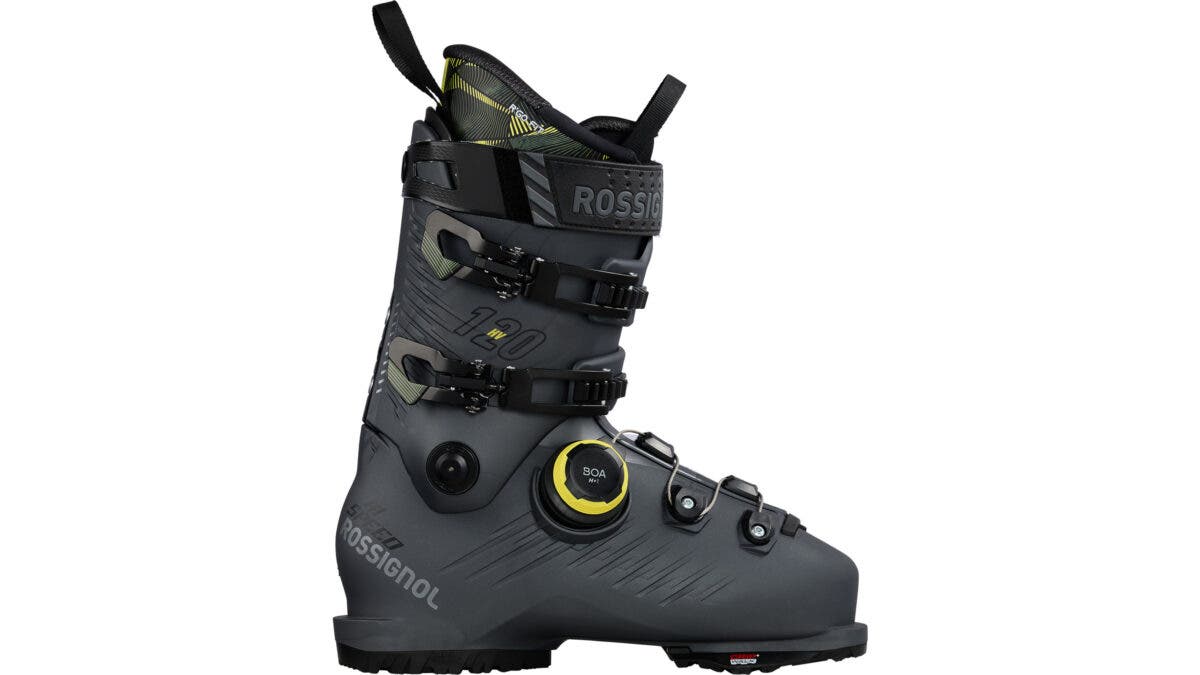
Leading the charge among high-volume models is the Rossignol Hi-Speed HV BOA, built on a 102-millimeter last and offered in flexes of 120 and 100. Garnering high praise from testers who noted it as one of the best 102-millimeter boots ever engineered, the Rossignol balances a secure, pinch-free rearfoot with a roomy front end that avoids feeling overly cavernous. A newly designed lower-shell BOA dial allows users to precisely adjust the wrap across the forefoot and instep, while step-in entry remains exceptionally smooth. The reworked R-Go Fit liner provides just enough grip to lock down the heel, offering a snug initial feel that relaxes slightly after a few runs. Notably, the 120 flex model delivers performance comparable to stiffer 130-flex boots, making the 100-flex variant an attractive, high-value option for skiers seeking a softer ride.
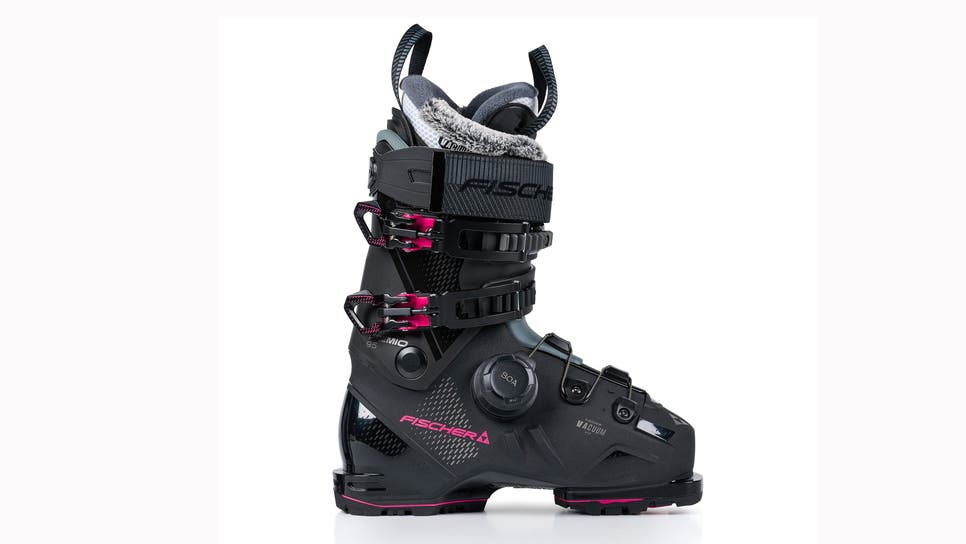
For skiers needing maximum space across the entire foot, the Fischer Premio BOA delivers a 102-millimeter last with impressive internal volume. Available in a wide range of flexes from 85 to 130 and sizes spanning 23.5 to 30.5, the Premio stands out by avoiding the boxy feel common among wide boots. Testers recorded consistently high comfort scores across every interior measurement zone, noting a uniquely squared toe box that allows toes to splay out naturally for improved warmth and balance. Thoughtful stance angles and shell construction keep the foot firmly planted during edge transitions, though testers caution that the boot’s spacious interior requires a genuinely high-volume foot and lower leg to maximize responsiveness.
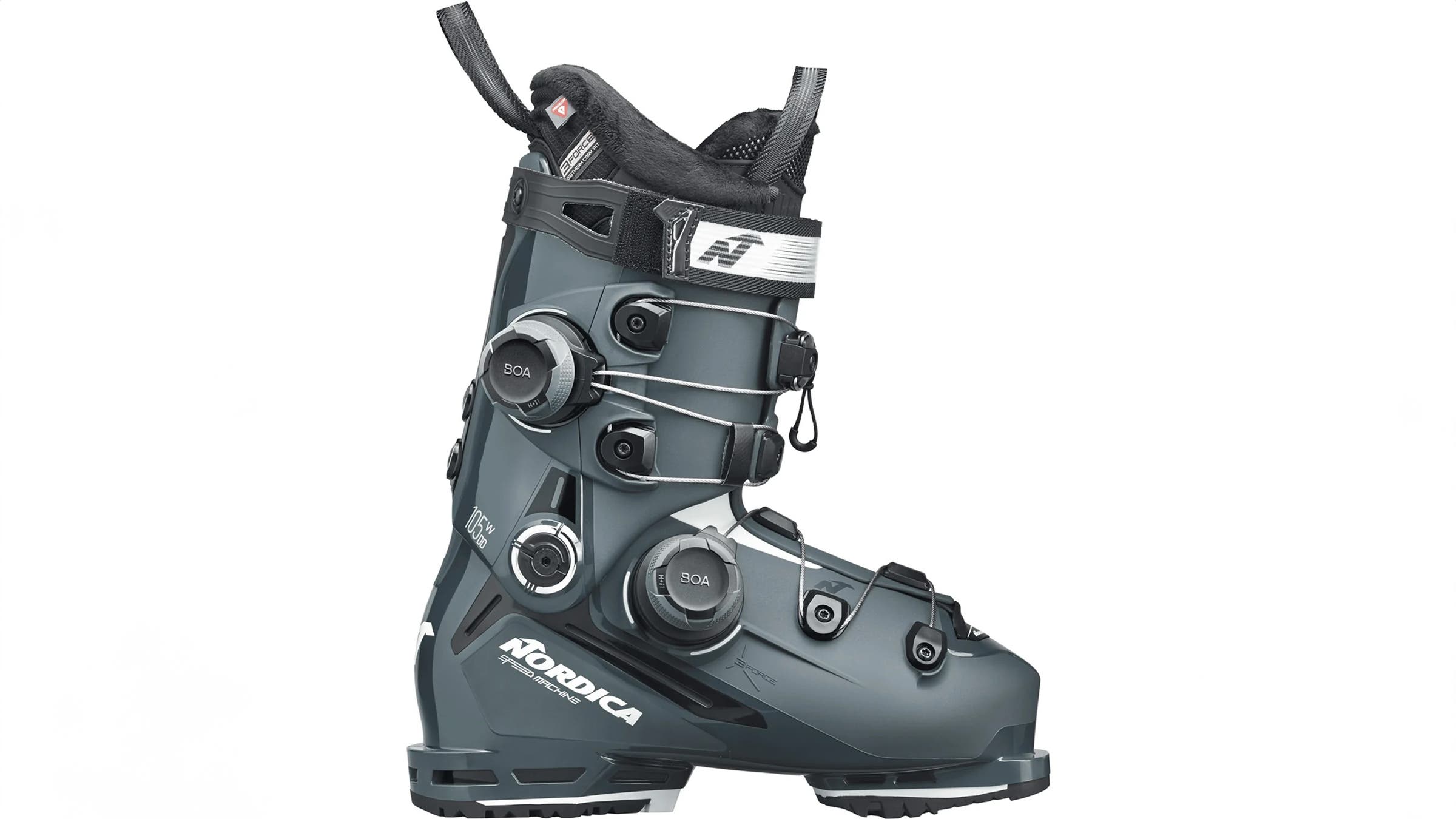
Striking a balance in the true medium category, the Nordica Speedmachine 3 BOA DD utilizes a 100-millimeter last while maintaining enough internal breathing room for higher-volume feet to settle securely. The shell mirrors natural foot contours, while the liner strategically cushions bony prominences. Once the foot is locked into the rear pocket, skiers experience a secure hold accompanied by welcome breathing room in the toe box, forefoot, instep, and calf. The tested 115-flex women’s DD model utilizes a dual-dial configuration that provides micro-adjustments, though testers observed that entering the double-BOA shell requires a bit more effort than traditional buckle-and-dial hybrids.
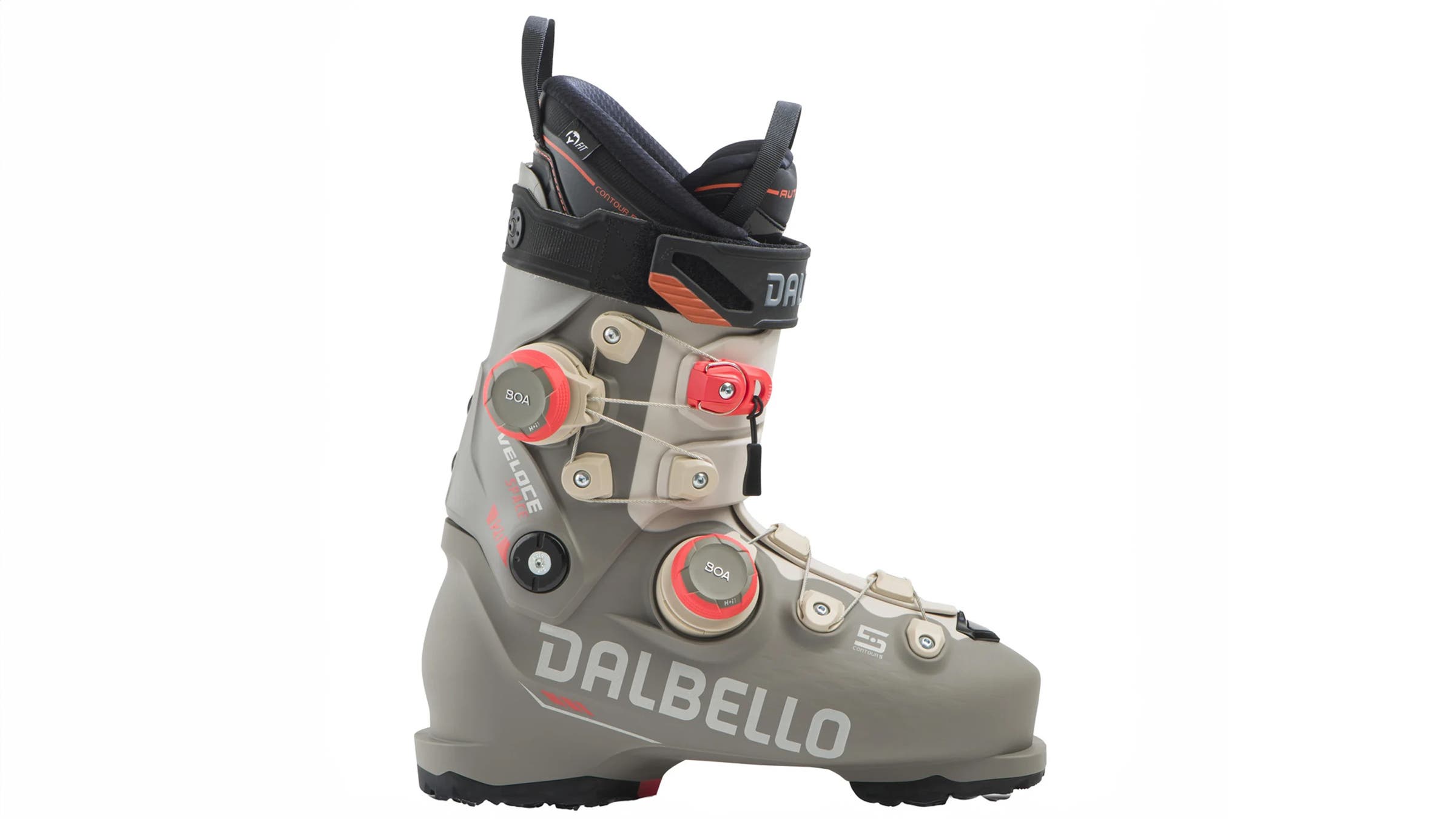
Another strong contender in the medium-to-wide category is the Dalbello Veloce Space Dual, featuring a 101-millimeter last and flex options including 120 and 110 for men, alongside a 105-flex women’s model. The cabrio shell design proves exceptionally friendly for skiers with high insteps, while the snug shin fit and accommodating toe box earned high marks from testers. Although managing the dual BOA cables during entry can occasionally prove cumbersome, the on-snow payoff is substantial. The boot handles everything from hardpack groomers to variable crud with remarkable stability, often outperforming stiffer traditional models.
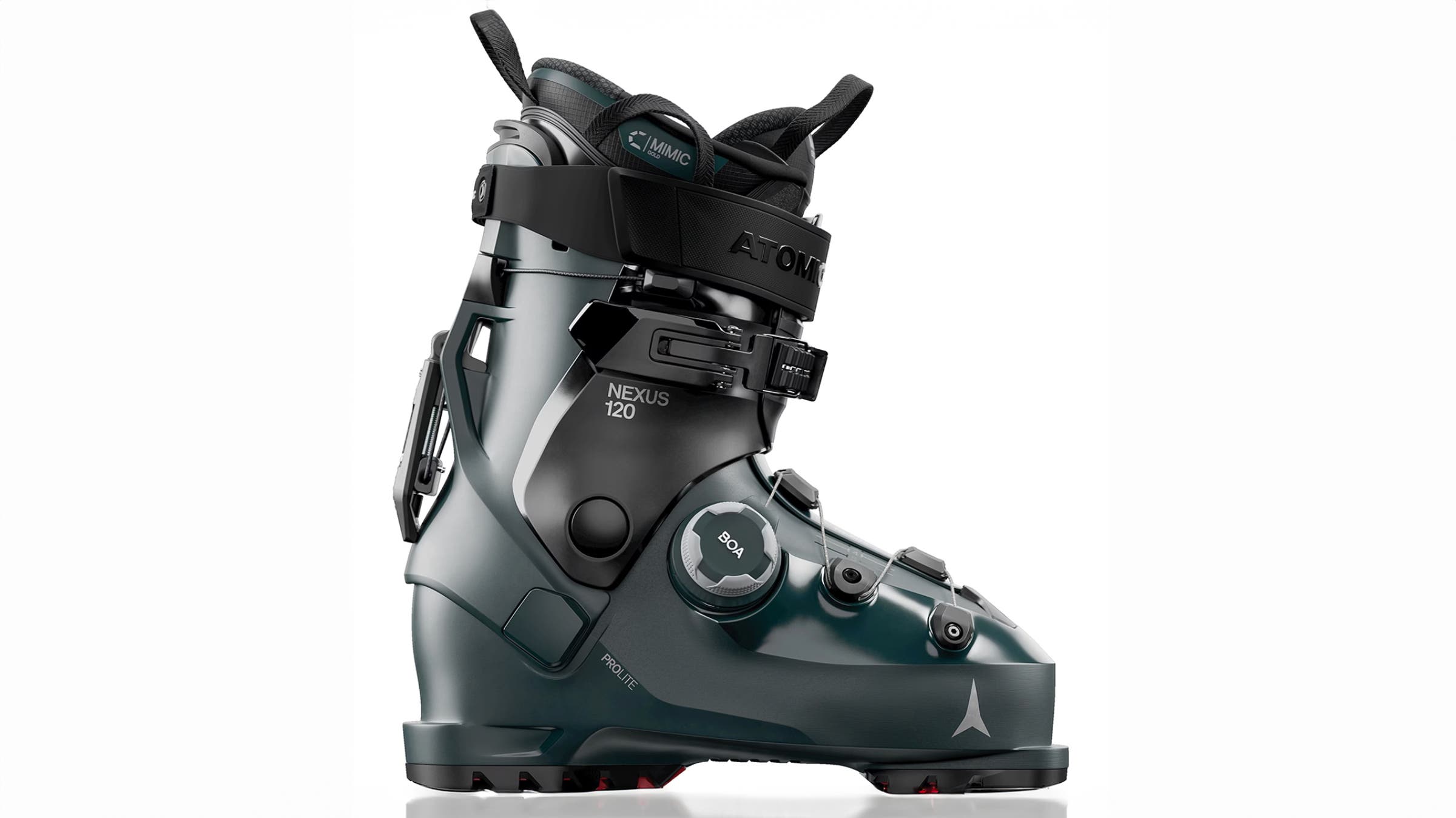
Atomic enters the high-volume conversation with the Nexus BOA, built on a 101-millimeter last and offered in flexes up to 130 for men and 105 for women. Designed to bridge the gap between comfort and aggressive performance, the Nexus features an ankle break positioned slightly higher and further forward to accommodate high insteps. Heel retention remains impressive even for skiers with genuinely voluminous feet, while the mid-entry spine lever allows for straightforward, hands-free entry. Despite its accommodating interior volume, the boot provides a lively, springy rebound that mimics a true 130-flex alpine model.
Salomon addresses the wide-fit market with the S/Pro Delta BOA, utilizing a 102-millimeter last and offering flexes up to 130 for men and 105 for women. Rather than offering a soft, unsupportive fit, the S/Pro Delta is engineered to ski like a true high-performance boot. The generous forefoot and instep dimensions are paired with ample cuff volume for thicker calves, while the BOA system ensures smooth, even tension distribution from the shin down to the toes. Testers highlighted its plush interior comfort combined with surprisingly powerful edge-to-edge responsiveness, though skiers with exceptionally wide feet may still benefit from utilizing the boot’s heat-moldable Custom Shell via a professional bootfitter.
For backcountry enthusiasts seeking a dedicated touring option, the Dynafit Radical Pro offers a roomy 103.5-millimeter last in a 120-flex men’s and women’s model. Designed for long mountain missions, the boot walks efficiently while maintaining downhill integrity. The forefoot and heel pocket run broad, making it a less ideal match for exceptionally narrow feet, but the low instep height successfully anchors the heel. During extensive field testing on multi-day tours, the progressive flex effectively muted vibrations in heavy, variable snow conditions, while the walk mode offered a frictionless 60-degree range of motion.
Understanding the mechanics of ski boot sizing remains essential for wide-footed skiers. Boot width is measured by the last, representing the internal width at the forefoot in millimeters on a standard size 26 or 26.5 shell. This measurement also serves as an indicator of overall internal volume, correlating directly with instep height and cuff circumference. While narrow boots feature lower insteps and snug cuffs, wider options provide increased vertical clearance. However, experts note that skiers with broad feet do not automatically require a high-volume model, as personal tolerance for snugness varies widely.
Evaluating ski gear of this caliber requires rigorous testing across diverse conditions. The annual evaluations are coordinated in partnership with Masterfit and America’s Best Bootfitters, led by industry veteran Mark Elling. Over a rigorous two-week testing window, a balanced panel of professional bootfitters and expert skiers put dozens of models through their paces across a wide spectrum of snow surfaces. Ultimately, while expert testing provides a reliable baseline, the nuances of individual foot anatomy mean that a professional bootfitter remains the most dependable resource for achieving an ideal ski boot fit.