




When a sudden craving for fried chicken strikes and the thought of firing up the stove or managing a messy skillet at home feels like too much work, consumers across the country turn to the reliable convenience of the drive-thru. The quick-service restaurant landscape is fiercely competitive, dominated by three colossal giants that have long battled for poultry supremacy: KFC, Popeyes, and Church’s Texas Chicken. While culinary preferences ultimately boil down to individual taste, regional availability, and personal loyalties regarding crust crispiness, a closer examination of the American fast-food market reveals several distinct categories where the Colonel’s kitchen undeniably edges out the competition.
Rather than relying solely on a superior spice blend or a singular cooking method, KFC’s enduring appeal often stems from menu innovation, impressive side dish variety, unbeatable value propositions, and a willingness to adapt to modern culinary trends. For fast-food enthusiasts weighing their options for lunch or dinner, understanding these differences sheds light on why Kentucky Fried Chicken continues to maintain its cultural footprint in a crowded marketplace.
KFC is Home to the Famous Bowl, a Legendary Fast Food Menu Item
Among the defining menu items that have shaped the fast-food landscape over the last two decades, KFC’s Famous Bowl stands out as a true heavyweight. Introduced in 2006, the dish arrived somewhat ahead of its time, long before the modern fast-casual obsession with bowl-style meals took over the restaurant industry. The composition is straightforward yet deeply comforting: a pillowy base of creamy mashed potatoes layered with sweet corn, bite-sized chicken nuggets, and shredded cheese, all tied together by a generous drenching of savory gravy.
The appeal of the Famous Bowl lies in its deliberate combination of contrasting textures and deeply savory flavors, anchored by a prominent saltiness that makes it exceptionally craveable. While competitors like Popeyes and Church’s Texas Chicken boast plenty of worthy novelties and signature items of their own, none have managed to leave quite as permanent a mark on fast-food culture as KFC’s layered bowl. Even as food critics and consumers debate whether the overall quality has shifted since its initial heyday, the menu item remains a masterclass in comforting, all-in-one fast-food engineering.
KFC’s Chocolate Dessert Game is Stronger Than Popeyes’ or Church’s
The conclusion of a hearty fast-food meal naturally triggers a desire for something sweet, and nearly every major chicken chain offers a dessert selection to cap off the experience. However, when evaluating the final course through the lens of chocolate lovers, KFC emerges as the superior choice among the big three.
Church’s Texas Chicken currently offers the most limited dessert menu, relying almost exclusively on a traditional fried apple pie. While reliable for those who enjoy fruit pastries, the selection leaves customers entirely out of luck if they prefer decadent chocolate treats or suffer from apple fatigue. Popeyes provides a slightly broader lineup, featuring an apple pie alongside a strawberry cream cheese pie and a blueberry lemon cheesecake cup. Despite the creative fruit and bakery-inspired flavors, Popeyes noticeably lacks a dedicated chocolate option on its permanent menu.
KFC successfully fills this gap by offering straightforward chocolate indulgence. Featuring both a chocolate chip cake and a chocolate chunk cookie, KFC provides the rich, cocoa-centric finish that many diners expect from a fast-food indulgence, proving that the chain understands the diverse cravings of its customer base.
There are More Sides to Choose From at KFC Than Either of the Other Restaurants
While the main protein invariably takes center stage at any specialized poultry restaurant, the accompanying side dishes often serve as the ultimate deciding factor for whether a meal is considered satisfactory. On this front, KFC firmly establishes itself as the frontrunner by offering an unmatched variety of accompaniments.
Church’s Texas Chicken keeps its side lineup relatively modest with just six choices. Although customer favorites like fried okra add a distinct regional flair, the limited menu can feel restrictive for diners who prefer a wide array of choices. Popeyes expands on this by offering eight distinct side dishes, including popular items like jalapeño peppers.
KFC, by contrast, boasts an impressive lineup of 11 different sides. While many of these selections remain traditional, this consistency is precisely what diners look for when pairing items with rich, fried meats. Staples like mashed potatoes and gravy anchor the menu, while diners can easily branch out to fresher, crunchier options like coleslaw or comforting classics like mac and cheese to customize their plates.
KFC is the Only One of the Three That Offers a Chicken Pot Pie
Fried chicken, tenders, and bone-in portions may be the expected staples of the industry, but convenience-seeking consumers do not always want deep-fried pieces every time they visit a chicken-focused restaurant. When diners look for a comforting alternative, Church’s and Popeyes offer relatively traditional menus that lack unexpected comfort-food crossovers.
KFC differentiates itself by featuring a chicken pot pie, providing a cozy, homestyle option rarely seen in the fast-food sector. The dish features a familiar filling of diced chicken, peas, potatoes, and carrots suspended in a creamy white sauce, all encased within a flaky, golden-brown crust. By stepping outside the standard fried and grilled formats, KFC captures a distinct segment of the fast-food audience seeking a less conventional, highly comforting meal option without resorting to home cooking.
You Can Get a Better Deal at KFC
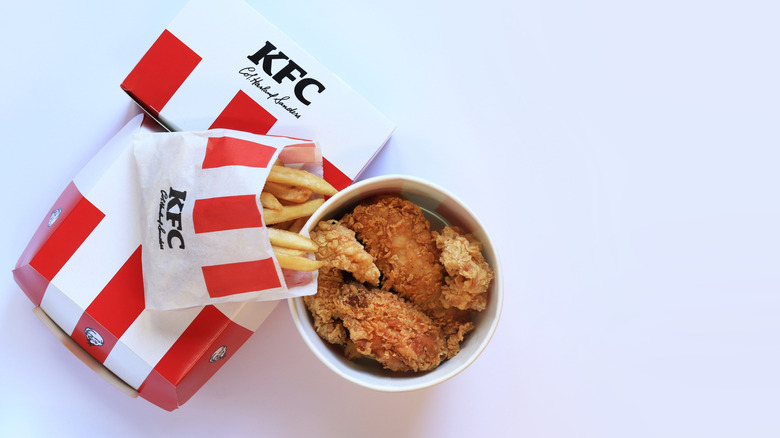
In an economic climate where fast-food prices face continuous upward pressure, consumers are increasingly mindful of securing maximum value for their money. Industry analyses, such as evaluations by Food Republic, consistently point to KFC as generally maintaining the most competitive pricing structure among the top three fried-chicken chains.
A direct comparison of standard two-piece chicken combos across the brands highlights these cost variations. At KFC, customers can secure a two-piece combo complete with a drink, a side, and a biscuit for $8.99. Church’s offers a similarly priced two-piece combo starting as low as $8.49, though this lower price point typically restricts the customer to a leg and a thigh, requiring an upgrade fee for breasts and wings—restrictions that KFC does not enforce on its standard packages. Meanwhile, a comparable meal at Popeyes averages around $9.09.
For budget-conscious diners looking to trim costs further, KFC offers simplified promotional bundles like the Taste of KFC meal, which delivers the core components of the two-piece combo minus the beverage for $6.39, presenting a price point that competitors struggle to match.
Only KFC Sells Dirty Soda
The viral "dirty soda" trend has steadily transitioned from regional novelty to mainstream staple, and KFC has successfully integrated the concept into its beverage program. By offering customizable dirty sodas featuring classic bases like Pepsi and Dr Pepper, alongside variations incorporating sour cherry lemonade, Starry, and Mountain Dew, the chain provides a modernized beverage experience.
These drinks retain the familiar carbonation of traditional fountain drinks while incorporating a rich, creamy vanilla topping that elevates the sweetness and imparts a dessert-like quality. This level of customization at the beverage fountain remains rare among traditional quick-service chicken chains. Neither Popeyes nor Church’s has incorporated creamy, modified soda offerings into their standard menus, leaving KFC as the sole destination among the three for patrons seeking this specific beverage trend.
There are Way More Family Meal Options at KFC Than at the Other Two Spots
Ordering for a household often introduces logistical challenges at quick-service restaurants, frequently requiring the purchase of numerous individual meals or navigating rigid menu structures. Family bundle meals offer an efficient alternative, allowing multiple people to share a cohesive spread while occasionally trimming overall costs.
KFC stands out in this category by providing a substantial selection of approximately 10 distinct family meal bundles, featuring diverse distributions of side dishes, biscuits, and chicken pieces tailored to various group sizes and preferences. In comparison, Church’s Texas Chicken limits its family offerings to roughly six variations, which largely consist of different piece-counts of bone-in chicken or tenders. Popeyes similarly offers around six bundle configurations that primarily scale in size rather than offering distinct menu variety. For households navigating fast-food options, KFC’s expansive bundle menu provides significantly greater flexibility.