



In many cases, this localized, selective editing and sharing does the original artwork a quiet disservice. By stripping away narrative stakes, pacing, and thematic weight, viral clips inevitably isolate moments from their greater artistic context to serve the fast-moving machinery of internet discourse.
A prime example of this phenomenon is Jonathan Glazer’s 2014 psychological science-fiction masterpiece Under the Skin. Widely recognized by critics as one of the most unsettling and visually arresting films of the 21st century, the movie has earned a prominent place on numerous prestige "best of the century" critic lists and garnered critical acclaim upon release. Yet, within mainstream internet culture, it is frequently reduced to a handful of widely circulated clips because its lead actor, Scarlett Johansson, spends significant portions of the runtime in various states of undress. Consequently, while short excerpts and specific visual motifs from Under the Skin are easy to encounter online, only a relatively small percentage of moviegoers have actually sat down to experience the complete, uninterrupted feature.
Fortunately, viewers now have an accessible opportunity to rectify that gap in their cinematic education. Under the Skin has recently become available to stream for free across multiple digital platforms, making it easier than ever for curious audiences to explore the full scope of the movie firsthand.

What is Under the Skin about?
In Under the Skin, Scarlett Johansson stars as an unnamed, mysterious woman who prowls the overcast, rain-slicked streets of Scotland, preying upon the lost, isolated, and vulnerable inhabitants of the city. When she successfully identifies a prospective victim—usually a lonely man searching for connection—she uses an alluring persona to lure him back to an isolated, seemingly abandoned residential location, where he is submerged into a black, tar-like fluid and makes a permanent disappearance from the world.
The film is loosely adapted from Michel Faber’s acclaimed 2000 science-fiction novel of the same name. In the source material, there is very little ambiguity regarding the nature of the protagonist’s mission or the mechanics of her actions. In the book, the character is named Isserley, and her purpose is explicitly laid out: she acts as the scout and the bait in a brutal extraterrestrial operation, abducting human beings so they can be processed and sold as an expensive delicacy for an alien species on her home planet.
The cinematic adaptation, however, takes a radically different approach. Directed by Jonathan Glazer, the movie is a loose, Lynchian adaptation that resists easy answers, instead lending itself to multiple, competing interpretations. On a surface level, it functions almost as an arthouse deconstruction or high-concept remake of sci-fi thrillers like Species, centering on a lethal femme fatale who wanders the urban landscape seeking out victims who will not be immediately missed by society. There are no frantic government agents racing against the clock, no scientists warning of an impending invasion, and no conspiracy theorists trying to decode the extra-terrestrial threat. The audience receives virtually no exposition, and whatever sparse context is provided comes entirely through Johansson’s cold, detached performance.
Dig deeper beneath the surface, and the film transforms into something entirely different. It can be read as a surreal exploration of an alien consciousness experiencing human existence for the very first time, a biting piece of cultural commentary on contemporary society, or an extended, unsettling metaphor for human sex, desire, and physical vulnerability. Throughout the narrative, Johansson’s protagonist frequently exhibits an alien fascination with the most mundane, overlooked details of her surrounding environment, ranging from crawling ants and city pedestrians to the physical reality of her own borrowed human body. Even when she is actively leading trusting men to their horrific demises, she displays neither malice nor sadistic pleasure; the murders are executed with a chilling, clinical detachment, treated simply as a routine task that must be completed.

A Style Grounded in Alien Detachment
That pervasive sense of the impersonal and the uncanny extends directly into the stylistic choices that define the production. The film is remarkably quiet, taking nearly fourteen minutes of screen time before a single character speaks aloud. Instead of traditional dialogue or standard cinematic exposition, Glazer relies heavily on Mica Levi’s discordant, anxiety-inducing musical score to anchor the viewer’s emotional state.
Adding to its unique atmosphere, many of the most striking sequences were filmed using hidden, concealed cameras mounted at unconventional angles within public spaces. Furthermore, the vast majority of the people who interact with Johansson on screen are not professional actors, but everyday citizens and unsuspecting locals of Scotland who were unaware they were being filmed for a major motion picture. This documentary-style approach imbues the narrative with a strange, voyeuristic authenticity, making Under the Skin feel less like a traditional scripted thriller and more like a harrowing, detached extra-terrestrial reality show.
It is not difficult to understand why the film did not achieve widespread commercial success upon its initial theatrical release, ultimately becoming a box office disappointment. From its opening moments, Under the Skin actively seeks to make the viewer feel uneasy, utilizing prolonged static shots and pacing that rejects conventional Hollywood momentum. Yet, for those who stay with it until the end, the film proves to be an unforgettable cinematic experience, leaving behind haunting, indelible imagery that lingers in the mind long after the credits roll.
Completing the Johansson "Product Trilogy"
Viewed in a broader retrospective context, Under the Skin can be fascinatingly interpreted as the final chapter of an informal, thematic trilogy of films starring Scarlett Johansson, all of which heavily engage with her own public persona and celebrity status. At the time of its production, Johansson had been working as a professional actor since childhood, having transitioned into a household name as a teenager following her breakout performance in Sofia Coppola’s critically acclaimed Lost in Translation. By 2013 and 2014, she was one of the most recognizable stars in the world, having recently anchored the massive blockbuster success of Marvel’s The Avengers as Black Widow.
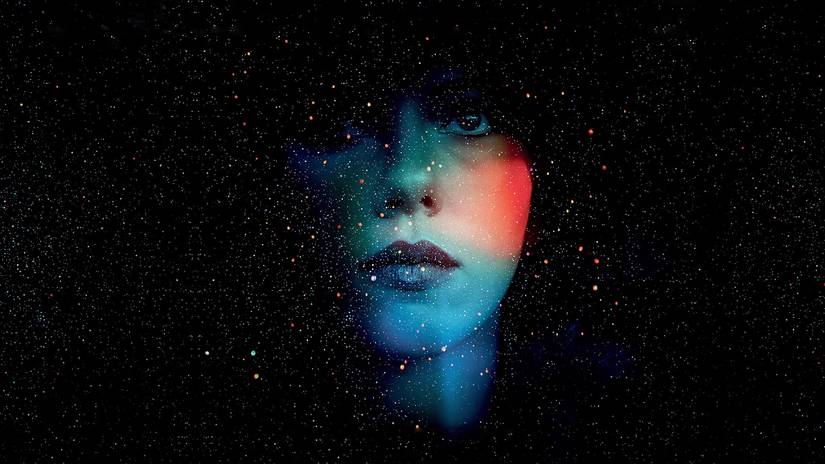
Her cinematic choices immediately following her debut in the Marvel Cinematic Universe showcased a willingness to subvert audience expectations regarding her image. In Spike Jonze’s 2013 sci-fi romance Her, Johansson provided the voice for Samantha, an advanced artificial intelligence operating system who exists purely as an intangible, corporate-backed commodity to be interacted with through an earpiece. She followed that project with Luc Besson’s 2014 action thriller Lucy, in which her titular character is initially exploited and ignored by criminal elements before rapidly evolving into a god-like, all-powerful entity capable of transcending human limitations.
Under the Skin completes this thematic trio by casting Johansson as a hidden, predatory threat operating directly beneath the surface of everyday life—effectively positioning her as a trapdoor spider disguised in a celebrated celebrity exterior.
All three roles represent daring, unconventional choices for an A-list actor operating at the absolute peak of her commercial fame, and collectively they function as a profound, self-aware commentary on the very nature of modern celebrity. One might describe them collectively as Johansson’s informal "Product Trilogy"—reminders that while the star presented on screen is carefully packaged, marketed, and sold to the global public, the true nature of what lies beneath the surface is far more complex and challenging than the marketing suggests.
Under the Skin is currently available to stream for free on various digital platforms, including Tubi, Pluto TV, the Roku Channel, Plex, Fandango at Home, and Xumo Play, and is also accessible to subscribers on Netflix.