
The value of the S&P 500 index has climbed approximately 57 percent over the past two years, more than doubling over a five-year span. This rapid growth has left many investors wondering whether their retirement portfolios are witnessing a genuine economic expansion or an artificial financial illusion fueled by the current frenzy surrounding artificial intelligence.
The question of market sustainability is on the minds of many savers who have watched their net worth figures accelerate far beyond historical trajectories. For individuals who felt they were only halfway toward their retirement goals during the pandemic era, the recent market performance has pushed many past their financial finish lines. Conversely, long-term retirees are observing portfolios that provide unprecedented purchasing power, occasionally prompting higher spending behaviors.

To evaluate the current financial landscape, analysts often return to the foundational economic definition of a stock: a fractional business arrangement that functions similarly to a rental property. When an investor owns a rental house, the primary financial return is derived from the collection of rent minus operational expenses, yielding net profit. If local real estate prices appreciate while tenant rental payments remain static, the paper value of the property increases, but the actual cash flow remains unchanged unless the asset is liquidated.
The financial valuation of that rental house is typically expressed through a price-to-earnings ratio. If a property generates $24,000 in annual profit and sells for $240,000, the investor is operating at a price-to-earnings ratio of 10. If market demand drives the sale price to $480,000 for that same income stream, the price-to-earnings ratio doubles to 20, representing a more favorable outcome for the seller and a compressed future return for the incoming buyer.

A parallel dynamic is currently visible across the broader stock market. An investment of $100,000 placed into the market in 2019 with dividends reinvested would have grown significantly by 2025. However, the underlying share of company earnings generated by that basket of equities has not expanded at an identical rate. Consequently, the price-to-earnings ratio for the S&P 500 has climbed from approximately 20 to around 30 over the same timeframe.
This valuation shift indicates that modern equity investors are operating similarly to real estate buyers who are paying significantly higher multiples for income streams that have grown at a more modest pace. While owning stocks remains a viable long-term strategy, basic financial math dictates that purchasing assets at higher price-to-earnings ratios generally correlates with lower future percentage yields compared to buying assets during market downturns.

Market observers note that higher valuations can be justified if underlying earnings are projected to rise sharply. For instance, an investor might willingly pay a premium for a rental property if commercial developments nearby suggest that rental income will soon increase exponentially. In the equity markets, individual stocks frequently experience price surges when favorable corporate developments emerge, such as the pandemic-era demand spike experienced by home-exercise equipment manufacturers before consumer habits normalized.
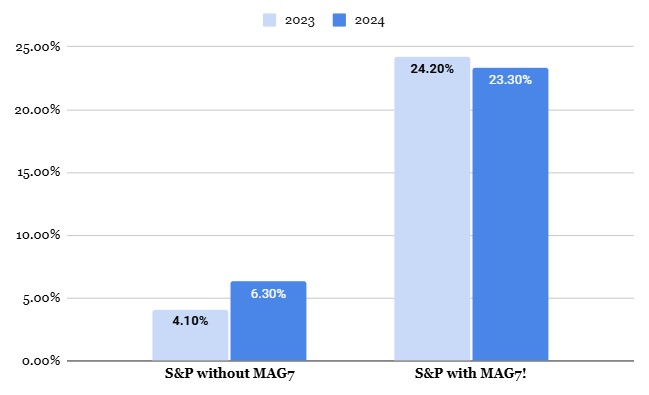
However, when the entire market experiences a broad valuation expansion, economists examine whether aggregate economic output is expected to accelerate dramatically. Recent market data reveals a distinct concentration within the S&P 500. Approximately three-quarters of the recent index growth can be attributed to just seven major technology companies, frequently designated as the "Magnificent Seven," which include Apple, Nvidia, Microsoft, Amazon, Alphabet, Meta Platforms, and Tesla.
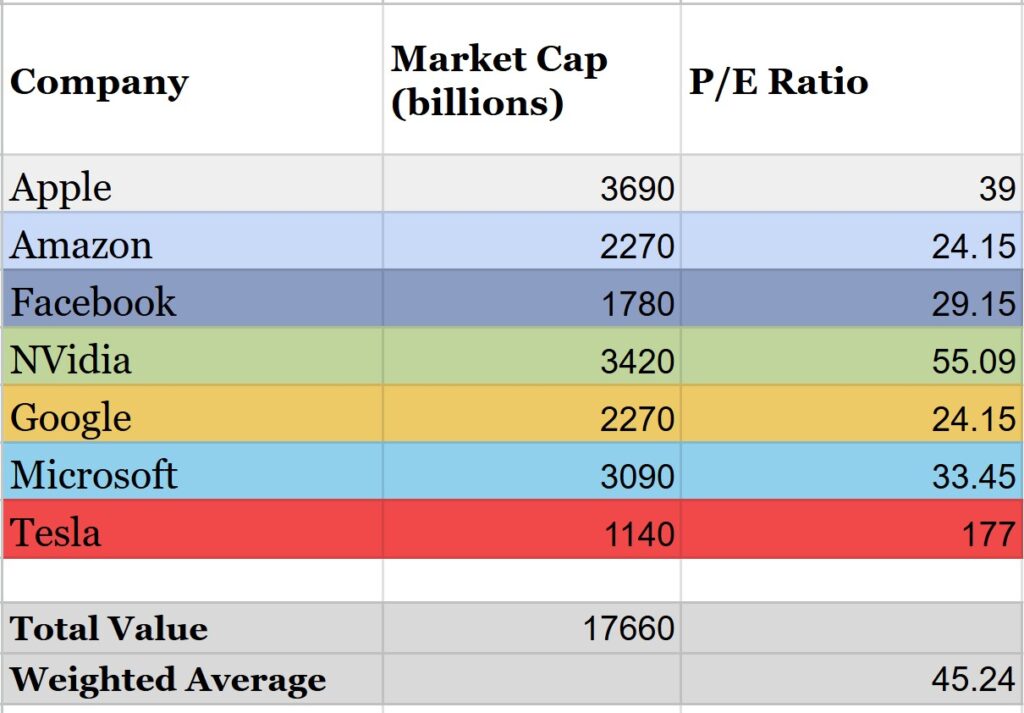
These corporations represent over 25 percent of the total market capitalization, translating to roughly $17.66 trillion, and carry a weighted average price-to-earnings ratio near 45. In contrast, removing these seven enterprises leaves the remaining 493 companies in the index trading at a more moderate price-to-earnings ratio of approximately 20. This disparity indicates that while the broader economy is anticipated to maintain steady performance, market participants are pricing in exceptionally rapid growth specifically for dominant technology leaders.
The primary catalyst behind this technology-sector valuation surge is the rapid evolution of artificial intelligence. Recent breakthroughs have demonstrated software capabilities capable of sophisticated reasoning across numerous disciplines, igniting widespread corporate enthusiasm. Six of the major technology firms are currently committing hundreds of billions of dollars toward constructing large-scale infrastructure projects equipped with specialized supercomputers. Meanwhile, semiconductor manufacturers are experiencing unprecedented demand, allowing them to command high margins on hardware shipments.
Downstream industries are similarly evaluating how these technological capabilities might enhance productivity and expand corporate profit margins. Enterprise applications now range from document analysis and software debugging to complex data synthesis, automated logistics, and advanced medical research. Proponents of the technology argue that society is approaching an era where intelligent automation could help overcome traditional constraints associated with finite human labor and cognitive bandwidth.
Despite the prevailing market optimism, fundamental questions remain regarding whether projected corporate earnings will materialize as forecasted. Industry participants must navigate potential capital expenditure overruns, intensified competitive pressures, and regulatory challenges. Furthermore, broader economic implications regarding workforce adaptation and labor market shifts continue to be subjects of discussion among economists and policy analysts.

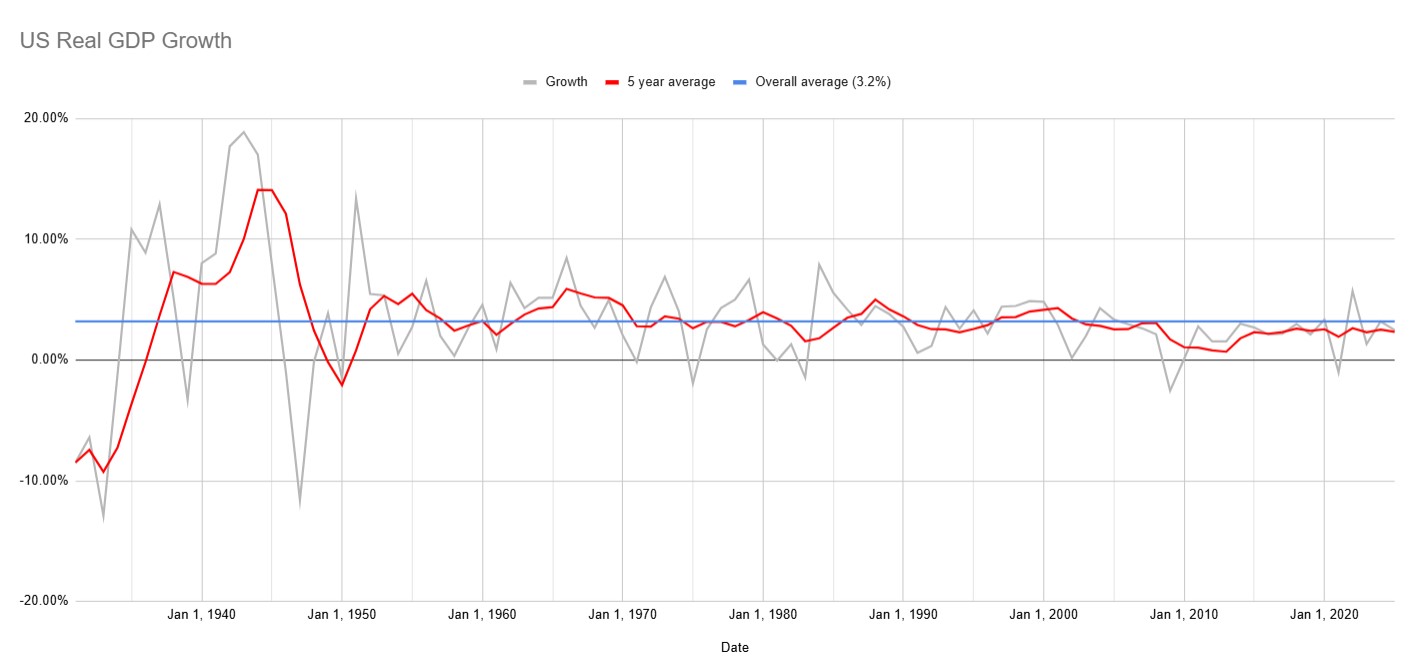
Historical economic indicators provide additional context for evaluating current market conditions. Long-term United States economic growth has historically averaged approximately three percent annually after adjusting for inflation. Notably, recent decades have recorded growth rates slightly below this historical average, leading some financial analysts to question the alignment between current macroeconomic expansion rates and elevated equity valuations.
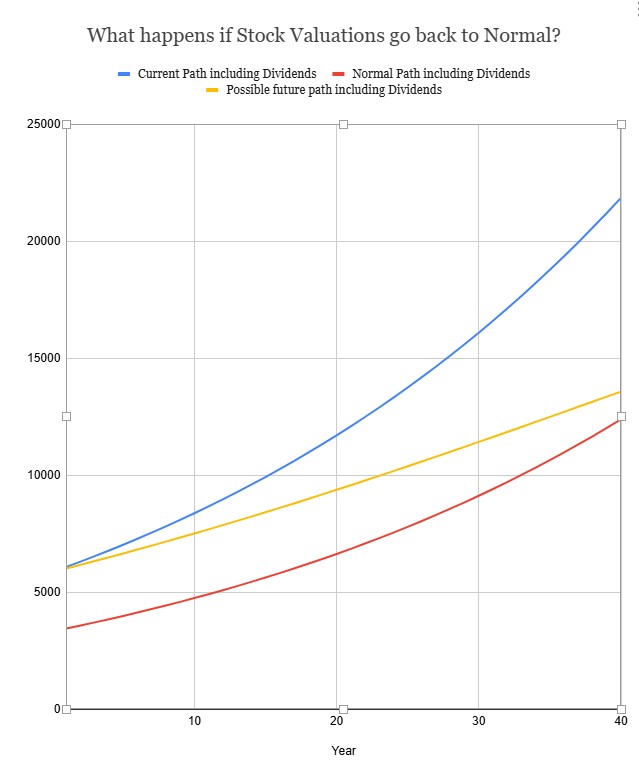
While market corrections, volatility cycles, and valuation adjustments remain a standard component of economic history, attempting to time market entries and exits consistently proves challenging for most participants. As historical precedents suggest, even if equity valuations eventually return to long-term averages, corporate earnings tend to expand alongside overall economic growth over extended investment horizons.
Alternative asset classes and conservative strategies offer different risk-return profiles for market participants navigating elevated equity valuations. Institutional forecasts, such as those published periodically by major investment firms, occasionally project competitive medium-term returns for international equities and fixed-income assets, driven largely by more accessible price-to-earnings ratios found in overseas markets, which frequently trade at significant discounts compared to United States benchmarks. However, domestic technology concentrations have historically offset these theoretical advantages in recent years.
Prominent figures within the financial community have also signaled caution regarding prevailing asset prices. Major holding conglomerates have maintained substantial reserves of uninvested cash, citing a scarcity of compelling acquisition bargains amidst higher market multiples. Similarly, individual financial strategies—such as prioritizing the elimination of high-interest mortgages—offer alternative approaches for capital allocation depending on individual risk tolerance and debt obligations.
Ultimately, long-term financial strategies continue to emphasize consistency, broad diversification, and a focus on extended investment horizons rather than short-term market fluctuations or daily economic headlines.