


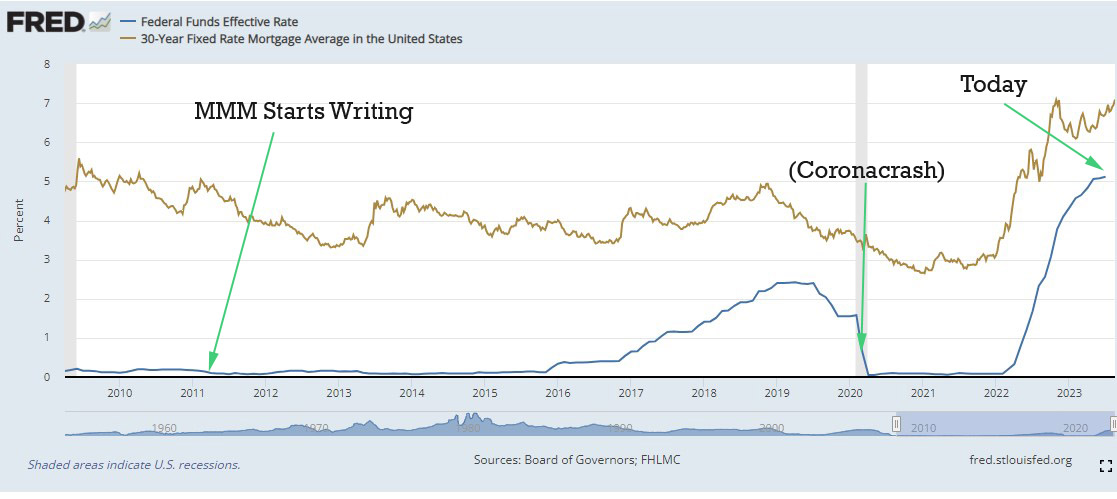
Financial markets have undergone a profound shift. After roughly fourteen years of remarkably stable, near-zero borrowing costs that anchored the global economy following the 2008 financial crisis, central bankers have flipped the script. Interest rates have climbed sharply, reaching multi-decade highs and upending the assumptions of a generation of consumers, investors, and business leaders.
For more than a decade, the Federal Reserve kept monetary policy remarkably loose, maintaining interest rates near absolute zero. This prolonged period of cheap money acted as a powerful accelerator for the broader economy. Mortgages were exceptionally affordable, fueling a continuous surge in housing demand that drove both existing home sales and new construction. Businesses large and small took advantage of low-cost capital to fund expansion, rent office space, build facilities, and hire millions of workers. Those workers, in turn, funneled their wages back into the consumer economy, purchasing automobiles, consumer electronics, and everyday goods.

That extended period of economic expansion ultimately generated unintended consequences. As too much money began chasing a limited supply of goods and services—most notably housing—inflation surged to unacceptably high levels. To cool the overheated economy and bring inflation back toward target levels, Federal Reserve Chairman Jerome Powell and his colleagues stepped firmly on the monetary brakes, rapidly raising the federal funds rate and bringing an end to the era of cheap capital.
The subsequent economic adjustments have rippled across nearly every sector. Borrowing costs for residential mortgages have climbed dramatically, prompting prospective home buyers to hit pause on their purchasing plans. Corporations face a much steeper price for debt, leading to scaled-back capital expenditures, delayed facility construction, and significant workforce reductions across major technology firms and other industries. The tightening credit environment even triggered a localized banking crisis earlier in the year, as several mid-sized institutions folded under the pressure of rising interest rates and
declining asset values, reviving anxieties about broader systemic stability.
Public discourse surrounding these economic shifts often remains sharply divided along political lines, with various commentators arguing that the country is enduring severe economic hardship or heading in the wrong direction. Yet these pessimistic narratives frequently contrast sharply with fundamental economic indicators. Unemployment rates have hovered near historic lows, and broader economic output remains remarkably resilient, defying the expectations of many traditional forecasters. In essence, the current economic climate reflects a necessary cooling period—a deliberate pause designed to allow the system to digest years of rapid expansion without descending into a structural crisis.

Evaluating Investment Portfolios and Savings Strategies
For individual investors, the sudden rise in interest rates naturally sparks anxiety regarding portfolio stability and the future of the equities market. Historically, the stock market trends upward over the long term, punctuated by unpredictable corrections and volatility. Because precise market timing remains virtually impossible, attempting to cycle in and out of equities to dodge short-term downturns rarely succeeds.
Market valuations provide valuable context for these adjustments. Following peaks reached at the beginning of 2022, the broader United States equities market experienced a modest correction, leaving valuations roughly flat over a multi-year period when accounting for modest dividend yields. For disciplined long-term investors, lower equity prices effectively represent a discount on future earnings potential, increasing the attractiveness of regular contributions to broad-based index funds.

At the same time, the resurgence of high-yield savings accounts, money market funds, and short-term debt instruments offering returns in the mid-single digits introduces a compelling alternative for cash management. In an environment where risk-free or low-risk yields approach or exceed five percent, savers must weigh the immediate, guaranteed return of cash equivalents against the historical long-term outperformance of equities. While high-yield cash products offer attractive stability, equities continue to offer growth potential that outpaces inflation over extended horizons, creating a dynamic where balanced portfolios typically incorporate elements of both depending on individual timelines and risk tolerance.
The Impact on the Housing Market
Housing represents the single most visible sector affected by the rapid escalation of borrowing costs. The transition of benchmark mortgage rates from historic lows near three percent to levels exceeding seven percent has dramatically altered the mathematics of homeownership.

For the average prospective buyer making a standard down payment, monthly mortgage obligations on a median-priced home have expanded significantly, pricing many out of immediate market entry. Furthermore, property investors face compressed rental yields, while existing homeowners with locked-in low mortgage rates have little incentive to sell and take on new debt at higher prevailing rates, severely constraining housing inventory.
These mechanics are precisely what tighter monetary policy is intended to achieve. By making financing expensive, the central bank aims to dampen frenzied demand, ease bidding wars, stabilize runaway property valuations, and ultimately restore balance to the real estate sector.
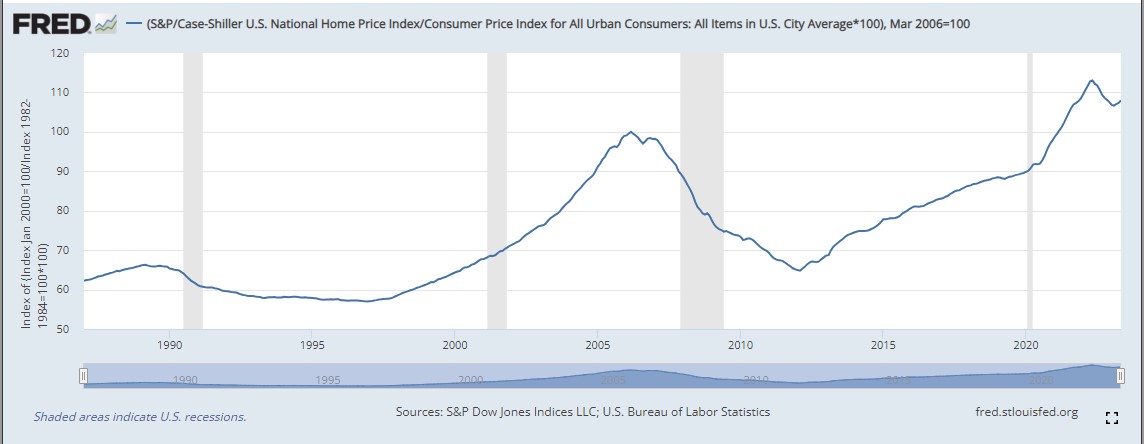
Over the long term, home prices are dictated by the fundamental relationship between supply and demand, alongside baseline construction costs and regulatory constraints. Technological advancements and global supply chains have historically helped offset some material costs, while innovations in building techniques streamline construction. However, regulatory hurdles, restrictive zoning laws, and local approval processes continue to inflate development costs and limit new housing supply in many regions, keeping upward pressure on prices even as demand cools. While localized adjustments and modest national price corrections remain possible, the broader trajectory of the housing market will depend heavily on whether municipalities can successfully encourage responsible residential development to meet ongoing demographic demand.
Looking Ahead: Interest Rates and the Yield Curve
Despite widespread characterizations of current borrowing costs as historically high, a broader historical perspective reveals that today’s interest rates sit comfortably within a normal long-term range. The exceptionally low rates observed between 2009 and 2021 represented an anomalous monetary policy response to severe economic crises rather than a permanent baseline.
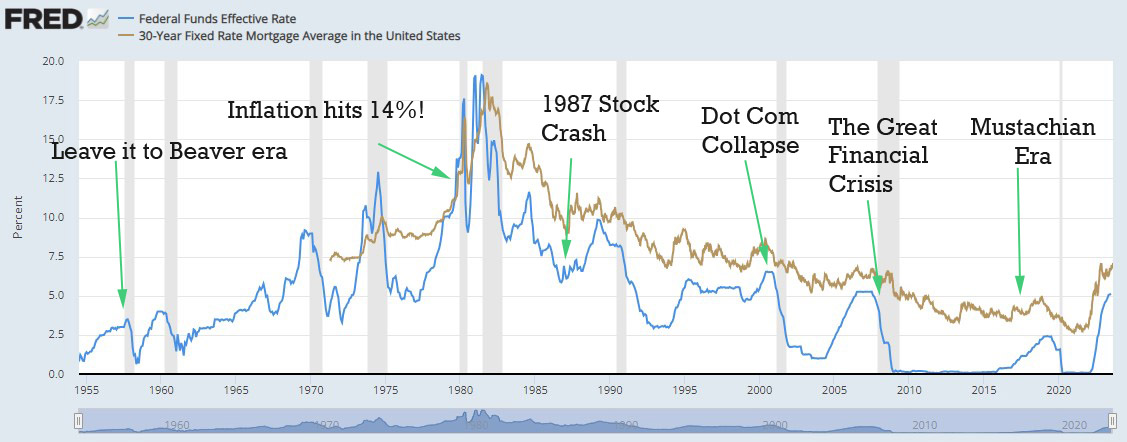
Future movements in benchmark interest rates will depend entirely on economic indicators, particularly inflation data and employment trends. If growth moderates significantly and the economy approaches a genuine contraction, central banks are likely to ease monetary policy once again.
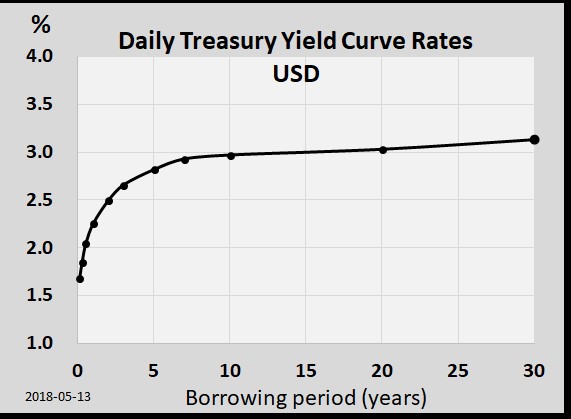
Indicators such as the U.S. Treasury yield curve provide valuable insight into how professional investors perceive future economic direction. The presence of an inverted yield curve—where short-term yields significantly exceed long-term yields—historically signals that bond market participants anticipate monetary easing and a potential economic slowdown within the medium term. While such indicators have accurately preceded past recessions, economic forecasting remains inherently uncertain.
Ultimately, navigating shifting financial conditions requires a focus on personal fundamentals rather than daily market commentary. Maintaining disciplined savings habits, managing debt prudently, and aligning financial decisions with long-term personal goals remain the most effective defenses against macroeconomic volatility. As financial cycles turn, sound individual preparation ensures that broader market fluctuations remain manageable background noise rather than sources of acute stress.