



Despite premiering almost three decades ago, Buffy the Vampire Slayer still endures as a monumental achievement in television history. Created by Joss Whedon, this beloved supernatural drama didn’t just lay the foundation for a strong, well-rounded female lead in Buffy Summers, brilliantly brought to life by Sarah Michelle Gellar. Buffy also subverted established horror tropes that had dominated the genre for decades and consistently mastered the "monster-of-the-week" format in a way few television productions could manage in the late 1990s and early 2000s. Cultural stigmas and traditional gender stereotypes were broken down on a regular basis. Throughout its historic run, Buffy never treated traditional femininity and world-altering strength as mutually exclusive traits, instead weaving them together to redefine what an action hero could look like on the small screen.
A successful television series that ran for seven seasons and 144 episodes is bound to feature an array of exceptional, standout hours. Some of these installments are deeply memorable because of the formidable "Big Bad" antagonists featured within them, while others are cherished for driving crucial character development milestones or raising emotional stakes to dizzying heights. With these enduring factors in mind, a look back at the 10 best episodes of Buffy the Vampire Slayer of all time, ranked according to their audience scores on IMDb, reveals the creative peaks of a series that forever changed the landscape of modern fantasy storytelling.
10. “Graduation Day: Part 2” (Season 3, Episode 22)
IMDb Rating: 9.1/10

While this two-part season 3 finale is arguably at its strongest when considered as a complete, unified narrative experience, “Graduation Day: Part 2” serves as a deeply satisfying conclusion to several major storylines that had been building since the pilot. Buffy and the core members of the Scooby Gang find themselves standing shoulder-to-shoulder with unexpected allies, as the entire student body of Sunnydale High bands together to defeat Mayor Richard Wilkins, portrayed with folksy menace by Harry Groener, and his evil plot to ascend into a giant snake demon and murder everyone in town.
This episode also marks a major emotional turning point for Angel, played by David Boreanaz, who makes the heartbreaking decision to leave Sunnydale after realizing that his immortal existence cannot provide Buffy with the normalcy, safety, and future that she genuinely deserves. Ultimately, “Part 2” takes the show’s foundational dark metaphor—that "high school is hell"—to its absolute limits, resulting in a cathartic climax where Buffy’s silent, grinding efforts as the town’s secret protector are finally recognized and validated by her peers.
9. “Fool for Love” (Season 5, Episode 7)
IMDb Rating: 9.1/10
A definitive high point in the overarching narrative of the show, “Fool for Love” radically humanizes Spike, played by James Marsters, by exploring his pre-vampire backstory as William, a painfully shy, insecure, and mocked Victorian-era poet whose romantic verse was brutally rejected by polite society. Through this deep dive, viewers come to understand that vampirism does not completely rewrite a person’s core psyche; rather, it strips away their inhibitions and amplifies their deepest flaws in the most brutal ways imaginable.

The episode also forces audiences to question everything they thought they knew about the mythos of the Slayers. Spike posits a provocative, unsettling theory that all Slayers harbor an unconscious death wish. Given the crushing, inescapable responsibility that every chosen girl must shoulder alone, they eventually and unwittingly embrace death after becoming completely burned out by their isolated lifestyles—at least according to the observations of the bleach-blond vampire who has lived to see two of them fall. Buffy is put under intense psychological scrutiny throughout the hour, but viewers are simultaneously treated to a rare look at Spike’s vulnerabilities and his deeply complicated, toxic obsession with the titular Slayer.
8. “Doppelgangland” (Season 3, Episode 16)
IMDb Rating: 9.2/10
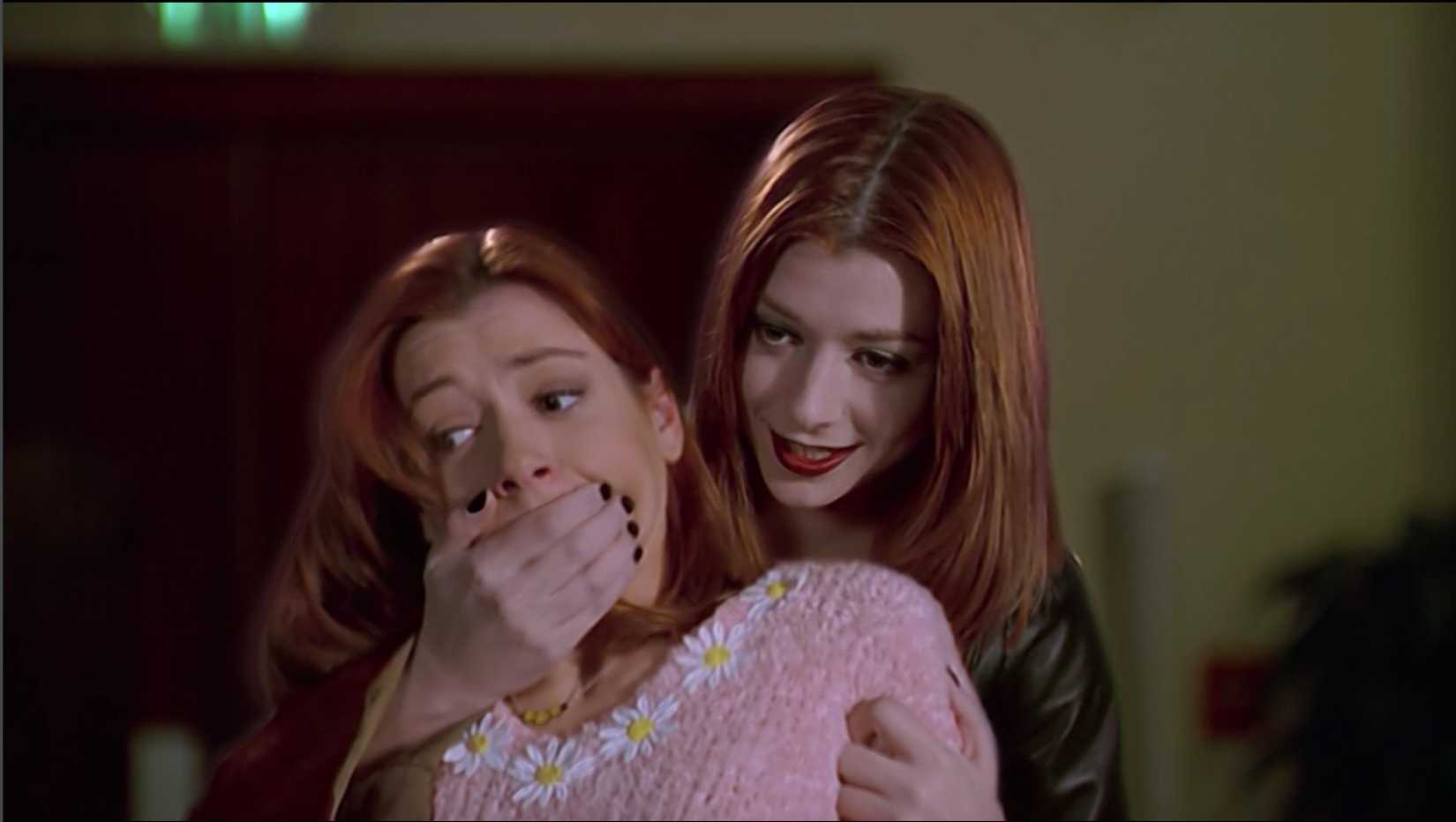
What would happen in a terrifying alternate reality where Buffy Summers never arrived in Sunnydale to protect it from the forces of darkness? The series originally explored this dark thought experiment in an earlier season 3 episode titled "The Wish," which revealed a grim dystopia where Willow and Xander were not only turned into ruthless, bloodthirsty vampires, but were also toxic lovers ruling over the town’s shadows.
Later that same season, the wicked, leather-clad vampire version of Willow gets accidentally transported from that alternate timeline into the show’s main reality in “Doppelgängland,” arriving just in time to wreak havoc and inadvertently give the regular, reliable, and often insecure human Willow an unexpected psychological confidence boost. Alyson Hannigan delivers an electrifying dual performance, seamlessly pivoting between sweetness and sheer sadism, while a series of amusing mistaken-identity scenarios makes for a genuinely entertaining hour of television. Beyond the comedy, Willow is forced to confront the darker, more assertive aspects of her own personality, learning to accept them to a degree without losing her essential humanity and moral compass.
7. “Passion” (Season 2, Episode 17)
IMDb Rating: 9.3/10
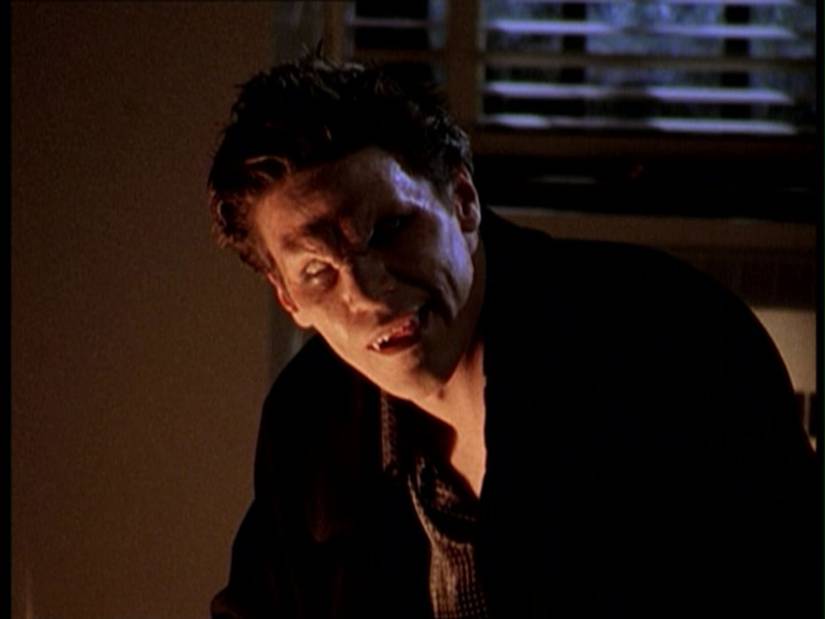
Despite his sincerely well-meaning actions and protective stance throughout the entirety of the first season and the early stretch of the second, Angel always represented a latent, benign threat due to his true nature as a vampire. In season 2, that existential threat bursts into the open with devastating consequences after Buffy and Angel sleep together, an intimate act that inadvertently triggers a moment of pure happiness and undoes the gypsy curse that had bound a human soul to the vampire for a century.
A few episodes later, Buffy raises the dramatic stakes to an unbearable pitch in “Passion,” as Angel’s soulless alter ego, Angelus, begins to actively go on the offensive, utilizing psychological torture, mind games, and cold-blooded murder against Buffy’s inner circle. This dynamic adds a profoundly terrifying, personal edge to Buffy’s romantic history, illustrating how her lingering affection morphs into horror once Angelus starts tormenting her loved ones. The episode also features a shocking, permanent death that plunges every member of the cast—including the usually composed and intellectual Rupert Giles—into the absolute depths of despair. Buffy had always dabbled in mature, dark themes, but this particular installment fully embraced the grim, unvarnished moral complexities of what it truly means to be a monster.
6. “Chosen” (Season 7, Episode 22)
IMDb Rating: 9.3/10
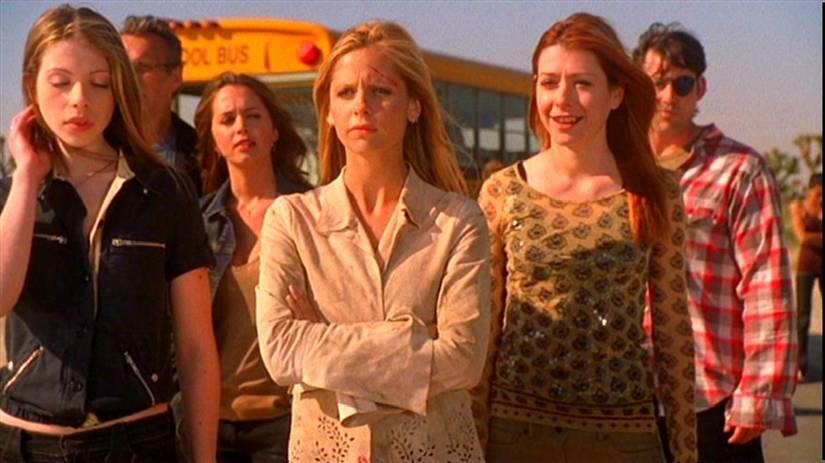
While Buffy’s seventh and final season is often debated among fans and critics alike, its grand series finale remains an all-time classic that successfully provides nearly every core character with a fitting, emotional sendoff—with the notable exception of Anya, whose tragic fate left a permanent scar on the audience.
The finale’s smartest narrative twist is a master plan that turns the entire foundational premise of the series completely on its head. Historically, being the Slayer came with an inescapable, crushing sense of absolute isolation; there could only ever be one girl chosen at a time to bear the weight of the world. “Chosen” radically rewrites this status quo by allowing Buffy to finally share the burden with every potential Slayer across the globe, whose latent supernatural powers are simultaneously activated through a powerful spell cast by Willow. This game-changing spell puts an end to centuries of unnecessary tragedy and modernizes the very definition of what it means to be a protector. Buffy undergoes a profound transformation across the series, evolving from a reluctant, homesick teenager into a mature, deeply strategic leader. Alongside a redemptive moment for Spike and a bittersweet parting with Buffy, the episode leaves viewers with an overwhelming sentiment of hope for the future, proving that nobody has to suffer in total isolation when power is democratized rather than hoarded by a single individual.
5. “The Gift” (Season 5, Episode 22)
IMDb Rating: 9.5/10
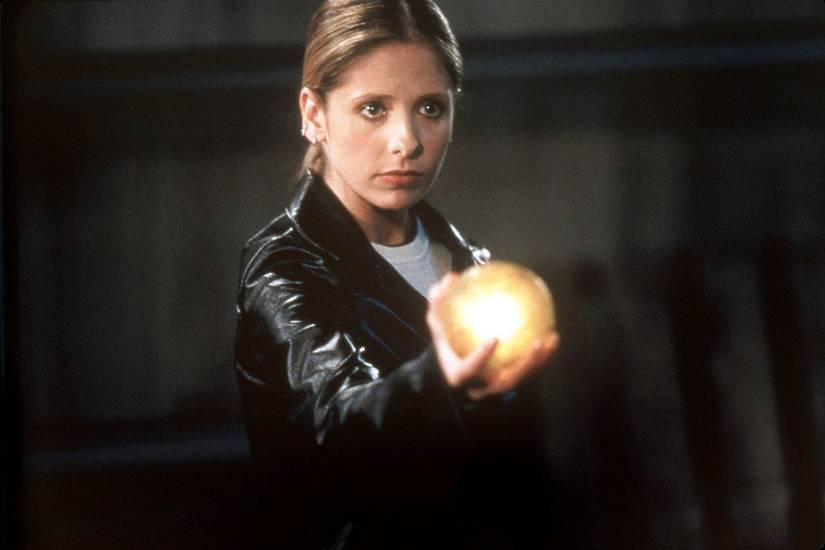
The brilliant conclusion to season 5 is widely regarded as one of the most emotionally devastating hours in television history. The entire plot converges on the fate of Dawn—a mystical energy source known as the Key, which was rewritten into human form and placed into Buffy’s care as her younger sister to keep it hidden from the hell god Glory. When Glory threatens to use Dawn’s blood to tear down the walls between dimensions and unleash multiversal chaos, Buffy protectively steps in, flatly refusing to view her sister as a necessary sacrifice for the greater good.
Instead of letting Dawn die, Buffy makes the ultimate sacrifice, diving headfirst into the glowing dimensional portal in her sister’s place to seal the breach. There is a profound, permanent sense of emotional finality to this utterly selfless act. It underscores Buffy’s complete journey of maturation, growing from a superficial high school cheerleader into an adult woman willing to make the most painful, absolute choice imaginable to keep the people she loves safe. Though she would eventually be dragged back from the peace of the afterlife at the start of season 6, “The Gift” remains a bleak, hauntingly tragic end for a relentlessly courageous soul.
4. “Becoming: Part 2” (Season 2, Episode 22)
IMDb Rating: 9.5/10
As another masterclass in season finale construction, “Becoming: Part 2” stands as an undisputed high watermark for Buffy’s personal evolution. Following a grueling stretch of episodes where she finds herself framed for murder, expelled from school, alienated from her friends, and forced into a desperate, uneasy alliance with Spike to save the world, Buffy faces her ultimate test in a final, brutal showdown with Angelus.
This is the iconic episode where Buffy catches Angelus’ heavy broadsword with her bare hands, leading to a legendary exchange of dialogue. When Angelus taunts her by asking, “No weapons, no friends, no hope. Take all that away, and what is left?” Buffy delivers her defining declaration: “Me.” While the finale ultimately ends in heartbreaking sacrifice as Buffy is forced to run her sword through the man she loves just as his soul is restored, it also showcases significant growth for the rest of the ensemble, marking a major milestone in Willow’s journey toward becoming a formidable practitioner of magic.
3. “The Body” (Season 5, Episode 16)
IMDb Rating: 9.7/10
One of the greatest achievements in the history of Buffy the Vampire Slayer does not feature a single monster, demon, or vampire. When Buffy returns home to her suburban house and discovers her mother, Joyce, lying lifeless on the living room sofa, the cause of death is mundane and entirely unmagical: a sudden, fatal brain aneurysm.
Buffy becomes completely unmoored by the suddenness of the grief, dropping her grocery bags as reality shatters around her. There are no supernatural interventions, no mystical resurrections, and no dramatic cinematic score to soften the blow. Instead, every character is forced to sit in uncomfortable silence with the cold, unvarnished reality of sudden death. A profound numbness grips Buffy, while Xander and Willow process the shock outwardly through frustrated, desperate outbursts and denial. Every single one of these messy, complex reactions is treated with absolute authenticity, making the episode a breathtaking depiction of grief. Sarah Michelle Gellar delivers a remarkably restrained, raw performance that strips away all of Buffy’s usual youthful bravado and hits the audience with staggering emotional force.
2. “Once More, with Feeling” (Season 6, Episode 7)
IMDb Rating: 9.7/10

On paper, the concept of a one-off musical episode in a dark supernatural drama sounds like a gimmicky, throwaway television trope designed for ratings. However, “Once More, with Feeling” takes that risky premise and executes it with brilliant narrative precision, using song and dance as a vehicle to expose deep emotional truths that the characters otherwise could not articulate.
The musical outbreak is triggered by a charismatic demon named Sweet who compels the citizens of Sunnydale to sing and dance until they literally combust from exhaustion. Beneath the catchy tunes lies heavy emotional wreckage, specifically revolving around the profound depression Buffy experiences after being ripped out of heaven and forced back into the harsh realities of life on Earth, alongside the secret struggles of her friends. Major relationship fractures and hidden confessions spill out in the lyrics; most notably, Xander and Anya utilize a 1950s-style show tune to confront the lingering doubts threatening their upcoming marriage. Seamlessly blending high-energy choreography with genuine psychological trauma, this episode proved that Buffy could take practically any convention and mold it into a profound character study.
1. “Hush” (Season 4, Episode 10)
IMDb Rating: 9.7/10
Widely celebrated as one of the most inventive and daring episodes in the history of television, “Hush” completely strips away the series’ signature witty banter and fast-paced dialogue for nearly thirty minutes, relying almost entirely on pure visual storytelling and physical acting.
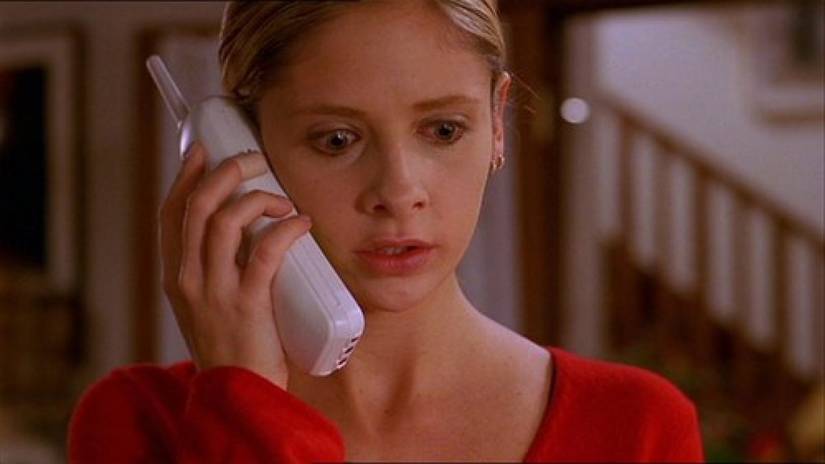
The premise introduces the Gentlemen, a terrifying trio of fairytale monsters who float through Sunnydale in Victorian attire, stealing the voices of every living person in the town to harvest their beating hearts without interference. The long, eerie stretches of silence work wonders for character growth and tension, forcing Buffy, Giles, Xander, Willow, and the rest of the cast to communicate strictly through silent cues, anxious glances, and frantic hand gestures. This enforced silence makes it impossible for the characters to hide behind their usual sarcastic defenses, leading to significant romantic developments—including the moment Buffy and Riley Finn discover each other’s secret identities during the chaos. Beyond its plot mechanics, “Hush” stands as a brilliant reminder that Buffy the Vampire Slayer did not always require massive supernatural spectacle to shine, earning two prestigious Emmy Award nominations for Outstanding Writing in a Drama Series and Outstanding Cinematography that cemented its legendary status.