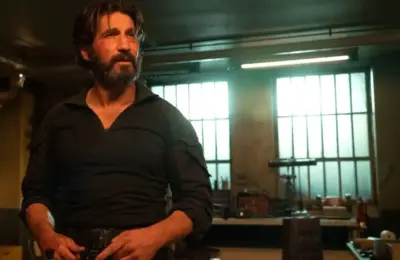


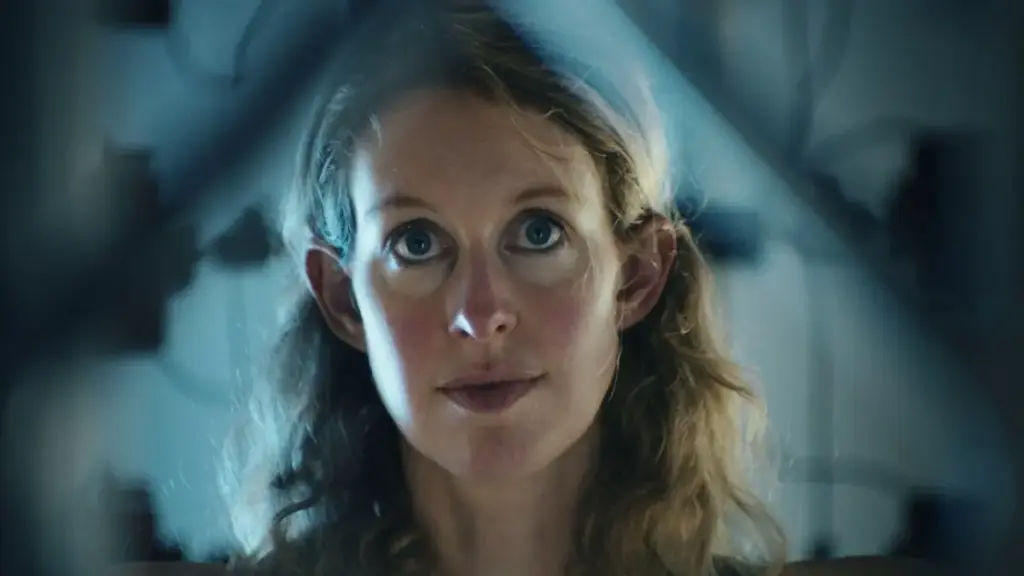
Full spoilers follow for You Can See Everything, which is in theaters now.
“The greatest trick the devil ever pulled was convincing the world he didn’t exist.” — The Usual Suspects
You Can See Everything has justifiably emerged as one of the most talked-about cinematic releases of the year, quickly sailing past traditional box office records for feature documentaries. The filmmaking itself is undeniably impressive, frequently surprising, and undeniably effective. However, the true staying power of the movie lies not in its technical merits, but in its function as a sprawling social experiment. It probes whether any of us truly know, care about, or communicate what is "real" outside the narrow confines of our own personal interests. Within the world of this film, truth exists on a fragile spectrum, frequently resembling a game of narcissistic whack-a-mole.
Liar, or Wired Differently?
It quickly becomes apparent that co-directors Nathan Fielder (Nathan for You) and Lance Oppenheim (Primetime) have not delivered a definitive, black-and-white verdict on whether Elizabeth Holmes is a liar. According to the legal system and a chorus of whistleblowers, she most certainly is, having been convicted after her startup Theranos was exposed as essentially hawking a blood-testing machine that did not actually work. Instead, the film asks a far more nuanced and unsettling question: Does Holmes understand that she is lying, or is she fundamentally incapable of discerning the difference between what she wishes were true and objective reality? It is, in essence, an attempt to construct a metaphorical "not guilty by reason of insanity" defense for massive corporate fraud.
For years, pundits and armchair psychiatrists have heavily speculated that Holmes suffers from Narcissistic Personality Disorder (NPD) alongside sociopathic or psychopathic tendencies, despite her having no public diagnosis. Yet, in You Can See Everything, there are striking moments where Holmes appears neurodivergent in a way that radically reframes her entire narrative. This complexity is compounded by the fact that her romantic partner, Billy Evans, appears on screen as wildly controlling, casting their relationship in an frequently abusive light.
Throughout the film, Holmes is occasionally framed as a sympathetic figure and a victim. This forces the viewer to confront a cascade of difficult questions: Was she manipulated by her original romantic and business partner, Ramesh “Sunny” Balwani, whom Holmes met when she was just 18 and he was 37? Is that exact toxic dynamic now playing out with Evans? Or is she a narcissistic sociopath hiding behind a facade, or perhaps an individual on the autism spectrum whose neurological profile inhibits her from processing social cues and linguistic nuances to such a degree that she can utter falsehoods without comprehending that she is lying?
The first truly jaw-dropping moment in the documentary occurs when Fielder shows Holmes and Evans the classic Abbott and Costello comedy sketch “Who’s on First?” While Holmes genuinely finds it funny, she insists with complete seriousness that she did not understand the first baseman’s name was actually “Who,” which serves as the foundational crux of the entire joke. As Fielder presses her on the point, she becomes visibly distressed by her own confusion, prompting Evans to abruptly send her to bed like a misbehaving child.
Time and again, the film suggests that her cognitive discernment is severely inhibited and that she simply does not utilize language in the standard way the rest of society does. Evans actively claims that her brain operates on an entirely different frequency. Fielder orchestrates this unconventional experiment because an earlier question arose regarding Holmes’s precise wording in an archival clip. In the footage, she states that the Theranos blood-testing machine “can” run specific diagnostic tests, conveniently omitting the crucial clarification that it could not yet do so reliably.
To demonstrate what she meant, Holmes and Evans retrieve the machine from storage, arguing that it was theoretically possible for the core technology to work, even if the actual testing protocols had not yet caught up with its hardware capabilities. The persistent implication is that what the public and prosecutors interpreted as a calculated, malicious lie was actually Holmes’s fundamental failure to grasp linguistic nuance. It leaves the audience wondering: Could it be that this woman committed terrible, damaging acts, but that her actual neurological conditions have been so profoundly misunderstood that her legal sentence is ultimately disproportionate to the psychological reality?
Theranos whistleblower Tyler Shultz is entirely eager to disabuse audiences of any such sympathetic speculation. Speaking in interviews with broadcast media, Shultz revealed that he nearly jumped out of his seat during the sequence featuring the Theranos device because, according to his insider knowledge, it was not even the machine they were actively using on real patients, but rather an uncompleted future prototype. From his perspective, the film deliberately re-litigates the Theranos scandal just enough to sow manufactured doubt in the minds of viewers. This leads to a broader, more critical point articulated by Shultz: this project is not a traditional documentary. Instead, it is a brilliantly constructed piece of cinematic storytelling that holds up a deeply distorting funhouse mirror to the concept of truth and to society at large.
Showmen, Not Documentarians
The foundational question of who is manipulating whom begins with the very genesis of the film itself. Holmes and Evans initially pitched a "documentary" to tell their side of the story, and the directors utilized that same unregulated label to tell theirs. No one involved had to meet a rigorous, standardized legal bar to capture an objective "truth."
In a broader legal context concerning documentaries and entertainment, courts frequently rely on the legal fiction of a "reasonable viewer" who easily recognizes dramatization and possesses enough personal discernment to separate entertainment from factual reality. When legendary actress Olivia de Havilland sued FX over the biographical series Feud, the court ultimately did not believe an ordinary television audience would interpret a dramatic docudrama as literal fact.
This legal defense frequently holds firm even within major news networks. When Fox News faced a high-profile defamation lawsuit over Tucker Carlson’s prime-time program, network lawyers successfully argued that no reasonable viewer could or should believe Carlson was stating facts rather than offering commentary. The presiding judge agreed, writing that given Carlson’s established public reputation, his viewers arrive “with an appropriate amount of skepticism,” and dismissed the case accordingly.
However, empirical research suggests that real-world viewers consistently fail to make these clean distinctions. A study conducted by Washington University found that when a narrative film contradicted an accurate historical text, students recalled the film’s misinformation as factual up to half the time. Perhaps more saliently, a general, upfront warning that films can contain historical inaccuracies had zero impact on the outcome; only a specific warning addressing a particular error made a tangible difference.
Similarly, public data indicates that the share of UK viewers who believe the fictional drama series The Crown is an accurate historical account actually rose significantly over a one-year period. While potentially worrisome, this is entirely understandable; after all, popular culture relies heavily on the willing suspension of disbelief. The reality remains that human beings are remarkably ill-equipped to parse fact from fiction, even under optimal circumstances.
Given these cognitive vulnerabilities, it is highly notable that Fielder and Oppenheim were the creative minds tapped for this complex project. They are decidedly not traditional documentarians in the vein of Ken Burns or Errol Morris. Rather, they are showmen whose collective bodies of work have spent years deliberately blurring the boundaries between performance and reality.
There are multiple layers of profound irony woven throughout this endeavor. Oppenheim recently released Primetime, a film examining how infamous To Catch a Predator host Chris Hansen allegedly manipulated his subjects to secure compelling television. Hansen subsequently denounced that project as a “complete work of fiction” that unlawfully exploited his name and image for commercial gain.
Now, Oppenheim has co-directed a documentary centered on a convicted fraudster that continually plays with the very nature of objective truth. Meanwhile, Fielder has repeatedly faced intense ethical scrutiny regarding how participants were portrayed in both Nathan for You and The Rehearsal. To be entirely fair, both filmmakers are exceptionally skilled at what they do, and this criticism does not imply they are inherently unethical. One valid lens through which to view the film is that they are purposefully utilizing their distinct reputations to provoke deeply engaging philosophical questions. Another, more cynical lens is that they selectively framed footage of Holmes in or out depending entirely on what best served their overarching narrative.
Enter Amanda Seyfried
Undoubtedly, there are moments where the audience can visibly perceive the filmmakers executing a sleight of hand, leaving viewers wondering if they are being actively challenged to catch the directors in the act. One of the film’s most inventive twists arrives just as the narrative appears to have reached its natural conclusion: Holmes has already been sent to prison, and viewers can almost picture themselves sitting in the editing suite with Fielder and Oppenheim as they realize their footage, while interesting, lacks the explosive punch needed to truly break cultural ground.
You can nearly hear one of them pitch the twist: “Let’s turn this completely on its head. We had Liz watch the fictionalized version of herself; now let’s do the reverse with Amanda.” While the exact behind-the-scenes reality remains opaque, the resulting footage of Amanda Seyfried and Elizabeth Holmes watching one another generates a powerful sense of voyeuristic glee.
This dynamic echoes an unsettling account of a filmmaker who filmed a brutally realistic car crash scene based on a deeply traumatic personal incident told to him by a friend, entirely without her permission. When the film premiered, he invited her to sit beside her without revealing what he had done, simply staring at her in silence to observe her physiological reaction as her hidden trauma played out on the big screen.
The sequences in You Can See Everything—where Fielder shows Hulu’s biographical series The Dropout to Holmes, and later shows his own documentary footage to Seyfried—evoke that exact chilling impulse. To be entirely clear, this is not to suggest Fielder shares malicious intent, but the psychological impulse is undeniably related: the desire to witness human shame, pain, or heartbreak unfold in real time, and subsequently broadcast that intimate vulnerability to the entire world. It taps into a dark voyeuristic impulse shared by many, serving as yet another way the film forces the audience to confront the blurry line between acceptable and forbidden behavior, and the ethics of utilizing other human beings to project a specific image for personal gain.
Seyfried is widely regarded as a gifted actress and a genuinely compassionate individual who famously maintains a farm dedicated to rescuing animals. She even demonstrates enough empathy for Holmes—without being an outright admirer—to tell Fielder during filming that she genuinely hated seeing Holmes trapped in a toxic relationship with Evans. Yet Seyfried herself maintains a distinct professional and personal stake in a specific interpretation of Holmes, having earned an Emmy Award for her acclaimed performance in The Dropout.
This is not a condemnation of Seyfried, who visibly wrestles with the uncomfortable realization that her previous television project may have contributed to real-world negative outcomes in Holmes’s life. Yet, upon watching the recorded interactions between Holmes and Fielder unfold, Seyfried immediately slips back into the familiar psychological space of playing her.
In a brilliant stroke of meta-filmmaking that encapsulates nearly all of the documentary’s core themes simultaneously, Seyfried dramatically reenacts a visitation between Fielder and Holmes in prison, as actual filming was prohibited inside the facility. Within the reenactment, Holmes claims that prison guards and fellow inmates treat her with open hostility because they believe the deeply unsympathetic version of her depicted in The Dropout is absolute reality.
At a key juncture, Fielder begins second-guessing his own memory of her exact phrasing during their interviews, prompting Seyfried to wonder aloud whether he is being entirely faithful to the truth or merely protecting his primary subject. Neither party can definitively verify whether "their" version of events is accurate. Crucially, the exchange highlights just how readily modern audiences accept the constructed media image of a public figure until an entirely alternative narrative is presented to them.
The Many Faces of Liz
For substantial portions of You Can See Everything, the audience is invited to explore the recurring theme that Holmes’s public image has been continually commodified by others: initially by Balwani and Holmes herself, subsequently by The Dropout, now by Fielder and Oppenheim, and most grotesquely by her current partner, Evans. Reports indicate that Evans has explored developing an artificial intelligence version of Holmes to make available to the general public, effectively allowing anyone to put words into her mouth. He reportedly posts from her social media accounts posing as her without her direct knowledge, occasionally publishing genuinely offensive remarks for which she, not he, will ultimately be judged. Her face, her body, and her voice have all been cherry-picked and weaponized by various parties for their own ends.
The audience is directly implicated in this cycle. During its early stretches, the documentary frequently plays awkward psychological jokes at Holmes’s expense, and the theater audience invariably laughs along. While the documentary touches on Evans’s initial desire to secure financial compensation from the film—a stake he and Holmes ultimately relinquished—the overarching movie remains entirely comfortable with other entities profiting handsomely from her public persona. The documentary itself is generating substantial box office revenue, just as The Dropout previously achieved widespread critical acclaim and major industry awards.
These ongoing discussions regarding the exploitation of her image stand in stark contrast to profound personal trauma: two separate relationships that read as deeply abusive—one with Balwani, whom Holmes testified abused her during their tenure at Theranos (an allegation he firmly denies), and another with Evans, as presented by the filmmakers. Crucially, a passing reference is made to a severe sexual assault in her past that her father noted changed her personality permanently, a heavy revelation that the documentary introduces but never meaningfully pursues.
Perhaps that early trauma is what ultimately set her on the psychological path of constructing elaborate personas and fictional characters behind which she felt safe hiding. Whether any authentic, core "Liz" exists beneath the layers of performance crafted by herself and others remains fundamentally unknowable. Yet the film seems to argue that while Holmes is many complex things, she is also an object that has been systematically utilized by others for years, and the documentary itself is simply continuing that very tradition.
The filmmakers are not attempting to draw false equivalencies; Holmes remains the deepest and most complex narcissistic rabbit hole of them all. Rather, the point is that to lesser or greater degrees, nearly everyone involved relies on selective truth and narrative manipulation to secure their desired outcomes.
This theme is underscored when a business associate involved in Holmes and Evans’s new entrepreneurial venture—widely dubbed "Theranos 2.0"—casually remarks that virtually all corporate chief executive officers lie. The assertion raises an uncomfortable question: How fundamentally different is Holmes, in terms of sociopathic tendencies, from the vast majority of prominent tech CEOs?
Elon Musk famously settled with federal securities regulators over a "funding secured" tweet that a federal judge subsequently ruled was both untrue and reckless, yet Musk never faced criminal charges. Similarly, Nikola founder Trevor Milton was convicted of misleading investors before ultimately receiving a presidential pardon. These cases highlight another lingering question raised by the film: Exactly when does corporate deception cross the line from standard entrepreneurial hyperbole into unpardonable criminality?
In Holmes’s specific case, there is a vital distinction: Theranos actually deployed its unproven diagnostic machines into clinical settings, resulting in real patients receiving inaccurate medical test results. The company was ultimately forced to void two years of laboratory results generated by its proprietary Edison devices, and subsequent misdiagnoses caused genuine emotional and physical distress to vulnerable patients.
Yet the documentary spends almost no time contextualizing the human toll of the Theranos scandal, leaving Holmes’s actual medical victims entirely unseen and unaccounted for. This omission may stem from the legal reality that Holmes was formally acquitted by the jury on the specific patient-fraud charges and convicted solely of defrauding wealthy investors. Alternatively, it may simply be because that dark chapter of the story was inconvenient to the filmmakers’ preferred narrative. The inherent danger is that the documentary presents a significantly more sympathetic portrait of "Liz" than previous dramatizations, and that neither extreme version of the narrative is entirely accurate.
The Ultimate Magic Trick
At one point in the documentary, Fielder discusses illusionist David Blaine, describing a famous stunt where the magician appears to drive an ice pick directly through his own hand. Fielder notes that the reality of the trick is far more stark: it is not a traditional optical illusion; the performer is literally pushing an ice pick through his flesh.
Whistleblower Tyler Shultz sees a direct parallel to Holmes in this anecdote: she truly is trapped in a deeply toxic or abusive relationship, meaning the audience feels genuine empathy for her real pain. Yet, from Shultz’s perspective, she is enduring that real-world suffering entirely by design as part of her own ongoing performance. Shultz maintains that the subdued, fragile woman depicted in the film is completely unrecognizable from the commanding corporate titan he knew at Theranos. It suggests that Holmes may truly be an elusive non-entity—a shape-shifting chameleon continually adapting her personality to the immediate demands of her environment.
Ultimately, what constitutes the objective "truth"? In all likelihood, Oppenheim and Fielder fully understand both that Holmes is a proven liar and that she is entirely aware of her deceptions. However, simply stating that straightforward fact would not make for a compelling feature film. Evans and Holmes clearly recognized that they were not inviting traditional, deferential documentarians into their private lives. Did they genuinely believe they could outmaneuver master manipulators at their own game? Did that strategy succeed, or is the documentary playing us?
The answer is likely all of the above. You Can See Everything is undeniably manipulative, yet it simultaneously captures something fundamentally human. Those two realities are not mutually exclusive. The film serves as a sobering meditation on how human beings routinely utilize one another, how we are exploited in return, the carefully curated images we present to the world, and how ultimately, no one ever truly knows anyone else—frequently including themselves.
“You can see everything” is a promise Holmes makes directly to Fielder early in the documentary. Yet the phrase also functions as a wry acknowledgment by the filmmakers of their own cinematic methodology. By the time the credits roll, the audience does not definitively see or know anything with absolute certainty. Viewers are left completely unmoored and subtly gaslit—a sensation clinical psychologist Dr. Ramani Durvasula notes is characteristic of victims of narcissistic abuse.
That is the ultimate magic trick of the movie: successfully placing the viewer in the vulnerable position of being psychologically handled by Holmes, and perhaps by the filmmakers themselves. In a very real sense, the documentary weaponizes the audience’s own capacity for empathy. It operates as if whispering a challenge: If you do not feel at least slightly taken in, you may lean toward the more sociopathic end of the psychological spectrum presented in the film. And if you do feel entirely taken in, you may simply be a willing spectator, ripe for the next grand illusion.