


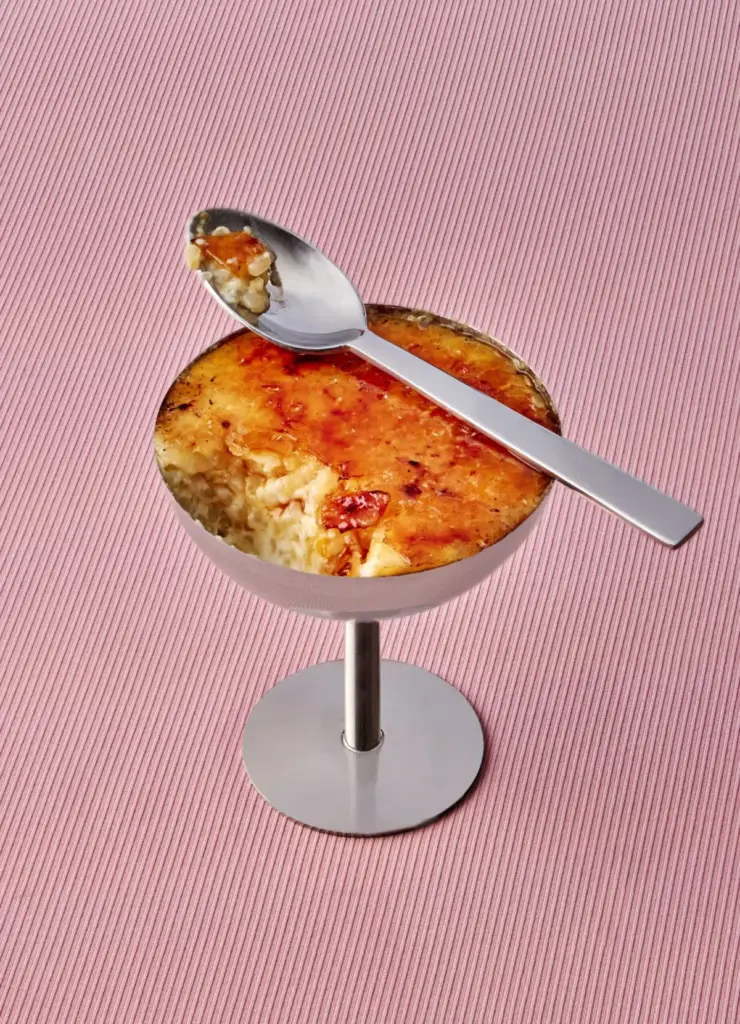
The dish draws deeply from a rich culinary lineage found across South Asia and beyond, where variations of slow-simmered rice puddings occupy a central place in domestic cooking and festive celebrations. While preparation methods and specific regional names differ widely, these dishes share a common profile of creamy textures, aromatic spices, and a deep sense of culinary nostalgia. Gurjar’s version honors this heritage while introducing contemporary culinary techniques designed to play with textures and temperatures.
At the core of the recipe is the slow-cooking method, which allows the rice to release its starches gradually, yielding a naturally thick and velvety consistency. The pudding is subtly infused with cardamom, a foundational spice in South Asian desserts that imparts a warm, floral complexity. Traditionally, similar desserts are often garnished with an array of chopped nuts, such as pistachios or almonds, and dried fruits like raisins, adding contrasting bites to the smooth pudding base.
Gurjar introduces a distinct twist to the traditional format by incorporating two modern elements. The first is a torched sugar topping, creating a glassy, caramelized crust that shatters under a spoon, mimicking the signature textural contrast of a classic French crème brûlée. The second addition is a scoop of mango sorbet, which serves a dual purpose on the plate. It provides a burst of bright, tropical acidity to cut through the richness of the dairy and rice, while also acting as a deliberate nod to the beloved regional flavor pairing of mango and sticky rice.
Executing the dish requires careful attention to traditional stovetop methods, particularly regarding heat control and kitchen equipment. Culinary professionals note that preparing dairy-based grain puddings without a nonstick pot demands constant vigilance. Without a nonstick surface, cooks must stir the mixture diligently every four to five minutes to prevent the starches from settling and scorching on the bottom of the vessel. Should scorching occur, immediate intervention is necessary, requiring the cook to rapidly transfer the uncontaminated portion of the pudding into a clean pot and resume simmering over low heat to salvage the dish.
The finishing touches offer flexibility depending on available kitchen tools and serving preferences. For the caramelized topping, a kitchen blowtorch is required to melt and brown the sugar layer; however, home cooks lacking a torch can easily omit this step without compromising the foundational flavors of the cardamom-infused rice pudding. The dessert can be served warm for immediate comfort, or chilled in the refrigerator for two to four hours for a refreshing, cool experience. Before serving, the dish is traditionally garnished with delicate threads of saffron, adding both a subtle earthy aroma and a vibrant visual accent.
This inventive presentation by Rachel Gurjar reflects a broader culinary trend of bridging distinct global dessert traditions, merging the slow-simmered comfort of South Asian household staples with the dynamic textures of modern pastry arts. Further culinary creations and recipes by Rachel Gurjar remain accessible to home cooks and food enthusiasts through professional culinary platforms and digital recipe archives.