


What began as an innocent five-star review for a winter heated vest on Amazon quickly spiraled into a nine-month psychological experiment for prominent financial blogger Peter Adeney, better known as Mr. Money Mustache. Within moments of submitting his feedback, Adeney received an email inviting him to join the coveted Amazon Vine program, an exclusive network where invited reviewers—often called "Vine Voices"—can order products for free in exchange for writing reviews on at least 80 percent of their acquisitions.
Initially, the proposition seemed harmless enough. Adeney, a longtime advocate of frugal living and financial independence, reasoned that he already wrote product reviews voluntarily out of the goodness of his heart. The idea of being rewarded with free merchandise for something he already enjoyed doing sounded like a win. Without giving it much deeper thought, he accepted the terms and conditions and plunged headfirst into the system.

Looking back on the experience after months of receiving near-daily deliveries, Adeney realized that the program had systematically exploited his psychological triggers. Despite saving thousands of dollars on tools and materials for his construction business and the MMM-HQ coworking space, he found himself surprised by how easily small digital nudges and behavioral incentives could override lifelong frugality instincts, pulling him into busywork that ultimately wasted valuable time.
Scarcity Brain and the Online Casino Effect
To understand how a self-described master of frugality could fall into a consumerist loop, Adeney turned to behavioral science, drawing parallels from Michael Easter’s book Scarcity Brain. Easter’s work explores how modern gambling platforms, targeted marketing, and social media algorithms exploit evolutionary vulnerabilities rooted in human survival mechanisms—specifically, a hardwired reaction to scarcity and a dopamine-driven response to unpredictable rewards.

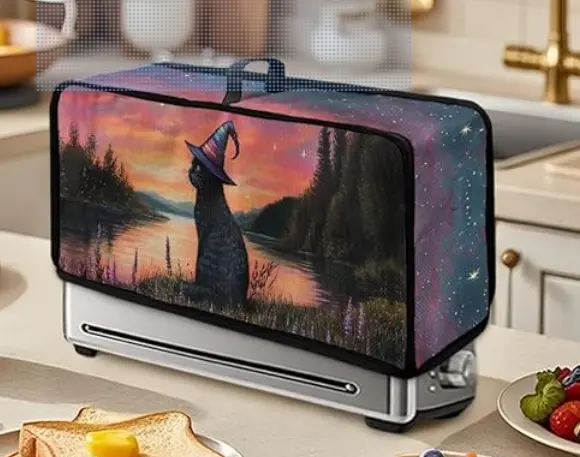
As Adeney analyzed his behavior, he realized that the Amazon Vine portal operated much like an online casino or a social media feed. Every time he logged into the restricted reviewers-only website, the available inventory shifted unpredictably. A search for essential household items might yield endless pages of irrelevant items, such as pink plastic disposable party plates or a cat’s toaster cover featuring a witch hat. Yet, sprinkled among the absurd trinkets were genuinely useful items, such as high-end light fixtures, plumbing parts, heavy-duty tools, an electric vehicle charger, and even unique apparel like the viral eagle shirt featured in a Mustachianism music video.
The unpredictability of the inventory created a compelling loop of intermittent reinforcement. Even when a search yielded nothing of value, the occasional dopamine hit of scoring a high-value item kept him checking the platform daily. He began enlisting friends and coworkers at the headquarters to help sift through the available merchandise, turning the hunt into a shared game. They ordered artificial plants that successfully brightened hard-to-water courtyard gardens and even joked about theoretical high-ticket items like a fully functional cold plunge tub.

However, as Adeney pushed forward to upgrade his account from Vine Silver to Vine Gold by completing 80 reviews, the underlying mechanics of the program began to reveal their true toll. He caught himself checking the platform out of pure habit, even when he needed nothing. The arrival of packages led to assembly-line photography and batch-writing review sessions that consumed hours he would have preferred to spend elsewhere. Worse yet, acquiring questionable items directly contradicted his core values regarding sustainability and waste reduction, as the manufacturing and packaging generated pollution and overflowing recycling bins at home.
Navigating the Bureaucracy of Free Goods
During the peak of his consumerism bender, the influx of parcels strained household dynamics. With boxes arriving almost daily, family members began poking fun at his growing collection of frivolous items, prompting Adeney to discreetly tuck away deliveries to avoid scrutiny.

Eventually, he recognized the behavior for what it was: a form of procrastination. Ordering items online provided a hollow simulation of productivity, offering an easy escape from the more challenging, rewarding work of physical exercise, construction projects, and creative writing.
The structural realities of the Amazon Vine program also began to wear thin. Rather than treating reviewers as valued partners, the platform exhibited the traits of low-wage digital labor. The search functionality lacked basic sorting or filtering tools, forcing participants to manually comb through endless screens of clutter. Furthermore, an automated AI evaluation system routinely flagged factual, benign reviews for allegedly violating community standards without providing clear explanations. Minor tweaks to punctuation and phrasing would routinely satisfy the algorithm, highlighting the arbitrary nature of the bureaucracy governing the platform.

Reflecting on the experience, Adeney drew comparisons to a previous experiment he conducted in 2017 working as an Uber driver. In both instances, participants are handed a rigid set of rules and tasks within a closed system designed by others, expected to produce output without having any real voice in improving the underlying structure. For Adeney, who has enjoyed two decades of financial independence and the autonomy of being his own boss, the reminder reinforced the value of personal freedom and intentional time management.
Financial Realities and Tax Implications
While the merchandise obtained through Amazon Vine is marketed as free, the program comes with explicit financial reporting obligations. Amazon tracks the estimated retail value of all acquired items and issues a Form 1099 at the end of the year, transforming the "free" goods into taxable income based on the recipient’s marginal tax rate.

For the 2025 tax year, Adeney’s account accumulated approximately $7,000 worth of goods, resulting in an estimated tax burden of roughly $1,750 at his marginal rate of 25 percent. The majority of these acquisitions—around 75 percent—were directed into his business operations for commercial use, effectively converting the merchandise into functional capital for construction jobs and headquarters renovations. Other items covered household necessities he would have purchased regardless. However, the calculation also included roughly $1,000 of impulse acquisitions that yielded little practical value.
A breakthrough arrived through community engagement when readers pointed out a lesser-known tax provision. According to established guidelines discussed within reviewer communities, participants can often reduce the reported value of review items by up to 80 percent because opening, testing, and evaluating the products largely eliminates their resale value. Consequently, the actual tax liability for the extraneous items proved to be significantly lower than initially anticipated.

Rather than formally canceling his account, Adeney utilized a behavioral strategy known as a "keystone habit" to break the cycle. By remapping his browser bookmark for the Vine portal to a daily tracking chart he calls his "Badassity Tracker," clicking the link now redirects him to a prompt encouraging physical exercise instead of online browsing.
While publishing a public critique of the program might ultimately violate Amazon Vine’s unwritten rule against discussing the platform, the experiment yielded deeper insights into human psychology. Adeney noted that the subtle trap of the Vine program mirrors "One More Year Syndrome," a common phenomenon where individuals continue working long past the point of financial independence simply out of momentum and habit. Ultimately, the experience serves as a broader reminder to continuously evaluate personal assumptions, question daily patterns, and embrace minor course corrections to maintain a balanced and intentional life.