

By Olivia Rosane and Cristen Hemingway Jaynes
Invisible, odorless, and found everywhere from natural wetlands and livestock to domestic basement furnaces, methane stands as the second most influential driver of the global climate crisis, trailing only carbon dioxide. As the primary component of natural gas—a fossil fuel currently responsible for generating approximately a quarter of the world’s electricity—methane is deeply embedded in modern energy systems. Yet, its environmental footprint extends far beyond power plants. Composed of four hydrogen atoms bonded to a single carbon atom, this powerful hydrocarbon is continuously generated through a complex mix of geological formations and biological activities across the planet.
Geologically, methane is typically produced when heat and pressure act upon decomposing plant and animal matter over millions of years, forming the vast underground reservoirs that supply the global natural gas industry. However, it can also form deep within the Earth without organic precursors. Biologically, the gas is created through a process known as methanogenesis, wherein specialized underwater microorganisms called archaea produce methane as a byproduct of oxygen-free respiration. This biological pathway accounts for methane generation in environments ranging from natural wetlands and aquatic ecosystems to the specialized digestive tracts of termites and ruminant livestock.

Measuring Methane: From the Ground Up and the Sky Down
Scientists and engineers rely on two distinct frameworks to quantify methane emissions: bottom-up and top-down methodologies. Bottom-up assessments begin on the ground with localized sources, calculating emissions either through direct facility measurements or by multiplying standard emission factors by the total number of active sources. For instance, estimating the methane output of a national livestock sector involves multiplying the average emissions per animal by the total cattle population, while regional energy emissions are calculated using equipment counts and standard leak rates.
Conversely, top-down approaches observe atmospheric concentrations from vantage points in the sky, utilizing aircraft, high-altitude platforms, and increasingly sophisticated satellites. When combined with atmospheric transport models and data regarding natural sources and sinks, these overhead observations provide a macro-level view of global emissions.
Advanced satellite technology has proven particularly adept at uncovering extraordinary "super-emitting" events that are entirely missed by traditional bottom-up inventories. Standard equipment assessments often fail to capture the rare, catastrophic leaks that account for more than half of all total leakage volume within the fossil fuel industry. Comprehensive studies show that direct measurements of U.S. oil and gas operations frequently run significantly higher than official regulatory estimates, underscoring the vital need for improved monitoring systems to effectively control emissions.

The Mechanism of Global Heating
As a greenhouse gas, atmospheric methane absorbs thermal energy radiating from the Earth’s surface and redirects it back downward, intensifying planetary warming. While natural sinks—primarily soil and chemical reactions in the troposphere that break methane down into carbon dioxide and water vapor—historically balanced natural emissions, human activities since the industrial revolution have drastically outpaced the Earth’s capacity to absorb the gas.
By 2023, atmospheric methane concentrations had surged by 265 percent compared to pre-industrial levels, reaching 1,934 parts per billion, with human activities accounting for roughly 60 percent of that total. This accumulation is responsible for approximately one-third of contemporary global heating. Projections indicate that unchecked emissions will continue to climb through the decade.
Methane’s critical role in climate mitigation stems from a unique atmospheric profile: it is vastly more potent than carbon dioxide but boasts a much shorter lifespan. Over a 20-year timeframe, a unit of methane traps 86 times more heat than an equivalent amount of carbon dioxide, though this potency diminishes to 28 times over a century. Because methane breaks down in roughly 12 years compared to centuries for carbon dioxide, cutting emissions delivers an immediate cooling effect. Scientific consensus, including assessments by the Intergovernmental Panel on Climate Change, indicates that slashing methane emissions by roughly 34 percent by 2030 relative to 2019 levels is essential to limiting global temperature rise to 1.5 degrees Celsius.

Primary Sources of Atmospheric Methane
Human activities and natural processes divide the responsibility for atmospheric methane, with anthropogenic sources driving the majority of current accumulations. More than 90 percent of human-caused emissions originate from three primary sectors: agriculture, fossil fuels, and waste management.
Agriculture accounts for roughly 40 percent of anthropogenic methane, driven largely by livestock. Ruminant animals such as cattle, sheep, and goats produce methane through enteric fermentation, a digestive process where microbial communities break down complex plant fibers. Manure storage systems further contribute to these agricultural totals. Rice cultivation represents another major agricultural source, as flooded paddy fields create oxygen-depleted environments that foster methanogenesis.
Fossil fuel operations contribute approximately 35 percent of human-caused emissions. The extraction, processing, and transportation of oil and natural gas account for nearly a quarter of anthropogenic emissions, driven by routine venting and accidental infrastructure leaks. Coal mining operations and abandoned subterranean shafts release an additional 12 percent, as methane trapped along coal seams escapes into the atmosphere. Major super-emitter incidents, detectable via satellite, frequently plague these fossil fuel installations, occasionally releasing volumes of gas comparable to the emissions of entire industrialized nations.

Landfills and wastewater management systems generate roughly 20 percent of human-caused methane. As organic material decomposes within oxygen-starved municipal waste sites and treatment facilities, microbial activity produces substantial volumes of the gas. With global urbanization and population growth, waste-related emissions are projected to accelerate significantly in the coming decades.
Natural emissions are dominated by wetlands, which cover roughly six percent of the global land area and account for roughly one-third of total atmospheric methane. The persistent water saturation of wetland soils creates ideal conditions for archaea. Climate change has amplified these natural emissions through a feedback loop involving warmer temperatures and altered precipitation patterns, particularly across tropical and Arctic permafrost regions. Oceans also contribute minor quantities through marine geological seeps, coastal groundwater, and destabilizing seafloor hydrates.
Positive Climate Feedbacks
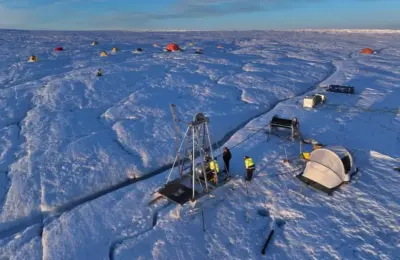
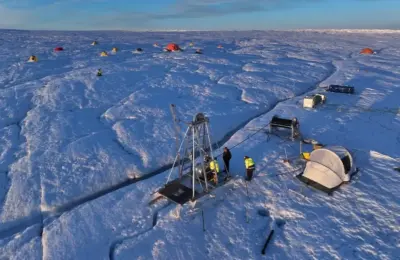
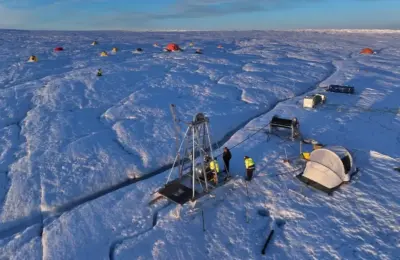
Methane is intrinsically linked to several positive climate feedback loops that threaten to accelerate global heating. The thawing of Arctic permafrost—both on land and beneath the ocean—releases vast stores of frozen organic matter and trapped methane hydrates, a process already driving measurable increases in high-latitude emissions. Similarly, more frequent and severe wildfires fueled by a warming climate release substantial quantities of carbon dioxide and methane, further compounding atmospheric concentrations.

The "Bridge Fuel" Debate and Liquefied Natural Gas
The rapid expansion of natural gas production, particularly through hydraulic fracturing and the global trade of liquefied natural gas, has intensified debates over the fuel’s role in the energy transition. While proponents argue that natural gas serves as a cleaner "bridge fuel" because burning it emits less carbon dioxide than coal, this perspective frequently overlooks upstream methane leakage. Studies indicate that even minimal leakage rates during extraction and transport can render LNG as warming over a 20-year timeline as coal, potentially undermining global climate targets.
Public Health Impacts and Reduction Pathways
Beyond its climatic influence, atmospheric methane reacts with other compounds to generate ground-level ozone, a harmful pollutant responsible for hundreds of thousands of premature deaths annually from respiratory and cardiovascular illnesses, alongside widespread damage to agricultural crops. Mitigating methane yields immediate public health and food security benefits.
A combination of systemic transformations and technological interventions can address these emissions. Within agriculture, dietary shifts toward plant-based proteins, reductions in food waste, and the implementation of feed additives such as specialized seaweeds and chemical inhibitors can drastically curb enteric emissions. Enhanced manure management and alternative wetting and drying techniques in rice paddies offer further mitigation potential.

For the energy sector, transitioning rapidly to renewable energy sources while rigorously deploying leak detection and repair technologies, vapor recovery units, and infrastructure electrification can substantially reduce ongoing fossil fuel emissions. Waste management improvements, including enhanced landfill gas capture and advanced wastewater treatment, provide complementary pathways toward achieving international climate goals outlined in frameworks such as the Global Methane Pledge.