The Resident Evil movie reboot has officially arrived, marking a major cinematic event directed by one of the most prominent names in modern horror: filmmaker Zach Cregger. Having previously terrified and delighted audiences with his critically acclaimed features Barbarian and Weapons, Cregger has wasted no time proving himself behind the wheel of Capcom’s legendary survival horror franchise. The new film is already off to a phenomenal start, securing a strong 8 out of 10 score from IGN reviewers, landing comfortably in the 90s on both Rotten Tomatoes critic and audience meters, and pacing itself to break franchise box-office records by surpassing the 2010s-era Resident Evil: Afterlife.
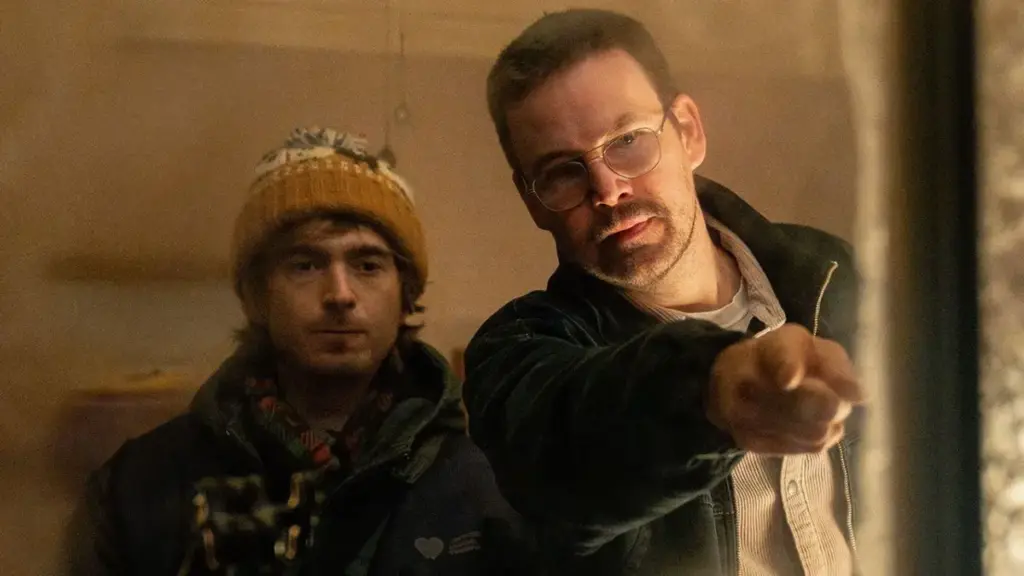
Despite the widespread critical acclaim and financial success, the road to the film’s release was not without its hurdles. IGN’s Tom Jorgensen recently sat down with Cregger and the film’s lead star, Austin Abrams—who portrays Bryan, an ill-fated medical courier caught in the middle of a nightmare—to unpack the journey. The candid discussion covered everything from navigating pre-release fan skepticism and capturing the authentic "video game feel" on film to the harrowing on-set near-miss involving a 150-pound bag of blood.
Navigating Fan Expectations and the Legacy of the Games
Before the reboot hit theaters, social media and online forums were rife with spirited debates regarding how faithfully Cregger’s vision would adapt the beloved source material. Speaking on the divided fan response, Cregger admitted that he may have underestimated the intensity of the fanbase’s preconceived notions.
"A little bit of a conversation?" Cregger joked when Jorgensen brought up the online discourse, before acknowledging the friction. "I think I was naive when I… I thought that fans of these games like me would be thrilled that somebody was coming along and turning Resident Evil into a survival horror movie. And I was like, ‘That’s great.’ I did not really appreciate the sentiment of ‘We’ve been waiting forever for Leon’s story.’ And I appreciate that. And I’m sorry that that’s not the story that I’m bringing here. I mean, I get it. I understand the frustration."
Cregger noted that his understanding of the fans’ hesitation stems from his own perspective on previous cinematic adaptations. Having avoided earlier franchise entries because they did not align with his personal vision of what Resident Evil should look like, he harbors no ill will toward skeptical players. Instead, he expressed hope that audiences will look past their initial disappointment regarding omitted storylines and recognize the profound affection poured into the production.
"This is not just me telling a story and slapping Resident Evil on it so I can get a budget," Cregger emphasized. "This is me telling a Resident Evil story. I understand the resistance. I really do, because I have it myself. But it is coming from a true place of love."
Translating the Active Experience to a Passive Medium
Historically, video game adaptations have notoriously struggled to bridge the gap between the active, participatory nature of playing a game and the passive experience of watching a film. To overcome this hurdle, Cregger chose to bypass strict narrative scene-for-scene replications, focusing instead on recreating the visceral feeling of playing a Resident Evil title.
"Well, there’s a lot of answers to that question," Cregger explained. "The first thing that comes to mind is the camera work. I’m using the language of the games in the camera work. So I’m staying rooted in that third-person, over-the-shoulder with a big wide lens [style], which is how all of these games are. That’s their language. And so that was a really fun thing, is to just almost one-to-one the visual language of the games in there."
This philosophy extended to the film’s pacing, tone, and progression. Cregger deliberately leaned into survival horror elements—establishing a suffocating sense of dread, forcing characters on grueling journeys on foot, and emphasizing resource scarcity where a protagonist might find themselves wounded with only two shotgun shells left. He also integrated core series ingredients like the T-virus, the Umbrella Corporation, and weapon progression, starting characters off with a basic pistol before graduating to shotguns and submachine guns against increasingly lethal mutants.
Austin Abrams praised Cregger’s meticulous control over the production’s visual grammar, noting that the complex camera choreography required a careful dance between actors and operators. Because many sequences were captured in unbroken, dynamic takes, maintaining a spontaneous yet precise feel was paramount. Abrams admitted that he felt comfortable trusting the director precisely because of Cregger’s deep, firsthand familiarity with the games.
"If it was someone else that wasn’t as much of a fan, that wasn’t as passionate about the games, I wouldn’t have felt comfortable," Abrams noted.
Reimagining the Threat of the T-Virus
In earlier promotional breakdowns, Cregger pointed out that traditional, vanilla zombies actually occupy a relatively small portion of the runtime, a revelation that caught some purists off guard. Addressing this creative choice, Cregger clarified that the narrative simply unfolded organically around the broader potential of the source material.
"It’s not that that was not important," Cregger said. "As I was writing the story, it’s just the story. I’m a big fan of letting the story tell itself to me, and this is the way the story naturally unfolded. I think I maybe shouldn’t have said that, because I think there are more scenes than I mentioned that have zombies. I didn’t expect people to really grab onto that as a bad thing. You don’t know what the other things are, so how can you get mad at this yet? The T-Virus is more interesting than just zombies. You know what I mean? The T-Virus can do all sorts of fascinating things with organic matter. So why would I not utilize that as much as possible?"
Crafting an Original Hero and Maintaining Relentless Momentum
For Abrams, stepping into the world of Resident Evil via an entirely original character—Bryan, the unfortunate medical courier—offered a liberating creative runway. Without the weight of preexisting fan expectations tied to legacy heroes, Abrams and Cregger were able to sculpt a protagonist driven by good intentions and pure desperation.
Rather than drawing direct inspiration from classic horror archetypes, Abrams built Bryan’s performance around a unique cinematic trifecta. "We found as we were going that there were character inspirations," Abrams explained, pointing to a mix of Marty McFly, Kevin McCallister, and John McClane. "Oscillating between the three of those guys… [the] person that is just ill-equipped to deal with it, which just makes it more fun I think for everyone."
That sense of being ill-equipped directly fed into Cregger’s overarching structural goal for the film: maintaining a relentless, adrenalized momentum from start to finish. While his previous works like Barbarian and Weapons incorporated narrative lulls and deliberate story-building pacing, the director wanted to approach Resident Evil by flooring the accelerator.
"Is it possible to make a movie that is adrenalized for 85% of the movie?" Cregger asked. "There are a couple of moments of little lulls here and there, but really, this movie is like tension, release, tension, release, tension, release. Can you stick with that for the runtime? That is a unique challenge."
Close Calls and Real-World Terror
The intense production environment also yielded memorable behind-the-scenes mishaps, most notably during the chaotic sequence where zombies fall from a rooftop. Abrams narrowly avoided serious injury when a massive, 150-pound bag of stage blood swung dangerously close to him during a take.
"I remember running and then being like, ‘Oh, whoa, that was close,’" Abrams recalled. "And I kept to my line and thankfully there weren’t any slips or anything like that. And then afterwards people being like, ‘Oh dude, that was…’"
Cregger quickly chimed in with a laugh, noting that he immediately dragged his lead actor over to the playback monitor to review the terrifying near-miss—footage that ultimately made the final cut of the film.
Reflecting on their own histories with the horror genre, both men pointed back to interactive media as the ultimate source of genuine dread. Abrams cited Dead Space as an experience that proved too intense to finish, while Cregger recounted a particularly harrowing encounter with modern gaming.
"Not the first time, but the most effective was Resident Evil 8," Cregger shared. "I played in VR, and that baby in the basement. It actually scared me so bad I had to stop. And I don’t think I’ve ever noped out of anything as an adult, but that did it. In VR, dude, it was too intense."