


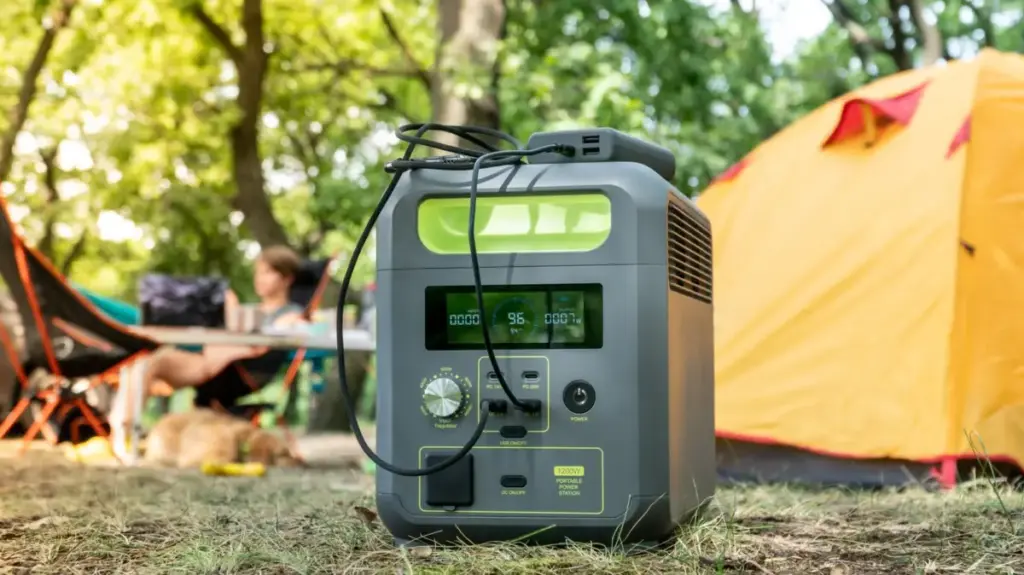
Determining the true stamina and endurance of a portable power station is considerably more complicated than simple arithmetic might suggest. In an era increasingly defined by an absolute reliance on smartphones, laptops, and various other electronic essentials, consumer interest in backup power has surged dramatically. For anyone bombarded by online advertisements for these devices over the last several years, the trend is undeniable. While compact power banks are well-suited for everyday mobile top-ups, they simply cannot handle the heavy demands of a prolonged power outage. Consequently, portable power stations have transitioned from niche camping accessories and job-site necessities into mainstream household resilience tools.
A critical evaluation that every prospective buyer must make is determining how much power is genuinely necessary for their specific situation. A prevailing consumer misconception is that purchasing the largest available model is always the wisest choice. However, high-end, multi-kilowatt power stations are not only exceptionally expensive—often costing as much or more than the very appliances they are intended to run—but they are also significantly bulkier and heavier. These larger units can require genuine physical effort to transport, making them impractical for users seeking straightforward portability.
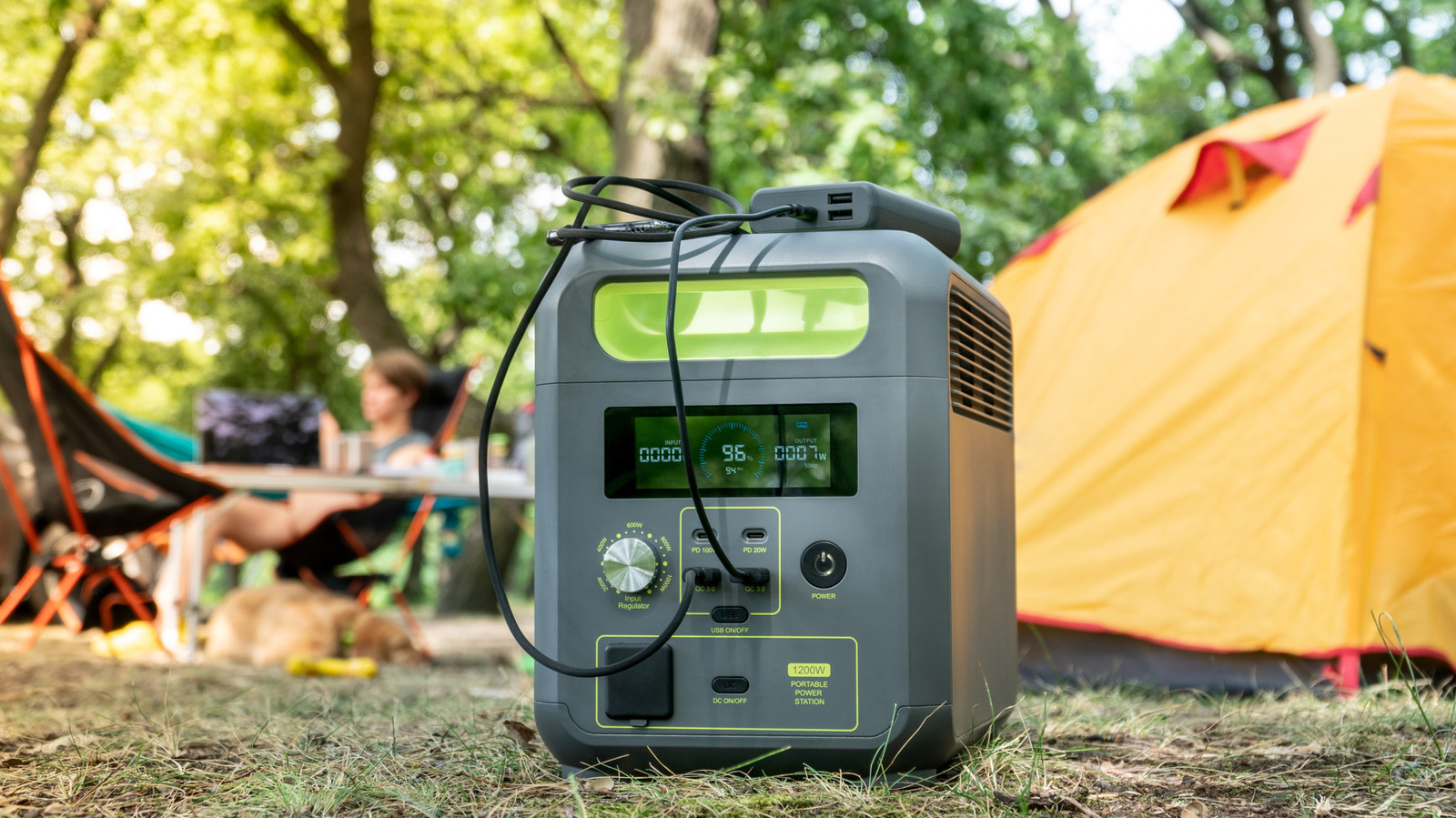
To understand these dynamics, examining a standard 1,000 watt-hour (Wh) power station serves as a useful baseline. Whether facing an unexpected blackout at home or trying to maintain electronic connectivity while camping in a remote area, understanding how long a 1,000Wh supply will actually last yields surprisingly complex answers. The total runtime depends heavily on what devices are plugged into the station, how those devices are actively operating at any given moment, and the underlying efficiency of the power station itself as it converts stored energy for external use.
The Real-World Limits of a 1,000Wh Power Station
The market offers a wide variety of robust power solutions from prominent brands such as Anker, EcoFlow, and Jackery. Considering a typical mid-range offering, such as the Jackery Explorer 1000 v2, provides a clear lens into the practical mathematics of portable energy. Rated at 1,024Wh and capable of delivering up to 1,500W of continuous power output, basic arithmetic suggests straightforward expectations. On paper, dividing the station’s total capacity by the wattage of an appliance implies that a standard 200W refrigerator could run for over five hours, or that a 65W laptop could operate continuously for well over 15 hours.
In actual practice, however, manufacturers themselves offer more conservative estimates. Jackery’s own performance projections suggest closer to four hours for that same refrigerator and roughly 11 hours for the laptop. The discrepancy between theoretical math and real-world performance stems from the fundamental physics of power conversion. When a user plugs a device into a power station’s AC outlet, stored direct current (DC) power must be converted into alternating current (AC) power through an internal inverter. This conversion process is never one hundred percent efficient, typically resulting in an energy loss of anywhere from five to twenty percent. Furthermore, overall system efficiency can be degraded even further if users plug in secondary wall adapters, such as those included with phones and tablets, which force the electricity to undergo yet another conversion cycle back into DC power.
Compounding this conversion loss is the reality that device power consumption is rarely static in real-world scenarios. A high-performance gaming laptop, for instance, might sip only a few dozen watts of power while idling or performing basic web browsing, but its energy demands can skyrocket well past 200W when running intensive applications or rendering graphics. Similarly, even a standard smartphone experiences constant ebbs and flows in power draw depending on active tasks. Streaming high-definition video over a cellular network requires substantially more electrical juice than simply performing routine background tasks or checking notifications.
What You Can Do to Stretch Out a Power Station’s Runtime
Maximizing the usable runtime of a portable power station requires a combination of smart connection strategies, environmental management, and long-term battery care. As a foundational rule, whenever a power station is equipped with built-in USB ports, users should plug mobile phones, tablets, and other compatible electronics directly into those ports rather than utilizing standard AC outlets. Bypassing external wall bricks and tapping directly into the station’s native DC outputs significantly reduces the energy inefficiencies introduced by multiple power conversions. Additionally, this practice leaves the valuable AC outlets free for larger, critical appliances that have no alternative connection method.
Environmental conditions also play a surprisingly vital role in battery performance and output longevity. While models like the Jackery 1000 are structurally rated to discharge electricity across a broad temperature range spanning from 14 to 113 degrees Fahrenheit, the optimal operational sweet spot for their internal lithium iron phosphate (LiFePO4) chemistry typically hovers between 59 and 95 degrees Fahrenheit. Batteries subjected to extreme cold or excessive heat experience a reduction in deliverable power efficiency. Simply storing and operating a power station in a shaded, well-ventilated area can make a measurable difference in overall energy output during critical moments.
Looking at the broader lifespan of the equipment, users must also consider the cumulative impact of regular charging cycles. A distinct difference exists between total battery capacity and overall battery health. Much like any rechargeable electronic device, the usable capacity of a portable power station naturally diminishes over time, driven largely by the number of complete charge-and-discharge cycles it undergoes. While a kilowatt-level supply provides a substantial energy buffer, treating the station as a primary power source rather than an emergency reserve can lead to premature degradation. Being mindful of these underlying technical realities ensures that users can extract maximum value and reliability from their portable power investments when they are needed most.