


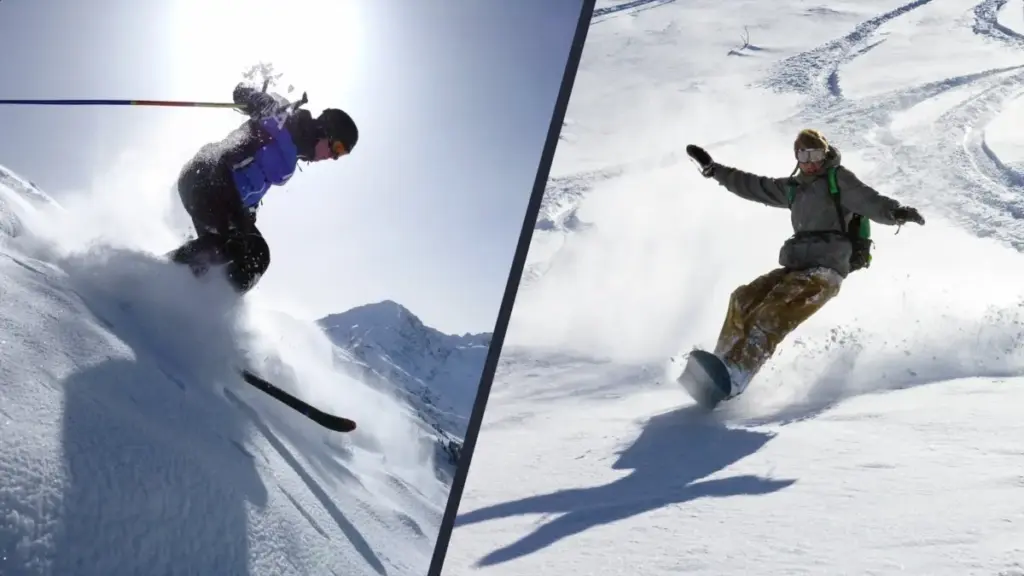
When winter weather blankets the mountains and ski resorts open their lifts to eager crowds, millions of outdoor enthusiasts face a classic seasonal dilemma: should they strap into a snowboard or click into a pair of skis? Both winter pastimes offer an exhilarating rush of adrenaline, stunning alpine scenery, and a formidable test of physical agility. Yet, both sports come with inherent risks that are as old as the sports themselves. For decades, winter sports enthusiasts, athletes, and medical professionals have debated whether skiing or snowboarding is ultimately the more dangerous choice.
According to recent research published in the medical journal Health Science Reports, the definitive answer to that question is far from simple. Instead of a clear-cut winner or loser, the safety profiles of skiing and snowboarding appear to depend heavily on an individual’s skill level and experience on the mountain. The comprehensive study, which analyzed existing data from numerous international trials, suggests that snowboarding may present a higher risk of injury at the elite or professional level, whereas skiing tends to pose greater risks for recreational participants and weekend amateurs.
The findings offer valuable insight into the mechanics of alpine injuries, shedding light on the distinct physical demands of each sport and providing actionable guidance for how recreational skiers and snowboarders can better protect themselves while enjoying the powder.
Understanding the Data: Professionals Versus Amateurs
To arrive at these conclusions, the authors of the study conducted a thorough systematic review, analyzing data from 82 separate studies that tracked injuries across both skiing and snowboarding. By synthesizing this extensive body of research, the investigators were able to compare injury rates across different tiers of participation, revealing stark contrasts between professional athletes pushing the limits of extreme sports and everyday enthusiasts seeking weekend recreation.
Among professional alpine skiers, the data showed a relatively low incidence rate of injuries during formal competition and training. When adjusted for scale, professional alpine skiers reported roughly two injuries for every 100,000 runs. By contrast, professional snowboarders faced a significantly higher hazard profile, registering approximately 380 injuries per 100,000 runs. This dramatic disparity among elites reflects the high-flying nature of modern professional snowboarding, which often involves massive air time in halfpipes, boardercross events, and complex terrain park maneuvers where high-velocity impacts are common.
However, when the focus shifts from elite athletes to recreational participants, the statistical landscape shifts in the opposite direction. Among amateur alpine skiers, the review revealed an incidence of about four injuries per 1,000 days spent on the slopes. Meanwhile, recreational snowboarders reported roughly one injury per 1,000 snowboarding days.
Despite these figures, medical experts urge caution against making hasty generalizations or using the raw numbers to alter recreational habits. Dr. Sabrina Sawlani, a primary care sports medicine physician and assistant clinical professor in the department of orthopedic surgery at UCLA Health in Los Angeles, noted that the apparent reversal in risk among amateurs comes with important caveats. Dr. Sawlani, who was not involved in the published study, pointed out that only a small subset of the reviewed literature focused specifically on recreational snowboarding, and those studies yielded widely varying results. Consequently, she advises against using those specific metrics to steer a casual weekend skier toward snowboarding simply under the assumption that it is statistically safer.
Furthermore, a significant limitation inherent in evaluating snowsports literature is the lack of a standardized definition for what constitutes an "injury." Across the 82 studies examined in the review, researchers defined injuries in various ways—ranging from minor contusions and scrapes that required no medical attention to severe fractures and ligament tears requiring surgical intervention. Interpreting these results therefore requires careful contextualization, as varying definitions can easily skew incidence rates.
Analyzing the Most Common Injuries on the Slopes
The patterns of injury observed in the research underscore how differently the human body interacts with snow depending on the equipment attached to the feet. Among professional skiers and snowboarders, upper limb injuries—such as collarbone fractures, shoulder dislocations, and wrist trauma—were found to be the most common. These were followed closely by injuries to the trunk, a broad anatomical category that encompasses the chest, torso, abdomen, pelvis, and back.
In contrast, recreational participants experience a distinctly different profile of trauma. Among amateurs, limb injuries were the most prevalent overall, with lower extremities bearing the brunt of the impact. Knee injuries, in particular, remain a notorious hazard for recreational skiers. Overall, fractures and sprains emerged as the most frequently reported diagnoses among amateur snowsports enthusiasts, with falls identified as the single most likely mechanism of injury.
According to the study’s insights, these divergent injury patterns are driven by the specific operational environments of the participants. Professional athletes regularly encounter extreme terrain, steep alpine pitches, high velocities, and high-consequence acrobatic maneuvers. Amateurs, on the other hand, typically sustain injuries due to a combination of poor foundational technique, inadequate physical conditioning, and unexpected falls on gentler or moderately steep slopes.
As a primary care sports medicine physician who routinely treats active patients, Dr. Sawlani observed that what consistently stands out in a clinical setting is how frequently a recreational injury originates from a remarkably ordinary, low-speed fall. Whether it is an awkward tumble while exiting a chairlift or a minor loss of balance on a beginner run, these seemingly benign incidents can result in significant orthopedic damage if the body absorbs the kinetic energy improperly. Understanding these patterns, she noted, allows medical professionals and instructors to tailor injury prevention strategies directly to the specific sport and the exact style of skiing or riding an individual prefers.
Practical Steps to Enhance Safety on the Mountain
While the risks associated with downhill snowsports cannot be entirely eliminated, experts emphasize that an individual’s vulnerability tends to decrease as experience, technique, and physical awareness improve. Moreover, regardless of whether someone is a seasoned veteran or a first-time beginner stepping onto the snow for the very first time, several straightforward precautions can drastically reduce the likelihood of a trip to the medical clinic.
For both disciplines, foundational safety gear and professional instruction are paramount. Wearing a well-fitting, certified snowsports helmet is universally recommended by medical professionals to mitigate the risk of traumatic head injuries. Beginners are strongly encouraged to invest in a lesson with a certified instructor rather than attempting to self-teach. Instructors not only provide foundational technical advice but also teach participants the mechanics of how to fall safely—a skill that can prevent awkward twists and impacts—as well as how to comfortably control speed and execute stops on gentle terrain before advancing to steeper runs.
Specific equipment considerations also play a critical role in injury mitigation. Snowboarders are frequently advised to wear wrist guards, which can absorb the force of impact during the natural tendency to break a fall with outstretched hands. Skiers, conversely, need to pay close attention to their hardware setup. Dr. Sawlani recommends having a qualified, professional ski technician inspect boot fit and binding-release settings prior to hitting the slopes. A proper ski binding must strike a delicate balance: it needs to remain securely locked during aggressive turns while reliably releasing when appropriate during a fall to prevent severe rotational injuries to the knee and lower leg.
Environmental awareness and personal physical limits are equally vital components of slope safety. Dr. Sawlani cautions against maintaining high speeds during low-visibility days, such as heavy snowstorms or dense fog. Skiers and snowboarders should always maintain a pace that allows them to come to a complete stop within the visible stretch of slope ahead of them.
Finally, fatigue management remains one of the most effective ways to avoid injury at the end of a long day on the mountain. As leg muscles tire and turns begin to lose their precision, the margin for error narrows significantly. When fatigue sets in and technique starts to slip, recognizing the warning signs and choosing to skip that final run of the day can make the difference between a memorable winter vacation and a long recovery.