

It is a dilemma that has faced generations of hardware enthusiasts and budget-conscious gamers alike: comparing the specialized architecture of a dedicated home console to the modular, open-ended ecosystem of a custom-built gaming PC often feels a bit like comparing apples and oranges. In an era where acquiring new technology has become increasingly punishing to the wallet, consumers are forced into a tech-savvy form of a Sophie’s Choice. Gamers must carefully weigh whether to invest in a current-generation console like the PlayStation 5 or meticulously source the components for the most affordable gaming PC they can assemble for a comparable sum. This brings up a fundamental question of value: does mid-range PC gaming genuinely offer enough superiority to justify the steep financial barrier compared to what current consoles can provide?
As Sony and AMD continually tease the upcoming GPU technologies they are developing for future PlayStation iterations, it is completely understandable why consumers want to compare and contrast modern console hardware with PC components. For those fortunate enough to already own a PS5 Pro—particularly with massive upcoming blockbusters like Grand Theft Auto VI looming on the horizon—sticking with existing hardware is often the most sensible path. Of course, there are specific scenarios where high-end gamers and pixel-counting enthusiasts may still find compelling reasons to invest heavily in PC hardware. Evaluating when those particular scenarios actually make financial and performance sense requires peeling back layers of hardware specifications, architectural differences, and current market realities.
What GPU Offers the Same Power as the PS5?
At first glance, attempting to map a console’s capabilities directly onto a desktop graphics card is a somewhat awkward proposition, yet it remains one of the most frequently asked questions in hardware forums. For anyone already content with the performance of their base PS5, the advice from seasoned builders is simple: continue enjoying the system you have. Having observed the evolution of the hardware market for decades, experienced custom builders note that assembling a brand-new, custom-built gaming rig from scratch has become a daunting financial endeavor. This is particularly true during periods where memory pricing volatility and shifting market dynamics—sometimes colloquially referred to by builders as periods of "RAMaggeddon"—have severely skewed the costs of essential computer components.
However, for those determined to uncover which desktop graphics card most closely aligns with the base PlayStation 5’s graphical processing architecture, hardware analysts and frame-counting experts have provided a baseline, albeit with significant caveats. According to performance evaluations from technical breakdowns like those produced by Digital Foundry, the desktop graphics card that serves as the closest performance match to the base PS5’s internal architecture is the NVIDIA GeForce RTX 2070 Super.
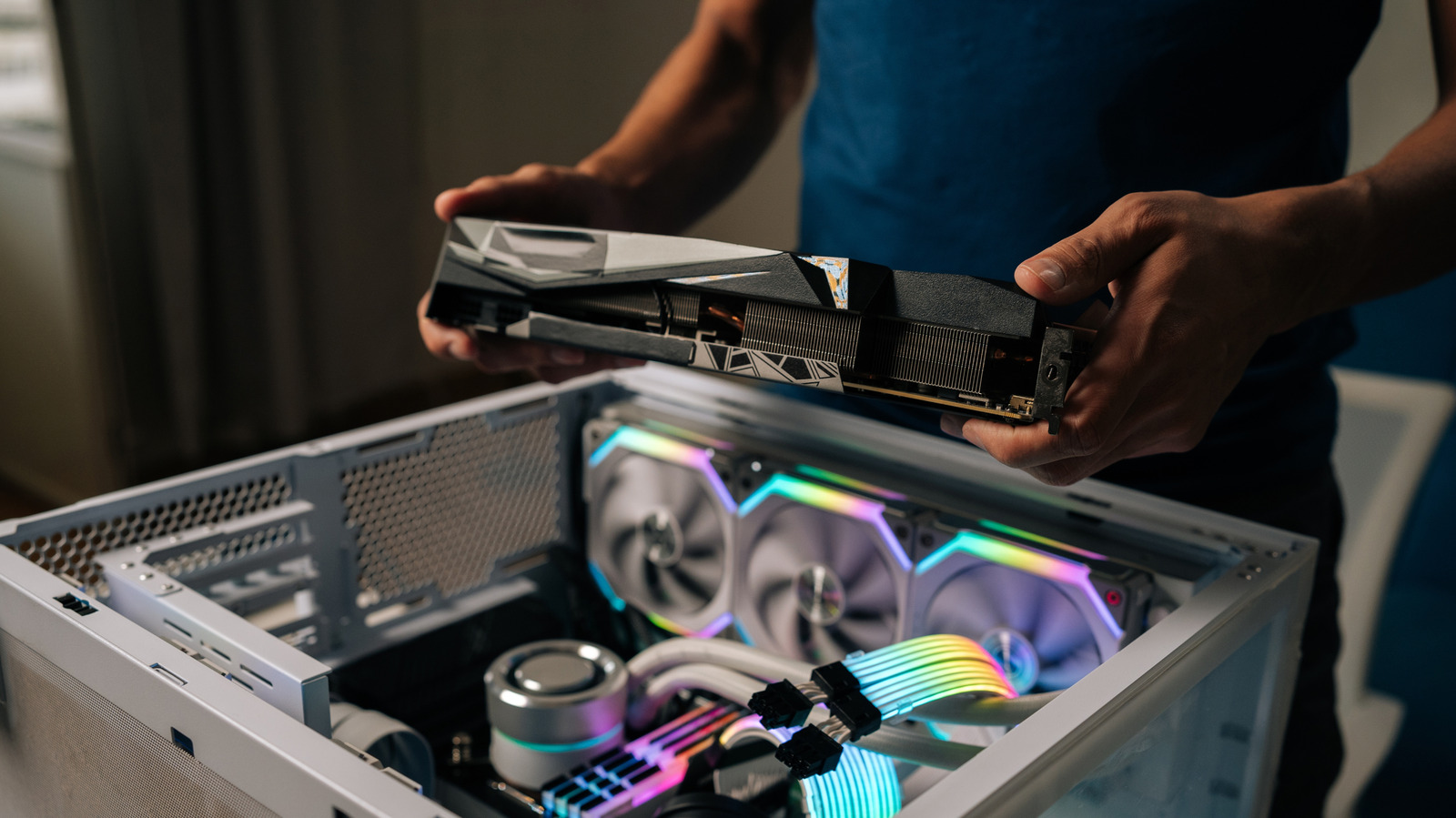
It is important to note that the PS5 utilizes an Accelerated Processing Unit (APU) rather than a discrete GPU. This means the console relies on a single, centralized chipset designed to handle both graphics and central processing tasks simultaneously, much like its Microsoft competitor, the Xbox Series X. By contrast, the RTX 2070 Super is a dedicated desktop graphics card that is now multiple generations old, meaning it can hardly be considered a cutting-edge piece of modern hardware.
Driven by shifting market demands and an industry-wide obsession with artificial intelligence infrastructure, pricing for older components has experienced unusual fluctuations. A pre-owned or remaining model of this older card can still command notable prices on the second-hand market, representing a substantial fraction of the cost of a modern digital-edition console. For anyone navigating the complexities of purchasing graphics hardware, industry veterans strongly advise looking closely at the second-hand market. The retail cost of brand-new, current-generation desktop cards has reached such extreme heights that dropping a significant sum on a GPU originally launched in 2019 requires careful deliberation.
From a purely specification-based perspective, the RTX 2070 Super features 8GB of GDDR6 video memory. However, this does not translate into a direct apples-to-apples comparison with the PS5’s architecture, which utilizes a 16GB system-wide pool of unified GDDR6 memory shared across the entire system. While the RTX 2070 Super is fully capable of producing PS5-level performance under the right environmental and optimization conditions, mapping a console’s custom APU directly onto Team Green’s aging desktop hardware is far from a straightforward calculation.
Is the RTX 5060 Stronger Than the PS5 Pro?
Moving further up the performance ladder, hardware surveys from platforms like Steam illustrate shifting trends in consumer hardware adoption, with lower-to-mid-range desktop cards capturing significant market share among PC players. These modern mainstream GPUs often support advanced upscaling technologies and feature modern memory standards, such as GDDR7 video memory, paired with high base clock speeds. Yet, finding these current-generation mainstream cards at retail without substantial markups remains a challenge for budget-minded builders.
On the console side of the spectrum, Sony introduced the supercharged PlayStation 5 Pro to the market at a notably higher price point, with supply constraints and high-profile software releases like GTA VI only compounding the friction in the hardware ecosystem. Examining the technical specifications of the high-end console reveals that it relies on a custom AMD Zen 2 eight-core, sixteen-thread processor architecture codenamed "Trinity." While this configuration represents a noticeable boost over the standard PlayStation 5 model specifically in terms of graphical throughput, the accompanying upgrade to the central processing unit is comparatively modest, estimated at roughly a ten percent increase.
Consequently, despite the implementation of advanced machine-learning upscaling solutions like PlayStation Spectral Super Resolution (PSSR), many titles running on the Pro console can still occasionally fall short of the robust mid-range PC performance results that users might expect from a high-priced hardware investment.
From a raw horsepower perspective, upper-tier mainstream graphics cards—such as the 16GB variants of NVIDIA’s mid-range lineup and comparable offerings from AMD’s Radeon stable—provide performance metrics that closely rival the raw processing power of the PS5 Pro. Yet, once again, this is not a strict like-for-like comparison. Equipped with appropriate graphical settings tweaks and supported by a capable modern gaming processor, either of these desktop cards possesses the capability to outgun Sony’s prosumer console. Despite this performance ceiling, the inherent simplicity, streamlined software ecosystem, and plug-and-play nature of a dedicated console continue to hold immense appeal for players who simply want a frictionless experience for major upcoming releases.
Why Comparing a Graphics Card to a Console GPU is Complicated
There are numerous fundamental reasons why making direct comparisons between open-ended personal computer setups and closed-source console hardware is inherently difficult. When analyzing the standard PlayStation 5, observers are evaluating a custom AMD RDNA 2 graphical architecture that operates in tandem with a central processing unit on a single, unified silicon chip. There is no direct, identical counterpart to this specific hardware design within the traditional desktop PC marketplace. Despite these hardware differences, console developers have consistently managed to achieve smooth frame rates and high-resolution output using clever optimization techniques, variable resolution scaling, and proprietary software features.
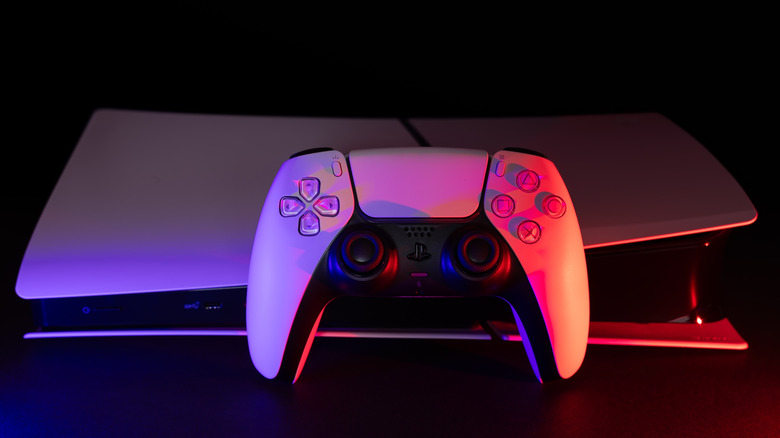
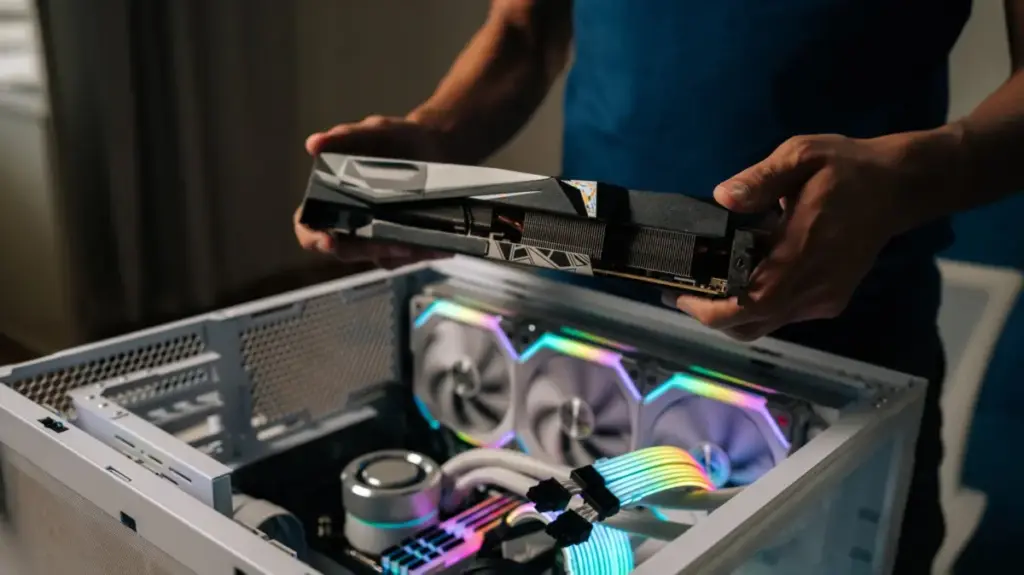
While desktop components like the older RTX 2070 Super can generally match console performance levels in specific titles, that equivalence exists strictly through the narrow lens of that single graphics processor’s capabilities. It completely overlooks the broader, system-wide hardware environment of a modern gaming PC, which requires a balanced combination of high-speed system memory, a powerful motherboard, adequate cooling, and a robust central processor to truly rival the performance output of a modern console.
The choice of central processor and the total capacity and bandwidth of the system memory paired with a console-tier graphics card matter immensely. Selecting a weak processor will quickly introduce performance bottlenecks, leaving a system CPU-bound and unable to deliver optimal framerates regardless of how powerful the graphics card might be. Assembling or purchasing a complete gaming PC requires weighing a multitude of financial and technical factors, particularly during periods of economic uncertainty.
For consumers primarily interested in high-resolution gaming without the hassle of troubleshooting drivers, managing background applications, or spending upwards of a thousand dollars on individual components, a dedicated console remains an exceptionally practical solution. Given the typical multi-year lifecycle of Sony’s hardware ecosystem, players who invest in a PlayStation platform can generally expect years of consistent software support, removing the immediate pressure to constantly upgrade individual components.
Ultimately, both the standard PlayStation 5 and the enhanced PlayStation 5 Pro stand as formidable gaming systems. By leveraging customized AMD APU technology, they consistently deliver polished visual fidelity and smooth frame rates to millions of living rooms. While mid-range desktop graphics cards—when paired with adequately powerful gaming processors—can certainly push past console limits, they demand a significantly higher financial investment. For gamers seeking stable performance with modern graphical features without breaking the bank, console hardware remains a reliable option, whereas enthusiasts chasing maximum framerates and absolute hardware customization will continue to find their home within the PC ecosystem.