

While enduring science fiction franchises like Star Wars, Star Trek, and the Alien universe have captivated audiences for decades with sprawling mythologies, expansive galaxies, and endless sequels, there is a distinct charm to a story that knows exactly when to conclude. For viewers seeking the boundless imagination of speculative fiction without the multi-season commitment, the miniseries format offers an ideal balance. These self-contained narratives allow creators to build intricate alternate realities, ponder profound philosophical questions, and deliver high-stakes drama that can be fully digested in a single weekend.
Although science fiction content is abundant across modern streaming platforms, relatively few genre productions manage to make an unforgettable, cohesive impact within a limited episode count. Series like The Expanse or Westworld understandably require years of television real estate to properly flesh out their massive, multi-season arcs. Conversely, a select group of exceptional science fiction miniseries manage to accomplish an extraordinary amount with significantly less runtime. Whether viewers are searching for pulse-pounding action or deeply contemplative philosophical tones, these eight productions deliver a near-perfect viewing experience capable of wrapping up in just a few days.
Station Eleven
Stories set within a post-apocalyptic dystopia typically demand a considerable amount of runtime merely to establish the rules, geography, and social hierarchy of their desolate worlds. However, HBO Max’s Station Eleven bypasses conventional pacing entirely, rewarding audiences with ten enthralling episodes that register with immense emotional weight from the very first frame. Taking place two decades after a devastating flu pandemic effectively collapses modern human civilization, the narrative follows a resilient band of survivors who carve out a nomadic existence by performing classical theatre and Shakespearean plays.
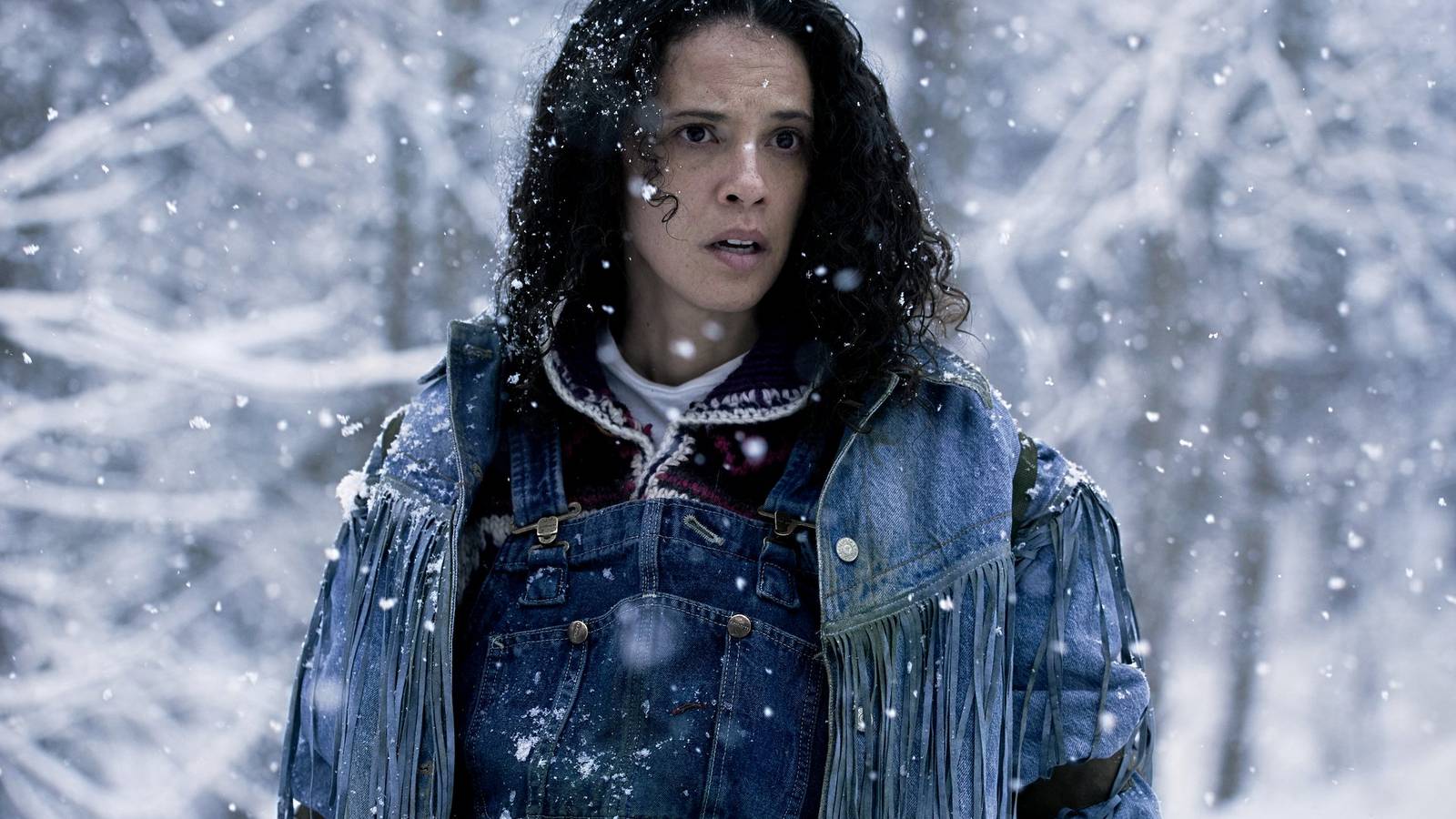
Rather than leaning into lazy nihilism or cynical tropes, Station Eleven frames grief as a universal, shared language connecting those who lived through the collapse, highlighting how they attempt to heal through collective artistic expression. While the series does feature moments of violent conflict and the raw dangers of a lawless earth, its ultimate resolutions feel deeply earned and satisfying, elevating the post-apocalyptic genre into a profound meditation on art, memory, and human connection.
Watchmen
Following his acclaimed work as showrunner for monumental television mysteries like Lost and The Leftovers, Damon Lindelof turned his attention to Alan Moore and Dave Gibbons’ legendary 1986 comic book, crafting a bold and provocative continuation for HBO titled Watchmen. Rather than executing a straightforward adaptation, the miniseries serves as a thematic sequel, following the legacy of iconic heroes and morally ambiguous figures like Doctor Manhattan and Ozymandias while introducing an entirely new generation of characters to reflect how their alternate world has evolved over decades.
In this reimagined reality, a white supremacist domestic terrorist organization inspired by the violent ideology of the original comic’s Rorschach character wages a clandestine war against the Tulsa Police Department. To protect themselves and their families from targeted assassinations, law enforcement officers are legally forced to conceal their identities behind masks. Angela Abar, also known as Sister Knight and portrayed by Regina King, operates as a lead detective investigating a colleague’s murder. In doing so, she inadvertently stumbles upon long-hidden, systemic conspiracies tied to the history of vigilantism, which was outlawed years prior. Watchmen excels through its intricate puzzle-box plotting, anchoring speculative comic book mythos firmly in real-world historical trauma and a sophisticated understanding of how cultural power structures evolve.

Bodies
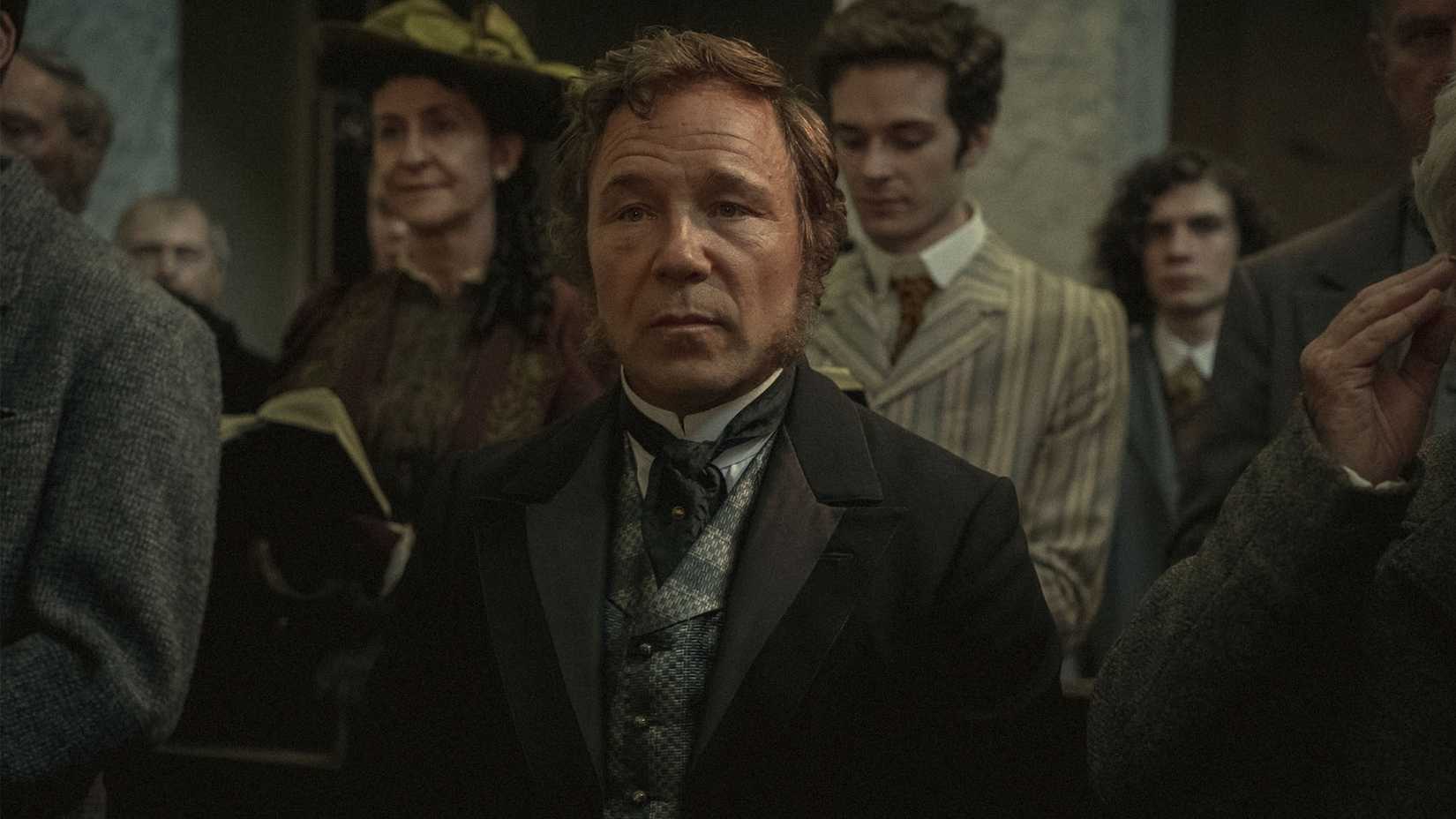
While ambitious time travel narratives like Netflix’s Dark have fundamentally elevated the complexity of science fiction storytelling, the eight-part British mystery Bodies successfully reinvigorates the subgenre through a tightly wound, multi-era investigation. Based on the graphic novel created by Si Spencer and Dean Ormston, the story begins with a shocking discovery: a single, identical corpse turns up in the exact same London neighborhood of Whitechapel across four completely separate historical periods—1890, 1941, 2023, and 2053.
The investigation is spearheaded by four distinct detectives operating within their respective eras, each approaching the baffling case through the unique psychological lens and social anxieties of their time. Watching a detective navigate a world scarred by the Blitz during World War II provides a starkly different viewing experience than observing a counterpart operating within the rigid social codes of the Victorian era. Featuring a remarkably talented ensemble cast, Bodies utilizes its time-spanning premise to deliver a captivating puzzle that makes for an ideal, engrossing watch over a rainy weekend.
Years and Years
Russell T Davies is widely celebrated by television audiences as the visionary driving force behind the triumphant modern revival of Doctor Who, but he also penned Years and Years, a dystopian science fiction drama of staggering emotional devastation. Set across a fifteen-year span between 2019 and 2034, the narrative tracks the daily struggles, triumphs, and heartbreaks of the extended Lyon family as they bear witness to the rapid degradation of democratic institutions and the meteoric political rise of a controversial, populist figure named Vivienne Rook, brilliantly portrayed by Emma Thompson.

Against a backdrop of intense political instability across Great Britain, rapid technological progress marches hand-in-hand with sweeping economic upheaval, directly altering the personal lives and financial security of the Lyon family members. Years and Years serves as essential viewing for enthusiasts of realistic science fiction that acts as a mirror to contemporary society, projecting a future that leans far more toward bleak plausibility than hopeful optimism. The chilling realism of its premise, coupled with Rook’s emergence as an antagonist with uncomfortable parallels to real-world political figures, cements its status as a uniquely effective cautionary tale.
FLCL
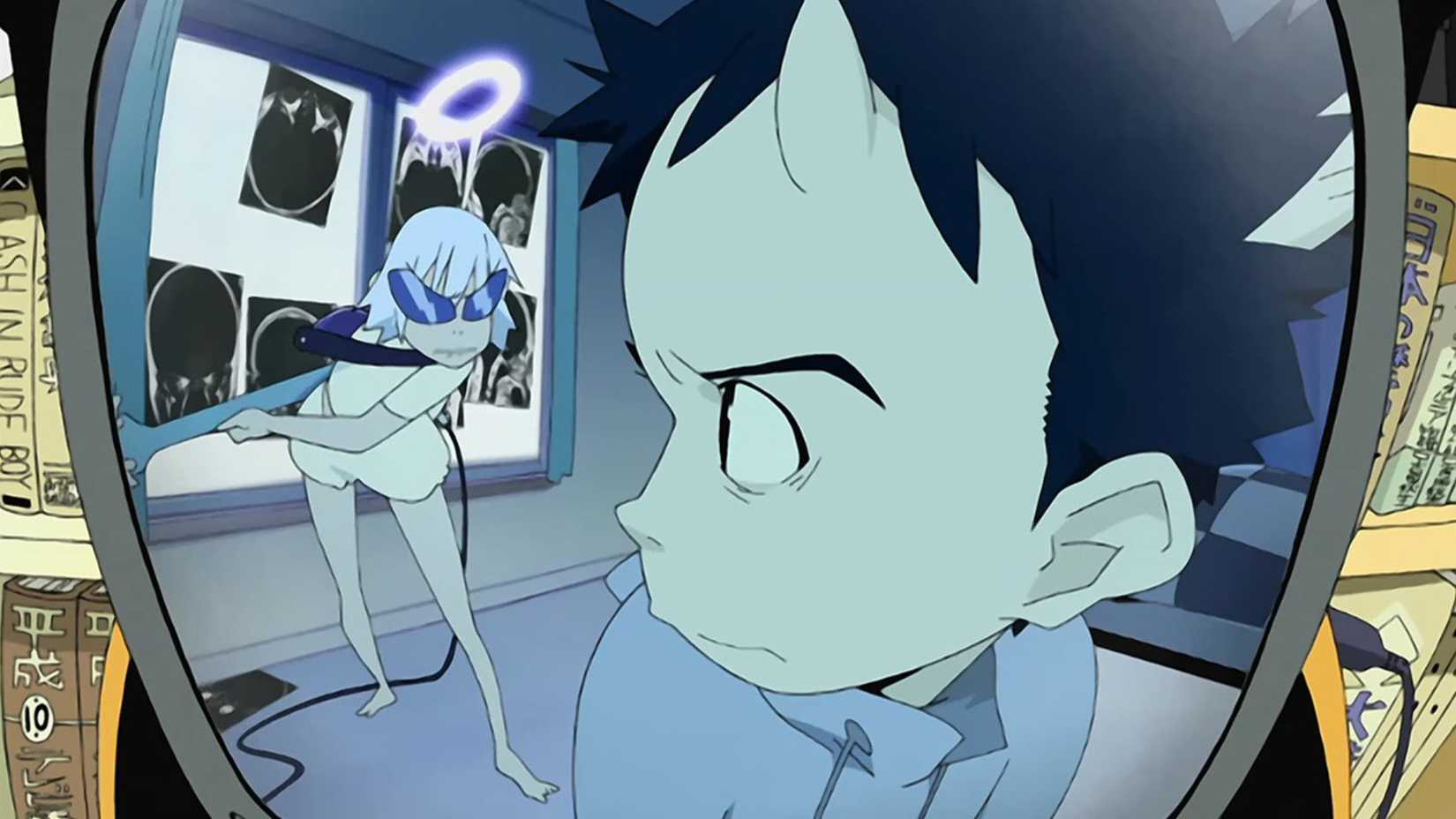
The original six-episode anime masterpiece FLCL stands as a masterclass in avant-garde storytelling and pure creative energy. The narrative centers on Naota Nandaba, a cynical twelve-year-old boy whose mundane, monotonous suburban life is completely upended by the sudden arrival of Haruko Haruhara, an eccentric and chaotic intergalactic investigator who promptly runs him over with a yellow Vespa before striking him across the head with a Rickenbacker bass guitar.
Following this bizarre accident, strange mechanical appendages, deadly weapons, and colossal robots begin emerging directly from inside Naota’s head. Haruko opportunistically utilizes these portals while pursuing her own mysterious, high-stakes mission across dimensions. Produced through a collaborative effort by Gainax and Production I.G, this coming-of-age adventure boasts a revolutionary visual identity defined by a seamless, energetic blend of traditional cel animation and early 3D computer graphics. By centering its chaotic sci-fi spectacle on flawed, deeply insecure characters, FLCL achieves a raw emotional resonance that remains unmatched in standalone animation.
Scavengers Reign
Though it faced the unfortunate fate of cancellation by Max following its initial run, the breathtaking animated sci-fi series Scavengers Reign retroactively functions as a magnificent, self-contained miniseries that delivers a mesmerizing and complete narrative experience. The plot follows the surviving crew members of a severely damaged interstellar cargo ship who find themselves marooned on a gorgeous yet hostile alien planet, where hyper-vivid vegetation and bizarre fauna conceal unpredictable, lethal hazards.
Although the stranded survivors are separated into distinct groups across the sprawling landscape, each faction bears witness to an intricate, unprecedented symbiosis connecting the flora and fauna of the region in ways defying standard biological logic. The alien planet effectively operates as a primary character in its own right, forcing the human protagonists to carefully study its shifting characteristics, behavioral cycles, and environmental rhythms merely to survive another day. Drawing heavily from a distinct, tactile 1990s animation aesthetic, Scavengers Reign evokes a hypnotic sense of beauty alongside a persistent, underlying environmental dread.
Devs
Alex Garland, celebrated internationally for cerebral cinematic science fiction masterpieces like Ex Machina and Annihilation, brought his signature atmospheric dread to television with Devs, an eight-episode techno-thriller that defies simple categorization. The plot is set in motion when a brilliant, secretive quantum computing firm named Amaya recruits Sergei, a talented young software engineer, to join its ultra-exclusive research division.
When a sudden tragedy strikes, Sergei’s girlfriend and fellow Amaya software engineer, Lily, embarks on a desperate mission to uncover the truth behind her partner’s disappearance. Her investigation quickly pulls her into a surreal, corporate labyrinth where reality itself begins to fracture. Devs showcases Garland at his most unnerving, utilizing a deliberate, slow-burn narrative structure that unpacks complex philosophical arguments regarding determinism, free will, and human consciousness. Supported by meticulous set design and an intricate plot, the miniseries keeps viewers hooked through its intellectual ambition.
V
No comprehensive exploration of science fiction television is truly complete without examining the classic alien invasion narrative, a trope brilliantly executed in Kenneth Johnson’s influential two-part miniseries V. The story begins as massive, saucer-shaped extraterrestrial vessels unexpectedly shadow Earth’s major metropolitan skylines. The visitors, led by a charismatic leader named Diana, extend a peaceful olive branch, claiming their home planet is dying and requesting raw materials in exchange for sharing their advanced technological and medical knowledge with humanity.
As world governments readily accept the extraterrestrial alliance, a subtle and terrifying global infiltration begins, with the visitors systematically securing powerful political and military positions across the globe. Rather than relying solely on conventional B-movie monster tropes, this landmark 1983 production uses its high-concept premise as a grounded, powerful political allegory examining the mechanics of fascism, totalitarian control, and grassroots human resistance. Bolstered by a documentary-style sense of realism and nuanced dramatic tension, V remains a towering achievement in serialized science fiction storytelling.