



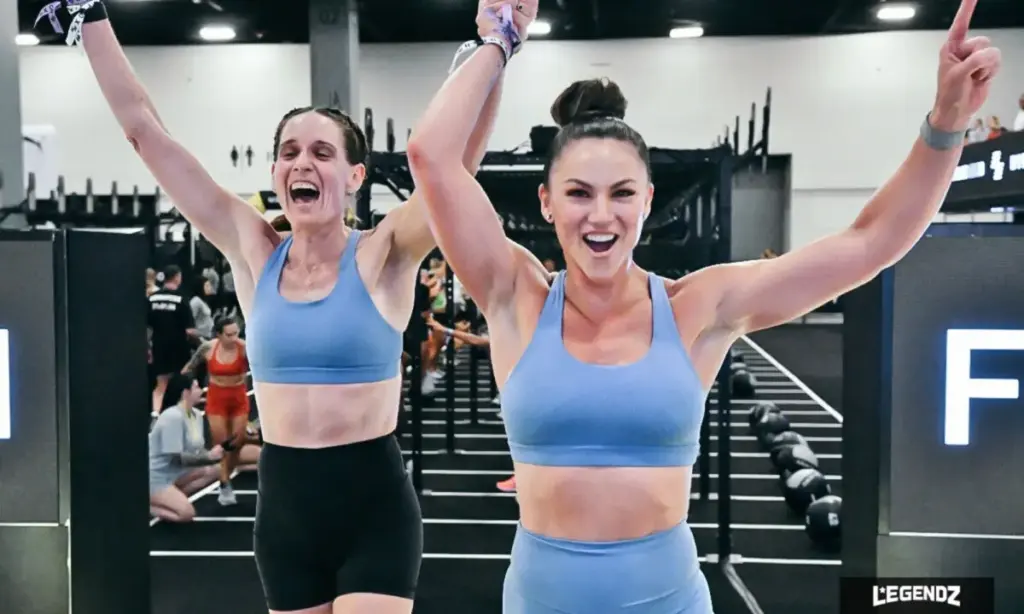
For many fitness enthusiasts, the decision to sign up for an intense athletic competition begins as a simple challenge—a way to break through a plateau, test physical boundaries, or find a fresh source of motivation. But as participants soon discover, the journey often transforms into something far deeper, reshaping daily routines, dietary habits, and even personal perspectives on aging and resilience. This was precisely the experience for one athlete who stepped into the world of HYROX, a rapidly growing fitness race that blends cardiovascular endurance and functional, weight-based strength work.
Drawn in by the immense energy, strength, and sheer volume of women embracing the physical challenge, the athlete found herself wondering if she could conquer a HYROX event herself. After years as a dedicated athlete, she had been missing real cardiovascular training, yet she harbored a strong aversion to traditional treadmills. HYROX offered the ideal solution, combining running intervals with distinct functional stations that pushed both stamina and power.
Entering the training cycle with a solid foundation, she had relocated to Miami in 2022 and intentionally integrated weights into her regular routine. By 2024, she had begun working with personal trainer Ashley Damaj, transitioning from traditional weight training into functional fitness workouts layered with cardio elements. Though she initially believed she was in peak physical condition, reality set in quickly once she and Damaj officially committed to competing together as a doubles pair. Reflecting on the rigorous preparation, she noted that the demanding adventure would not have been nearly as successful or enjoyable without her training partner by her side.
Running Again (And Actually Loving It)
The initial hurdle of the training program was running, a discipline that served as an immediate cardiovascular wake-up call. The pair’s very first workout on Miami’s Rickenbacker Causeway covered roughly three miles interspersed with functional movements. The data from the session was revealing: she spent 26 minutes trapped in heart rate Zones 4 and 5, hitting a maximum heart rate of 194 beats per minute. The numbers confirmed that her overall cardio fitness required significant development.
Undeterred, the duo built a consistent schedule featuring at least two runs a week, averaging about five miles each, complete with a stretch break at the halfway point. Unexpectedly, what started as a grueling necessity evolved into an activity she genuinely grew to love. Running side by side rekindled her appreciation for group training, offering a distinct sense of shared struggle and camaraderie that differed vastly from the atmosphere of a standard run club. Their early-morning sessions, often beginning at 5:30 a.m. to accommodate their lives as working mothers, established a new rhythm for her days and proved to be the most efficient method for reaching high-intensity cardio zones.

How I Fueled for Training
Preparing the body to handle the rigorous demands of HYROX required a complete reassessment of nutritional habits and daily fueling strategies. Recognizing the need to sustain energy output through intense sessions, she deliberately increased her overall carbohydrate intake. Furthermore, she placed a strong emphasis on consistent protein consumption and daily creatine supplementation to combat the ongoing challenge of building and maintaining muscle mass.
Her daily routine involved taking 12 to 15 grams of creatine, cycling through formulations containing taurine and brain-supporting ingredients, while incorporating electrolyte-infused creatine specifically on race day. As wellness conversations increasingly highlight, creatine extends far beyond basic gym performance; it actively supports cellular energy production, muscle maintenance, and cognitive function, making it a valuable addition to many women’s wellness protocols.
The Setback That Taught Me Lessons
Physical preparation rarely follows a linear path, and a major test arrived roughly two months before the competition. During a full race simulation in a gym setting—where the pair practiced completing the entire race individually rather than splitting the modalities as they would in the actual doubles event—she pushed her body too hard and sustained a knee injury.
The incident underscored a vital reality of HYROX training: it demands a specialized level of body awareness that differs significantly from traditional weightlifting. Because the movement patterns under fatigue can compromise joint stability, it is easy to overreach. The injury forced a shift in focus. Collaborating closely with her trainer and her chiropractor, Jenna, she worked to strengthen her quadriceps and stabilize the affected joint, which unfortunately meant reducing her running volume in the weeks leading up to the race.
Yet, this obstacle brought a freeing realization. At 46 years old, she came to accept that the human body rarely remains in an immaculate, pain-free state of absolute perfection, and that such imperfection is entirely acceptable. Fitness, she realized, does not require feeling 100% to participate; it simply requires the willingness to adapt when plans go awry.

Race Day
The atmosphere inside the Miami Beach Convention Center on race day was nothing short of electric. With a scheduled start time of 2:40 p.m., the afternoon slot offered a welcome departure from typical morning events, allowing her to sleep in, rest adequately, and avoid early-morning rushing. The pre-race tunnel experience provided a palpable surge of collective adrenaline and crowd encouragement that set an unforgettable tone for the event.
The physical stations delivered the expected degree of challenge, with participants executing running loops around the track between each station—often utilizing the first lap as a deliberate recovery phase to lower their heart rate. While she valued the long-term data provided by her WHOOP device, she noted the absence of real-time racing metrics, prompting thoughts of eventually transitioning to a sports watch like a Garmin to avoid the digital distractions of text messages and calls associated with standard smartwatches.
Having her family present added deep personal meaning to the milestone. Emphasizing the importance of an active lifestyle and embracing difficult tasks is a core family value, and she wanted her children to witness her doing the hard work firsthand. Entering the competition without a strict time target, she crossed the finish line in 1:27:06. In the immediate aftermath, she and Damaj engaged in detailed debriefs, analyzing how to fine-tune their pre-workout nutrition and strategize their physical exchanges for future events.
What I’m Taking With Me
Whether she will return to the competitive racing circuit remains undecided, but her commitment to maintaining an elevated baseline of fitness as a sustainable lifestyle is unwavering. Beyond the personal physical achievements, the experience left a lasting impression through the sheer diversity of the crowd gathered in the arena. Surrounded by married couples, adaptive athletes, pregnant and postpartum mothers, seniors, and solo competitors, she witnessed a powerful display of the collective human spirit.
Ultimately, the journey reinforced the idea that physical health is neither about perfection nor personal records. Instead, it is about showing up consistently, adapting gracefully when setbacks arise, and discovering genuine joy in the process—ideally alongside people who matter most.