



Speed has historically been the primary marketing hook for networking hardware manufacturers. Flagship models currently dominating store shelves—such as Netgear’s Nighthawk RS700S—are marketed with staggering theoretical speeds of up to 19Gbps, equipped with dual 10Gbps ports and bristling with up to eight external antennas. These top-tier devices routinely command price tags exceeding $500. Yet, for the vast majority of households, purchasing such high-end hardware means paying for a performance ceiling they will quite literally never touch.
Consumer technology analysts frequently point out that a dependable budget router from reputable brands like Netgear or TP-Link, often retailing for under $100, is more than capable of handling the vast majority of digital traffic a typical home can generate. Understanding the actual mechanics of home networking reveals why extravagant spending on a router is frequently unnecessary, as well as highlighting the specific, niche scenarios where investing in premium hardware actually makes practical sense.
Start with the Speed Coming Into Your House
To understand why high-end routers are often overkill, one must first look at the fundamentals of internet delivery. A router fundamentally cannot make your internet service faster than the plan you are currently paying for. The core job of a router is straightforward: it takes the data connection delivered by your internet service provider (ISP) and distributes it wirelessly and through wired ports to the various devices scattered throughout your living space.
The Federal Communications Commission (FCC) benchmarks basic broadband as 100Mbps for downloads and 20Mbps for uploads. Consequently, a standard budget broadband router only needs to carry those baseline speeds to your connected devices without choking or dropping packets.
Before shopping for networking equipment, consumers should carefully evaluate their current internet service tier. There is little practical logic in purchasing a router capable of transferring staggering amounts of data per second if that capacity far exceeds the data actually entering the home through the wall socket. A router rated significantly above a household’s internet plan provides no tangible benefit because the operational bottleneck resides firmly with the service provider, not the unassuming plastic box sitting on a living room shelf.
What a Good Budget Router Actually Needs
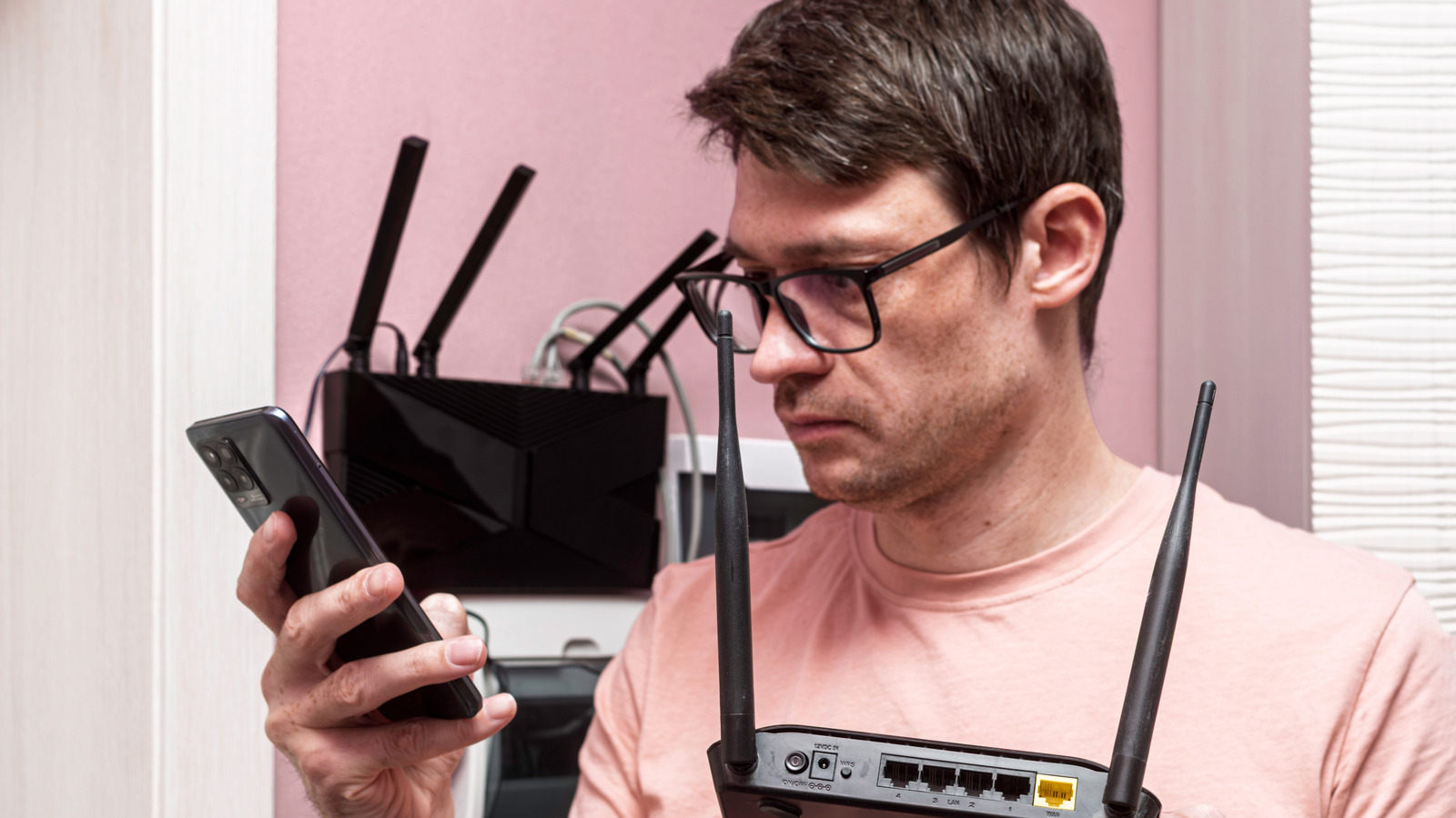
Navigating the market for affordable networking equipment does not require deciphering a complex, novel-length specification sheet. Instead, consumers can focus on a few core hardware features that genuinely impact daily performance.
First among these are Gigabit Ethernet ports. Despite the ubiquity of wireless connections, physical wired links remain the most reliable, lowest-latency method to connect desktop computers, gaming consoles, and smart televisions. Having gigabit ports ensures that the router itself will never become a physical bottleneck for any device plugged directly into it.
Parental controls also stand out as a vital feature for modern households, proving useful for scheduling screen time limits and blocking inappropriate or distracting websites on children’s devices. Most competent budget routers incorporate these management tools natively, often accessible through a free, user-friendly mobile application.
The adoption of Wi-Fi 6 or a newer standard is another critical consideration, though not merely for raw speed metrics. Wi-Fi 6 utilizes advanced protocols designed to manage numerous simultaneous device connections much more gracefully than older generations. This efficiency represents the true day-to-day improvement: different devices distributed around the home stop fighting aggressively for limited bandwidth.
Finally, whole-home range and physical placement remain just as important as raw data speeds. A remarkably fast router positioned in an inconvenient corner of a house will inevitably provide sluggish performance in the rooms where occupants actually spend their time. Matching wireless coverage to the physical dimensions of a living space is paramount. In larger homes, deploying a mesh kit or an additional access point frequently solves connectivity issues far more effectively than purchasing a single, highly expensive router.

What Wi-Fi 7 Adds, and Who Should Get It
As the newest wireless standard to enter the consumer market, Wi-Fi 7 is currently where manufacturers house their most expensive flagship hardware. The headline technological feature of Wi-Fi 7 is its utilization of 320MHz channels within the 6GHz frequency band. According to the Wi-Fi Alliance, this capability theoretically doubles data throughput compared to the previous Wi-Fi 6 standard. While this sounds like an enticing upgrade on paper, a significant catch accompanies the technology.
To experience those headline-grabbing speeds, connected client devices—such as smartphones, tablets, and laptops—must also natively support Wi-Fi 7, a compatibility feature absent from many devices currently in active use. Furthermore, the peak speeds advertised on product packaging represent theoretical maximums rather than the practical performance measurements users will experience in a typical living room. While Wi-Fi 7 routers maintain backward compatibility with older legacy devices, those older phones and computers will not experience any speed enhancement simply because they are communicating with a newer, more expensive router.
Match the Router to Your Household
Selecting the appropriate networking hardware ultimately depends on the composition and habits of the household utilizing the connection. For individuals living alone or sharing a space with a single roommate, even a mature Wi-Fi 5 router can typically manage smartphones, laptops, and streaming televisions without noticeable friction.
Conversely, in an average household comprising four to six residents—featuring children streaming video on tablets, parents conducting video calls for work, and family members gaming concurrently—transitioning to Wi-Fi 6 becomes a much safer choice. This standard is specifically engineered to share network resources efficiently among a dense crowd of active devices.
New, expensive, Wi-Fi 7-enabled routers only begin to justify their elevated costs within sprawling multi-story homes or dedicated home offices that are already serviced by gigabit-plus fiber optic plans, paired with a robust ecosystem of newly purchased Wi-Fi 7 compatible hardware. If a household does not fit this specific description, a standard budget router or a well-configured mesh system for larger square footage will accomplish the task reliably for a fraction of the investment.
When a High-End Router Is Worth It
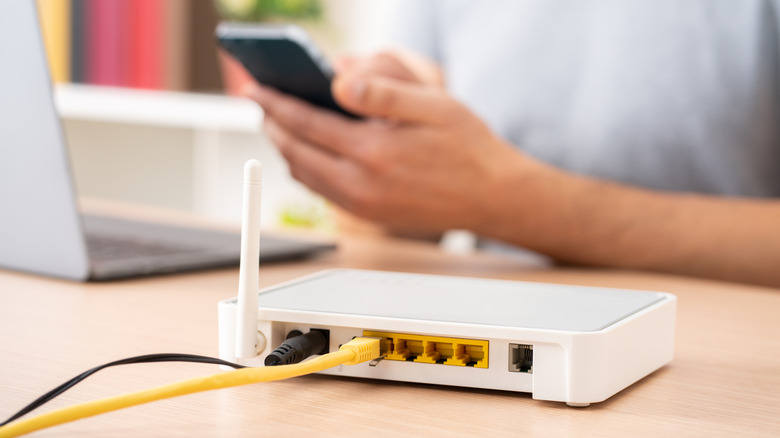
Despite the general rule that most consumers can bypass expensive networking gear, specific high-demand use cases provide legitimate justification for purchasing a high-end router, even for a single user.
One notable scenario involves streaming PC virtual reality wirelessly. Meta notes that features like Air Link over Wi-Fi function most effectively on the 5GHz frequency band, with the host computer physically connected to the router via an Ethernet cable. The company suggests considering a dedicated, high-performance router if latency issues degrade the immersive experience. A router equipped with substantial processing headroom and bandwidth capacity helps keep the headset’s wireless connection pristine and responsive, even when other network activity occurs simultaneously elsewhere in the home.
Another valid justification involves moving massive files around a local home network. Copying large video production projects to and from a Network Attached Storage (NAS) device or executing automated system backups bypasses the internet service plan entirely, meaning transfer speeds rely exclusively on internal hardware. While a wired Ethernet connection remains the superior method for these tasks, a faster router meaningfully assists any connected device that must communicate over a wireless link.
Competitive gaming and live streaming also benefit from premium hardware. When a sudden latency spike can ruin a competitive match or disrupt an audience of live viewers, a robust router featuring sophisticated traffic prioritization algorithms and ample spare processing capacity helps maintain a stable connection.
Finally, households operating a heavily populated smart home ecosystem face unique demands. Security cameras, environmental sensors, automated smart plugs, and wireless speakers accumulate rapidly, and inexpensive routers can occasionally struggle under the sheer volume of simultaneous persistent connections. For consumers whose daily routines do not involve these intensive workloads, however, the extra financial outlay for a high-end router merely purchases performance headroom that will remain indefinitely unused.