


Throughout a legendary career spanning decades on stage and screen, the late Patrick Stewart built much of his sterling reputation on portraying unique heroes and deeply memorable protagonists. If there is a single defining thread connecting his iconic tenure as Captain Jean-Luc Picard in the Star-Trek franchise with his portrayal of Professor Charles Xavier across the expansive X-Men film universe, it is that both characters could fairly be described as steadfast idealists. Though they approached their respective leadership roles with distinctly different philosophies—Picard through the diplomatic and philosophical lens of Starfleet, and Xavier through the nurturing yet protective framework of his school for mutants—both men stood as paragons of moral clarity and compassion.
Taken together, these career-defining roles cemented Stewart’s prominent position in popular culture as the ultimate benevolent authority figure. Stewart himself was frequently more than willing to playfully subvert that perceived public image. Memorable comedic turns, such as his hilariously uninhibited and cynical guest appearance on Ricky Gervais’s sitcom Extras—where he played a version of himself that can best be described as depraved—or his voice-acting work as the eccentric and morally flexible CIA deputy director Avery Bullock on the animated series American Dad, demonstrated a sharp self-awareness. Yet, despite his willingness to mock his own wholesome archetype, his commanding physical presence and raw, theatrical gravitas continually secured him prestigious parts as noble kings, wise mentors, and heroic leaders.
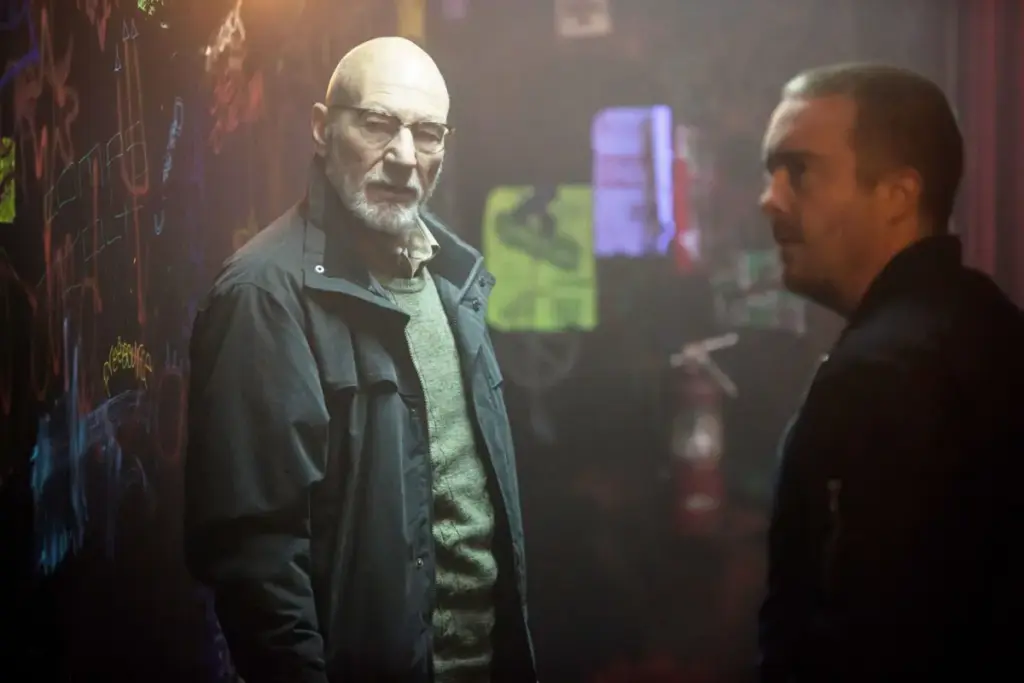
It was, therefore, a profound departure for Stewart to step into the shoes of a genuine, unapologetic cinematic villain. While he famously tackled darker, complex theatrical antagonists such as Shylock in The Merchant of Venice and the titular Scottish tyrant in Macbeth during his celebrated stage career, his film and television filmography featured remarkably few straightforward villains. One could easily count his major cinematic antagonist roles on the fingers of one hand. That rare cinematic exception arrived in 2015, when Stewart radically transformed his screen persona to play a ruthless neo-Nazi drug lord in writer-director Jeremy Saulnier’s harrowing rural thriller, Green Room. With the same terrifying focus, economy of movement, and psychological intensity that
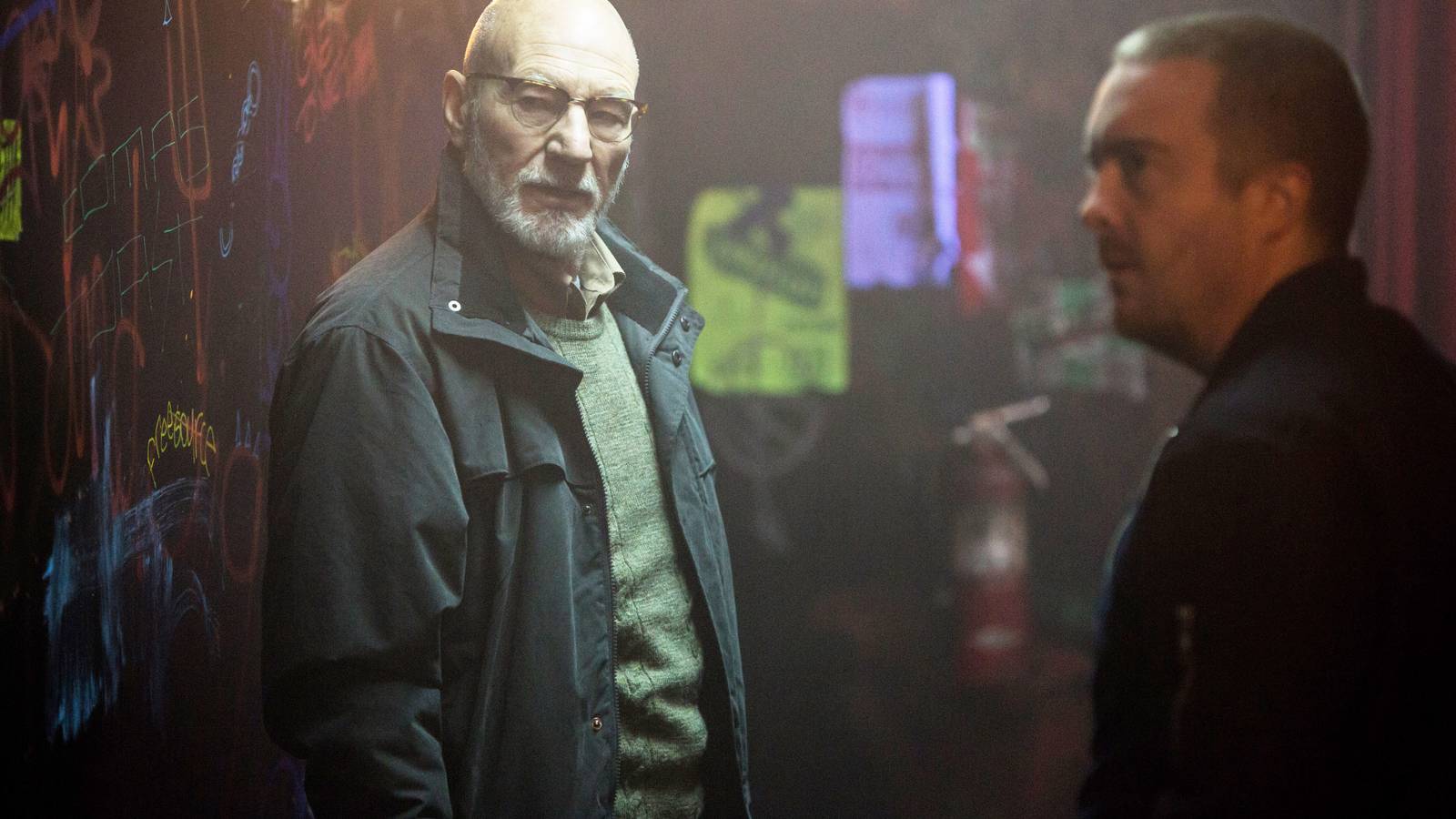
he traditionally brought to his heroic roles, Stewart delivered a masterclass in screen villainy. For audiences eager to witness what is arguably the single most chilling and evil performance of Stewart’s illustrious career, Green Room is currently available to stream for free on Tubi.
You’ll be the first to go unless you think
The harrowing narrative of Green Room centers on the Ain’t Rights, a struggling, hard-touring punk rock band slogging through the Pacific Northwest. Living a hand-to-mouth existence defined by cramped van rides, meager bar gigs, scrounged free food, and siphoned gasoline, the group is perpetually low on cash and barely scraping by. Desperate for any opportunity to fund the remainder of their tour, they accept a last-minute booking at an isolated, heavily fortified music venue situated deep in the rural backcountry of Oregon.
Upon arrival, the band quickly realizes that the venue is not a typical indie rock dive. Instead, it serves as a heavily guarded compound and gathering hub for aggressive local skinheads, and they have been hired as the opening act for a genuinely menacing white supremacist metal band. While the atmosphere is tense and openly hostile, the band performs their set and retreats to the venue’s backstage holding area, known as the green room, to collect their payment and leave.

What starts as a deeply uncomfortable evening instantly escalates into an inescapable nightmare when the members of the Ain’t Rights return to the green room and inadvertently witness a brutal murder. The bar’s frantic staff immediately takes them prisoner, confiscates their communication devices, and locks them inside the room. The venue’s security personnel contact the compound’s secretive and calculating owner, Darcy, played with chilling composure by Patrick Stewart. Upon assessing the situation, Darcy makes a cold, pragmatic calculus and decides that the only acceptable solution to protect his criminal enterprise is to eliminate every single witness. With their backs squarely against the wall and possessing no particular talent or training for real-world violence, the members of the Ain’t Rights are forced into a desperate, bloody fight for survival if they hope to make it out of the Oregon woods alive.
From its opening frames, Green Room establishes a distinct atmosphere that can best be described as relentlessly grimy. The members of the Ain’t Rights inhabit a hardscrabble, unglamorous reality defined by petty theft, couch-surfing, and decaying basement venues. Even before the narrative shifts to the isolated skinhead compound, the film’s visual texture feels suffocated by a layer of metaphorical dirt, sweat, and exhaustion. Every building they encounter looks structurally compromised, as though it is merely one heavy kick away from total collapse, and the cinematography employs harsh, sickly lighting that casts a pallid, almost corpse-like hue over the characters.
Once the film’s primary conflict ignites, it refuses to relent, morphing into a truly brutal and unforgiving survival story. The film operates under a strict reality where no one enjoys plot armor; major characters are frequently dispatched with a shocking, unceremonious suddenness that subverts traditional thriller tropes. Those who manage to stay alive do not emerge unscathed, quickly accumulating crippling injuries, bone fractures, and lacerations. The film’s makeup and special effects crew lean into the visceral reality of the violence, depicting shredded throats, broken bones, and severe trauma with unflinching precision. It is an intense cinematic experience designed to keep viewers on edge from start to finish.
In much the same vein as Jeremy Saulnier’s previous feature, the dark comedy-thriller Murder Party, Green Room functions brilliantly as a study in inaction and improvisation. The protagonists are ordinary, unprepared people thrust into an extreme scenario requiring lethal self-defense, yet they possess no tactical training or combat prowess. Instead of executing choreographed action sequences, the characters must rely on makeshift weapons, frantic and flawed escape plans, and sheer adrenaline to push through escalating physical trauma. One of the film’s most memorable and agonizing sequences revolves entirely around the desperate, multi-character struggle simply to locate and successfully load a single unexpended shotgun shell under immense pressure.

Amidst this chaos, Patrick Stewart’s performance as Darcy anchors the entire film, operating almost in spite of the actor’s historical association with heroism. Darcy embodies the terrifying banality of evil. He does not posture as a cackling madman or an emotionally unhinged monster; rather, he views his horrific criminal acts—including the systematic execution of innocent musicians—as little more than routine business management. When running a rural skinhead compound that doubles as the operational center for a regional drug trafficking network, loose ends are simply a liability, and Darcy is entirely comfortable ordering the slaughter of young people to protect his bottom line.
While it certainly takes a moment for the audience to adjust to seeing the beloved sci-fi captain and fantasy professor in such a dark, hateful role, Stewart fully commits to the transformation. He crafts a casual, everyday sort of monster whose terrifying authority stems entirely from his absolute lack of remorse. It is a performance that redefines the outer boundaries of his dramatic range, and one that must be witnessed firsthand to be fully appreciated. Green Room is currently available to stream for free on Tubi.